Make it in the Emirates products at a supermarket in Abu Dhabi. The UAE launched its industrial strategy, Operation 300bn, in 2021 to position itself as an industrial centre by 2031. Victor Besa / The National
Make it in the Emirates products at a supermarket in Abu Dhabi. The UAE launched its industrial strategy, Operation 300bn, in 2021 to position itself as an industrial centre by 2031. Victor Besa / The

Make it in the Emirates: UAE manufacturing focused on future with 'sunrise industries'


Alvin R Cabral
  • English
  • Arabic

LATEST: UAE to provide $11bn in financing to industrial firms over next five years

The UAE's manufacturing push benefits from its focus on future industries as the country boosts efforts to develop its non-oil economy, according to industry analysts and executives.

At next week's Make it in the Emirates conference in Abu Dhabi, the spotlight will once again be on domestic manufacturing and the steps being taken to support the sector.

The event, now in its fourth edition, is hosted by the Ministry of Industry and Advanced Technology and will run from May 19-22 under the theme of "Advanced Industries. Accelerated", with AI and Industry 5.0 in focus.

Set to be spread across 68,000 square metres at Adnec – five times larger than last year's event – it will feature more than 700 exhibitors.

Experts say that the manufacturing ecosystem built by the UAE, the Arab world's second-largest economy, was a patient yet streamlined process, giving rise to investment and company set-ups.

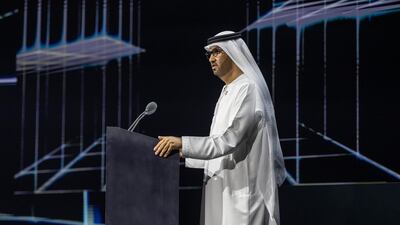
  • Dr Sultan Al Jaber, Minister of Industry and Advanced Technology, gives an opening speech on the first day of Make it in the Emirates 2025 at Adnec. All photos: Antonie Robertson / The National
    Dr Sultan Al Jaber, Minister of Industry and Advanced Technology, gives an opening speech on the first day of Make it in the Emirates 2025 at Adnec. All photos: Antonie Robertson / The National
  • The ROX automotive stand is pictured at the fourth Make it in the Emirates event, now under way at Adnec for four days
    The ROX automotive stand is pictured at the fourth Make it in the Emirates event, now under way at Adnec for four days
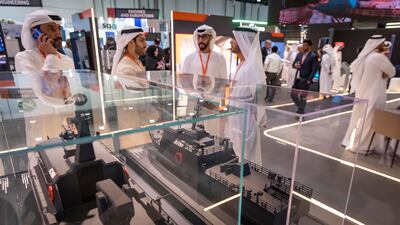
  • The Arbus flight stand attracts interest. This year's event is five times larger than in 2024 and features more than 700 exhibitors
    The Arbus flight stand attracts interest. This year's event is five times larger than in 2024 and features more than 700 exhibitors
  • Calidus Industries exhibits its wares as the spotlight shines on domestic manufacturing at Adnec
    Calidus Industries exhibits its wares as the spotlight shines on domestic manufacturing at Adnec
  • The Edge exhibition. The UAE has been focusing on industrial growth as it diversifies its economy from oil
    The Edge exhibition. The UAE has been focusing on industrial growth as it diversifies its economy from oil
  • More from the Calidus Industries stand
    More from the Calidus Industries stand
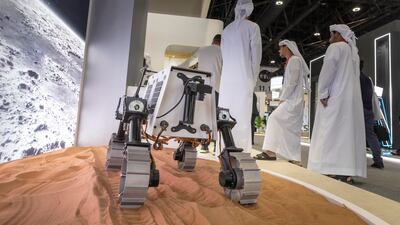
  • A display by Khalifa University, as the nation taps into modern and forward-looking sectors
    A display by Khalifa University, as the nation taps into modern and forward-looking sectors
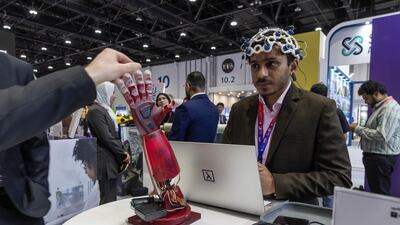
  • A cognitively controlled robotic hand on display at the NYUAD stand
    A cognitively controlled robotic hand on display at the NYUAD stand
  • Make it in The Emirates 2025 runs until Thursday, May 22
    Make it in The Emirates 2025 runs until Thursday, May 22

“The good thing about the UAE, when we talk about manufacturing, is it doesn't suffer from any legacy or historical manufacturing industries, what you might call sunset [declining] industries,” Simon Penney, managing partner and chief executive of Dubai-based strategic management services Incrementum CGA, told The National.

Other parts of the world that have been manufacturing economies for 100 years or more are saddled with industries that are no longer viable. The UAE doesn't have that problem because, being historically an oil-driven economy, it has the opportunity to tap into other, more modern and forward-looking sectors, said Mr Penney, who is also the former UK HM Trade Commissioner for the Middle East.

“[The UAE] is in a very enviable position to focus on those industries which you might call sunrise industries – those that are going to be very much at the centre of global manufacturing for the next decades ahead,” he said.

The UAE has been focusing on industrial growth as it diversifies its economy away from oil. The country launched its industrial strategy, Operation 300bn, in 2021 to position itself as an industrial centre by 2031.

The sectors the strategy has been focusing on include chemicals, electrical, construction, machineries and equipment, food, transportation, metals, pharmaceuticals, rubber, plastic and fibre glass, and wood and paper.

The initiative is “not just about the UAE government wanting to expand manufacturing, but also expand manufacturing in specific areas”, said Jeanne Walters, a senior economist at Emirates NBD, Dubai's largest bank.

“The UAE government has already done a significant amount of work in setting the groundwork for that to become a reality,” she added.

Abu Dhabi Department of Economic Development's industrial parks. Photo: Added

The Emirates has also signed 21 Comprehensive Economic Partnership Agreements to boost trade and attract investment into the country. Deals with nine countries – India, Israel, Turkey, Indonesia, Cambodia, Georgia, Costa Rica, Mauritius and Jordan – have already taken effect, out of a goal of 27.

Those deals are proof that the government is “really putting a focus on developing itself as a key logistics hub that's a link between East and West”, Ms Walters said, noting that the Cepas “help manufacturers get confidence in the UAE as a place to base their manufacturing facilities”.

The UAE’s foreign trade exceeded Dh5 trillion ($1.36 trillion) in 2024, with a trade surplus of more than Dh490 billion, data from the World Trade Organisation shows.

ICV programme

The UAE's ICV programme, meanwhile, has been aimed at boosting the growth of domestic industries by redirecting half of government spending on procurements and tender contracts into the national economy by 2031.

Abu Dhabi, which is estimated to hold more than 90 per cent of the UAE's oil reserves, has increasingly advanced its manufacturing capabilities with high-tech tools, automation and robotics, and data analytics.

The manufacturing sector remained the largest non-oil contributor to Abu Dhabi's gross domestic product at 9.5 per cent in 2024, with its added value hitting Dh111.6 billion – the highest on record, the emirate's Department of Economic Development reported in March.

The sector posted an annual growth rate of 2.7 per cent in 2024.

Dubai last week launched its own ICV programme aimed at encouraging government entities to direct more of their spending towards domestic suppliers.

The emirate aims to double the size of its economy to Dh32 trillion over the next decade and establish itself among the top three cities around the world as part of its D33 strategy.

Other emirates also have manufacturing contributing a higher share to their GDP.

Manufacturing contributes about 16 per cent to Sharjah's GDP, while in Ras Al Khaimah, an industrial hub, the sector clocks in at around 27 per cent, according to Emirates NBD research.

The evolution of manufacturing in each emirate varies: Abu Dhabi has seen a “strong growth”, particularly after the Covid era, while Dubai has been “fairly stable”, Ms Walters said.

But no matter where, there is “definitely” opportunity for further growth, both at an emirate level and aggregate level in the UAE, with “a lot” going to depend on respective initiatives, she said.

From opportunity to reality

The UAE's manufacturing push has seen small and big companies across sectors start building in the country.

The AM Lab, a UAE-based 3D printing company, seeks to digitise manufacturing “in order to lower the entry barrier and democratise access to methods of manufacturing that were not accessible before”, its founder Abdallah Alawadi said.

In 2021, he realised it was hard to gain access to industries that wanted high volume production.

"We ended up having to purchase the machines and manufacture ourselves to be able to meet the current demand that we had for our prototyping needs," he told The National.

“What we were trying to do is experiment with different materials and, unfortunately, with such a tight budget, we were only able to iterate once.”

Fast-forward four years and The AM Lab is up and running, powered by AI, but the goal of mass manufacturing remains a patience game.

“We haven't developed the clientele and the reputation to be able to do that yet,” Mr Alawadi said.

But demand is growing, and he believes the UAE manufacturing and supplier network will play a key role in their business' growth. In turn, it will allow local businesses to purchase items locally, instead of from overseas.

“Our goal every month is to add two new manufacturers or two new vendors as part of our network to meet growing demand from our clients,” Mr Alawadi said.

“I see us setting a new standard for manufacturing within the region. I expect larger companies to jump on … to be able to produce their parts as we'll be able to guarantee and protect their IP [intellectual property].”

Mr Penny said the UAE spent the last number of years putting in place "an incredibly solid foundation to attract manufacturing – and that's something which takes time to do".

That has put the Emirates “in an exceptionally strong place right now”, having the agencies in place to support inward investment for manufacturing and “very clear in which sectors they want to attract international manufacturing”.


Mercer, the investment consulting arm of US services company Marsh & McLennan, expects its wealth division to at least double its assets under management (AUM) in the Middle East as wealth in the region continues to grow despite economic headwinds, a company official said.

Mercer Wealth, which globally has $160 billion in AUM, plans to boost its AUM in the region to $2-$3bn in the next 2-3 years from the present $1bn, said Yasir AbuShaban, a Dubai-based principal with Mercer Wealth.

Within the next two to three years, we are looking at reaching $2 to $3 billion as a conservative estimate and we do see an opportunity to do so,” said Mr AbuShaban.

Mercer does not directly make investments, but allocates clients’ money they have discretion to, to professional asset managers. They also provide advice to clients.

“We have buying power. We can negotiate on their (client’s) behalf with asset managers to provide them lower fees than they otherwise would have to get on their own,” he added.

Mercer Wealth’s clients include sovereign wealth funds, family offices, and insurance companies among others.

From its office in Dubai, Mercer also looks after Africa, India and Turkey, where they also see opportunity for growth.

Wealth creation in Middle East and Africa (MEA) grew 8.5 per cent to $8.1 trillion last year from $7.5tn in 2015, higher than last year’s global average of 6 per cent and the second-highest growth in a region after Asia-Pacific which grew 9.9 per cent, according to consultancy Boston Consulting Group (BCG). In the region, where wealth grew just 1.9 per cent in 2015 compared with 2014, a pickup in oil prices has helped in wealth generation.

BCG is forecasting MEA wealth will rise to $12tn by 2021, growing at an annual average of 8 per cent.

Drivers of wealth generation in the region will be split evenly between new wealth creation and growth of performance of existing assets, according to BCG.

Another general trend in the region is clients’ looking for a comprehensive approach to investing, according to Mr AbuShaban.

“Institutional investors or some of the families are seeing a slowdown in the available capital they have to invest and in that sense they are looking at optimizing the way they manage their portfolios and making sure they are not investing haphazardly and different parts of their investment are working together,” said Mr AbuShaban.

Some clients also have a higher appetite for risk, given the low interest-rate environment that does not provide enough yield for some institutional investors. These clients are keen to invest in illiquid assets, such as private equity and infrastructure.

“What we have seen is a desire for higher returns in what has been a low-return environment specifically in various fixed income or bonds,” he said.

“In this environment, we have seen a de facto increase in the risk that clients are taking in things like illiquid investments, private equity investments, infrastructure and private debt, those kind of investments were higher illiquidity results in incrementally higher returns.”

The Abu Dhabi Investment Authority, one of the largest sovereign wealth funds, said in its 2016 report that has gradually increased its exposure in direct private equity and private credit transactions, mainly in Asian markets and especially in China and India. The authority’s private equity department focused on structured equities owing to “their defensive characteristics.”

The bio

Date of Birth: April 25, 1993
Place of Birth: Dubai, UAE
Marital Status: Single
School: Al Sufouh in Jumeirah, Dubai
University: Emirates Airline National Cadet Programme and Hamdan University
Job Title: Pilot, First Officer
Number of hours flying in a Boeing 777: 1,200
Number of flights: Approximately 300
Hobbies: Exercising
Nicest destination: Milan, New Zealand, Seattle for shopping
Least nice destination: Kabul, but someone has to do it. It’s not scary but at least you can tick the box that you’ve been
Favourite place to visit: Dubai, there’s no place like home

The burning issue

The internal combustion engine is facing a watershed moment – major manufacturer Volvo is to stop producing petroleum-powered vehicles by 2021 and countries in Europe, including the UK, have vowed to ban their sale before 2040. The National takes a look at the story of one of the most successful technologies of the last 100 years and how it has impacted life in the UAE. 

Read part four: an affection for classic cars lives on

Read part three: the age of the electric vehicle begins

Read part one: how cars came to the UAE


TRAINING FOR TOKYO

A typical week's training for Sebastian, who is competing at the ITU Abu Dhabi World Triathlon on March 8-9:

  • Four swim sessions (14km)
  • Three bike sessions (200km)
  • Four run sessions (45km)
  • Two strength and conditioning session (two hours)
  • One session therapy session at DISC Dubai
  • Two-three hours of stretching and self-maintenance of the body

ITU Abu Dhabi World Triathlon

For more information go to www.abudhabi.triathlon.org.

LAST 16

SEEDS

Liverpool, Manchester City, Barcelona, Paris St-Germain, Bayern Munich, RB Leipzig, Valencia, Juventus

PLUS

Real Madrid, Tottenham, Atalanta, Atletico Madrid, Napoli, Borussia Dortmund, Lyon, Chelsea

Dr Afridi's warning signs of digital addiction

Spending an excessive amount of time on the phone.

Neglecting personal, social, or academic responsibilities.

Losing interest in other activities or hobbies that were once enjoyed.

Having withdrawal symptoms like feeling anxious, restless, or upset when the technology is not available.

Experiencing sleep disturbances or changes in sleep patterns.

What are the guidelines?

Under 18 months: Avoid screen time altogether, except for video chatting with family.

Aged 18-24 months: If screens are introduced, it should be high-quality content watched with a caregiver to help the child understand what they are seeing.

Aged 2-5 years: Limit to one-hour per day of high-quality programming, with co-viewing whenever possible.

Aged 6-12 years: Set consistent limits on screen time to ensure it does not interfere with sleep, physical activity, or social interactions.

Teenagers: Encourage a balanced approach – screens should not replace sleep, exercise, or face-to-face socialisation.

Source: American Paediatric Association
The specs: Rolls-Royce Cullinan

Price, base: Dh1 million (estimate)

Engine: 6.75-litre twin-turbo V12

Transmission: Eight-speed automatic

Power: 563hp @ 5,000rpm

Torque: 850Nm @ 1,600rpm

Fuel economy, combined: 15L / 100km

Avatar: Fire and Ash

Director: James Cameron

Starring: Sam Worthington, Sigourney Weaver, Zoe Saldana

Rating: 4.5/5

The specs

Engine: Four electric motors, one at each wheel

Power: 579hp

Torque: 859Nm

Transmission: Single-speed automatic

Price: From Dh825,900

On sale: Now

The burning issue

The internal combustion engine is facing a watershed moment – major manufacturer Volvo is to stop producing petroleum-powered vehicles by 2021 and countries in Europe, including the UK, have vowed to ban their sale before 2040. The National takes a look at the story of one of the most successful technologies of the last 100 years and how it has impacted life in the UAE.

Read part three: the age of the electric vehicle begins

Read part two: how climate change drove the race for an alternative 

Read part one: how cars came to the UAE

COMPANY%20PROFILE%20
%3Cp%3EName%3A%20DarDoc%3Cbr%3EBased%3A%20Abu%20Dhabi%3Cbr%3EFounders%3A%20Samer%20Masri%2C%20Keswin%20Suresh%3Cbr%3ESector%3A%20HealthTech%3Cbr%3ETotal%20funding%3A%20%24800%2C000%3Cbr%3EInvestors%3A%20Flat6Labs%2C%20angel%20investors%20%2B%20Incubated%20by%20Hub71%2C%20Abu%20Dhabi's%20Department%20of%20Health%3Cbr%3ENumber%20of%20employees%3A%2010%3C%2Fp%3E%0A
Updated: May 19, 2025, 10:37 AM