


Imagine that Karachi and Dhaka are each served by a single power plant. Germany demands for its own political reasons that the plants are turned off, spends heavily to enforce this, and both cities are plunged into darkness.
It sounds incredible — but current European policy has the same effect.
In the face of Russia’s floundering campaign in Ukraine, its near shutdown of gas supplies to Europe, impending bans on Russian oil, and September’s explosions on the Nord Stream pipelines, European capitals have elevated their security of supply above all. They rightly blame Moscow for denying food to poorer countries, but do not face up to the energy starvation their policies impose on others.
After much angst, Berlin finally decided to keep two of its three remaining nuclear power plants on standby — but not generating — until April. The country has fired up its mothballed coal power stations, and is building at least six terminals to import liquefied natural gas. Europe has bought and stored so much gas that, after prices hit all-time records in August, they are now at barely a quarter of that level.
Germany, the UK and others have announced enormous financial support packages to households to cope with their energy bills. Spain’s gas consumption for electricity almost doubled in October as it capped fuel prices. Meanwhile, efforts on energy efficiency and conservation have been mostly voluntary and weak.
In response, the LNG price has become simply unaffordable for South Asian countries. Or, when they are ready to pay, they find that the seller has diverted the cargo to Europe, realising higher profits that more than cover the modest contractual penalty for non-delivery. Pakistan issued a tender in August for LNG supplies from this December to December 2028 — and received no bids at all.
Last month, Bangladesh endured its worst power cut since 2014, when about 80 per cent of the country lost electricity. Pakistan has suffered endemic power cuts this year, worsening a political and economic crisis.

So how can lower-income countries in South Asia and Africa satisfy their own energy needs?
Can they outbid Europe for LNG? No, since the continent is richer, and will provide financial backing to make sure its citizens don’t go cold. Berlin is providing a €200 billion aid package, of which €31 billion will go to energy trader Uniper, nationalising it and making sure it can stand behind its supply contracts to German utilities.
Much global LNG supply is also sewn up by other wealthy countries in East Asia — Japan, South Korea and Taiwan — under long-term contracts. By the end of next year, Germany, the Netherlands, France, Italy and other European nations will have added 50 billion cubic metres of LNG import capacity, equivalent to a third of prior gas supplies from Russia, at a time that hardly any new LNG export plants are starting up.
Can they develop their own fossil fuel resources? No, because international financial institutions, banks and insurers have increasingly forbidden lending to oil, gas and coal projects, either at government insistence or because of their own “net-zero” policies. Developing countries are usually reliant on external financing for such ventures.
International oil companies, especially those in Europe, have restricted their new ventures to a handful of the most promising countries. The few projects that do progress are export-orientated, with creditworthy customers in Europe or East Asia, not focused on bringing energy to African or South Asian consumers.
What if developing countries build gas or coal-fuelled power or industry with carbon capture and storage to eliminate most emissions? Unfortunately, that runs into three problems. First, out of 197 CCS projects operational or in different stages of development worldwide in the Global CCS Institute’s latest report, only six are in middle-income Asian countries, and those are relatively wealthier ones — Malaysia, Thailand, Indonesia and Timor-Leste. There is not a single venture in India, Pakistan, Bangladesh or anywhere in Africa.
-
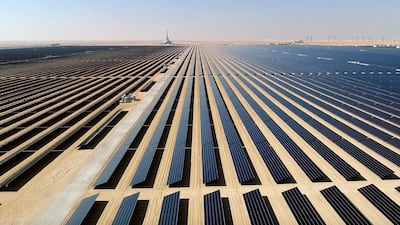
The Mohammed bin Rashid Al Maktoum Solar Park is located about 50 kilometres south of Dubai. AP -
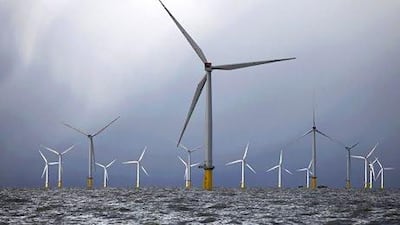
Masdar, the Abu Dhabi clean energy company, owns a one-fifth stake in London Array, the offshore wind farm in the Thames estuary. Chris Ratcliffe / Bloomberg News -
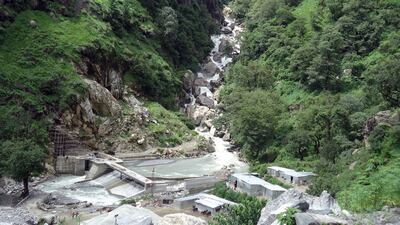
A hydro plant in Himachal Pradesh, India. Photo: Abu Dhabi National Energy Company (TAQA) -
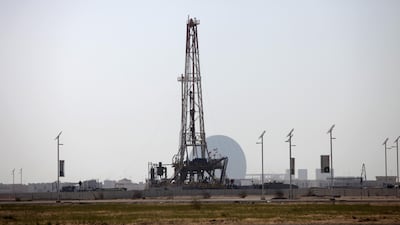
The Geothermal Pilot Project drills 4km beneath Masdar City in search of boiling temperatures to generate electricity and fuel the city's cooling system. Nicole Hill /The National -
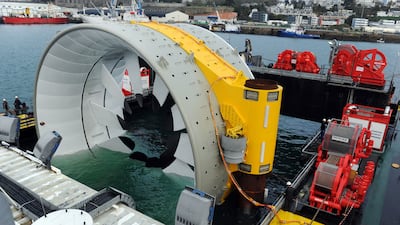
A hydroelectric motor at a tidal farm in the harbour of Brest, in western France. AFP


Secondly, such projects in developing countries would still fall foul of anti-fossil lending rules. Even if the plant itself qualified, the coal mine or gasfield that feeds it would not. Yet Pakistan has major undeveloped coalfields, as do southern African countries, while unused gas resources abound across Africa.
Thirdly, in Europe and the US, generous tax credits or carbon prices, amounting to $65-85 per tonne, encourage CCS. Developing countries do not have access to these, while international carbon offsets price at $20 per tonne at best, much too low to cover the cost of CCS projects, and usually don’t include CCS as eligible anyway.
So that leaves renewable energy. But despite abundant sun, wind and land, the Mena region accounts for just 3 per cent, and sub-Saharan Africa 2 per cent, of 2030 renewables targets. Clean energy investment in developing countries needs to step up from $150 billion in 2020 to more than $1 trillion in 2030. But as debate heats up at the Cop27 conference in Egypt, wealthy nations are still falling well short of their climate financing commitments.
Such policies are not just morally unjustified — they undermine Europe’s own critical environmental and energy security objectives. Countries that have nothing to do with Russia’s invasion of Ukraine, or the decade of European energy policy failures that preceded it, are made to bear the burden. This in turn damages attempts by Berlin, Brussels, London and Washington to build a diplomatic front.
To solve this, Europe needs to reflect on the wider impacts of its scramble for energy security. It should be pragmatic rather than rigidly ideological on fossil fuels, and create mechanisms to support carbon capture internationally. It could work with the existing programmes of Gulf states, notably the UAE and Saudi Arabia, for a massive scale-up of renewable energy in developing countries. Rather than turning others’ lights off, Europe will gain by illuminating them.
Robin M Mills is CEO of Qamar Energy, and author of 'The Myth of the Oil Crisis'

