

Shake-ups in the international oil pricing system do not come along very often. When backed by one of the world’s largest national oil companies, one of the biggest futures exchanges and a group of leading traders, a new benchmark must be taken seriously.
Adnoc, the Intercontinental Exchange and their partners, including leading traders and oil companies, are launching ICE Futures Abu Dhabi, or IFAD, on Monday.
IFAD will trade Murban crude oil futures on a physically settled basis. When it expires each month, holders of the contract will receive tanks of real oil.
Murban is “a great crude to build a contract around”, says ICE Futures Europe president Stuart Williams of Abu Dhabi’s key export oil grade.
The launch of Murban futures reflects three major developments. Firstly, the ever-growing shift to Asia as the world’s key growth area for oil demand and imports. Secondly, the rise of exports of very light US crude, again with Asia as an important market, creating a new trade flow and need for benchmarks.
Thirdly, the problems with other price markers make Murban’s launch relevant. US benchmark West Texas Intermediate and Brent from the North Sea are both light, sweet (low sulphur) crudes, typically preferred by refiners. They have long and illustrious histories.
WTI futures first traded in 1983 and Brent in 1988, as the Opec-based price system of the 1970s collapsed in the face of new competing and freely traded production.
WTI prices went negative last April amid a coronavirus-induced decline in oil demand after paper traders were stuck with physical crude they could not take or sell on. It is a landlocked crude priced at Cushing, Oklahoma, and often more representative of domestic US factors than international ones.
Although Brent has a long history, it has required repeated fixes as production of the British and Norwegian crudes that underpin it declines.
S&P Global Platts reports Dated Brent, the price of physical crude that is closely linked to Brent futures. In February, Platts announced a radical change: moving to Brent as a benchmark for suitable crudes delivered into Rotterdam rather than produced in the North Sea. But this move was not well received by the industry and was suspended for consultation.
DME Oman, traded on the Dubai Mercantile Exchange, is based on a medium gravity, sour (high sulphur) crude, typical of Middle Eastern oil exports. It has proved to be an excellent mechanism for buyers to obtain physical oil and in 2018, Saudi Aramco began to use it to price some of its exports.
However, trading levels are significantly lower than for Brent and WTI.
Murban addresses many of these issues. It is a light, sweetish crude, a little higher in sulphur than Brent and WTI but close enough. It is loaded in Fujairah, outside the potentially risky Strait of Hormuz, a major port with growing storage and refining capacity. Its production quality is consistent, and volumes are large and poised to grow.
So why now? The idea of Murban futures has been around for more than a decade but the current process was initiated in mid-2018. It reflects partly the market changes mentioned above, but also the willingness within the reformed Adnoc to think differently and break taboos.
-

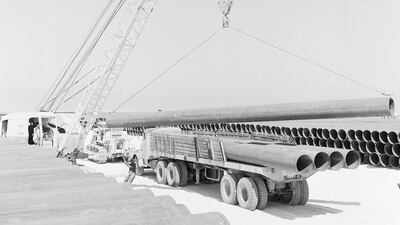
Historical image of Murban. Adnoc, the Intercontinental Exchange and their partners including leading traders and oil firms, are launching ICE Futures Abu Dhabi on Monday. Wam -
Murban is a light, sweetish crude, a little higher in sulphur than Brent and WTI. Wam -
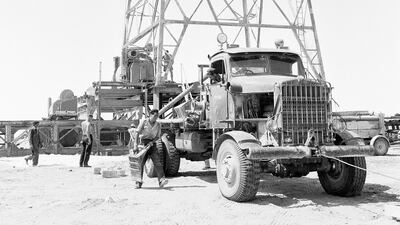
The idea of Murban futures has been around for more than a decade. Wam -

To make Murban futures work, Adnoc has switched to forward pricing of its crude. Wam -

Murban is not intended to replace Brent or WTI, but to complement them. Wam -
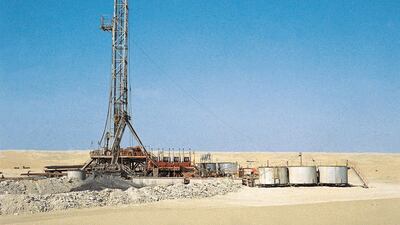
Adnoc has also made Murban freely tradable instead of the usual Middle East system. Wam -

Murban volumes will grow over time as Adnoc’s capacity expansion plans proceed. Wam -

Historical image of Murban. Wam -
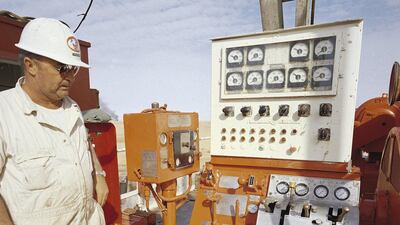
Historical image of Murban. Wam -

The launch of Murban futures is about enhancing the efficiency of global oil pricing. Wam -

Murban's production quality is consistent and volumes are large and likely to grow. Wam -

The idea of Murban futures has been around for more than a decade. Wam -
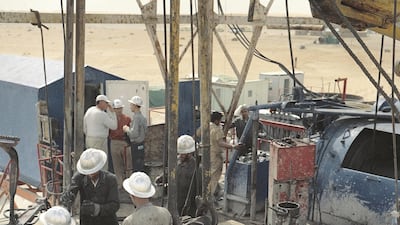
Murban loads from Fujairah, a major port with growing storage and refining capacity. Wam -

Murban's production quality is consistent and volumes are large and likely to grow. Wam -
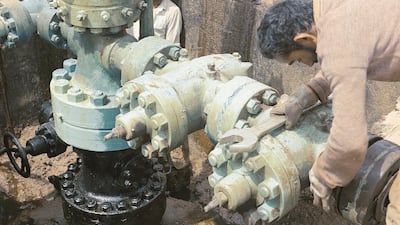
The launch of Murban futures is about enhancing the efficiency of global oil pricing. Wam -

Murban is “a great crude to build a contract around”, Stuart Williams, president of ICE Futures Europe said. Wam -

The price for Murban will be based on the exchange instead of a national oil company determining official selling prices. Wam


To make Murban futures work, Adnoc has switched to forward pricing of its crude – two months ahead – instead of the old retroactive system where buyers only knew the price after a cargo had been loaded. The price for Murban will be based on the exchange instead of a national oil company determining official selling prices based on its reading of the market and setting premiums or discounts to another benchmark.
Adnoc has also made Murban freely tradable instead of the usual Middle East system, in which buyers have to nominate the final destination. It has issued a rolling 12-month forecast of Murban availability, which indicates more than 1 million barrels per day out to next March, compared with Brent, which now depends on a depleting stream of less than 0.8 million bpd. Murban volumes will grow over time as Adnoc’s capacity expansion plans proceed.
However, Murban is not intended to replace Brent or WTI but to complement them with a range of other derivatives that serve the needs of traders and refiners. New futures contracts need to attract liquidity, which begets further liquidity, to survive and flourish.
Adnoc, ICE and their partners – Shell, PetroChina, Vitol and others – have done all they can to assure success. Now the market will judge.
The launch of Murban futures is about enhancing the efficiency of global oil pricing. It is also intended to be part of Adnoc’s and Abu Dhabi’s growing economic sophistication. As Mr Williams says, “IFAD is our 13th exchange but the first in the Middle East. The story is a global exchange setting up shop. The Abu Dhabi Global Market will be connected to the global clearing infrastructure and capital that sits in London. ICE is not just an energy exchange and we see an opportunity to expand our network here”.
IFAD might help end the anomaly that the Middle East produces the biggest share of world oil but does not host its own pricing mechanism. Yet, at the same time, it is also helping the region move beyond reliance on crude exports.
Robin Mills is chief executive of Qamar Energy and author of The Myth of the Oil Crisis

