


Live updates: follow the latest news on Russia-Ukraine
Oil prices could hit $130 a barrel by June if the Ukrainian conflict disrupts Russian crude flows and surge beyond that if the crisis escalates further, according to industry analysts.
The assessment comes after US President Joe Biden laid out punitive measures against Russia that include limiting its ability to do business in dollars, euros, pounds, and yen, while 27 EU members also said they would freeze Russian assets and deny banks access to its financial markets in response to Moscow's military offensive in Ukraine.
The measures follow Germany's suspension of the Nord Stream 2 pipeline. On Friday, Japan said it would impose sanctions on Russia that are aimed at semiconductor exports and financial institutions.
Notably, Moscow's energy, aluminium, and wheat industries were not the focus of sanctions and the country was not banned from the Swift payments network — largely because of how intertwined European economies are with Russia's and the clout it has as a global energy player.
“The escalation immediately jeopardises up to 1 million barrels per day of crude supplies that transit through Ukraine and the Black Sea, but the long-term disruptions could be far more significant,” said Rystad Energy’s chief executive Jarand Rystad.
“Oil prices could surge to around $130 per barrel, with consumers feeling the squeeze at the gas pump and in their power bills. The reality is that significantly higher prices are on the horizon in Europe and overseas.”
On Thursday, markets tumbled and oil prices soared to above $100 a barrel for the first time since 2014 after Russian President Vladimir Putin decided to conduct a special military operation in the Donbas region of Ukraine.
The move he said was in response to calls from separatist leaders in the Donetsk and Luhansk enclaves of eastern Ukraine for help to fight Ukrainian forces.
The global oil benchmark Brent, which surged as much as 8.78 per cent to $105.34 on Thursday, receded to $100.88 a barrel on Friday at 10.49am UAE time while West Texas Intermediate, the gauge that tracks US crude, receded to $94.40 after rising 8.72 per cent to $100.13 a barrel the previous day.
US stock index futures fell on Thursday. Dow Jones Industrial Average futures were down about minus 0.49 per cent on Friday at 11.24am while S&P 500 futures fell 0.62 per cent and Nasdaq-100 futures were trading 0.83 per cent lower.
Gold, a hedge against inflationary pressures and a safe haven for investors, was trading at $1,910.58 an ounce at 2.09pm UAE time after it rallied to $1,970.90 on Thursday, its highest since January of last year.
“The conflict in Ukraine brings enormous uncertainty, which strengthens gold's appeal as both a safe haven and an inflation hedge,” said Craig Erlam, a senior market analyst at Oanda.
“The next big test will be $2,000, where it has only traded above briefly in August 2020, hitting a high that month around $2,072. The worse the situation becomes in Ukraine, the more likely it is that we will see those levels once more.”
By Thursday evening, markets turned around. The Dow Jones Industrial Average closed up 0.28 per cent, ending a five-day losing streak, after having declined by as much as 2.6 per cent in morning trade.
-
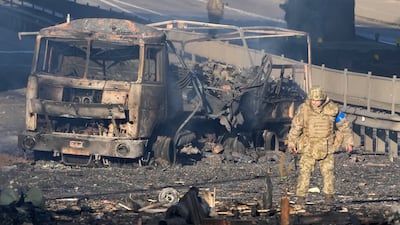
A Ukrainian soldier walks past the shell of a burnt military vehicle, on a street in Kiev. AP -
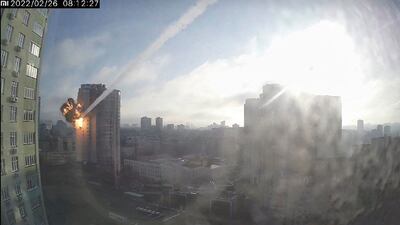
A screengrab from CCTV footage shows a missile hitting a residential building in Kiev. Reuters -
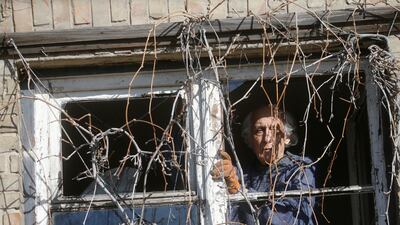
A man inspects a broken window, after shelling carried out by Russian troops in the Ukrainian capital. Reuters -
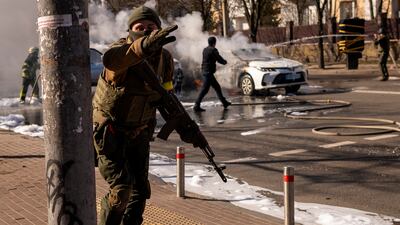
Ukrainian soldiers take positions outside a military centre as two cars burn on a street in Kiev. AP -

Medical specialists transport a woman, who was wounded in the shelling of an apartment building, to an ambulance, as her husband looks on. Reuters -

A woman outside her apartment building after it was damaged by a rocket, in Kiev. AP -

A Ukrainian police officer detains a driver on a street in Kiev. AP -
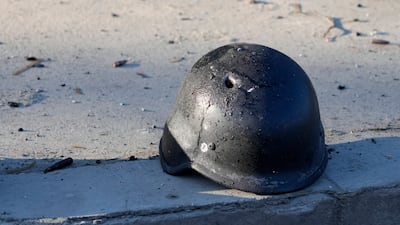
A soldier's helmet with a bullet hole on a street in the Ukrainian capital. AP -
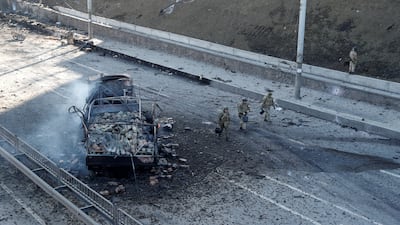
Ukrainian soldiers walk by a damaged vehicle, at the site of fighting with Russian troops, in Kiev. Reuters -
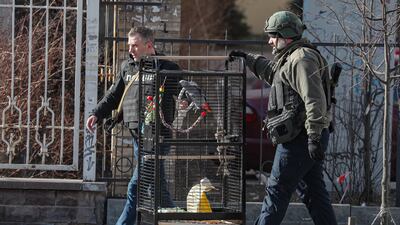
Ukrainian policemen move parrots to safety after a high-rise apartment block was damaged by shelling in Kiev. EPA -
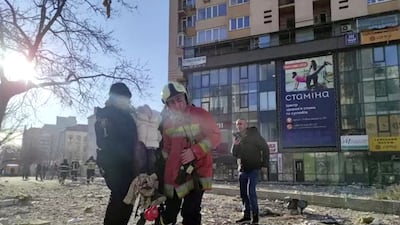
A screengrab from a video shows rescue workers carrying a person at the site of a damaged multi-storey residential building, south-west of the Ukrainian capital. Reuters -
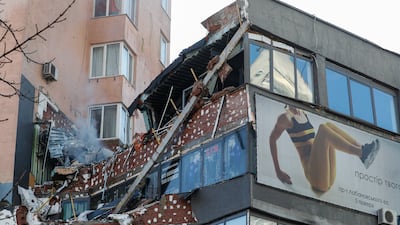
A building damaged by shelling carried out by Russian troops in Kiev. EPA -

Helga Tarasova comforts her daughter Kira Shapovalova as they wait in an underground shelter during a bombing alert in Kiev. AFP -
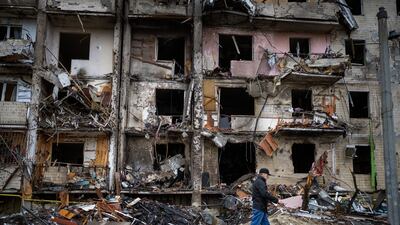
A man walks past a building damaged by a rocket attack in the Ukrainian capital. AP -

Emergency services workers near an apartment building damaged by shelling in Kiev. Reuters -
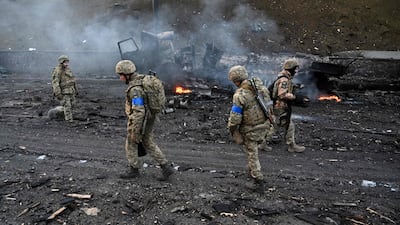
Ukrainian soldiers collect unexploded shells in the capital. AFP -
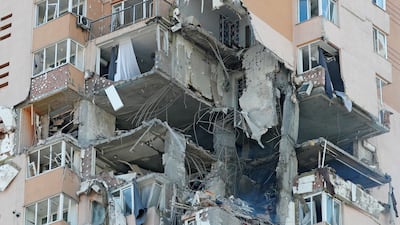
An apartment building damaged by shelling in Kiev. Reuters -
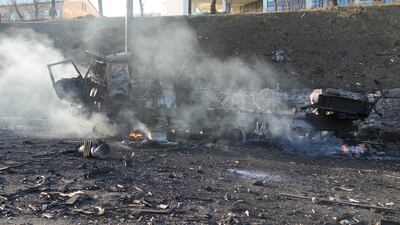
Debris of a burnt military truck on a street in Kiev. AP -
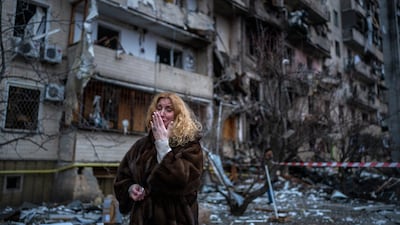
Natali Sevriukova stands next to her home after a rocket attack in Kiev, Ukraine. AP -
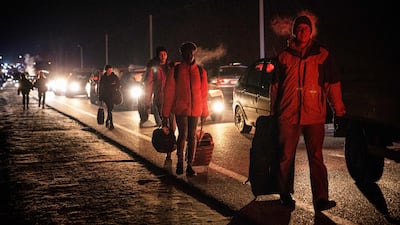
People on foot and in cars move to cross from Ukraine to Poland at the Korczowa-Krakovets border crossing following the Russian invasion of Ukraine. AFP -
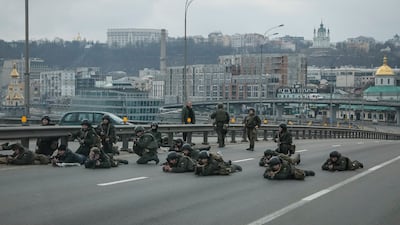
Servicemen from the Ukrainian National Guard in central Kiev. Reuters -
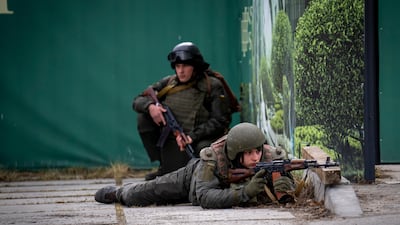
Ukrainian soldiers in downtown Kiev after Russian troops reached the outskirts of the capital. AP Photo -
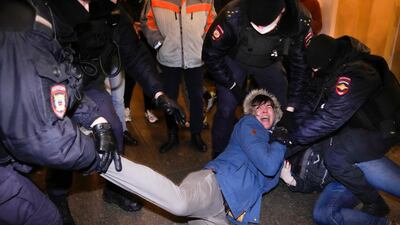
Police officers detain demonstrators in St. Petersburg, Russia. Hundreds of people gathered in Moscow and St. Petersburg on Thursday, protesting against Russia's attack on Ukraine. Similar protests took place in other Russian cities, and activists were also arrested. AP Photo -
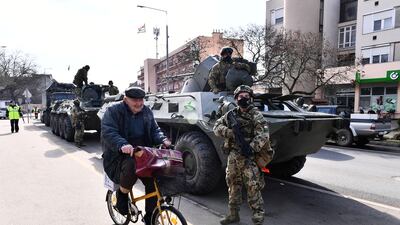
Hungarian troops in Vasarosnameny, close to the border with Ukraine, prepare to help refugees. AP Photo -
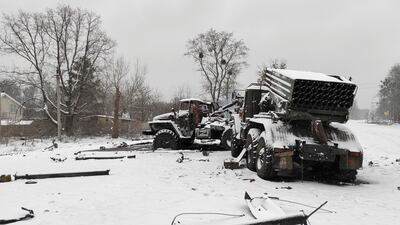
Wrecked Russian army rocket launchers in Kharkiv, Ukraine. Reuters -

The aftermath of a rocket attack in Kiev. AP Photo -
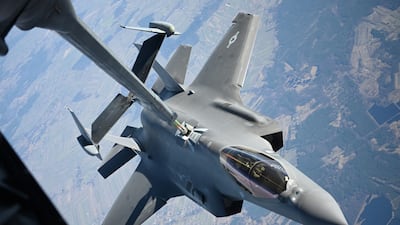
A US Air Force jet refuels over Poland. Reuters -
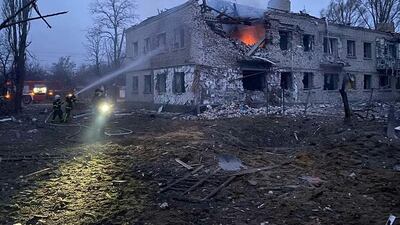
Devastation after shelling in Ukraine's Luhansk enclave. Reuters -
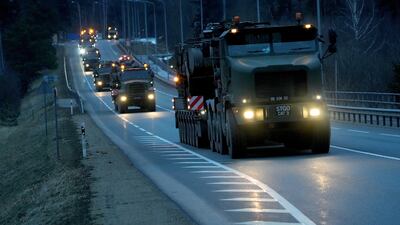
The Royal Welsh Battlegroup from the UK makes its way to Estonia. Reuters -
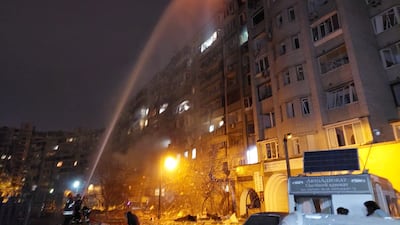
Firefighters tackle a blaze in a building in Kiev. AFP -

The wreckage of an unidentified aircraft in a residential area in Kiev. Reuters -
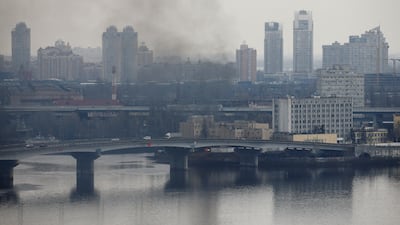
Smoke rises near the Ukrainian Defence Ministry in Kiev. Reuters -
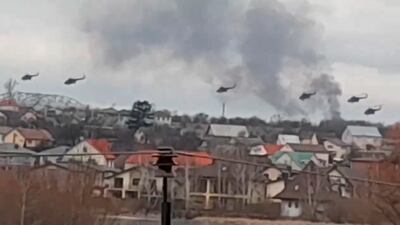
Russian military helicopters fly over the Ukrainian capital. AP -
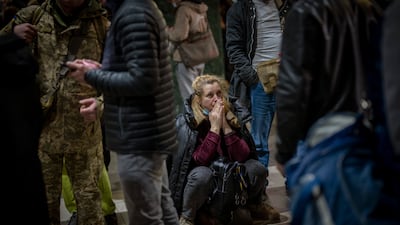
An anxious wait to board a train to leave Kiev as the attack loomed. AP Photo -
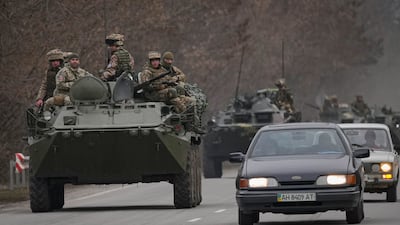
Ukrainian servicemen on tanks in the Donetsk region, eastern Ukraine. AP Photo -
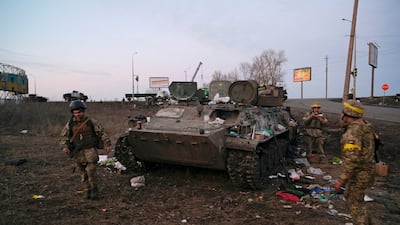
Ukraine troops said this destroyed armoured vehicle outside Kharkiv belonged to the Russian army. Reuters -
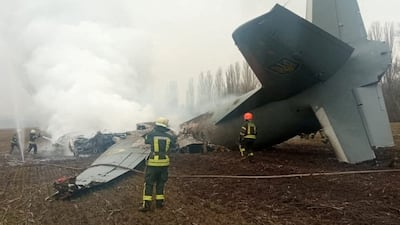
Rescuers at the crash site after a Ukraine armed forces Antonov aircraft was shot down in Kiev, according to the Ukrainian authorities. Reuters -
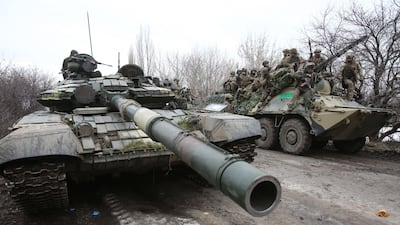
Ukrainian tanks that aim to repel an attack by the Russian military in the Luhansk enclave of Ukraine. AFP -

A Ukrainian State Border Guard Service base is ablaze after heavy shelling near Kiev. Reuters -
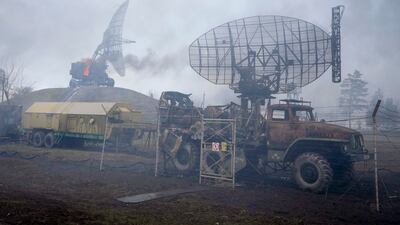
Damaged radar at a Ukrainian military plant outside Mariupol. Officials in Kiev say Russian troops have rolled into the country from the north, east and south. AP Photo -
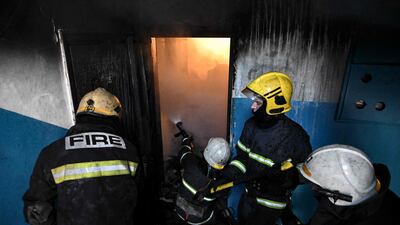
Firefighters attend a blaze after bombing in the eastern Ukrainian town of Chuguiv, as Russian armed forces appeared to be bombarding Ukraine from several directions. AFP -
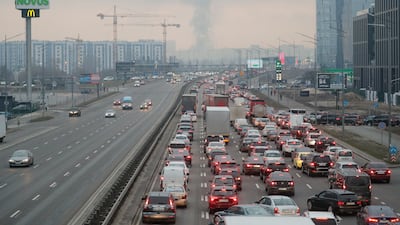
A traffic jam in Kiev, with many Ukrainians leaving their capital after Russian troops entered. EPA -
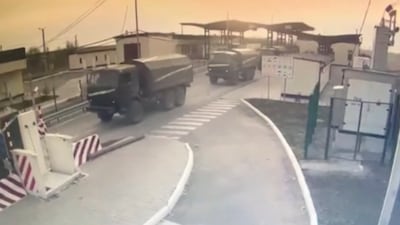
The Border Service of Ukraine released CCTV footage purporting to show Russian military vehicles passing a checkpoint to drive into Crimea. AP -
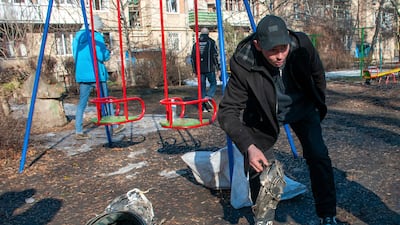
A man picks up fragments of military materiel on the street after an apparent Russian strike in Kharkiv, Ukraine. AP -
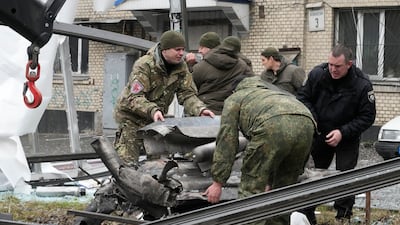
Workers load the debris of a rocket on to a lorry in the aftermath of Russian shelling in Kiev. AP -
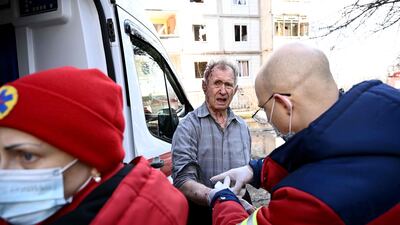
Emergency staff treat an injured man after bombing in Chuguiv. AFP -

An American woman in distress after crossing the border to flee the violence in Ukraine, in Medyka, Poland. Reuters -

People take shelter in a Kiev subway station, after Russian President Vladimir Putin authorised a military operation in eastern Ukraine. Reuters -
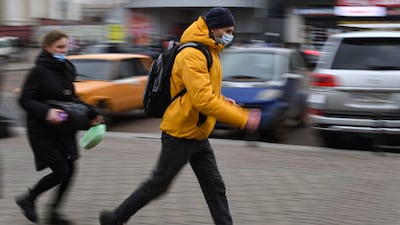
People in a rush near Kiev-Pasazhyrskyi railway station in the Ukrainian capital. AFP -
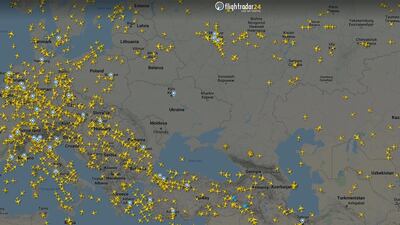
A Flightradar24.com screengrab shows a dearth of civilian aircraft in Ukrainian airspace after the Russian invasion. AP -
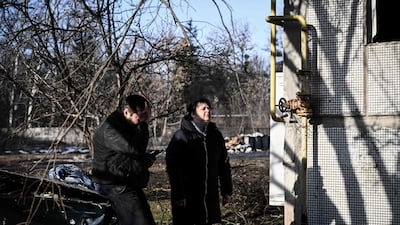
The aftermath of bombing in Chuguiv. AFP -

A Ukrainian rocket launcher vehicle prepares for action. Reuters -
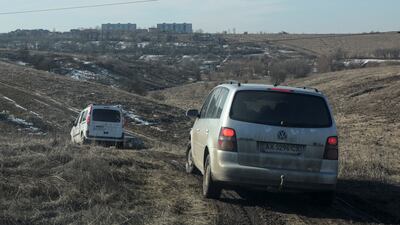
Cars are driven across a field to leave the city of Kharkiv. Reuters -
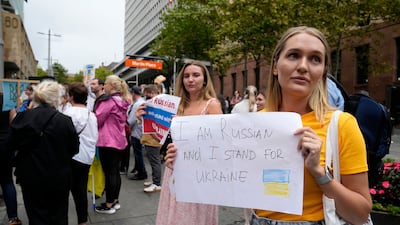
People chant, carry placards and wave Ukrainian flags as they gather in Sydney, to demonstrate against Russian attacks on its neighbour. AP -

People with many of their belongings packed take shelter in a Metro station in Kiev. AFP -
Emergency services at the scene of an explosion at a military unit building in Kiev. EPA -
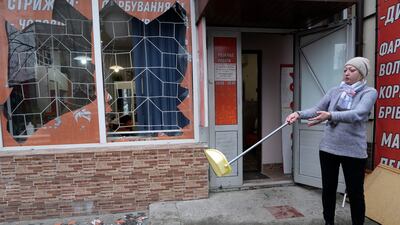
A Kiev resident sweeps up debris after Russian shelling. AP -
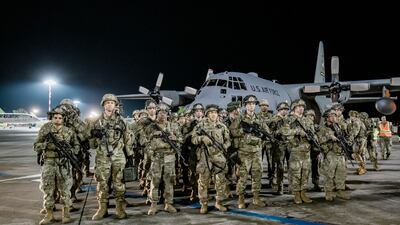
The first 40 soldiers of the 173rd US Army Airborne Brigade step off a military plane in Latvia. EPA -

More damage from shelling in Kiev. AP -
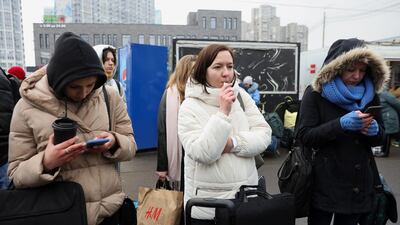
People wait at a bus station to travel to western parts of Ukraine, after violence in the east. Reuters -

A woman carries her cats in a quest for a safe haven. AFP -

Ukrainian President Volodymyr Zelenskyy holds an urgent government meeting in Kiev to discuss the next step. AFP -
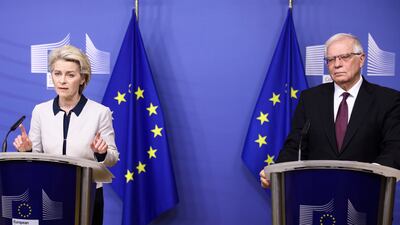
European Commission President Ursula von der Leyen and foreign policy chief Josep Borrell give a joint statement in Brussels, updating the press about the situation in Ukraine. EPA -
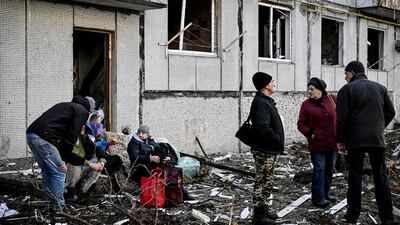
People survey the damage after bombing in Chuguiv. AFP -

A building on fire in Chuguiv. AFP


The S&P 500 gained 1.5 per cent on Thursday after falling 2 per cent the previous day while the Nasdaq Composite reversed a 2.6 per cent decline on Wednesday to gain 3.34 per cent yesterday.
Markets in Europe also rebounded on Friday from the sell-off the previous day. The FTSE 100 was about 1.3 per cent higher at 1.18pm UAE time while Frankfurt's Dax rose 0.4 per cent and the Paris CAC 40 index gained 0.7 per cent.
Russia' benchmark MOEX Index, which plunged more than 45 per cent during trading on Thursday and closed 33 per cent lower, making it the fifth-worst plunge in stock market history, was up 14 per cent at 2.16pm UAE time on Friday.
The rouble slumped to a record low of 90 against the dollar on Thursday, prompting the Russian central bank to intervene, before recovering to about 83 against the greenback.
EU finance ministers met on Friday in Paris and are assessing further sanctions against Russia that are aimed at its economy.
“The price ceiling for crude could rise further in the coming days if supplies from northern seaports or even Asia-bound crude barrels face imminent disruption,” said Rystad Energy’s senior oil market analyst Louise Dickson.
“The short-term stoking of oil prices will have a wide range of impacts on the oil market — significant disruptions or oil trade flows will be inevitable, as Europe currently sources 25 per cent of its oil imports from Russia, and its port terminals and infrastructure are not equipped for a sudden pivot from piped crude and oil products to port deliveries.”
A sharp rise in oil prices could nudge the Opec+ alliance of producers to shore up supplies as soon as next week, when they meet on March 2. They could also speed up nuclear talks with Iran, which would add supply to the market and be a pressure valve to inflationary market pressures, Ms Dickson said.
While a complete halt to gas exports from Russia is unlikely, gas that comes through Ukraine represents 8 per cent of Europe's supply needs and that is at risk, said Rystad Energy.
Russian gas, which reaps $300 million a day for Moscow, accounts for more than 30 per cent of Europe’s demand and alternatives cannot cover the shortfall — a key factor in the US and EU not hitting Russia's energy industry with sanctions.
Russia is among world’s largest producers of oil and accounts for about 11 per cent of global production.
In 2020, it produced about 10.2 million barrels a day of crude oil and natural gas condensate, placing it second after the US, with Saudi Arabia in third place, according to the 2021 BP Statistical Review of World Energy. It is also the second-largest producer of natural gas in the world.
On Friday, Russian energy company Gazprom said the transit of Russian gas through Ukraine was continuing as normal. Even before the recent turn of events, amid weeks of heightened tensions in February with Russia, the US imported 100,000 bpd of Russian crude oil this month, the highest daily average in eight months, according to the US Energy Information Administration and Texas-based consultancy Tellurian.
“Demand for oil and gas in the West is only rising, and a global energy crisis is likely to unfold,” Mr Rystad said.
Moody's Investors Service said it is factoring in two scenarios of WTI crude jumping to $100 a barrel and a second situation where it hits $150. In each scenario, increases in oil prices occur in the second quarter and remain there in the third quarter before stabilising.
If oil prices are $150 a barrel in the second and third quarters, a 0.2 percentage point will be shaved off the gross domestic product of the US, followed by a 1 percentage point in the third quarter and a 0.4 percentage point in the final three months of the year.
It will also boost US inflation, which reached an annual 7.1 per cent in December, marking the steepest rise in 40 years.
Inflation is also on the rise globally and a wider military conflict that is expected to impede the global economy's recovery “creates enormous uncertainty” for central banks as higher oil and gas prices will intensify the inflationary pressures they are already trying to fight with rate increases, Mr Erlam said.

