


Egyptian actress Karima Mokhtar is the subject of Monday's Google Doodle, visible across the Mena region.
The illustration, a painting of her with a television screen in the background, celebrates what would have been her 89th birthday.
Known as the “Mother of Egyptian Cinema”, Mokhtar often depicted maternal characters in her work, which spanned film, television and theatrical plays.
Who was Karima Mokhtar?
Mokhtar was born Ateiat Mohamed El Badry on January 16, 1934, in Sahel Selim, Egypt. She graduated with a bachelor's degree in theatre before pursuing her career on the silver screen.
Her career took off when she began presenting on Baba Sharou, a children's radio programme.
She stayed in radio for a while because her parents disapproved of film acting, but that changed with her marriage to actor and director Noor Al Demerdash, who supported her in her acting ambitions and helped her land her first breakthrough role.

Her first film role was in Thaman El Horeya (The Price of Freedom), but it was in Al Hafeed (The Grandson), in which she was a mother of seven children, that her reputation for playing maternal characters began.
She has close to 40 acting credits to her name on IMDb, the last of which were in 2014, but El Cinema, the Arab media database, has her listed with more than 200 credits, including stints on radio shows.
These also include films such as Amira Hobi Ana (Amira My Love) and Al Shaytan Ya'ez (The Devil Preaches), as well as TV series, including Yetraba Fi Ezo (May He Grow Up Prosperous), and — her first love — plays, such as El Eyal Kebret (The Kids Have Grown Up).
In 2007, Mokhtar won Best Actress at the Cairo Arab Media Festival.
'A legacy of strong and sympathetic performances'
Mokhtar died in January 2017, days before her 83rd birthday, after an undisclosed illness.
Among the hundreds who attended her funeral in Cairo were Helmi Namnam, Egypt’s culture minister at the time, and several prominent Egyptian TV personalities, including presenter Mahmoud Saad, actor Rashwan Tawfeeq and Poussy, widow of the late actor Noor El Sherif.
Mokhtar reportedly spoke with Ashraf Zaki, the head of Egypt’s Actors’ Syndicate, in her final days, saying she had conveyed the message she was destined to fulfil.
“Leaving behind a legacy of strong and sympathetic performances, Karima helped revolutionise the Egyptian film industry and paved the way for future generations of actresses,” reads Google's doodle description.
Google pays homage to the Mena region
The search engine often pays tribute to famous figures across the Mena region.
Already this month, Google paid homage to Egyptian writer Ihsan Abdel Quddous, one year after the first English translation of his popular novel I Do Not Sleep was released.
In December, it was the turn of Kuwaiti actor, singer, playwright and comedian Abdulhussain Abdulredha on what would have been his 83rd birthday.
For the UAE's 51st National Day, Google ran an animated doodle of the UAE's flag fluttering in the wind, visible on homepages across the nation.
Once users clicked on the animation, fireworks shot across the web page in green, white and black, the colours of the UAE flag, which Google explained “represent courage, prosperity, peace and strength of mind”.
A few days earlier, Emirati poet Ousha bint Khalifa Al Suwaidi, or Ousha the Poet, was honoured with a dedicated doodle.
One of the greatest Nabati poets of the 20th century, Al Suwaidi was recognised on November 28 in 2011 for her contributions to literature.
Scroll through the gallery below to see other regional Google Doodles over the past few years
-
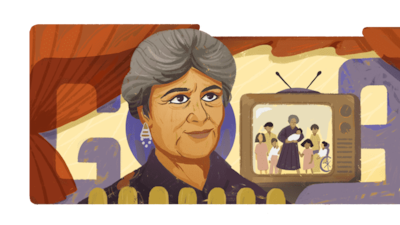
A Google Doodle celebrating Egyptian actress Karima Mokhtar's 89th birthday. All images: Google -
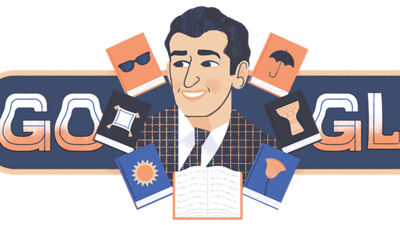
Egyptian writer Ihsan Abdel Quddous -
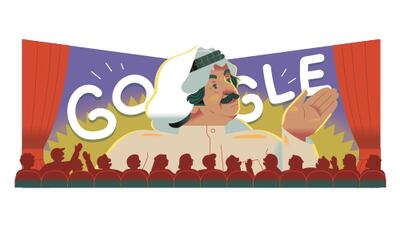
Kuwaiti actor and comedian Abdulhussain Abdulredha's 83rd birthday -
UAE National Day 2022 Google Doodle. -
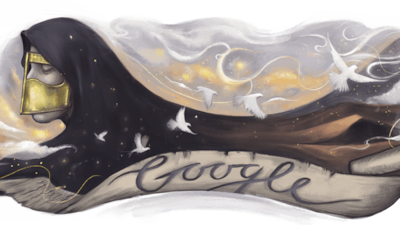
Ousha Al Suwaidi was a poetess from the United Arab Emirates. -
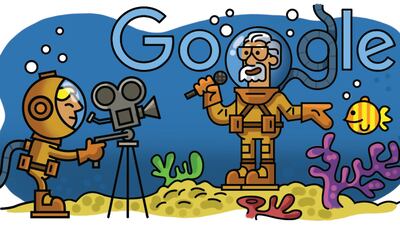
Prof. Hamed Abdel Fattah Goher was an Egyptian oceanographer, scientist and TV presenter. -
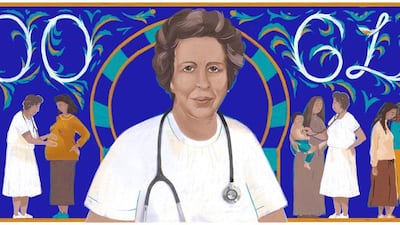
Tunisia's Tawhida Ben Cheikh was a pioneer in women's medicine. -
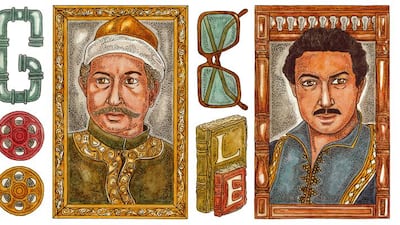
Google Doodle of Egyptian actor and director Nour El-Sherif honours him on what would have been his 75th birthday. -
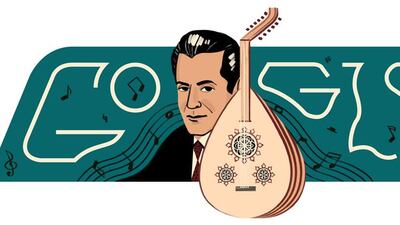
Google celebrates Syrian-Egyptian composer and actor Farid Al Atrash with a Google Doodle to mark what would have been his 110th birthday. -
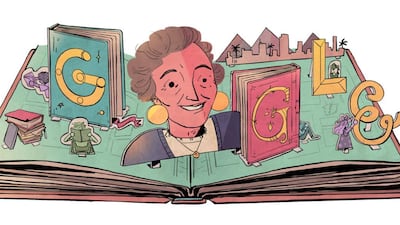
Children's author Notaila Rashed is honoured with a special Google Doodle to mark her 86th birthday. -

Egyptian actress, producer, writer and filmmaker Bahiga Hafez was born 112 years ago, on August 4. -
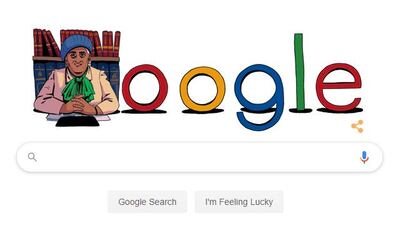
The Google Doodle for January 20, 2020, celebrates Mufidah Abdul Rahman, Egypt's first female lawyer. -
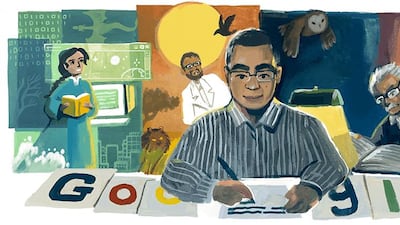
A Google Doodle on June 10, 2019, celebrates Egyptian author Ahmed Khaled Towfik. -
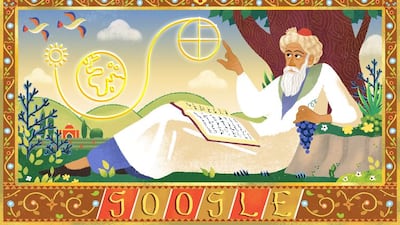
Google Doodle honours Persian mathematician, poet and astronomer Omar Khayyam on what would have been his 971st birthday. -
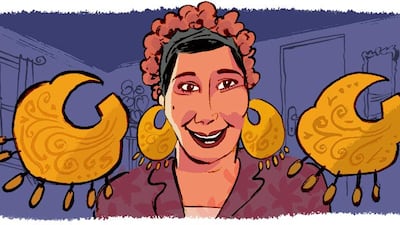
Mary Mounib was a renowned actress in the Egyptian cinema scene. Her 114th birthday is marked in a Google Doodle on February 11, 2019. -
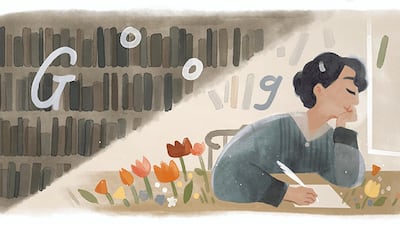
Egyptian poet Gamila El Alaily is honoured in a Google Doodle on March 20, 2019. -
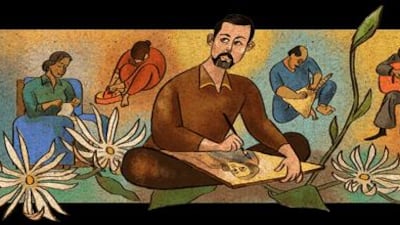
Syrian artist Louay Kayali is the subject of Google's doodle on January 20, 2019. -
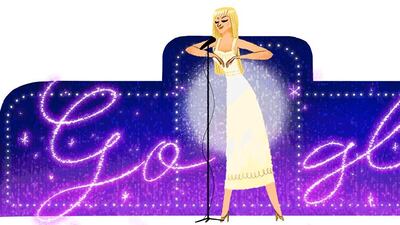
Egyptian-French singer and actress Dalida is honoured on her birthday by Google Doodle, on January 17, 2019. -
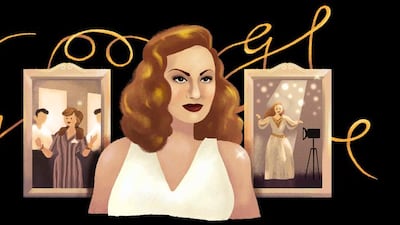
Egyptian actress Hind Rostom is celebrated in a Google Doodle on her 87th birthday, on November 12, 2018. -
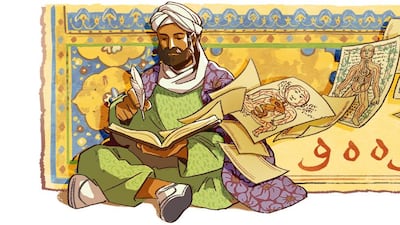
Ibn Sina, one of the greatest thinkers of Islam's golden age, is honoured on August 7, 2018. -
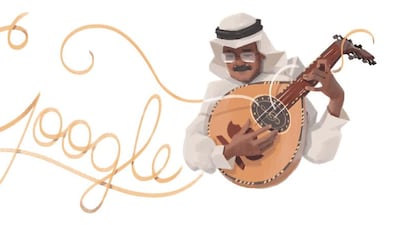
A Google Doodle honours Saudi musician Talal Maddah on what would have been his 78th birthday, on August 5, 2018. -
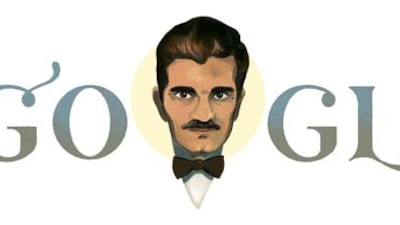
A Google Doodle gif marks Egyptian actor Omar Sharif's birthday on April 10, 2018. -
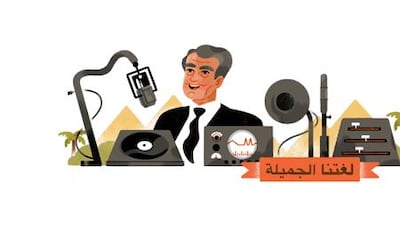
Egyptian poet Farouk Shousha is honoured by Google on what would have been his 82nd birthday, on January 9, 2018. -
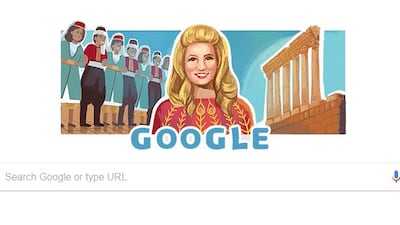
Google celebrates Lebanese singer Sabah's 90th birthday on November 10, 2017. -
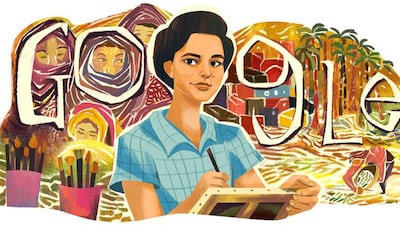
Egyptian painter Inji Aflatoun's Google Doodle pays homage to her style of bold brushstrokes. -
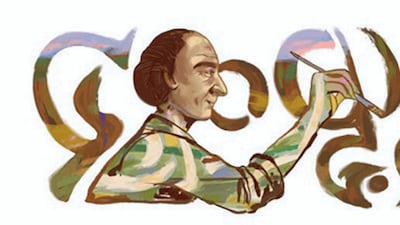
Google celebrates the birthday of Algerian painter Mohammed Khadda, who was born on March 14, 1930. -
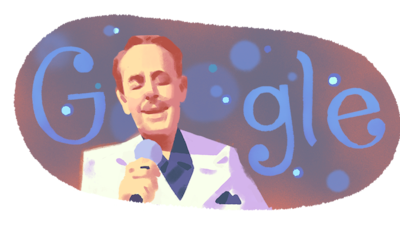
Lebanese singer-songwriter Melham Barakat is honoured by Google on his birthday.



