


Iranian author Marjane Satrapi will auction off the original artwork from her acclaimed graphic novel Persepolis, which depicts life growing up in Iran following the 1979 revolution.
The 44 black-and-white illustrated pages are estimated to sell for $4,500 to $6,700 each at the online auction orchestrated by Sotheby's London on Tuesday.
Satrapi’s novel, which tells the story of a young Iranian girl’s childhood during and after the revolution, received global acclaim and was turned into an Oscar-nominated film of the same name in 2007.
The author said she made the decision to sell the pages, which she described as “the monster in my cupboard”, six months ago when she could not have foreseen the protests sweeping across the country.

“I could never have imagined it would be in the context of the incredible scenes we’re seeing in Iran today,” she said in an interview with The Guardian.
“And the huge difference with my time is the boys were not with us. The beauty now is that there are boys and girls together. So this is what gives me hope as well as feeling extremely sad because of all this violence. There is nothing more beautiful and inspiring than their courage.”
Satrapi has not been back to Iran in the 22 years since her book was published, something she described as “a big price to pay”.
“What I have lived, the youth is living now,” she said. “My hope is that the situation will go towards something beautiful that is called freedom and democracy.”
“And the huge difference with my time is the boys were not with us. The beauty now is that there are boys and girls together. So this is what gives me hope as well as feeling extremely sad because of all this violence. There is nothing more beautiful and inspiring than their courage.”
Persepolis became an international bestseller when it was published in 2000, and challenged western misconceptions of Iranian history and society.
Sotheby’s contemporary and Middle Eastern art specialist Ashkan Baghestani said: “Persepolis is an undisputed masterpiece, a phenomenon that transcended borders and established comic books as a literary genre in its own right.
“Each of these pages is a tribute to the history of Iran, but also to every child that grew up in times of conflict.”
The sale will run until Tuesday, with the works being displayed in Sotheby’s London galleries from Friday.
Sotheby’s Dubai exhibition displays 16th-century manuscript valued at £6 million — in pictures
-
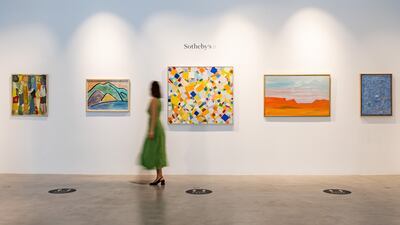
The latest exhibition from Sotheby’s Dubai is an expansive showcase of modern and contemporary masterworks, as well as pieces from the Middle East and India. All photos: Sotheby's Dubai -

The page from 'Shahnameh of Shah Tahmasp' illustrates one of the stories of Rustam, a mythological hero. -
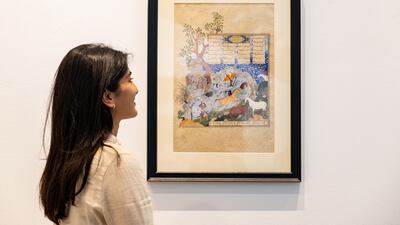
Illustrated folio from the 'Shahnameh of Shah Tahmasp'. -

The manuscript was commissioned by the emperor Shah Ismail, who sought to illustrate the 'Shahnameh', an epic poem which details the history of Persia’s rulers, written by Ferdowsi between 977 and 1010. -

A detail of Rustam from the 'Shahnameh of Shah Tahmasp'. -
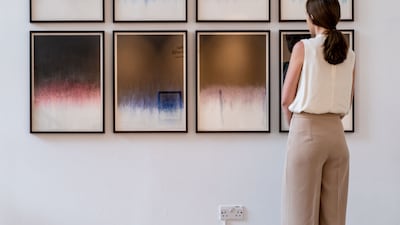
'Soundless' by Mohammed Kazem (2017), pastel on paper. -
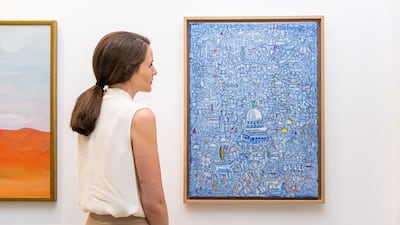
'Jerusalem' by Jamil Molaeb (2020) oil on canvas. -
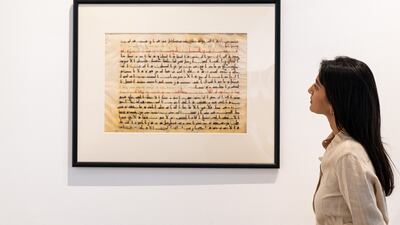
A monumental Quran leaf in Kufic script (750). -
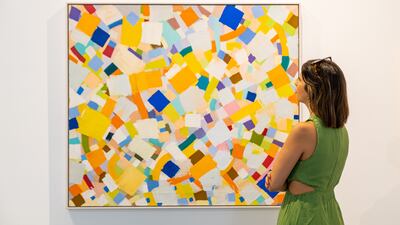
'Wind in the Sun on Earth in Early Winter' by Samia Halaby (1982).



