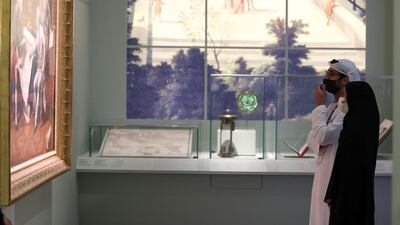
The Museum of the Future's programming will largely cover climate change, ecology, health, space travel and art. Photo: UAE Government Media Office

As the Museum of the Future opens, here are five other UAE museums to see


Alexandra Chaves
  • English
  • Arabic

The long-awaited Museum of the Future is set to open its doors on Tuesday. Organisers have kept details of the museum’s contents a mystery so far and its goals for its programming have remained largely broad, covering climate change, ecology, health, space travel and art.

Once it opens, the museum will not only join the list of the UAE’s growing list of attractions, but will also be part of its museum roster. With the new entry celebrating its opening, here are other UAE museums that are worth a visit:

Louvre Abu Dhabi

  • Versailles and the World is Louvre Abu Dhabi's first international exhibition of 2022. All photos: Khushnum Bhandari / The National
    Versailles and the World is Louvre Abu Dhabi's first international exhibition of 2022. All photos: Khushnum Bhandari / The National
  • The exhibition will be on at Louvre Abu Dhabi from January 26 to June 4.
    The exhibition will be on at Louvre Abu Dhabi from January 26 to June 4.
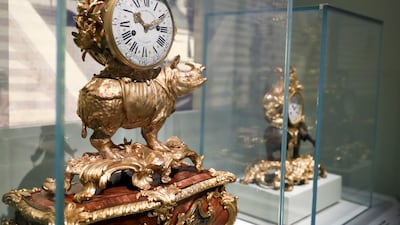
  • Rhinoceros musical clock, gilt bronze and wood veneer, with an enamelled dial, on display at the coming exhibition, Versailles and the World at Louvre Abu Dhabi.
    Rhinoceros musical clock, gilt bronze and wood veneer, with an enamelled dial, on display at the coming exhibition, Versailles and the World at Louvre Abu Dhabi.
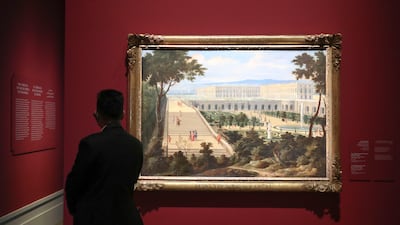
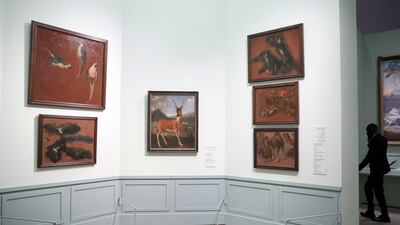
  • With more than 100 artworks, including paintings and decorative arts, the exhibition illustrates how Versailles became an important centre for diplomatic relations between the East and West.
    With more than 100 artworks, including paintings and decorative arts, the exhibition illustrates how Versailles became an important centre for diplomatic relations between the East and West.
  • Curator Helene Delalex explains about the seven-branch ostrich candlestick from the second Turkish Cabinet of the Count of Artois, brother of Louis XVI at the Chateau de Versailles.
    Curator Helene Delalex explains about the seven-branch ostrich candlestick from the second Turkish Cabinet of the Count of Artois, brother of Louis XVI at the Chateau de Versailles.
  • Curator Bertrand Rondo explains a board game that teaches geography, on display at the exhibition.
    Curator Bertrand Rondo explains a board game that teaches geography, on display at the exhibition.
  • Louvre Abu Dhabi's Versailles and the World tells the story of Versailles and the French royal court.
    Louvre Abu Dhabi's Versailles and the World tells the story of Versailles and the French royal court.
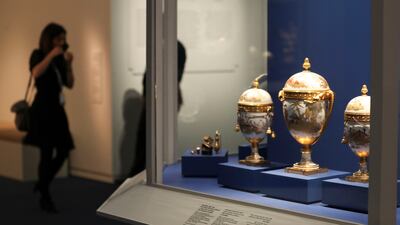
  • Set of three eggs vases with Chinese decoration, delivered to Queen Marie Antoinette at the Chateau de Versailles, displayed at the new Versailles and the World exhibition.
    Set of three eggs vases with Chinese decoration, delivered to Queen Marie Antoinette at the Chateau de Versailles, displayed at the new Versailles and the World exhibition.
  • Visitors explore the artwork and artefacts showcased at the new exhibition.
    Visitors explore the artwork and artefacts showcased at the new exhibition.
  • The exhibition immerses visitors in 17th-18th century Versailles and discover it as a unique meeting place for different civilisations.
    The exhibition immerses visitors in 17th-18th century Versailles and discover it as a unique meeting place for different civilisations.
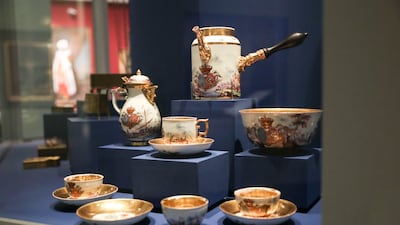
  • Tea and chocolate service of Marie Leszczynska: a large rinsing bowl, three tea bowls with saucer, two chocolate cups with saucers, chocolate pot and milk jug, made of hard-paste porcelain, blackened wood and gilt silver, on display at the exhibition.
    Tea and chocolate service of Marie Leszczynska: a large rinsing bowl, three tea bowls with saucer, two chocolate cups with saucers, chocolate pot and milk jug, made of hard-paste porcelain, blackened wood and gilt silver, on display at the exhibition.
  • A visitor in front of 'Grand Ananas' pineapple fabric, woodblock-printed cotton with brushwork, circa 1777, on display at the exhibition.
    A visitor in front of 'Grand Ananas' pineapple fabric, woodblock-printed cotton with brushwork, circa 1777, on display at the exhibition.
  • Bertrand Rondot and Helene Delalex, curators of Versailles and the World.
    Bertrand Rondot and Helene Delalex, curators of Versailles and the World.
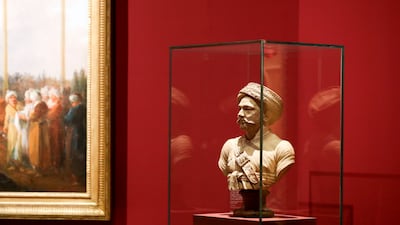
  • Bust of Mohammed Osman Khan, the ambassador of Tipu Sultan of Mysore in India, who came to Versailles in 1788 to negotiate a military treaty against England, on display at the exhibition.
    Bust of Mohammed Osman Khan, the ambassador of Tipu Sultan of Mysore in India, who came to Versailles in 1788 to negotiate a military treaty against England, on display at the exhibition.
  • Model of the Ambassadors' Staircase, Charles Arquinet, 1958, made of wood, board, plaster, plastic, on display at Versailles and the World.
    Model of the Ambassadors' Staircase, Charles Arquinet, 1958, made of wood, board, plaster, plastic, on display at Versailles and the World.
  • Mehmed Said Pasha, Ben of Rumelia, Ottoman ambassador at Versailles in February 1742, oil on canvas painting, displayed at Versailles and the World at Louvre Abu Dhabi.
    Mehmed Said Pasha, Ben of Rumelia, Ottoman ambassador at Versailles in February 1742, oil on canvas painting, displayed at Versailles and the World at Louvre Abu Dhabi.

Known for its stunning architecture, Louvre Abu Dhabi has worked on embedding itself into the local art community for the past four years. Not only does it have its own permanent collection of more than 630 artworks and artefacts, the museum has also been steadily expanding its educational resources, from creating a digital archive of its collection to launching a resource centre for students, researchers and professors in late 2021.

Louvre Abu Dhabi’s current exhibition, Versailles and the World, considers the historic palace in France as a starting point for explorations on the historical and artistic shifts of the 17th and 18th centuries.

More information is available at louvreabudhabi.ae

Jameel Arts Centre

Jameel Arts Centre at Jaddaf Waterfront. Photo: Dubai Media Office / Wam

What started as a project space in Alserkal Avenue has now become one of the key places in Dubai to see contemporary art. Privately funded by the Jameel family of Saudi Arabia, the Jameel Arts Centre sits on the edge of Al Jadaf and looks out onto the Dubai Creek.

An independent institution, the contemporary art museum has been responsible for bringing many international artists and their works to the UAE, as well as establishing a library and developing public programmes that create crucial dialogue within the local artistic community.

In March, the museum will present solo shows by Pakistani artist Fahd Burki and Russian artist Taus Makhacheva, in addition to site-specific commissions and a community learning programme on the region’s urban histories.

More information is available at jameelartscentre.org

Sharjah Art Museum

  • ‘Three Women and a Palm Tree’ (1947) by Baya. Collection of Ramzi and Saeda Dalloul Art Foundation. Courtesy Sharjah Art Museum
    ‘Three Women and a Palm Tree’ (1947) by Baya. Collection of Ramzi and Saeda Dalloul Art Foundation. Courtesy Sharjah Art Museum
  • ‘Young Women’ (1974) by Baya. Collection of Barbara Farahnick-Mathonet and Pierre-Yves Mathonet. Courtesy Sharjah Art Museum
    ‘Young Women’ (1974) by Baya. Collection of Barbara Farahnick-Mathonet and Pierre-Yves Mathonet. Courtesy Sharjah Art Museum
  • ‘Woman in Pink Dress’ (1945) by Baya. Collection of Barjeel Art Foundation. Courtesy Barjeel Art Foundation
    ‘Woman in Pink Dress’ (1945) by Baya. Collection of Barjeel Art Foundation. Courtesy Barjeel Art Foundation
  • A 1975 work by Baya. Courtesy Elmarsa Gallery
    A 1975 work by Baya. Courtesy Elmarsa Gallery
  • ‘Woman and Fantastical Character’ (1947) by Baya. Collection of Galerie Maeght. Courtesy Sharjah Art Museum
    ‘Woman and Fantastical Character’ (1947) by Baya. Collection of Galerie Maeght. Courtesy Sharjah Art Museum
  • ‘Two Women with Vase and Yellow Background’ (1997) by Baya. Collection of Ramzi and Saeda Dalloul Art Foundation. Courtesy Sharjah Art Museum
    ‘Two Women with Vase and Yellow Background’ (1997) by Baya. Collection of Ramzi and Saeda Dalloul Art Foundation. Courtesy Sharjah Art Museum
  • A work by Baya on display at Art Dubai in 2014. Pawan Singh / The National
    A work by Baya on display at Art Dubai in 2014. Pawan Singh / The National

Sharjah has no shortage of arts and culture organisations, from the Sharjah Art Foundation and the Sharjah Architecture Triennial to The Africa Institute. In addition to this, the Sharjah Museums Authority runs more than 15 museums in the emirate dedicated to the arts, heritage and entertainment.

Among its most prominent spaces is the Sharjah Art Museum, which was established in 1997. It houses works by significant modern and contemporary Arab artists as part of its permanent display, and it also has temporary exhibitions, including its upcoming major retrospective on Lebanese painter Aref El Rayess, which opens at the end of the month.

More information is available at sharjahmuseums.ae

Al Ain Palace Museum

The private Majlis of Sheikh Zayed are among the sights visitors can see at Al Ain Palace Museum. Photo: Al Ain Palace Museum

An important historical site for the UAE, Al Ain Palace was the home of Sheikh Zayed, Founding Father of the UAE. The ruler lived in the palace with his family until the late 1960s before moving to Abu Dhabi to become the emirate’s ruler.

Within the sprawling complex are a series of buildings, the oldest of which dates back to 1937 when the ruling family moved in. In 1998, the palace was converted into a museum and opened to the public in 2001. Inside its 37 rooms, visitors can glimpse at how the ruling family used to live with display of personal items and its interiors that have been maintained to look as they did when it was a royal residence.

More information is available at Visit Abu Dhabi's website

Etihad Museum

  • A pair of Sheikh Zayed’s sunglasses. Antonie Robertson / The National
    A pair of Sheikh Zayed’s sunglasses. Antonie Robertson / The National
  • An alarm clock that belonged to Sheikh Khalid bin Mohammed Al Qassimi of Sharjah. Antonie Robertson / The National
    An alarm clock that belonged to Sheikh Khalid bin Mohammed Al Qassimi of Sharjah. Antonie Robertson / The National
  • A copy of the original constitution signed by all seven rulers of the Emirates. Antonie Robertson / The National
    A copy of the original constitution signed by all seven rulers of the Emirates. Antonie Robertson / The National
  • Sheikh Ahmed bin Rashid Al Mualla of Umm Al Qaiwain’s dagger. Antonie Robertson / The National
    Sheikh Ahmed bin Rashid Al Mualla of Umm Al Qaiwain’s dagger. Antonie Robertson / The National
  • Sheikh Rashid bin Saeed’s glasses. Antonie Robertson / The National
    Sheikh Rashid bin Saeed’s glasses. Antonie Robertson / The National
  • The private office of the late Sheikh Rashid bin Saeed Al Maktoum, ruler of Dubai, inside the Guest Palace, where rulers met before the signing. Rym Ghazal / The National
    The private office of the late Sheikh Rashid bin Saeed Al Maktoum, ruler of Dubai, inside the Guest Palace, where rulers met before the signing. Rym Ghazal / The National
  • A gun belonging to Sheikh Saqr bin Mohammad Al Qassimi of Ras Al Khaimah. Antonie Robertson / The National
    A gun belonging to Sheikh Saqr bin Mohammad Al Qassimi of Ras Al Khaimah. Antonie Robertson / The National
  • An old-fashioned handgun and holster belonging to Sheikh Mohammed bin Hamad Al Sharqi of Fujairah. Antonie Robertson / The National
    An old-fashioned handgun and holster belonging to Sheikh Mohammed bin Hamad Al Sharqi of Fujairah. Antonie Robertson / The National
  • Inside the postal history room. On display is the first Sharjah stamps. Antonie Robertson / The National
    Inside the postal history room. On display is the first Sharjah stamps. Antonie Robertson / The National
  • Sheikh Rashid bin Humaid Al Nuaimi of Ajman’s ring. Antonie Robertson / The National
    Sheikh Rashid bin Humaid Al Nuaimi of Ajman’s ring. Antonie Robertson / The National

In terms of location, the Etihad Museum’s is quite historic. The uniquely shaped structure, with its delicately curved roof was designed by Canadian architects Moriyama and Teshima and is found on same grounds as the Union House, where the UAE constitution was signed in 1971.

Inside, the museum takes highlights from UAE history and tells the story of the country through interactive displays and pavilions. The museum’s timeline focuses on 1968 and 1974, and it also displays curious items and personal belongings from each of the seven rulers that established the UAE.

Currently, the museum is showcasing works from the Dubai Collection, an initiative between Art Dubai and Dubai Culture that seeks to promote art patronage in the country. The first exhibition by the Dubai Collection features artworks from the private collections of 11 collectors, including Sheikh Mohammed bin Rashid, Vice President and Ruler of Dubai.

More information is available on the museum's website

Trump v Khan

2016: Feud begins after Khan criticised Trump’s proposed Muslim travel ban to US

2017: Trump criticises Khan’s ‘no reason to be alarmed’ response to London Bridge terror attacks

2019: Trump calls Khan a “stone cold loser” before first state visit

2019: Trump tweets about “Khan’s Londonistan”, calling him “a national disgrace”

2022:  Khan’s office attributes rise in Islamophobic abuse against the major to hostility stoked during Trump’s presidency

July 2025 During a golfing trip to Scotland, Trump calls Khan “a nasty person”

Sept 2025 Trump blames Khan for London’s “stabbings and the dirt and the filth”.

Dec 2025 Trump suggests migrants got Khan elected, calls him a “horrible, vicious, disgusting mayor”

Tour de France Stage 16:

165km run from Le Puy-en-Velay to Romans-sur-Isère

Director: Laxman Utekar

Cast: Vicky Kaushal, Akshaye Khanna, Diana Penty, Vineet Kumar Singh, Rashmika Mandanna

Rating: 1/5

About Okadoc

Date started: Okadoc, 2018

Founder/CEO: Fodhil Benturquia

Based: Dubai, UAE

Sector: Healthcare

Size: (employees/revenue) 40 staff; undisclosed revenues recording “double-digit” monthly growth

Funding stage: Series B fundraising round to conclude in February

Investors: Undisclosed

RESULT

Manchester United 2 Burnley 2
Man United:
 Lingard (53', 90' 1)
Burnley: Barnes (3'), Defour (36')

Man of the Match: Jesse Lingard (Manchester United)

Ten tax points to be aware of in 2026

1. Domestic VAT refund amendments: request your refund within five years

If a business does not apply for the refund on time, they lose their credit.

2. E-invoicing in the UAE

Businesses should continue preparing for the implementation of e-invoicing in the UAE, with 2026 a preparation and transition period ahead of phased mandatory adoption. 

3. More tax audits

Tax authorities are increasingly using data already available across multiple filings to identify audit risks. 

4. More beneficial VAT and excise tax penalty regime

Tax disputes are expected to become more frequent and more structured, with clearer administrative objection and appeal processes. The UAE has adopted a new penalty regime for VAT and excise disputes, which now mirrors the penalty regime for corporate tax.

5. Greater emphasis on statutory audit

There is a greater need for the accuracy of financial statements. The International Financial Reporting Standards standards need to be strictly adhered to and, as a result, the quality of the audits will need to increase.

6. Further transfer pricing enforcement

Transfer pricing enforcement, which refers to the practice of establishing prices for internal transactions between related entities, is expected to broaden in scope. The UAE will shortly open the possibility to negotiate advance pricing agreements, or essentially rulings for transfer pricing purposes. 

7. Limited time periods for audits

Recent amendments also introduce a default five-year limitation period for tax audits and assessments, subject to specific statutory exceptions. While the standard audit and assessment period is five years, this may be extended to up to 15 years in cases involving fraud or tax evasion. 

8. Pillar 2 implementation 

Many multinational groups will begin to feel the practical effect of the Domestic Minimum Top-Up Tax (DMTT), the UAE's implementation of the OECD’s global minimum tax under Pillar 2. While the rules apply for financial years starting on or after January 1, 2025, it is 2026 that marks the transition to an operational phase.

9. Reduced compliance obligations for imported goods and services

Businesses that apply the reverse-charge mechanism for VAT purposes in the UAE may benefit from reduced compliance obligations. 

10. Substance and CbC reporting focus

Tax authorities are expected to continue strengthening the enforcement of economic substance and Country-by-Country (CbC) reporting frameworks. In the UAE, these regimes are increasingly being used as risk-assessment tools, providing tax authorities with a comprehensive view of multinational groups’ global footprints and enabling them to assess whether profits are aligned with real economic activity. 

Contributed by Thomas Vanhee and Hend Rashwan, Aurifer

EA Sports FC 26

Publisher: EA Sports

Consoles: PC, PlayStation 4/5, Xbox Series X/S

Rating: 3/5

No more lice

Defining head lice

Pediculus humanus capitis are tiny wingless insects that feed on blood from the human scalp. The adult head louse is up to 3mm long, has six legs, and is tan to greyish-white in colour. The female lives up to four weeks and, once mature, can lay up to 10 eggs per day. These tiny nits firmly attach to the base of the hair shaft, get incubated by body heat and hatch in eight days or so.

Identifying lice

Lice can be identified by itching or a tickling sensation of something moving within the hair. One can confirm that a person has lice by looking closely through the hair and scalp for nits, nymphs or lice. Head lice are most frequently located behind the ears and near the neckline.

Treating lice at home

Head lice must be treated as soon as they are spotted. Start by checking everyone in the family for them, then follow these steps. Remove and wash all clothing and bedding with hot water. Apply medicine according to the label instructions. If some live lice are still found eight to 12 hours after treatment, but are moving more slowly than before, do not re-treat. Comb dead and remaining live lice out of the hair using a fine-toothed comb.
After the initial treatment, check for, comb and remove nits and lice from hair every two to three days. Soak combs and brushes in hot water for 10 minutes.Vacuum the floor and furniture, particularly where the infested person sat or lay.

Courtesy Dr Vishal Rajmal Mehta, specialist paediatrics, RAK Hospital

Teaching your child to save

Pre-school (three - five years)

You can’t yet talk about investing or borrowing, but introduce a “classic” money bank and start putting gifts and allowances away. When the child wants a specific toy, have them save for it and help them track their progress.

Early childhood (six - eight years)

Replace the money bank with three jars labelled ‘saving’, ‘spending’ and ‘sharing’. Have the child divide their allowance into the three jars each week and explain their choices in splitting their pocket money. A guide could be 25 per cent saving, 50 per cent spending, 25 per cent for charity and gift-giving.

Middle childhood (nine - 11 years)

Open a bank savings account and help your child establish a budget and set a savings goal. Introduce the notion of ‘paying yourself first’ by putting away savings as soon as your allowance is paid.

Young teens (12 - 14 years)

Change your child’s allowance from weekly to monthly and help them pinpoint long-range goals such as a trip, so they can start longer-term saving and find new ways to increase their saving.

Teenage (15 - 18 years)

Discuss mutual expectations about university costs and identify what they can help fund and set goals. Don’t pay for everything, so they can experience the pride of contributing.

Young adulthood (19 - 22 years)

Discuss post-graduation plans and future life goals, quantify expenses such as first apartment, work wardrobe, holidays and help them continue to save towards these goals.

* JP Morgan Private Bank 

WWE TLC results

Asuka won the SmackDown Women's title in a TLC triple threat with Becky Lynch and Charlotte Flair

Dean Ambrose won the Intercontinental title against Seth Rollins

Daniel Bryan retained the WWE World Heavyweight Championship against AJ Styles

Ronda Rousey retained the Raw Women's Championship against Nia Jax

Rey Mysterio beat Randy Orton in a chairs match

Finn Balor defeated Drew McIntyre

Natalya beat Ruby Riott in a tables match

Braun Strowman beat Baron Corbin in a TLC match

Sheamus and Cesaro retained the SmackDown Tag Titles against The Usos and New Day

R-Truth and Carmella won the Mixed Match Challenge by beating Jinder Mahal and Alicia Fox

Updated: February 22, 2022, 6:47 AM