

Does inshallah serve as a polite Arabic form of “not possible”? And is habibi an appropriate term of friendly affection?
The beauty of the Arabic language is that it is so dynamic it can shapeshift in meaning across time, region and setting. A casual term may carry a deeper spiritual meaning, while other words can express respect, or be affectionate or even menacing – all depending on how they are said.
For non-Arabic speakers, this may seem like a minefield. In reality, it often follows common sense principles: read the room, know your audience and be sincere in your intentions.
Here are seven Arabic words that are often misunderstood.
1. Inshallah
Many of us have been there: you ask a question, get an “inshallah” in reply and feel your heart sink. The problem isn’t the phrase itself, but its frequent misuse.
Literally meaning “if God wills”, inshallah is not a polite deflection. Applied properly, it’s a genuine commitment to the matter at hand, with the recognition that life does not always follow human plans. Each time it’s said, it is meant to affirm humility in the larger scheme of things.
Because of that weightage, using inshallah casually or without sincerity can cause offence. If you intend to do something, say inshallah and give it your best effort – and if it doesn’t work out, the phrase is balm for the disappointment. But if you’re unsure about committing, best to be clear about it and don’t say inshallah at all.
2. Mashallah
Translated as “what God has willed”, mashallah is a form of praise as well as protection against envy. The phrase rests on a core Islamic principle that all fortunes – even those seemingly withheld – are a blessing.
When someone tells you about a new job or their children’s success, a sincere mashallah is apt. Used regularly, it can also build a habit of empathy and gratitude for the good you encounter each day.
A caveat: don’t use it to crow about your own achievements. You can share good news and speak of being blessed, but mashallah is reserved for recognising the accomplishments of others.
3. Wallah
Meaning “by God”, the phrase is originally meant as an oath. In everyday conversation, however, its role has been often reduced to a dramatic flourish as part of a hearty exchange. For that reason, it is best kept for personal settings rather than professional ones, and only used when you are absolutely certain of what you are saying so that it carries weight.
Used carelessly, it not only weakens the meaning of word itself, but can also leave an impression of untrustworthiness that may be hard to shake off.
4. Khalas
Sometimes in Arabic, it’s not about what you are saying but how you deliver it. A neutral tone and khalas, meaning “finished”, can be a polite settlement to a matter or exchange. Uttered with venom or as part of a command, it can signal you are asking a person to stop immediately or to remain silent.
Therefore, be wary of its usage in intense conversation and also who you say it to.
5. Haram
This dynamic word is used as a form of sympathy or to express stark judgment. In Islamic law, haram is something that is forbidden in keeping with the faith. In daily conversation, particularly in the Levant, it can mean “poor thing” or “that’s not right”, to empathise or show compassion for the unfortunate.
So it’s best to read the room when using it, particularly in religious discussions where haram takes on an uncompromising stance.
6. Yallah

This versatile word is often associated with urgency. It can be a clarion call for action – “yallah, we’re late” – or a friendly invitation – “yallah, try the kunafa”. Depending on delivery, the word can either hurry along or warmly encourage someone.
Because it is easy to pronounce, non-Arabic speakers often misuse it widely and risk causing offence when none is intended. Therefore, use it in informal settings with friends – and avoid it in professional settings.
7. Habibi / habibti
One of the first Arabic words many may come across, habibi (male) and habibti (female) both mean “darling”, and can be used with friends and close colleagues. But don’t drop it too casually. Familiarity doesn’t necessarily mean intimacy, and there is still a code of respect to follow. Don’t call your manager or a professional acquaintance habibi or habibti unless you are certain of the quality of your relationship.
-

The Arabic word for sign is aya. All photos: The National -

The Arabic word for cat is qita -

Laban is the Arabic word for milk -

Mosa, or Moses in English, is mentioned 136 times in the Quran -

The Arabic word for ownership is tamalouk -

The Arabic word for mint is ne’ena’a -

Shuback is the Arabic word for window -
Hilal is Arabic for crescent -

Musafir, the Arabic word for traveller, is often used in music and poetry, evoking a sense of longing and passion -

Raqaba, the Arabic word for neck, can also denote caution and scrutiny -
Ithin, the Arabic word for permission, has many bureaucratic uses -
The Arabic word for chair is kursee -

Faten is Arabic name that has many spiritual and poetic meanings -
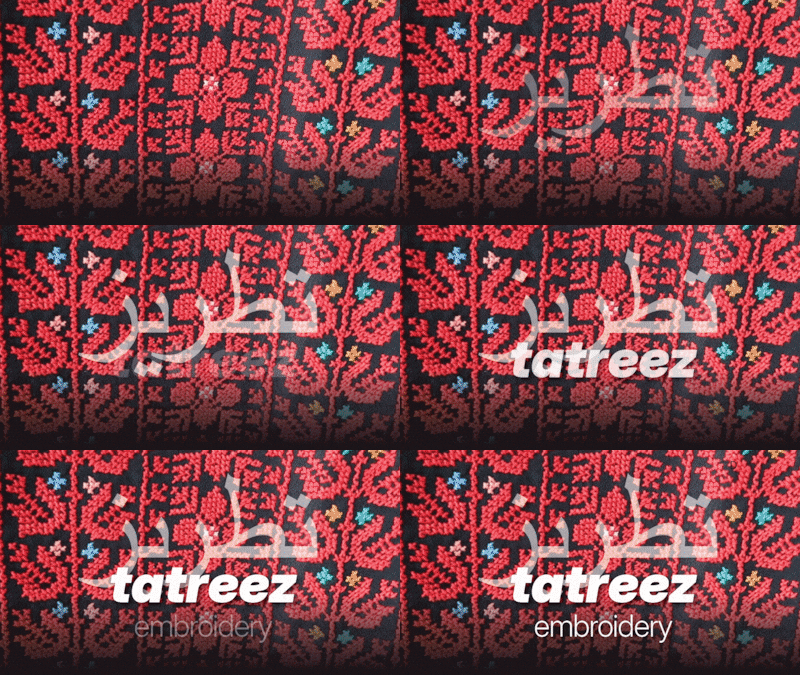
The Arabic word for embroidery is tatreez -
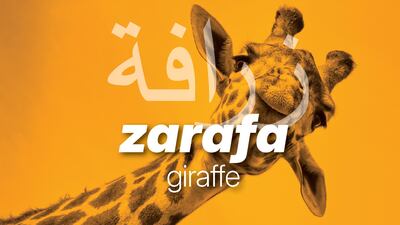
Zarafa is Arabic for giraffe -

The Arabic word for dignity, honour and respect is izza -

Hewi is the Emirati word for front garden -

Lahja is the Arabic word for dialect -

Muratabat is often translated as refreshments -

Handasa is the Arabic word for engineering -

The Arabic word for octopus is akhtaboot -

The Arabic word for mightiness is jabarut -

The Arabic word kibriyaa, often seen in Quranic verses, speaks to might and humility -

Junoon is the Arabic word for madness and obsession -

Adheem is commonly translated as great, magnificent or mighty -

Tanamor is the Arabic word for bullying -

The Arabic word for forgetfulness and oblivion is alnisyan -

'Yallah', the Arbic word for 'let's go', is an expression of urgency, encouragement or even impatience. The National -
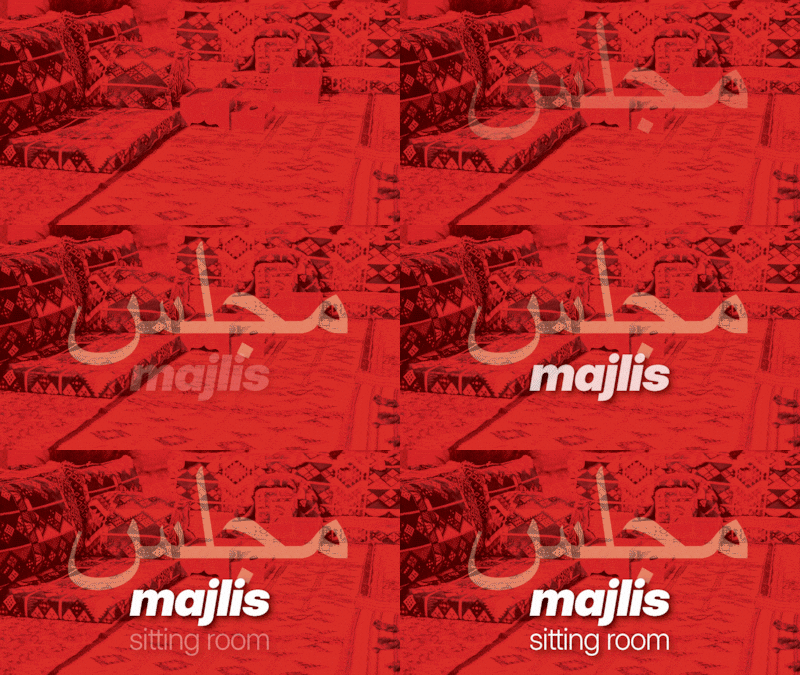
The Arabic word majlis, rooted in Bedouin tradition, refers to a space for hospitality and dialogue -

Falaj is Arabic for water channel -

Ne'meh is Arabic for blessing -

The Arabic word sumud means resilience and steadfastness -

The Arabic word for mountain is jabal -
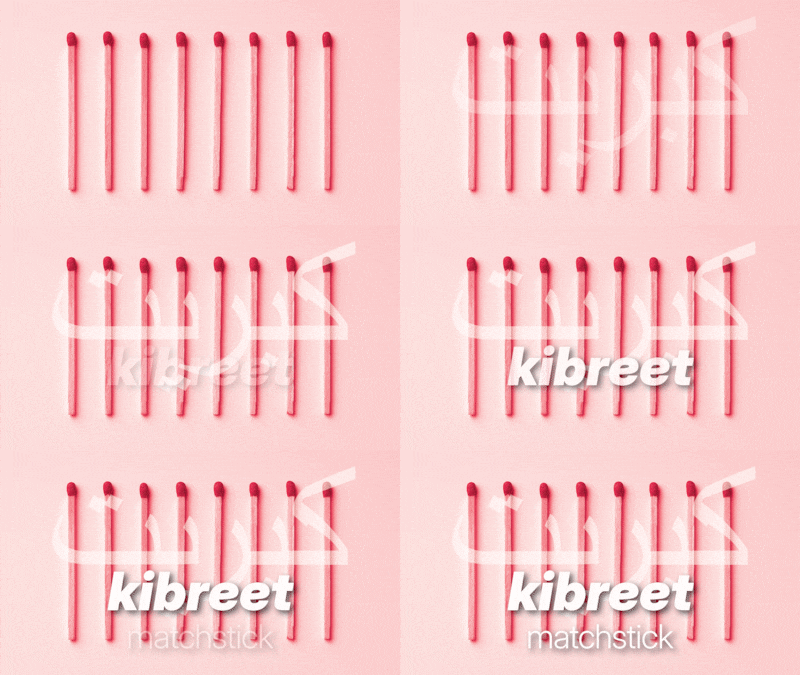
Kibreet is Arabic for matchstick -

Sahaba means cloud in Arabic -

Qilada is the Arabic word for necklace



