


The English author Charles Dickens is attributed to have said: “What greater gift than the love of a cat.”
Dickens isn’t the only person of note to have been a great cat lover. Around the world, cats have become much-loved household pets, and have a rich ancient connection to the Middle East.
This week’s Arabic word of the week is qita, which means cat. To be specific, qita refers to a female cat in classic Arabic, while qit is the male version. However, given the fact that when one first sees a cat it’s gender isn't obvious, qita is colloquially used interchangeably. Qita is also used to reference a kitten and the plural of qita is qittat.
The exact origin of the word is not clear, with many linguists proposing various theories on its sources and how it came into the Arabic language.
In Arabic, it’s believed that qita comes from the verb qat, which means to slice, shave or sculpt something. While there is no direct linguistic connection between the this origin and the word qita, one can assume that it is connected to the cat’s ability to scratch and claw at things.
There are other linguistic theories about the origin of the word, including that it may have come from the Latin word cattusl, or derived from the Egyptian Coptic word, sau. Or, potentially, the Nubian word kaddiska. This variation of potential roots makes sense, given the variety of colloquial words used for qita in Arabic.
There is also another word for qita in classic Arabic – hirr means a male cat, hirra is a female cat and hurair refers to a kitten, whether male or female, or huraira for a female kitten.
Cats have been an active part in the history of the Arab world for centuries, even before the spread of Islam in the region.
-
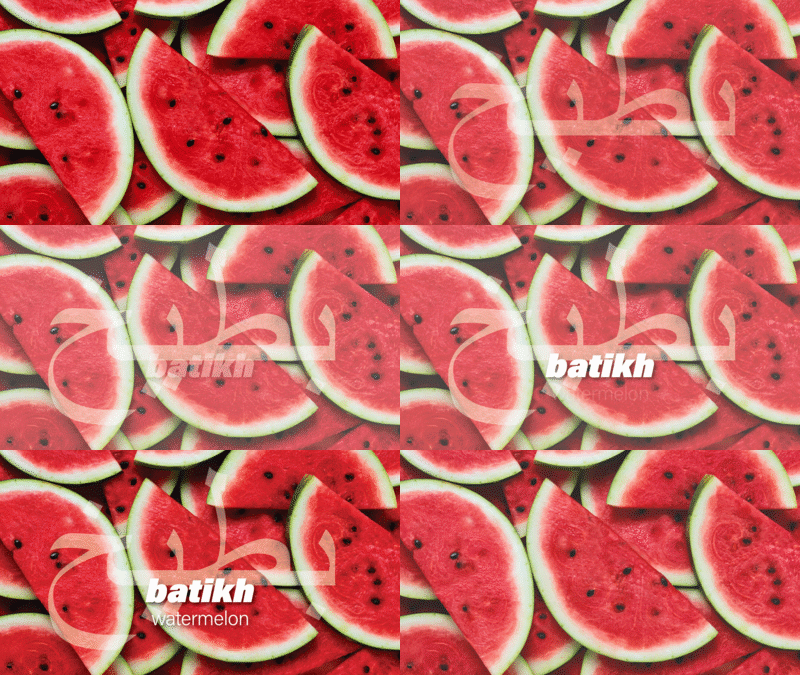
The Arabic word for watermelon, batikh, has become a symbol of Palestine. All photos: The National -

The Arabic word for union, etihad, is intrinsically connected to the UAE -

The Arabic for water, ma'a, is a universal symbol for rebirth -

The Arabic for echo, sada, is a literary device in poetry -

Aasal, the Arabic word for honey can also be used in a complimentary manner -

Jisim, the Arabic word for body extends across chemistry, medicine and aphorisms -

Jawab, the Arabic for answer resonates with knowledge -

Fikir is the Arabic word for think or to think -
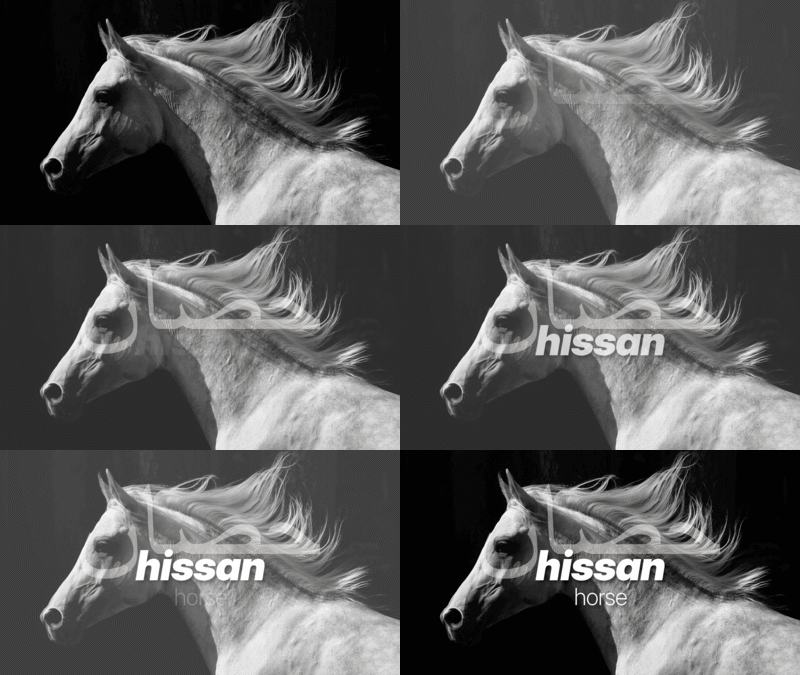
The Arabic word for hissan or horse can have more than one origin -

The Arabic word shaghaf or passion refers to intense love -
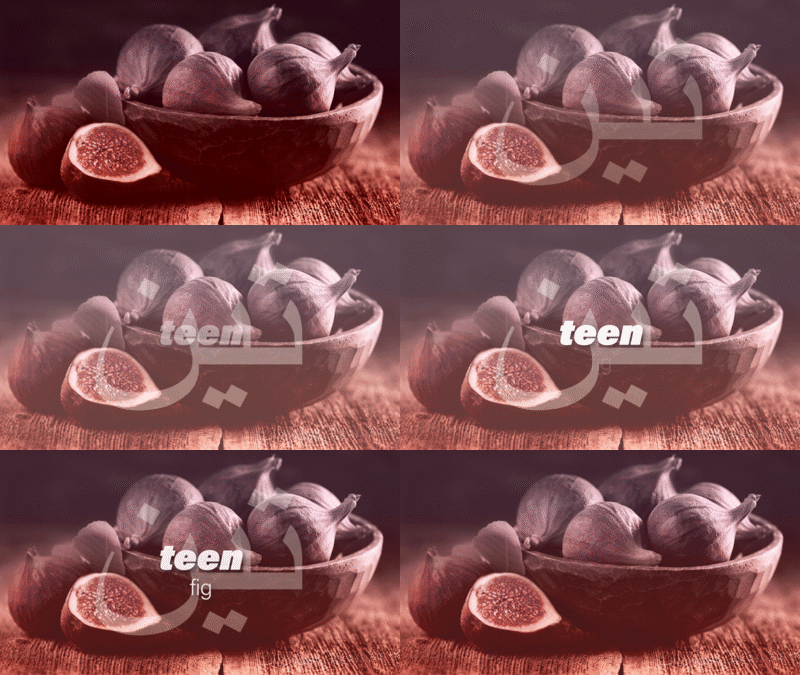
The Arabic word teen or onion doesn't have a clear Arabic source -

The Arabic word saraha means honesty -
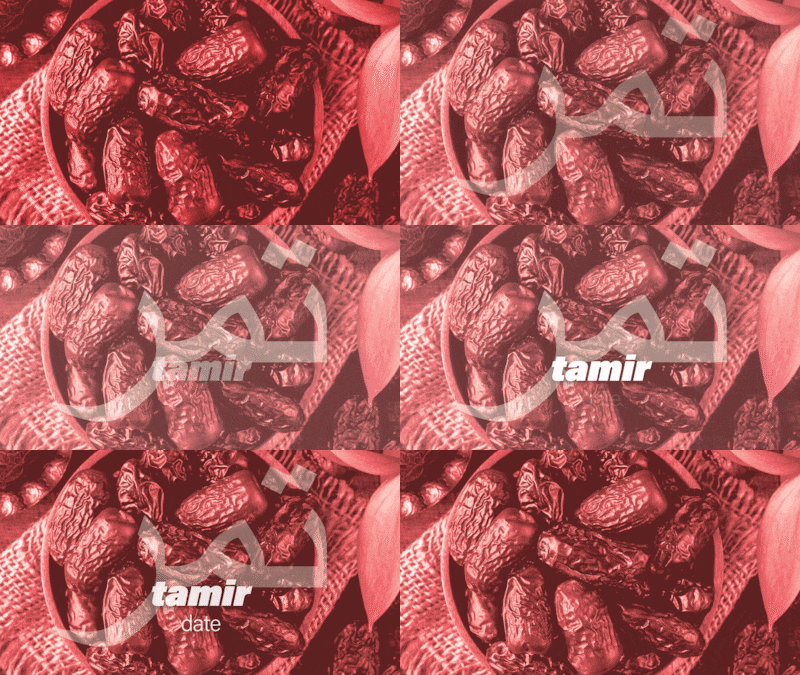
Tamir, the Arabic word for date is a fruit that has over 400 variations -

The Arabic word for tongue, lisan, is connected to the idea of truth -

The Arabic word for olive, zaytoon, is also the word for olive tree -

The Arabic word for sign, alama, has several meanings


Qita appears in many hieroglyphs and tomb paintings from ancient Egypt. They were revered and praised for having various symbolic and practical functions, such as representing divine goddesses on earth or being seen as protectors.
The qita has also played a crucial role in controlling rodent populations in cities such as Baghdad and Cairo, while Islamic scholars appreciated cats for protecting important books from mice and rodents.
In classical Arabic poetry and literature, qita often appear as metaphors for beauty, mystery and independence. In The Thousand and One Nights, cats are shown as cunning, but loyal companions, playing an important role in the narrative’s plot. While in poetry, cats have been praised for their nocturnal nature and their general elegance.

