


In his poem Our Death is Our Wedding with Eternity, Rumi writes: “The sunlight splits when entering the windows of the house. This multiplicity exists in the cluster of grapes; It is not in the juice made from the grapes.”
Here, the 13th-century poet uses the fruit to reflect ideas of unity, diversity and the nature of existence. He illustrates that while individual experiences may vary, as individualism exists in a bunch of grapes, there is an essence that connects them all.
The latest Arabic word of the week, inaab, which means grapes, is a fruit that has many symbolic meanings and cultural references. In the Arab world in particular, it is associated with the idea of sweetness. Formed from the three Arabic letters, ain, noon and bah, the word inaab is a noun that means a bunch of grapes. It’s derived from the verb, anaabaa, which refers to the action or process of the grape ripening in its tree.
-
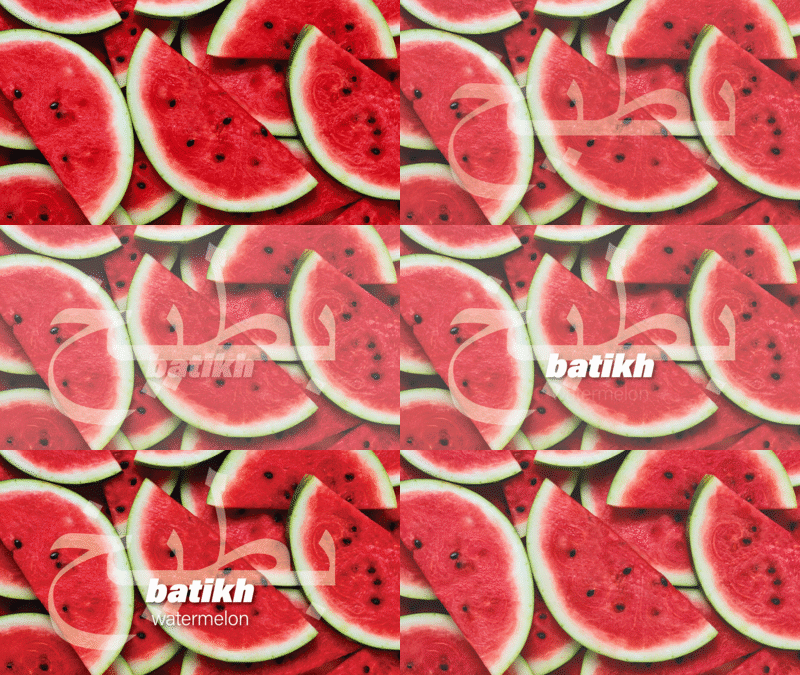
The Arabic word for watermelon, batikh, has become a symbol of Palestine. All photos: The National -

The Arabic word for union, etihad, is intrinsically connected to the UAE -

The Arabic for water, ma'a, is a universal symbol for rebirth -

The Arabic for echo, sada, is a literary device in poetry -

Aasal, the Arabic word for honey can also be used in a complimentary manner -

Jisim, the Arabic word for body extends across chemistry, medicine and aphorisms -

Jawab, the Arabic for answer resonates with knowledge -

Fikir is the Arabic word for think or to think -

The Arabic word for hissan or horse can have more than one origin -

The Arabic word shaghaf or passion refers to intense love -
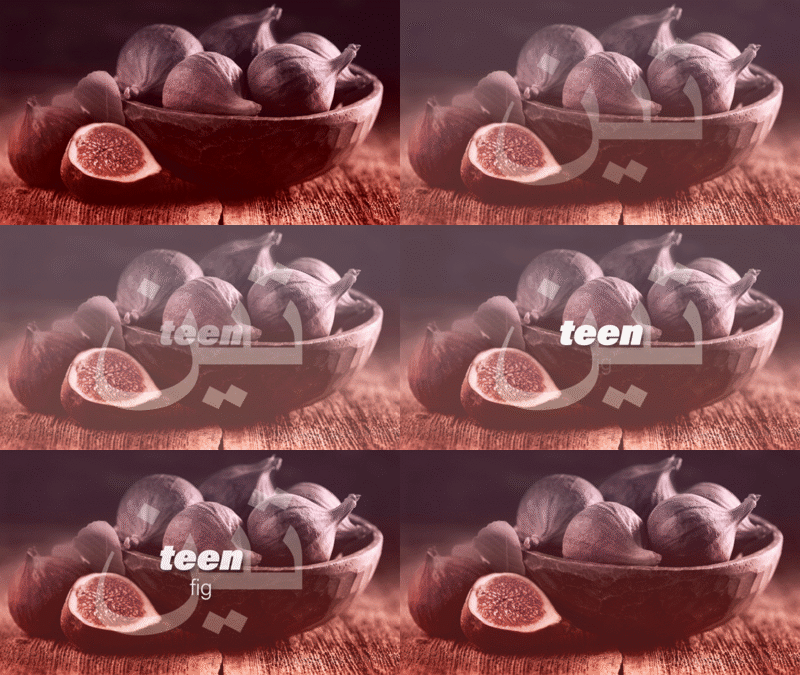
The Arabic word teen or onion doesn't have a clear Arabic source -

The Arabic word saraha means honesty -
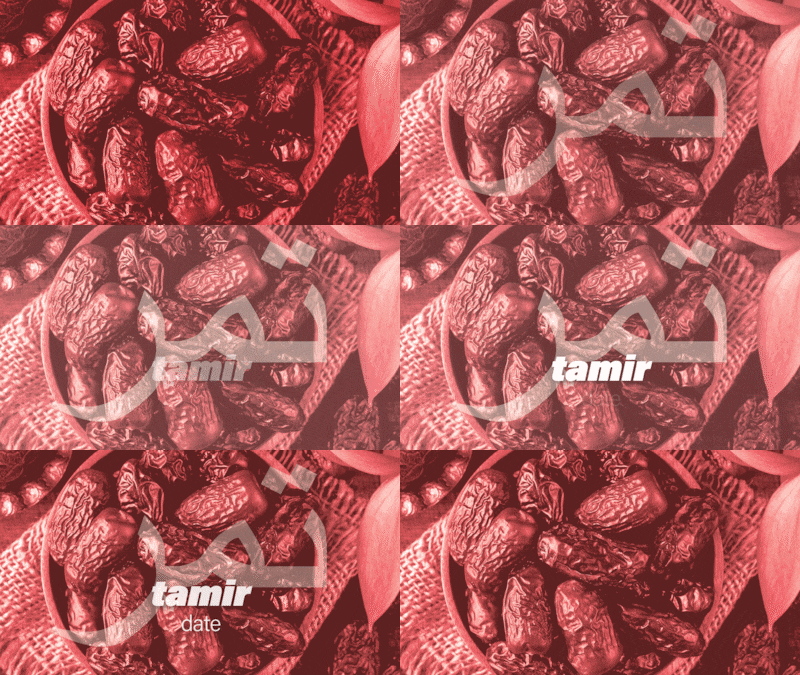
Tamir, the Arabic word for date is a fruit that has over 400 variations -

The Arabic word for tongue, lisan, is connected to the idea of truth -
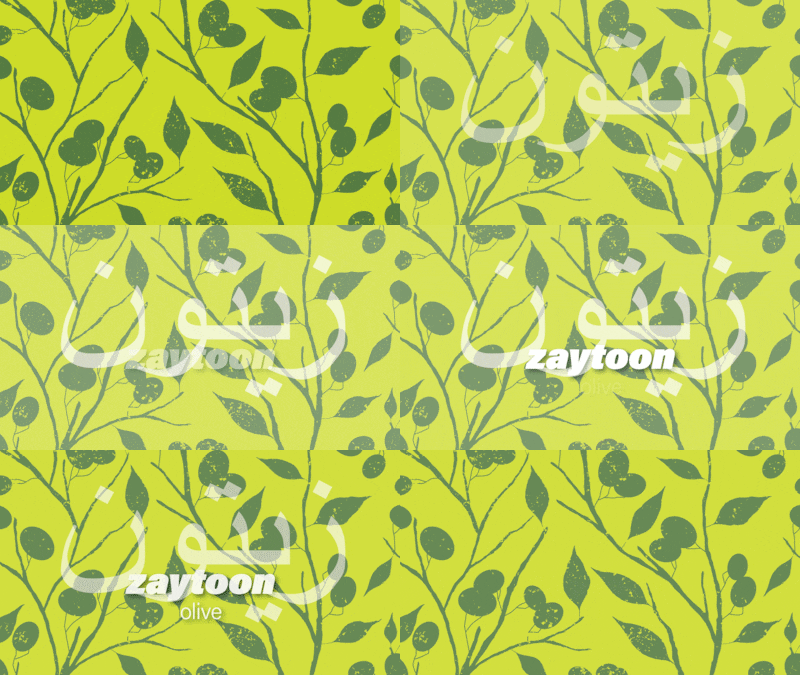
The Arabic word for olive, zaytoon, is also the word for olive tree -

The Arabic word for sign, alama, has several meanings


One singular grape is called inaba, a bunch is inaab and aanaab is the plural of bunches of grapes, used when referencing different types of grapes, grapes laid out for sale or grapes in a tree. The grape tree in Arabic is called karam and has no linguistic connection with the word inaab. It’s a hanging tree that isn’t seasonal, lives for a long time and produces small fruit that is often sweet and juicy and can be eaten or turned into juice.
Inaab comes in various sizes and colours such as green, purple or red and can have seeds or be seedless. As a juice, if they are fermented they produce wine. And as a fruit, if dried they become either sultanas or raisins depending on the grape. Inaab have been cultivated in the Middle East for thousands of years from ancient Egypt to Iran. In fact, grapes are very much part of many Middle Eastern dishes across the region.
One of the most popular dishes is warak anab or stuffed grape leaves. Varying across different parts of the Arab world, the dish usually includes a mixture of rice and meat wrapped in grape leaves. Also, raisins and sultanas have been used as part of many rice-based dishes across the region, such as the biryani.
In the Arab world, grapes are associated with sweetness and celebration. The Arabic word aannib, which comes from the same root letters of inaab, refers to someone who is so sweet to the point of flirtation. Inaab also has a history in classical Arabic poetry, particularly within the theme of bacchic poetry, which celebrates abundance and festivities. The famous Sufi Arab poet Ibn Farid used the grape motif to explore themes of love, intoxication and beauty in his works to evoke connections tied to memory and romance.
Inaab is also one of only five fruits mentioned in the Quran, along with tamir (dates), teen (figs), zaytoon (olives), ruman (pomegranate) and mooz (banana). Mentioned 11 times in different passages, inaab is often used to highlight the significance of the fruit as a gift from God, their role in the natural world and as a metaphor for divine blessings.

