


Ukrainian Foreign Minister Dmytro Kuleba said on Friday that Kyiv’s proposal remains the only viable path towards achieving enduring peace between Russia and Ukraine.
“No nation in the world wants peace more than Ukraine; our country suffers the most,” Mr Kuleba told the 193 members of the UN General Assembly on the anniversary of Russia’s invasion.
“Simply putting the war on hold and hoping that the aggressor will be merciful enough to eventually choose peace is not a realistic plan,” he noted.
President Volodymyr Zelenskyy’s 10-point peace plan is “the only serious peace proposal on the table,” he added.
The Ukrainian diplomat who was seeking to rally support for Mr Zelenskyy' plan, said that, in less than a year, the number of countries and international organisations taking part in Ukraine’s peace formula meetings had risen from 15 to 82.
The plan calls for expelling Russian forces, establishing a special tribunal to prosecute Russian war crimes and building a European-Atlantic security architecture with guarantees for Ukraine.
Switzerland's Foreign Minister Ignazio Cassis called on the UN General Assembly to work for peace and not to “give in to pessimism”.
He announced that Switzerland is planning to organise a high-level Ukraine peace conference "by the summer" at Kyiv's request and "would therefore like to take this opportunity to invite all nations ... to work together towards our common goal".
The summit aims to follow on the four previous national security-level gatherings in Copenhagen, Jeddah, Malta and Davos.
Mr Kuleba said countries now saying Ukraine should negotiate with Russia and end the war are either “ill-informed” or didn't follow events after 2014, when Russia seized Crimea and backed an armed rebellion in eastern Ukraine. The two countries, he said, held approximately 200 rounds of negotiations and made 20 cease-fire agreements.
Two years of the Russia-Ukraine war – in pictures
-
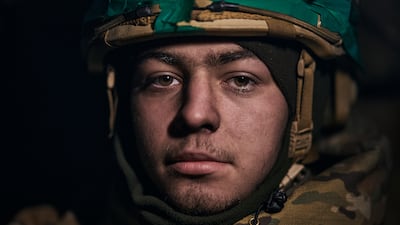
A soldier of the Ukrainian National Guard holds his position in the Serebryan Forest, in temperatures of -15°C in January 2024, in Kreminna, Donetsk Oblast. Getty Images -
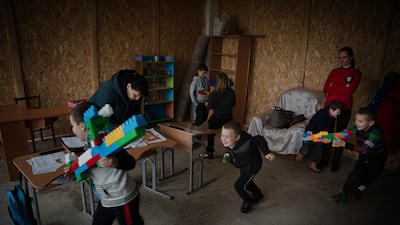
Classmates play with rifles made from Lego blocks after school, in Vysokopillya, December 2023. Getty Images -
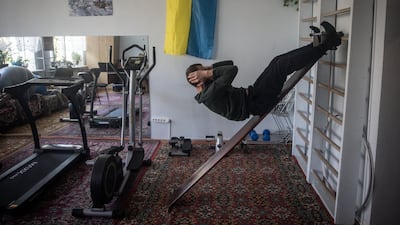
Leonid, a 38-year-old Ukrainian soldier suffering from severe mental trauma, cranial trauma and shrapnel wounds, does his physical training session at a psychiatric hospital in Kyiv, in October 2023. Getty Images -
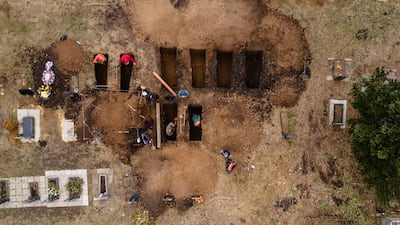
Gravediggers make new graves for the victims of a recent Russian missile strike, at Hroza cemetery, in October 2023. Getty Images -

Oleksander, suffering from a hand injury, relaxes during a speleotherapy session, an alternative medicine respiratory therapy, at a rehabilitation center for soldiers in Kyiv, in October 2023. Getty Images -
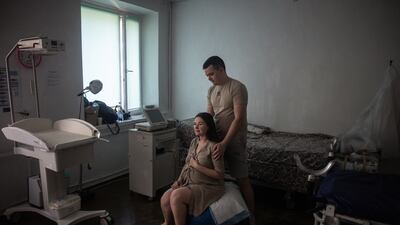
Volodymyr assists his wife Anastasia, as she has contractions before the birth of their first baby, at a maternity hospital in Zaporizhzhia, in September 2023. Ukraine’s birth rate since the start of the war the country's birth rate has plummeted by 28 per cent. Getty Images -
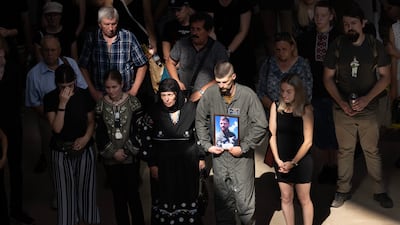
Friends and relatives mourn the death of fighter pilot Andrii Pilshchykov, 30, who was killed along with two other pilots in a mid-air plane crash in Kyiv, in August 2023. Getty Images -

Ukrainian recruits salute the flag as they attend a commemorative service marking Ukraine's Independence Day, in August 2023, in a training camp in the south of England. Getty Images -
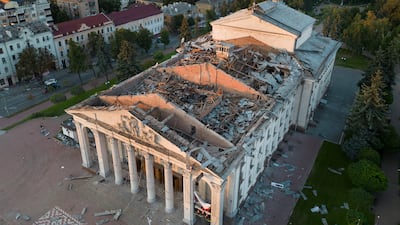
Damage from a missile that hit the Chernihiv Regional Academic Ukrainian Music and Drama Theatre, killilng seven people, in August 2023. Getty Images -
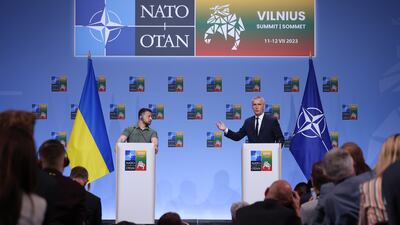
Ukrainian President Volodomyr Zelenskyy and Nato Secretary General Jens Stoltenberg speak to the media at the Nato Summit in July 2023, in Vilnius, Lithuania. Getty Images -
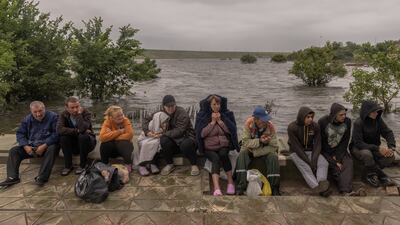
People wait for a transfer on a pontoon in a flooded area as the result of the Kakhovka dam destruction in June 2023 in Afanasiivka village, Mykolaiv region. Getty Images -
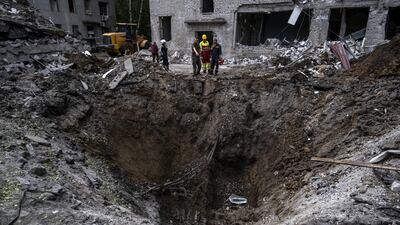
State workers and Ukrainian military personnel inspect the crater left behind by a missile strike in Dnipro, in May 2023. Getty Images -
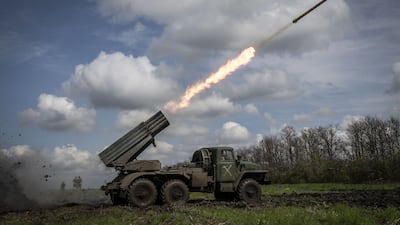
A grad missile is launched on the Donetsk fron tline in April 2023. Getty Images -
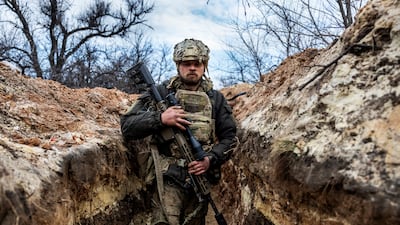
A Ukrainian sniper with the 28th Brigade moves to a fighting position in a front-line trench facing Russian troops in March 2023 outside of Bakhmut. Getty Images -

A damaged bust of Vladimir Lenin lies in the street in March 2023 in in the strategic town of Lyman. Getty Images -
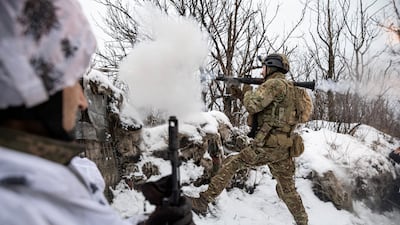
A member of Ukraine's 79th Air Assault Brigade fires a rocket-propelled grenade at Russian positions near Marinka in February 2023. Reuters -
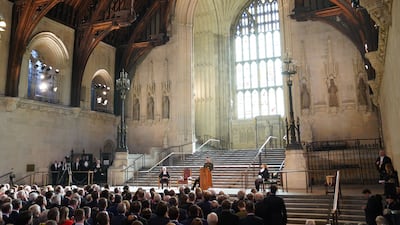
Ukrainian President Volodymyr Zelenskyy addresses MPs in Westminster Hall, London, in February 2023. Getty Images -

Destroyed buildings 32km west of the front lines in Donetsk in January 2023. Getty Images -
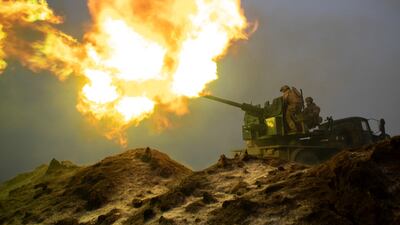
An anti-aircraft gun in January 2023 fires at Russian positions near Bakhmut, Donetsk. Reuters -
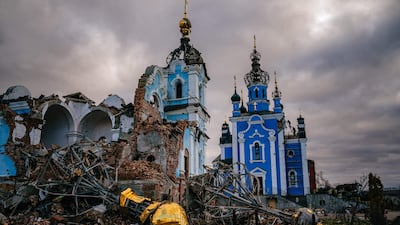
Destruction in the village of Bohorodychne, Donetsk, in January 2023. AFP -

A Ukrainian artilleryman discards an empty shell on the outskirts of Bakhmut, eastern Ukraine, in December 2022. AFP -
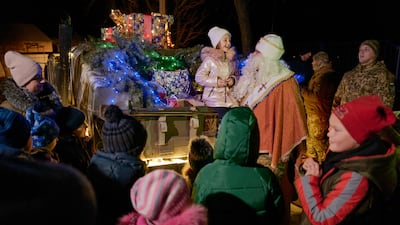
Children receive presents from a Ukrainian soldier dressed as Santa on Christmas Eve 2022 in Sloviansk. Getty Images -
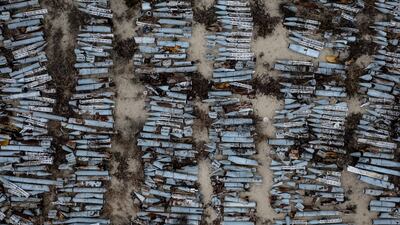
More than 1,000 missiles and rockets fired by Russian forces collected for cataloguing in Kharkiv in December 2022. Getty Images -
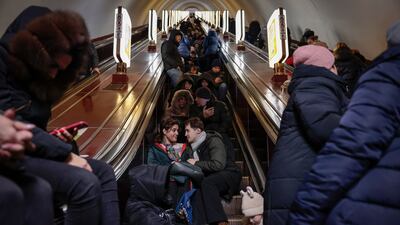
The Metro provides shelter as Russia launches another missile attack on Kyiv, Ukraine's capital, in December 2022. Getty Images -
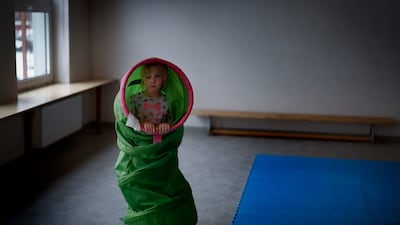
Children at a PE class in Kyiv after Russia abandoned its attempt to seize the capital in November 2022. Getty Images -
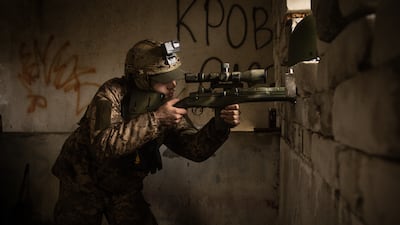
A sniper searches for Russian positions on the bank of the Dnipro river in Kherson in November 2022. Getty Images -
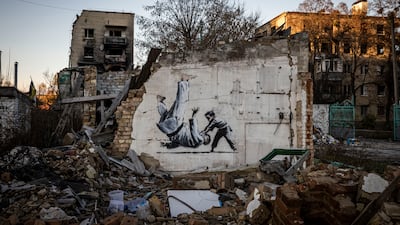
Graffiti by Banksy on a wall among the debris in Borodyanka in November 2022. Getty Images -
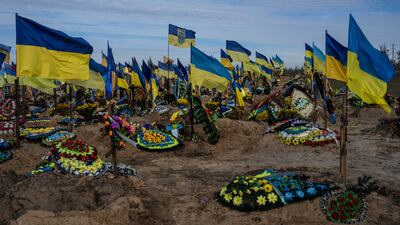
Ukrainian flags flutter around graves in a cemetery for soldiers killed in action in Kharkiv in October 2022. Getty Images -
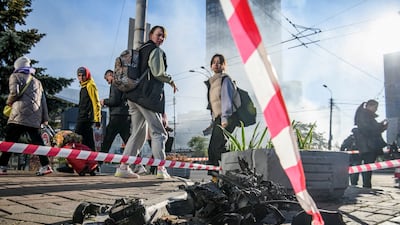
Parts of a drone, which Ukrainian authorities said was Iranian-made, after a Russian strike in Kyiv in October 2022. Reuters -
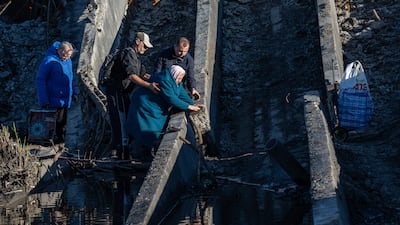
An elderly woman is helped across a damaged bridge in Bakhmut in October 2022. Getty Images -
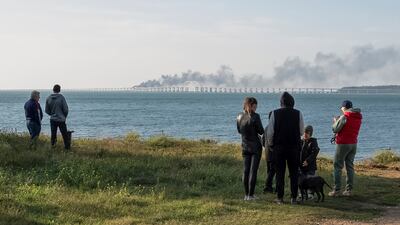
Fuel tanks ablaze on damaged sections of the Kerch bridge in Crimea, in October 2022. Reuters -

A destroyed bridge makes crossing the Donets river difficult, in Staryi Saltiv, east of Kharkiv, in September 2022. AFP -
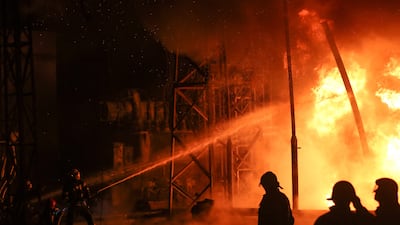
Firefighters at a thermal power plant in Kharkiv damaged by a Russian missile strike in September 2022. Reuters -
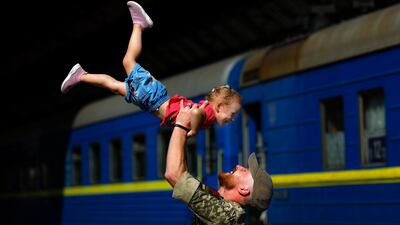
Ukrainian soldier Oleksandr with his daughter Nikole at Lviv railway station in August 2022. Getty Images -
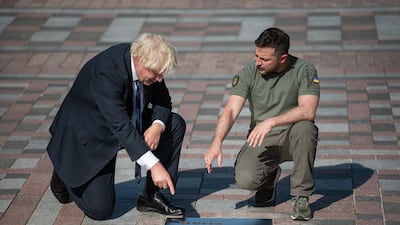
Ukrainian President Volodymyr Zelenskyy and then-British prime minister Boris Johnson read a plaque in Kyiv in August 2022 dedicated to the latter for his support. Getty Images -
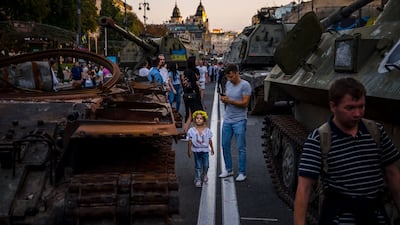
Destroyed Russian military equipment on Khreshchatyk street in Kyiv. The materiel was turned into an open-air military museum ahead of Ukraine's Independence Day on August 24. AFP -
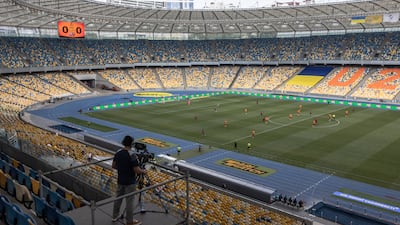
Shakhtar Donetsk v Metalist Kharkiv kicks off the Ukrainian Premier League season in August 2022 amid fears of bomb and missile alerts. EPA -
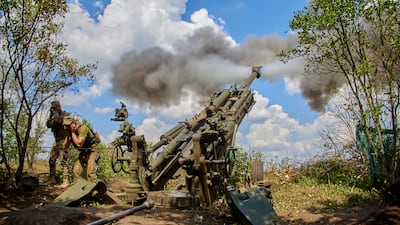
Ukrainian servicemen fire an American-made 155mm M777 howitzer in July 2022 in the Kharkiv area. EPA -
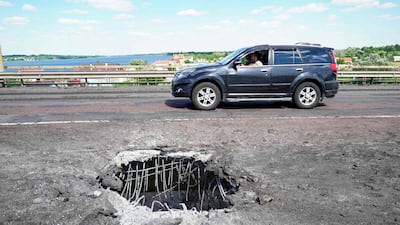
A bomb crater on the Antonovsky bridge across the Dnipro river in Kherson, July 2022. AFP -

Maksym and Andrii with plastic guns at a 'checkpoint' they set up while playing in Kharkiv, July 2022. AP -
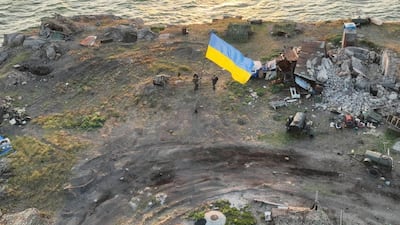
Ukrainian troops on Snake Island in June 2022. Reuters -
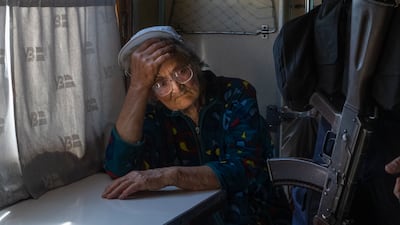
A woman evacuated from an area of conflict in June 2022 contemplates what the next move might be. AP -
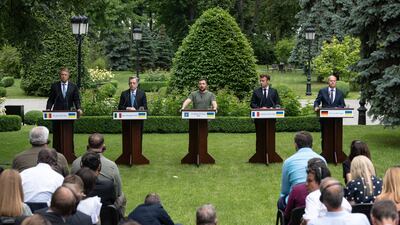
Romanian President Klaus Iohannis, Italian Prime Minister Mario Draghi, Ukrainian President Volodymyr Zelenskyy, French President Emmanuel Macron and German Chancellor Olaf Scholz in Kyiv in June 2022. Getty Images -
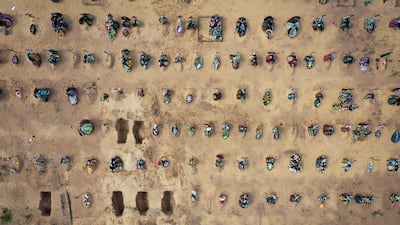
Graves in Irpin cemetery, May 2022. Getty Images -
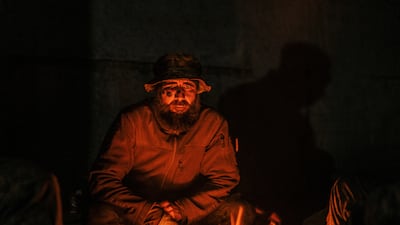
A Ukrainian soldier trapped within the besieged Azovstal Iron and Steel Works complex in Mariupol in May 2022. Reuters -
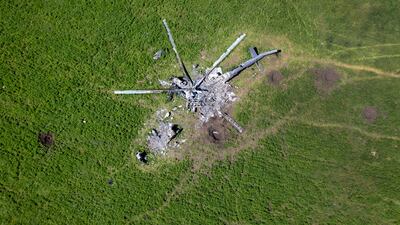
The wreckage of a Russian helicopter in a bomb-cratered field in Biskvitne, May 2022. Getty Images -
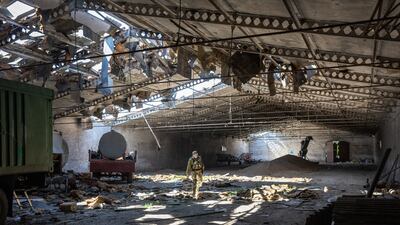
A Ukrainian army officer inspects a grain warehouse shelled by Russian forces in May 2022 near Novovorontsovka, Kherson. Getty Images -
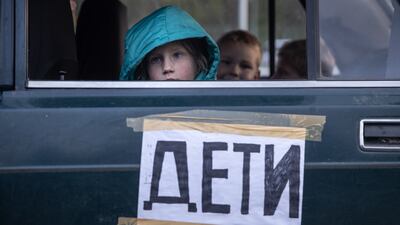
A boy from Mariupol arriving at an evacuation point in Zaporizhzhia in May 2022. Getty Images -
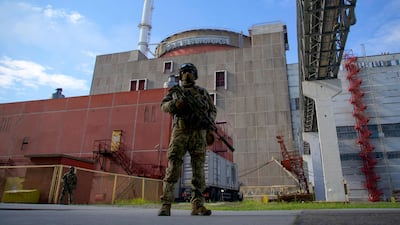
A Russian serviceman on guard outside Zaporizhzhia nuclear power station in May 2022. AFP -
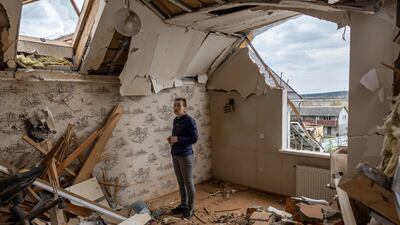
Oksana searches for salvageable items on the destroyed second floor of her home in Hostomel, April 2022. Getty Images -

A floral memorial wall in Lviv for Ukrainian civilians killed during the Russian invasion, April 2022. Getty Images -
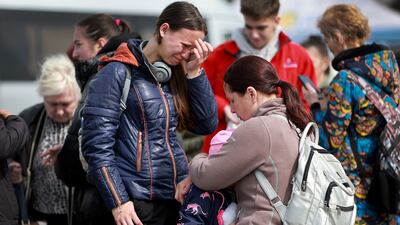
People fleeing Lviv, eastern Ukraine, in April 2022, wait for a bus that will take them to Poland. Getty Images -
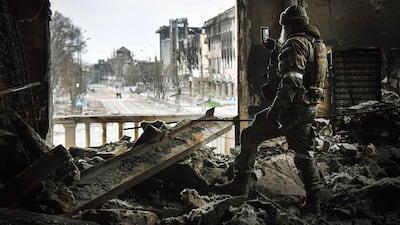
A Russian soldier patrols a bombed Mariupol theatre in April 2022, as Moscow intensified its campaign to take the strategic port city. AFP -
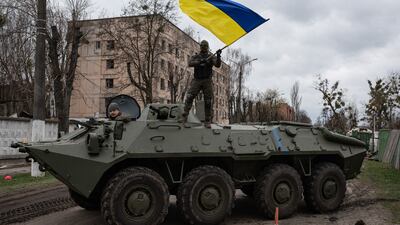
A Ukrainian celebrates success in Hostomel in April 2022. Getty Images -
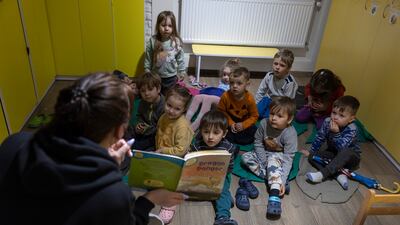
Julia Palovskaya reads to children during an air raid drill in the basement shelter at a preschool in Lviv, April 2022. Getty Images -
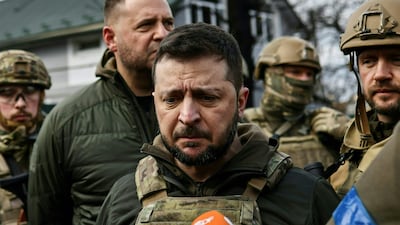
Volodymyr Zelenskyy in Bucha in April 2022, where hundreds of bodies were found in the street and it was claimed the Russian leadership was responsible for killing civilians. AFP -
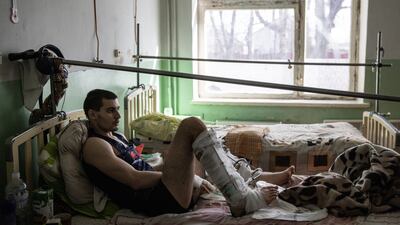
Oleh Smolin, 23, who suffered leg injuries from Russian shelling in April 2022, in hospital in Chuhuiv. Getty Images -
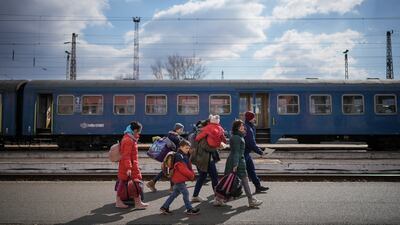
Fleeing refugees arrive at the border train station of Zahony, Hungary, in March 2022. Getty Images -
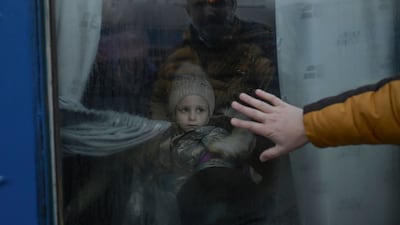
A father says goodbye to his daughter on an evacuation train about to leave Odesa in March 2022. AFP -
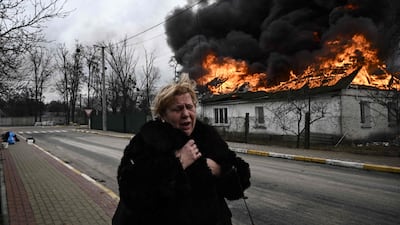
February 24 will be a year since Russia started the Ukraine war. The National picks out the most powerful images from the conflict. AFP -
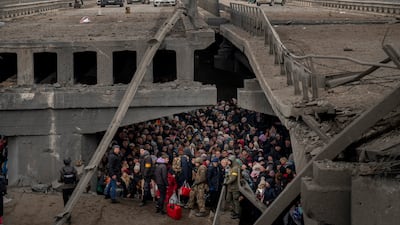
Ukrainians under a destroyed bridge as they try to cross the Irpin river on the outskirts of Kyiv in March 2022. AP -
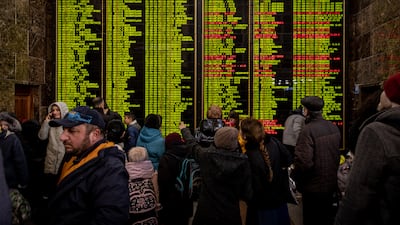
People cram into Kyiv station to catch trains to Poland or to western parts of Ukraine, shortly after the initial invasion in February 2022. Getty Images -
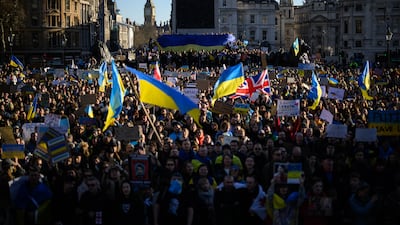
A demonstration in support of Ukraine in Trafalgar Square, London, February 2022 . Getty Images -
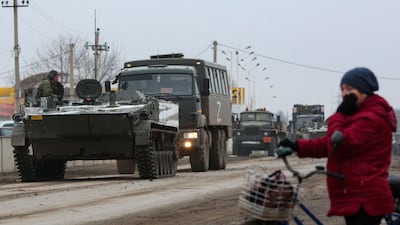
Russian army vehicles in Armyansk, Crimea, in February 2022. AFP -
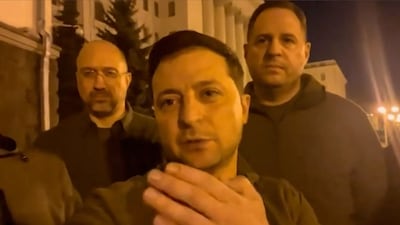
Volodymyr Zelenskyy in Kyiv on February 25, 2022, in a video on Facebook. He said 'we are all here', shortly after the Russian invasion began. AFP -
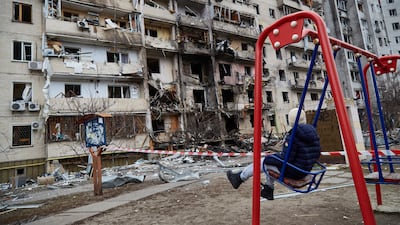
A residential building damaged by a missile strike in Kyiv in February 2022. Getty Images -

A metro station in Kyiv in February 2022, crowded with people trying to escape the invasion. AFP -
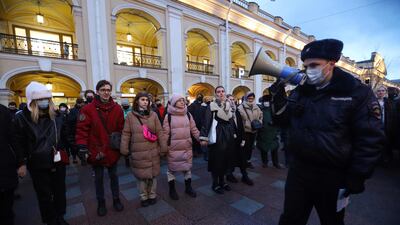
A police officer addresses people gathered to protest against the invasion of Ukraine, in central Saint Petersburg, Russia, February 2022. AFP -
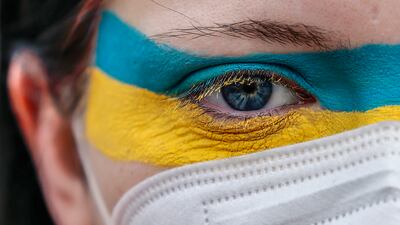
A protester in support of Ukraine, in Berlin, Germany, in February 2022. Getty Images -
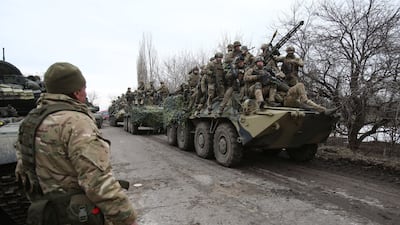
Ukrainian soldiers prepare to repel an attack in Ukraine's Lugansk region on February 24, 2022. AFP -
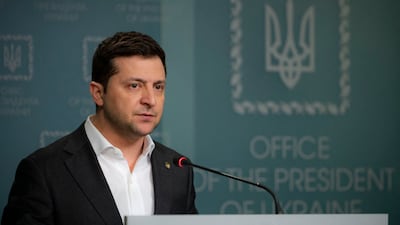
Volodymyr Zelenskyy in Kyiv on February 24, 2022, after Russia launched a full-scale invasion. AFP -
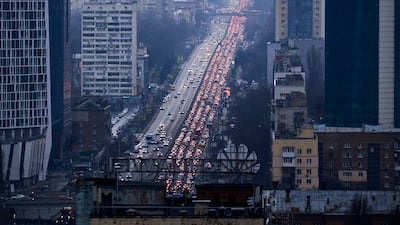
A mass exodus from Kyiv after pre-offensive missile strikes by Russian armed forces on February 24, 2022. Getty Images -
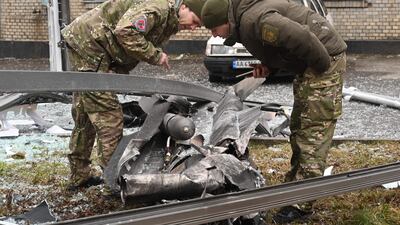
Security personnel inspect the remains of a shell in Kyiv on February 24, 2022, soon after Russian President Vladimir Putin announced a military operation in Ukraine. AFP -
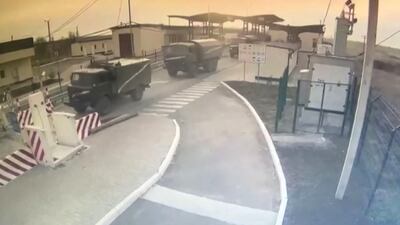
CCTV footage shows Russian military equipment crossing a Crimea border checkpoint on February 24, 2022. AFP -
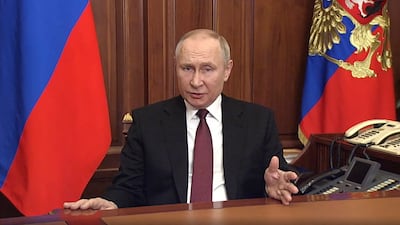
Russian President Vladimir Putin in the Kremlin early on February 24, 2022, when he announced a 'military operation' in Ukraine. AFP


“All of these peace efforts ended two years ago, when Russia tore apart the Minsk process and launched its full-scale invasion of my country,” Mr Kuleba said.
“Why would anyone suggest today that following the same logic will bring us to a different result?”
Russia's ambassador to the UN Vasily Nebenzya slammed Mr Zelenskyy's plan calling it "nothing other than an ultimatum to Russia and an attempt to lure as many countries as possible into endless meetings on this utopian project at any price possible."
Britain’s Foreign Secretary David Cameron said he recognised that there is a sense of fatigue with the war and a compromise might seem attractive, but he said Russian President Vladimir Putin isn't seeking compromise.
“Rather, this is a neo-imperialist bully who believes might is right,” he said. “If Putin were to eke out some kind of win, the rest of the world would suffer, too. What starts in Ukraine would not end there."
Speaking to journalists in New York, Luxembourg’s Foreign Minister Xavier Bettel expressed concern over Ukraine's diminishing strength in comparison to Russia, emphasising that without a shift in the balance of power, Russia is unlikely to engage in peace negotiations.
If Ukraine is abandoned, "we don't know who will be next," warned Mr Bettel.
He urged the international community to bolster support for Ukraine, highlighting the significance of Mr Zelenskyy's peace proposal as a viable solution.
“We have a peace plan by Zelenskyy which shows that Ukraine has a solution without [it] being humiliated. And the support for Ukraine is a support also for the negotiations.”

