


US climate envoy John Kerry said on Tuesday that the threat posed by climate change to global security is impossible to contest.
“It's now indisputable that the climate crisis is one of the top security threats not just to the developed world but to the entire planet,” the US Special Presidential Envoy for Climate Change told the 15-member UN Security Council.
He urged world leaders during the UAE-hosted Security Council debate on climate and security to take immediate action, warning there is “no space for procrastination … there's no room for debate on the science here”.
“Without concerted action from this body and every single governmental entity that deals with this … Without that effort, the world's impact is going to get worse. And it will continue to threaten our peace, our lives, our security,” Mr Kerry said.
Highlighting the gravity of the situation, Mr Kerry warned that the economic costs associated with the climate crisis will “rival the cost of many wars, even those being fought today”.
Heading the Security Council meeting, Mariam Al Mheiri, UAE Minister of Climate Change and Environment, urged members to view conflicts through a “climate sensitive lens” amid divisions over the role of climate change as a peace and security concern.
“The correlation between climate change and threats to peace and security was challenged by some questioning the aptness of the Security Council as a venue to foster and expedite climate actions,” she said.
Underscoring the stagnant progress within the Security Council in addressing this correlation, she asserted that climate change's role as a risk multiplier has transitioned from a “hypothetical scenario” to a “daily lived reality”.
She stressed that scientific studies have demonstrated the intricate relationship between vulnerability, climate change and armed conflict, leading to a destructive cycle.
Pointing to the Middle East, where 14 of the 33 most water-stressed countries are located, Ms Al Mheiri underscored how climate change exacerbates tension within and across national borders. Iraq was cited as an example, where climate-related water shortages jeopardise the country's recovery from conflicts.
China's UN ambassador Zhang Jun noted the “divided opinion” on the climate-conflict nexus and asserted that Iraq's biggest challenge was the dire consequences of foreign invasion and not “ecological challenges”.
“Years of war and hostilities, including the use of depleted uranium munitions by external forces have led to irreparable degradation of Iraq's ecosystems,” Mr Zhang said.
Russia's UN ambassador Vasily Nebenzya reiterated Moscow's view that climate change is primarily a sustainable development issue rather than a threat to international peace and security, and therefore falls outside of the mandate of the Security Council.
Effects of climate change in Iraq – in pictures
-
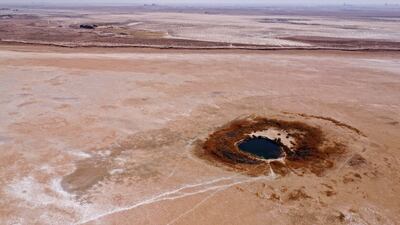
A remaining pond at the dried-up Sawa Lake on the edge of Iraq’s western desert. AFP -
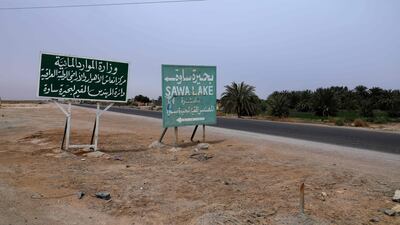
A street sign for Sawa Lake. A sharp drop in rainfall –now only at 30 per cent of what used to be normal for the region – has lowered the underground water table, said a senior advisor at Iraq's water resources ministry. AFP -
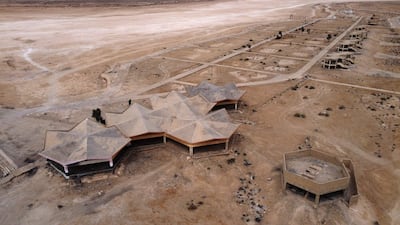
Hotels and tourist facilities near Sawa Lake have been abandoned. AFP -
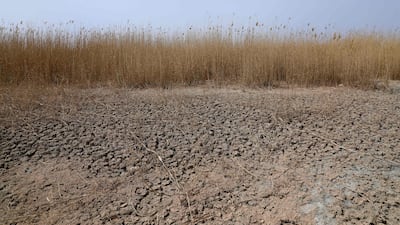
Dry, arid landscape remains. AFP -
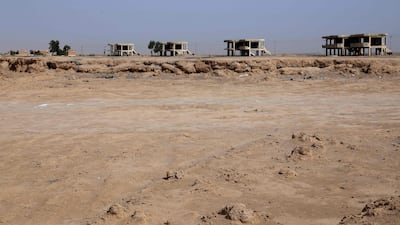
What's left of hotel accommodation. AFP -
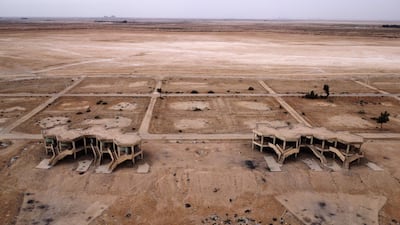
Iraq's Sawa Lake was once a popular tourist destination. AFP -
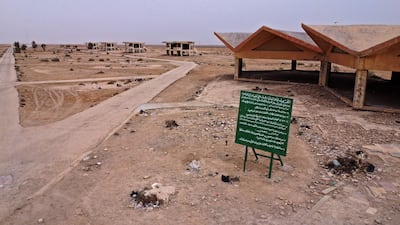
What was once a tourist hotspot now stands empty. AFP -
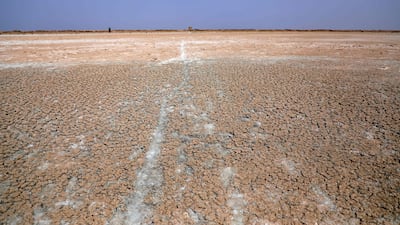
Parts of Sawa Lake are completely dry. AFP -
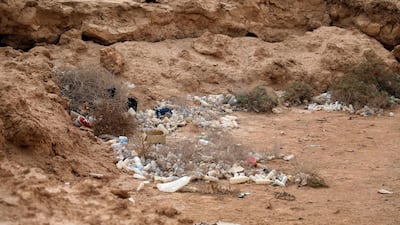
Bottles and plastic bags litter what was once a luscious lake. AFP -
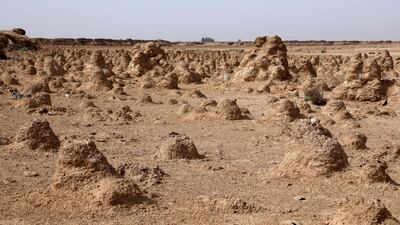
What was once a lake is now dry, arid landscape. AFP -
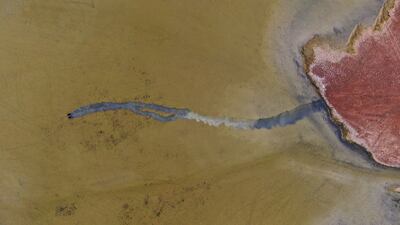
Lake Milh, also known as Razzaza Lake, in Iraq's central province of Karbala is also facing the perils of drought. AFP -
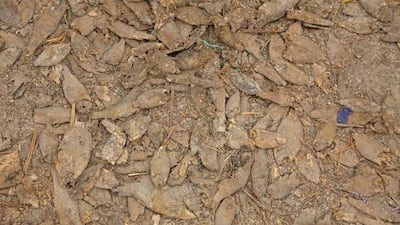
Dead fish litter Iraq's Lake Milh. AFP -
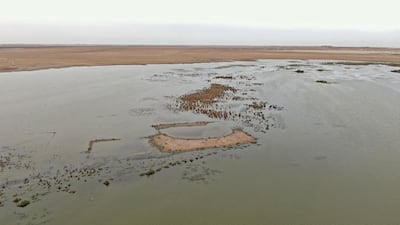
Human activity and climate change have combined to turn the site into a barren wasteland with piles of salt. AFP -
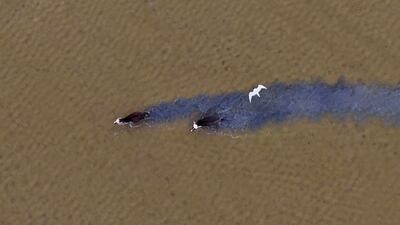
This aerial view shows horses running in Lake Milh. AFP -
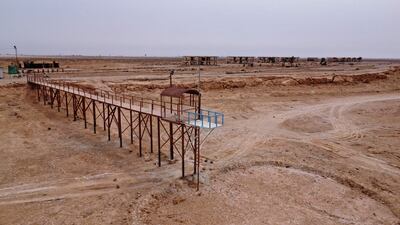
Sawa Lake is now dry due to years of drought. AFP



