Biden's first two years in the White House brought highs and lows


Holly Aguirre
  • English
  • Arabic

Friday marks the midway point of President Joe Biden's four-year term, with his first two years in the White House marked by some major wins and some spectacular losses.

When he was sworn in as America's 46th president on January 20, 2021, Mr Biden vowed to govern as a unifier after four divisive years of Donald Trump, during which the US became more polarised than at any time since the Civil War.

Despite the filibuster, a relic of the Jim Crow era, and no majority in the US Senate, Mr Biden managed to sign historic legislation into law.

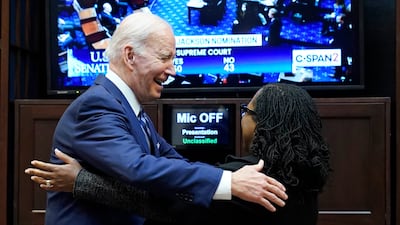
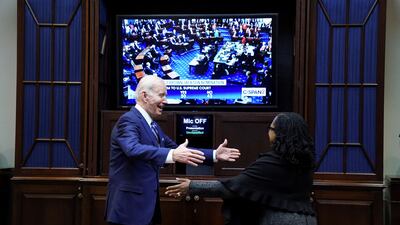
He also had milestone achievements such as dispensing hundreds of millions of Covid vaccinations, the appointment of the first black woman, Ketanji Brown Jackson, to the Supreme Court and the galvanising of Nato after Russia's invasion of Ukraine.

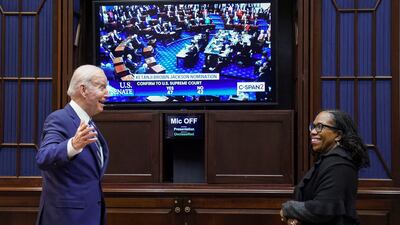
  • US President Joe Biden and Judge Ketanji Brown Jackson watch the Senate vote on her nomination to be an associate justice on the US Supreme Court, from the Roosevelt Room of the White House in Washington. AFP
    US President Joe Biden and Judge Ketanji Brown Jackson watch the Senate vote on her nomination to be an associate justice on the US Supreme Court, from the Roosevelt Room of the White House in Washington. AFP
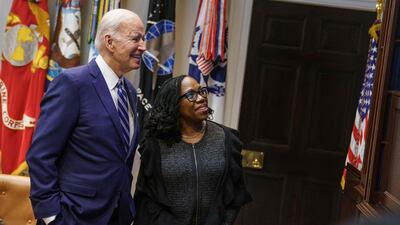
  • US President Joe Biden and his Supreme Court nominee Judge Ketanji Brown Jackson in the Roosevelt Room at the White House in Washington, April 7, 2022. Reuters
    US President Joe Biden and his Supreme Court nominee Judge Ketanji Brown Jackson in the Roosevelt Room at the White House in Washington, April 7, 2022. Reuters
  • US President Joe Biden and Judge Ketanji Brown Jackson watch the Senate vote on her nomination to be an associate justice on the US Supreme Court, from the Roosevelt Room of the White House in Washington. AFP
    US President Joe Biden and Judge Ketanji Brown Jackson watch the Senate vote on her nomination to be an associate justice on the US Supreme Court, from the Roosevelt Room of the White House in Washington. AFP
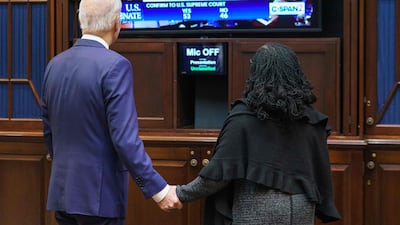
  • US President Joe Biden and Judge Ketanji Brown Jackson watch as she is made the first black woman on the Supreme Court of the US. AFP
    US President Joe Biden and Judge Ketanji Brown Jackson watch as she is made the first black woman on the Supreme Court of the US. AFP
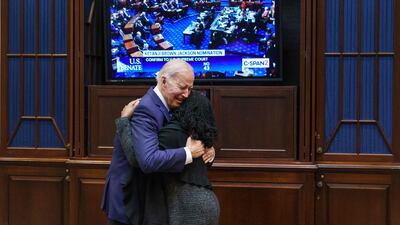
  • President Joe Biden goes to hug Supreme Court nominee Judge Ketanji Brown Jackson. AP
    President Joe Biden goes to hug Supreme Court nominee Judge Ketanji Brown Jackson. AP
  • Judge Ketanji Brown is the first black woman to serve on the Supreme Court. Reuters
    Judge Ketanji Brown is the first black woman to serve on the Supreme Court. Reuters
  • US President Joe Biden hugs Associate Supreme Court Nominee Ketanji Brown Jackson after she passed the 50 vote thresh hold by the US Senate for her confirmation to the Supreme Court at the White House in Washington. EPA
    US President Joe Biden hugs Associate Supreme Court Nominee Ketanji Brown Jackson after she passed the 50 vote thresh hold by the US Senate for her confirmation to the Supreme Court at the White House in Washington. EPA
  • US President Joe Biden and Judge Ketanji Brown Jackson watch the Senate vote on her nomination to be an associate justice on the US Supreme Court, from the Roosevelt Room of the White House in Washington. AFP
    US President Joe Biden and Judge Ketanji Brown Jackson watch the Senate vote on her nomination to be an associate justice on the US Supreme Court, from the Roosevelt Room of the White House in Washington. AFP

His election saw the return of championship teams to the White House and the release of WNBA star Brittany Griner from a Russian prison camp.

After faring better than expected in the 2022 midterm elections, an energised Mr Biden, 80, seemed set to announce another run for the White House in 2024.

But the discovery of classified documents in his Delaware home has created a scandal that could threaten that assumption.

Here is a look back at some of Mr Biden's successes and his notable failures after 730 days in the White House.

President Joe Biden signs the $1.2 trillion bipartisan infrastructure bill into law on the South Lawn of the White House in 2021. AP

Bipartisan Infrastructure Law

As a long-time Washington policymaker, Mr Biden used his negotiating skills to reach across the aisle and pass the Bipartisan Infrastructure Law, a once-in-a-generation investment in the country’s crumbling infrastructure.

The trillion-dollar investment package was passed with 19 Senate Republicans joining all Democrats and independents.

It is helping to repair and improve airports and public transport, update water systems, provide internet to underserved communities and create an untold number of new jobs.

The Pact Act

America’s veterans and their families saw the most substantial increase in benefits and services for those exposed to toxic burn pits in more than 30 years.

The signing of the Pact Act also empowers the Department of Veterans Affairs to swiftly designate illnesses as service-related, and authorised 31 new clinical sites to ensure continuing, life-saving treatments.

Climate change

Despite Republican blocking and deniers, Mr Biden set the most ambitious climate goals of any US president by taking executive action and signing legislation to advance clean energy.

He set a new bar for electric vehicle tax credits, and established guidelines to reduce pollution burdening poorer communities, with the goal of halving emissions by 2030 and net-zero emissions by 2050.

Mr Biden also protected more land and water in his first year than any US leader since John F Kennedy.

Ayman Al Zawahiri and Osama bin Laden were brought to justice with Mr Biden as President and vice president, respectively. Photo: Al Jazeera

Serving up justice

On Mr Biden’s orders, the US military took key leaders of ISIS and Al Qaeda off the battlefield, including ISIS leader Abu Ibrahim al Hashimi Al Qurayshi, also known as Hajji Abdullah, who, when the raid began, detonated a suicide device, killing himself and his family in Syria.

Mr Biden ordered an air strike in Kabul that killed Al Qaeda leader and Osama bin Laden number two, Ayman Al Zawahiri.

Afghanistan withdrawal

Mr Biden and his administration began their White House tenure with a slow and steady competency.

When he ordered the full withdrawal of US forces from Afghanistan, his long-time Democratic colleagues failed to back him, sending his more-than-capable staff scrambling.

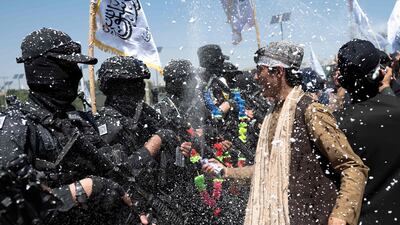
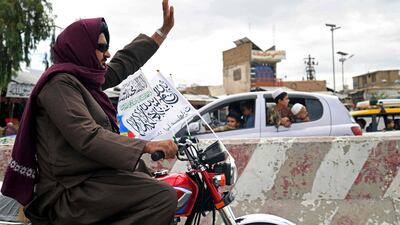
Although he was following through on a Trump-era deal with the Taliban, the chaotic withdrawal played out in real time on televisions across the world.

The Biden administration has sought to give refuge to tens of thousands of Afghans who worked for the US during its 20-year war, but the process has been marred by bureaucracy.

Meanwhile, in Afghanistan, the Taliban are clamping down on women's already limited freedom.

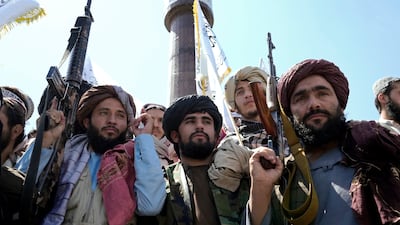
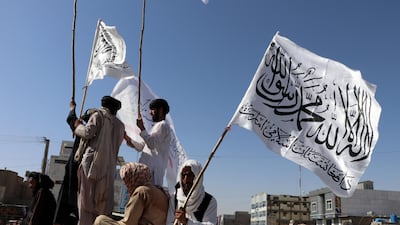
  • Taliban fighters and supporters celebrate at Ahmad Shah Massoud square in Kabul on August 31, 2022. AFP
    Taliban fighters and supporters celebrate at Ahmad Shah Massoud square in Kabul on August 31, 2022. AFP
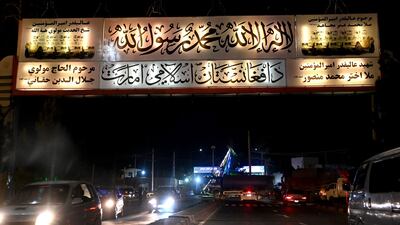
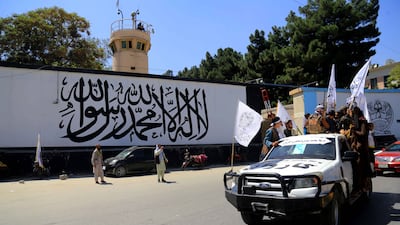
  • A banner hung in Kabul by Taliban authorities to mark the first anniversary of the departure of US-led foreign forces from Afghanistan. AFP
    A banner hung in Kabul by Taliban authorities to mark the first anniversary of the departure of US-led foreign forces from Afghanistan. AFP
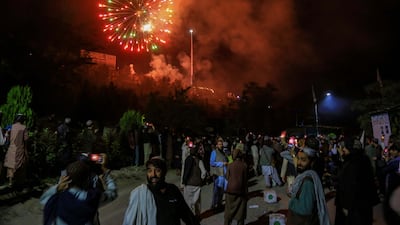
  • Taliban fighters set off fireworks near the former US embassy in Kabul to celebrate the anniversary. AFP
    Taliban fighters set off fireworks near the former US embassy in Kabul to celebrate the anniversary. AFP
  • The Taliban government declared August 31 a national holiday in Afghanistan, as part of the celebrations marking the first anniversary of the end of two decades of foreign presence. EPA
    The Taliban government declared August 31 a national holiday in Afghanistan, as part of the celebrations marking the first anniversary of the end of two decades of foreign presence. EPA
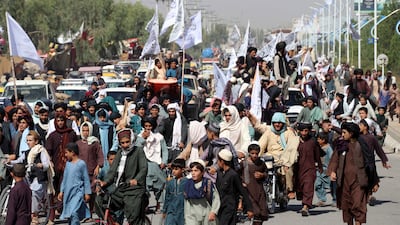
  • Taliban fighters take to the streets to celebrate. AFP
    Taliban fighters take to the streets to celebrate. AFP
  • Taliban fighters in front of the US embassy in Kabul. AP Photo
    Taliban fighters in front of the US embassy in Kabul. AP Photo
  • Children with Taliban flags celebrate the anniversary. AP Photo
    Children with Taliban flags celebrate the anniversary. AP Photo
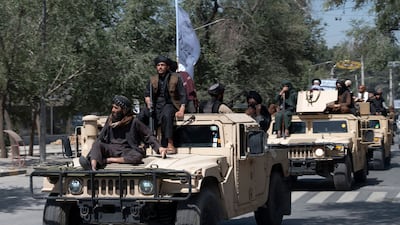
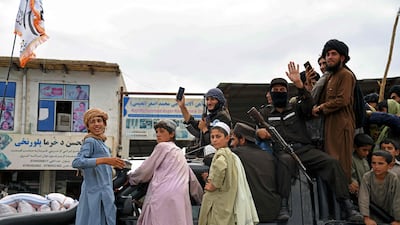
  • A Taliban convoy in Kabul on Wednesday. Reuters
    A Taliban convoy in Kabul on Wednesday. Reuters
  • The Taliban celebrate the first anniversary of the US withdrawal outside the former US embassy in Kabul. EPA
    The Taliban celebrate the first anniversary of the US withdrawal outside the former US embassy in Kabul. EPA
  • Taliban fighters celebrate the anniversary of the US withdrawal. EPA
    Taliban fighters celebrate the anniversary of the US withdrawal. EPA
  • Celebrations in Kandahar. EPA
    Celebrations in Kandahar. EPA
  • A celebratory parade in Kandahar. EPA
    A celebratory parade in Kandahar. EPA
  • Taliban fighters and supporters during a parade in Kandahar. AFP
    Taliban fighters and supporters during a parade in Kandahar. AFP
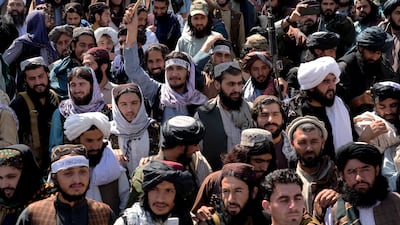
  • Taliban fighters and supporters in Kabul. AP Photo
    Taliban fighters and supporters in Kabul. AP Photo
  • A Taliban fighter during the anniversary parade in Kandahar. AFP
    A Taliban fighter during the anniversary parade in Kandahar. AFP

Inflation, borrowing costs and a queasy economy

Years of cheap money and a stampeding bull market came to a crashing halt in 2022 as the Federal Reserve raised borrowing costs to try to rein in rampant inflation that suddenly saw Americans paying record prices for petrol and most other things.

Financial experts expect a recession this year and the newly jobless will probably blame the Biden administration for the President's handling of the economy.

Losing the House

The Republican "red wave" of electoral wins in last year's midterms ended up being more of a splash, but the Democrats nonetheless lost control of the House of Representatives.

This all but guarantees a two-year headache for Mr Biden, who will become the subject of investigations into his and his son Hunter's conduct.

Voting rights

Ninety-two per cent of black voters cast ballots for Mr Biden in the 2020 election and many were sorely disappointed when the John Lewis Voting Rights Advancement Act failed to be enacted into law.

Two members of his own party — Joe Manchin of West Virginia and Kyrsten Sinema of Arizona — killed the legislation in the Senate and only one Republican crossed the aisle to support the measure.

The legislation was written after the US Supreme Court in 2013 overturned the historic Voting Rights Act of 1965.

It was named after the late civil rights advocate and activist Congressman John Lewis of Georgia.

Lewis was beaten and almost killed as he marched across the Edmund Pettus Bridge while peacefully advocating for voting rights in Selma, Alabama.

Document-gate

Mr Biden's aides recently found a handful of documents marked classified in a garage at his residence in Wilmington, Delaware, and at his former offices at the Biden Penn Centre on Capitol Hill.

After the documents were turned over, US Attorney General Merrick Garland announced that the Justice Department would launch a full investigation into their origins and sensitivity, and if national security were compromised.

There is no indication that Mr Biden was aware of the documents' existence before they were turned over.

But they are surely fuel for the fire that Congressional Republicans will use against the Biden administration and his family for the next two years.


Tamkeen's offering
  • Option 1: 70% in year 1, 50% in year 2, 30% in year 3
  • Option 2: 50% across three years
  • Option 3: 30% across five years 
Iftar programme at the Sheikh Mohammed Centre for Cultural Understanding

Established in 1998, the Sheikh Mohammed Centre for Cultural Understanding was created with a vision to teach residents about the traditions and customs of the UAE. Its motto is ‘open doors, open minds’. All year-round, visitors can sign up for a traditional Emirati breakfast, lunch or dinner meal, as well as a range of walking tours, including ones to sites such as the Jumeirah Mosque or Al Fahidi Historical Neighbourhood.

Every year during Ramadan, an iftar programme is rolled out. This allows guests to break their fast with the centre’s presenters, visit a nearby mosque and observe their guides while they pray. These events last for about two hours and are open to the public, or can be booked for a private event.

Until the end of Ramadan, the iftar events take place from 7pm until 9pm, from Saturday to Thursday. Advanced booking is required.

For more details, email openminds@cultures.ae or visit www.cultures.ae


High profile Al Shabab attacks
  • 2010: A restaurant attack in Kampala Uganda kills 74 people watching a Fifa World Cup final football match.
  • 2013: The Westgate shopping mall attack, 62 civilians, five Kenyan soldiers and four gunmen are killed.
  • 2014: A series of bombings and shootings across Kenya sees scores of civilians killed.
  • 2015: Four gunmen attack Garissa University College in northeastern Kenya and take over 700 students hostage, killing those who identified as Christian; 148 die and 79 more are injured.
  • 2016: An attack on a Kenyan military base in El Adde Somalia kills 180 soldiers.
  • 2017: A suicide truck bombing outside the Safari Hotel in Mogadishu kills 587 people and destroys several city blocks, making it the deadliest attack by the group and the worst in Somalia’s history.

Mercer, the investment consulting arm of US services company Marsh & McLennan, expects its wealth division to at least double its assets under management (AUM) in the Middle East as wealth in the region continues to grow despite economic headwinds, a company official said.

Mercer Wealth, which globally has $160 billion in AUM, plans to boost its AUM in the region to $2-$3bn in the next 2-3 years from the present $1bn, said Yasir AbuShaban, a Dubai-based principal with Mercer Wealth.

Within the next two to three years, we are looking at reaching $2 to $3 billion as a conservative estimate and we do see an opportunity to do so,” said Mr AbuShaban.

Mercer does not directly make investments, but allocates clients’ money they have discretion to, to professional asset managers. They also provide advice to clients.

“We have buying power. We can negotiate on their (client’s) behalf with asset managers to provide them lower fees than they otherwise would have to get on their own,” he added.

Mercer Wealth’s clients include sovereign wealth funds, family offices, and insurance companies among others.

From its office in Dubai, Mercer also looks after Africa, India and Turkey, where they also see opportunity for growth.

Wealth creation in Middle East and Africa (MEA) grew 8.5 per cent to $8.1 trillion last year from $7.5tn in 2015, higher than last year’s global average of 6 per cent and the second-highest growth in a region after Asia-Pacific which grew 9.9 per cent, according to consultancy Boston Consulting Group (BCG). In the region, where wealth grew just 1.9 per cent in 2015 compared with 2014, a pickup in oil prices has helped in wealth generation.

BCG is forecasting MEA wealth will rise to $12tn by 2021, growing at an annual average of 8 per cent.

Drivers of wealth generation in the region will be split evenly between new wealth creation and growth of performance of existing assets, according to BCG.

Another general trend in the region is clients’ looking for a comprehensive approach to investing, according to Mr AbuShaban.

“Institutional investors or some of the families are seeing a slowdown in the available capital they have to invest and in that sense they are looking at optimizing the way they manage their portfolios and making sure they are not investing haphazardly and different parts of their investment are working together,” said Mr AbuShaban.

Some clients also have a higher appetite for risk, given the low interest-rate environment that does not provide enough yield for some institutional investors. These clients are keen to invest in illiquid assets, such as private equity and infrastructure.

“What we have seen is a desire for higher returns in what has been a low-return environment specifically in various fixed income or bonds,” he said.

“In this environment, we have seen a de facto increase in the risk that clients are taking in things like illiquid investments, private equity investments, infrastructure and private debt, those kind of investments were higher illiquidity results in incrementally higher returns.”

The Abu Dhabi Investment Authority, one of the largest sovereign wealth funds, said in its 2016 report that has gradually increased its exposure in direct private equity and private credit transactions, mainly in Asian markets and especially in China and India. The authority’s private equity department focused on structured equities owing to “their defensive characteristics.”

((Disclaimer))

The Liechtensteinische Landesbank AG (“Bank”) assumes no liability or guarantee for the accuracy, balance, or completeness of the information in this publication. The content may change at any time due to given circumstances, and the Liechtensteinische Landesbank AG is under no obligation to update information once it has been published. This publication is intended for information purposes only and does not constitute an offer, a recommendation or an invitation by, or on behalf of, Liechtensteinische Landesbank (DIFC Branch), Liechtensteinische Landesbank AG, or any of its group affiliates to make any investments or obtain services. This publication has not been reviewed, disapproved or approved by the United Arab Emirates (“UAE”) Central Bank, Dubai Financial Services Authority (“DFSA”) or any other relevant licensing authorities in the UAE. It may not be relied upon by or distributed to retail clients. Liechtensteinische Landesbank (DIFC Branch) is regulated by the DFSA and this advertorial is intended for Professional Clients (as defined by the DFSA) who have sufficient financial experience and understanding of financial markets, products or transactions and any associated risks.

Sweet%20Tooth
%3Cp%3E%3Cstrong%3ECreator%3A%20%3C%2Fstrong%3EJim%20Mickle%3Cbr%3E%3Cstrong%3EStarring%3A%20%3C%2Fstrong%3EChristian%20Convery%2C%20Nonso%20Anozie%2C%20Adeel%20Akhtar%2C%20Stefania%20LaVie%20Owen%3Cbr%3E%3Cstrong%3ERating%3A%20%3C%2Fstrong%3E2.5%2F5%3C%2Fp%3E%0A
How to wear a kandura

Dos

  • Wear the right fabric for the right season and occasion 
  • Always ask for the dress code if you don’t know
  • Wear a white kandura, white ghutra / shemagh (headwear) and black shoes for work 
  • Wear 100 per cent cotton under the kandura as most fabrics are polyester

Don’ts 

  • Wear hamdania for work, always wear a ghutra and agal 
  • Buy a kandura only based on how it feels; ask questions about the fabric and understand what you are buying
The details

Heard It in a Past Life

Maggie Rogers

(Capital Records)

3/5

If you go


  • The nearest international airport to the start of the Chuysky Trakt is in Novosibirsk. Emirates (www.emirates.com) offer codeshare flights with S7 Airlines (www.s7.ru) via Moscow for US$5,300 (Dh19,467) return including taxes. Cheaper flights are available on Flydubai and Air Astana or Aeroflot combination, flying via Astana in Kazakhstan or Moscow. Economy class tickets are available for US$650 (Dh2,400).
  • The Double Tree by Hilton in Novosibirsk ( 7 383 2230100,) has double rooms from US$60 (Dh220). You can rent cabins at camp grounds or rooms in guesthouses in the towns for around US$25 (Dh90).
  • The transport Minibuses run along the Chuysky Trakt but if you want to stop for sightseeing, hire a taxi from Gorno-Altaisk for about US$100 (Dh360) a day. Take a Russian phrasebook or download a translation app. Tour companies such as  Altair-Tour ( 7 383 2125115 ) offer hiking and adventure packages.
The specs

Engine: 2.9-litre, V6 twin-turbo

Transmission: seven-speed PDK dual clutch automatic

Power: 375bhp

Torque: 520Nm

Price: Dh332,800

On sale: now

Coffee: black death or elixir of life?

It is among the greatest health debates of our time; splashed across newspapers with contradicting headlines - is coffee good for you or not?

Depending on what you read, it is either a cancer-causing, sleep-depriving, stomach ulcer-inducing black death or the secret to long life, cutting the chance of stroke, diabetes and cancer.

The latest research - a study of 8,412 people across the UK who each underwent an MRI heart scan - is intended to put to bed (caffeine allowing) conflicting reports of the pros and cons of consumption.

The study, funded by the British Heart Foundation, contradicted previous findings that it stiffens arteries, putting pressure on the heart and increasing the likelihood of a heart attack or stroke, leading to warnings to cut down.

Numerous studies have recognised the benefits of coffee in cutting oral and esophageal cancer, the risk of a stroke and cirrhosis of the liver. 

The benefits are often linked to biologically active compounds including caffeine, flavonoids, lignans, and other polyphenols, which benefit the body. These and othetr coffee compounds regulate genes involved in DNA repair, have anti-inflammatory properties and are associated with lower risk of insulin resistance, which is linked to type-2 diabetes.

But as doctors warn, too much of anything is inadvisable. The British Heart Foundation found the heaviest coffee drinkers in the study were most likely to be men who smoked and drank alcohol regularly.

Excessive amounts of coffee also unsettle the stomach causing or contributing to stomach ulcers. It also stains the teeth over time, hampers absorption of minerals and vitamins like zinc and iron.

It also raises blood pressure, which is largely problematic for people with existing conditions.

So the heaviest drinkers of the black stuff - some in the study had up to 25 cups per day - may want to rein it in.

Rory Reynolds

ABU%20DHABI'S%20KEY%20TOURISM%20GOALS%3A%20BY%20THE%20NUMBERS
%3Cp%3EBy%202030%2C%20Abu%20Dhabi%20aims%20to%20achieve%3A%3C%2Fp%3E%0A%3Cp%3E%3Cstrong%3E%E2%80%A2%2039.3%20million%20visitors%2C%3C%2Fstrong%3E%20nearly%2064%25%20up%20from%202023%3C%2Fp%3E%0A%3Cp%3E%3Cstrong%3E%E2%80%A2%20Dh90%20billion%20contribution%20to%20GDP%2C%3C%2Fstrong%3E%20about%2084%25%20more%20than%20Dh49%20billion%20in%202023%3C%2Fp%3E%0A%3Cp%3E%3Cstrong%3E%E2%80%A2%20178%2C000%20new%20jobs%2C%3C%2Fstrong%3E%20bringing%20the%20total%20to%20about%20366%2C000%3C%2Fp%3E%0A%3Cp%3E%3Cstrong%3E%E2%80%A2%2052%2C000%20hotel%20rooms%2C%3C%2Fstrong%3E%20up%2053%25%20from%2034%2C000%20in%202023%3C%2Fp%3E%0A%3Cp%3E%3Cstrong%3E%E2%80%A2%207.2%20million%20international%20visitors%2C%3C%2Fstrong%3E%20almost%2090%25%20higher%20compared%20to%202023's%203.8%20million%3C%2Fp%3E%0A%3Cp%3E%3Cstrong%3E%E2%80%A2%203.9%20international%20overnight%20hotel%20stays%2C%3C%2Fstrong%3E%2022%25%20more%20from%203.2%20nights%20in%202023%3C%2Fp%3E%0A
Ten tax points to be aware of in 2026

1. Domestic VAT refund amendments: request your refund within five years

If a business does not apply for the refund on time, they lose their credit.

2. E-invoicing in the UAE

Businesses should continue preparing for the implementation of e-invoicing in the UAE, with 2026 a preparation and transition period ahead of phased mandatory adoption. 

3. More tax audits

Tax authorities are increasingly using data already available across multiple filings to identify audit risks. 

4. More beneficial VAT and excise tax penalty regime

Tax disputes are expected to become more frequent and more structured, with clearer administrative objection and appeal processes. The UAE has adopted a new penalty regime for VAT and excise disputes, which now mirrors the penalty regime for corporate tax.

5. Greater emphasis on statutory audit

There is a greater need for the accuracy of financial statements. The International Financial Reporting Standards standards need to be strictly adhered to and, as a result, the quality of the audits will need to increase.

6. Further transfer pricing enforcement

Transfer pricing enforcement, which refers to the practice of establishing prices for internal transactions between related entities, is expected to broaden in scope. The UAE will shortly open the possibility to negotiate advance pricing agreements, or essentially rulings for transfer pricing purposes. 

7. Limited time periods for audits

Recent amendments also introduce a default five-year limitation period for tax audits and assessments, subject to specific statutory exceptions. While the standard audit and assessment period is five years, this may be extended to up to 15 years in cases involving fraud or tax evasion. 

8. Pillar 2 implementation 

Many multinational groups will begin to feel the practical effect of the Domestic Minimum Top-Up Tax (DMTT), the UAE's implementation of the OECD’s global minimum tax under Pillar 2. While the rules apply for financial years starting on or after January 1, 2025, it is 2026 that marks the transition to an operational phase.

9. Reduced compliance obligations for imported goods and services

Businesses that apply the reverse-charge mechanism for VAT purposes in the UAE may benefit from reduced compliance obligations. 

10. Substance and CbC reporting focus

Tax authorities are expected to continue strengthening the enforcement of economic substance and Country-by-Country (CbC) reporting frameworks. In the UAE, these regimes are increasingly being used as risk-assessment tools, providing tax authorities with a comprehensive view of multinational groups’ global footprints and enabling them to assess whether profits are aligned with real economic activity. 

Contributed by Thomas Vanhee and Hend Rashwan, Aurifer

Updated: January 20, 2023, 9:40 PM