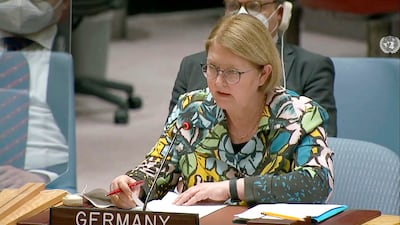
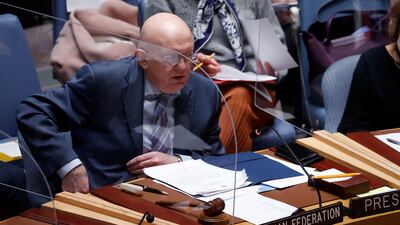
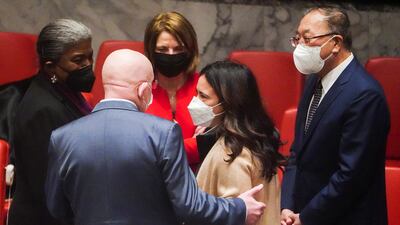
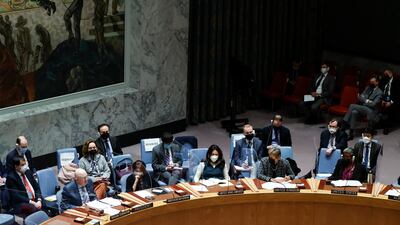
Seventy-seven years after its founding, the UN Security Council no longer works, Canada’s ambassador to the UN Bob Rae told The National.
The deeply divided council struggles to act on today’s most pressing international crises and when it does, it often fails.
The world, therefore, must come to terms with the reality that the UN’s most powerful organ is “dysfunctional”, he said.
He laid the blame for that ineffectiveness on the existence of the veto power.
From the beginning, the veto has been a steady source of tension between the wider membership of the UN and the five permanent Security Council members — the US, the UK, France, Russia and China. Though five countries are chosen to hold rotating memberships every year, none have the veto power.
“If you’ve got two permanent members with vetoes … there's no way they're going to allow for an effective resolution to come out,” Mr Rae said.
“I don't like any country having a veto. Canada has concluded that the use of the veto is being abused, and that it would be better in a multilateral system if no country had a veto.”
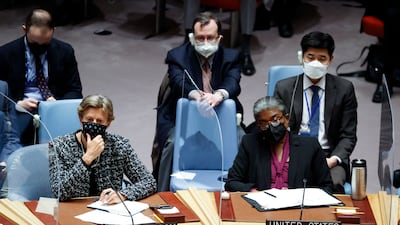
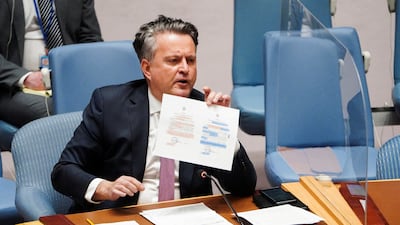
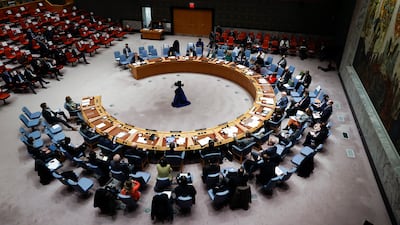
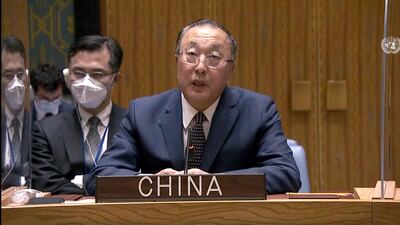
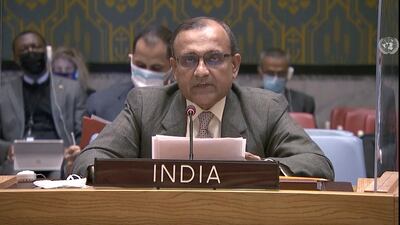
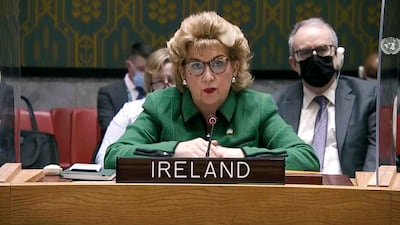
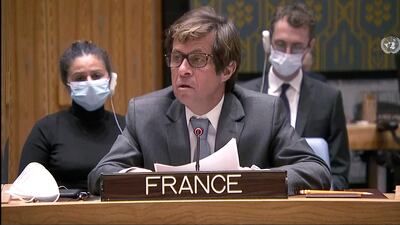
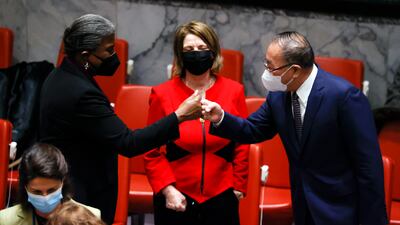
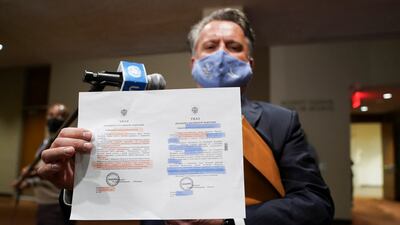
UN Security Council meeting on Ukraine crisis — in pictures
And any expansion of the veto power would be a “terrible thing”, he added.
With alliances clearly drawn on the council — Russia and China against the US, the UK and France — it is naive to expect the body to achieve “great things”.
Russia is not a constructive player on the council, he said: as emigration, war and a plunging birth rate wreak havoc on its demographics, as its economy continues to circle the drain and as its invasion of Ukraine drags on, Moscow is determined to continue playing a disruptive role in the UN system.
“I think President [Vladimir] Putin's ideas are dangerous,” he said. “His inability to recognise the independence of Ukraine and his refusal to accept the fact that Ukraine is a separate country whose sovereignty is as important as his own sovereignty is a real problem.”
With its veto power, Russia has the ability to block any attempt to condemn the invasion of Ukraine.
The inability of the council to successfully address issues such as the invasion of Ukraine has sparked calls for the UN to be reformed and raised questions about whether it can still serve its stated purpose of maintaining international peace and security.
Meanwhile, Canada has concerns over the growing influence of China.
Ottawa has been locked in a diplomatic confrontation with Beijing since the arrest of Huawei executive Meng Wanzhou at Vancouver's airport in 2018. Chinese authorities subsequently incarcerated two Canadian citizens, Michael Kovrig and Michael Spavor.
Mr Rae said that Beijing is trying to reshape the UN system so that it mirrors China’s values and foreign policy goals.
“It's important for China to know there are certain rules,” he said. “One of the key rules is, if you work for the UN, you don't work for your national government.”
Acting otherwise “poses a real challenge to the integrity of the UN system”.
Due to these and other issues, Mr Rae said that the current Security Council format “treats members unequally”.
“It says you're important, you're not important, you're permanent, you're not permanent.”
But Canada’s UN envoy noted that none of the veto-wielding permanent members would ever agree to give up their veto power.
Canada has held a rotating seat on the council six times since the UN was founded in 1945, with the last time being in 1999-2000, but Mr Rae said his country does not “need to be on the Security Council to have influence”.
“The Security Council is not really a highly functional body, so I don't worry about it,” he said.
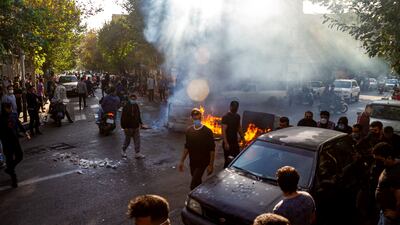
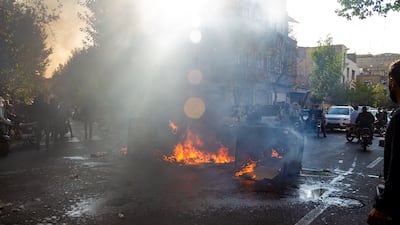
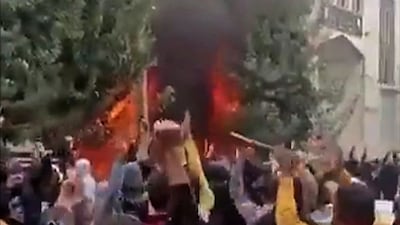
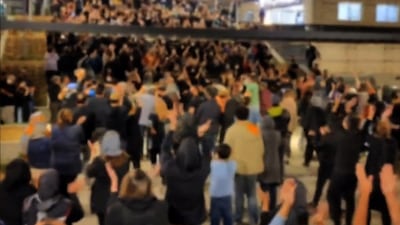
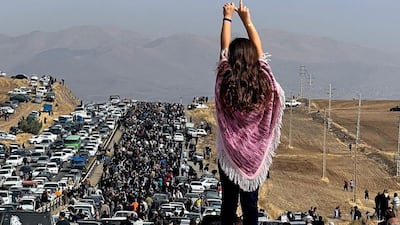
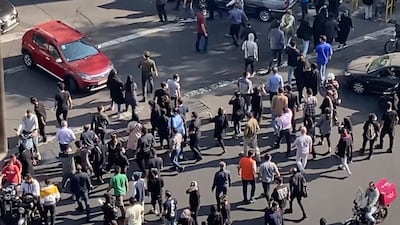
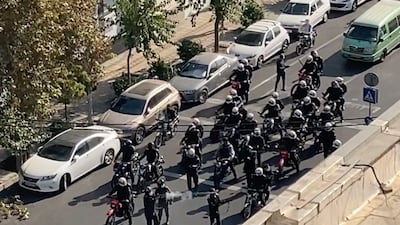
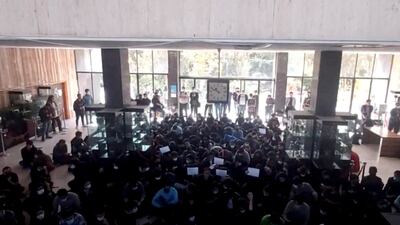
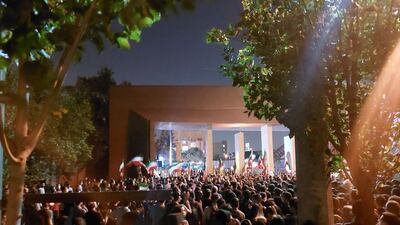
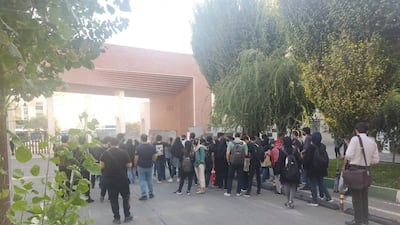
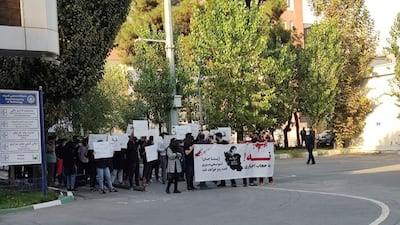
One of the most pressing issues facing the UN is the situation in Iran, which is supporting Russia in the war in Ukraine as it violently cracks down on anti-government protests at home.
Mr Rae underscored the importance of maintaining sanctions on Iran.
Canada recently imposed fresh sanctions on Iran, marking the fourth package it has announced over alleged human rights abuses in the country.
“We're continuing to deal directly with the question, how do we continue to put pressure on the [Iranian] regime and to isolate them?” he said.
Following efforts by several countries and activists to immediately expel Iran from the UN Commission on the Status of Women, the Canadian Parliament unanimously adopted a motion last month that called for Tehran’s removal from the body.
Iranian women have been at the forefront of protests across the country since 22-year-old Mahsa Amini died in police custody in September. She was arrested after she allegedly failed to comply with Iran's strict dress code for women.
Canada traditionally serves as a lead sponsor of an annual UN General Assembly resolution condemning human rights abuses in Iran. It will present that resolution again later this year, when it is expected to be widely approved.
But Mr Rae said this is unlikely to be enough.
“There's an extremely widespread, comprehensive set of sanctions by a number of countries, but not by Russia, not by China, not by India, not by a number of countries in the region,” he said. “And that's what's limiting the effectiveness of the global community.”
Ultimately, he adds, it will be up to the Iranian people to make a decision as to how they want to go forward.
In an age of mounting scepticism towards global institutions, Mr Rae underscored the importance of strengthening multilateralism in tackling the immense challenges the world faces.
“There is no Canadian answer to climate change. There is no Russian answer to climate change. There's no Chinese answer to the pandemic. There's no American answer to the growing conflicts and migration and displacement that we see in the world,” he said.
There is instead only a “global answer” and a need for “greater solidarity”.
“I think if we successfully pay attention to this, we would have reinforced the original goals of the UN Charter,” he said.
“And if we don't, then I think we'll begin to see a heavy price.”
Protests in Iran continue — in pictures
Command%20Z
%3Cp%3E%3Cstrong%3EDirector%3A%C2%A0%3C%2Fstrong%3ESteven%20Soderbergh%3C%2Fp%3E%0A%3Cp%3E%3Cstrong%3EStars%3A%C2%A0%3C%2Fstrong%3EMichael%20Cera%2C%20Liev%20Schreiber%2C%20Chloe%20Radcliffe%3C%2Fp%3E%0A%3Cp%3E%3Cstrong%3ERating%3A%3C%2Fstrong%3E%C2%A03%2F5%3C%2Fp%3E%0A
Milestones on the road to union
1970
October 26: Bahrain withdraws from a proposal to create a federation of nine with the seven Trucial States and Qatar.
December: Ahmed Al Suwaidi visits New York to discuss potential UN membership.
1971
March 1: Alex Douglas Hume, Conservative foreign secretary confirms that Britain will leave the Gulf and “strongly supports” the creation of a Union of Arab Emirates.
July 12: Historic meeting at which Sheikh Zayed and Sheikh Rashid make a binding agreement to create what will become the UAE.
July 18: It is announced that the UAE will be formed from six emirates, with a proposed constitution signed. RAK is not yet part of the agreement.
August 6: The fifth anniversary of Sheikh Zayed becoming Ruler of Abu Dhabi, with official celebrations deferred until later in the year.
August 15: Bahrain becomes independent.
September 3: Qatar becomes independent.
November 23-25: Meeting with Sheikh Zayed and Sheikh Rashid and senior British officials to fix December 2 as date of creation of the UAE.
November 29: At 5.30pm Iranian forces seize the Greater and Lesser Tunbs by force.
November 30: Despite a power sharing agreement, Tehran takes full control of Abu Musa.
November 31: UK officials visit all six participating Emirates to formally end the Trucial States treaties
December 2: 11am, Dubai. New Supreme Council formally elects Sheikh Zayed as President. Treaty of Friendship signed with the UK. 11.30am. Flag raising ceremony at Union House and Al Manhal Palace in Abu Dhabi witnessed by Sheikh Khalifa, then Crown Prince of Abu Dhabi.
December 6: Arab League formally admits the UAE. The first British Ambassador presents his credentials to Sheikh Zayed.
December 9: UAE joins the United Nations.
WHAT%20ARE%20THE%20PRODUCTS%20WITHIN%20THE%20THREE%20MAJOR%20CATEGORIES%3F
%3Cp%3E%3Cstrong%3EAdvanced%20materials%3A%3C%2Fstrong%3E%20specifically%20engineered%20to%20exhibit%20novel%20or%20enhanced%20properties%2C%20that%20confer%20superior%20performance%20relative%20to%20conventional%20materials%3C%2Fp%3E%0A%3Cp%3E%3Cstrong%3EAdvanced%20components%3A%3C%2Fstrong%3E%20includes%20semiconductor%20components%2C%20such%20as%20microprocessors%20and%20other%20computer%20chips%2C%20and%20computer%20vision%20components%20such%20as%20lenses%20and%20image%20sensors%3C%2Fp%3E%0A%3Cp%3E%3Cstrong%3EAdvanced%20products%3A%3C%2Fstrong%3E%20includes%20personal%20electronics%2C%20smart%20home%20devices%20and%20space%20technologies%2C%20along%20with%20industry-enabling%20products%20such%20as%20robots%2C%203D%20printing%20equipment%20and%20exoskeletons%3C%2Fp%3E%0A%3Cp%3E%3Cem%3ESource%3A%20Strategy%26amp%3B%3C%2Fem%3E%3C%2Fp%3E%0A
SECRET%20INVASION
%3Cp%3E%3Cstrong%3EDirector%3A%3C%2Fstrong%3E%20Ali%20Selim%20%3Cbr%3E%3Cstrong%3EStars%3A%3C%2Fstrong%3E%20Samuel%20L%20Jackson%2C%20Olivia%20Coleman%2C%20Kingsley%20Ben-Adir%2C%20Emilia%20Clarke%20%3Cbr%3E%3Cstrong%3ERating%3A%3C%2Fstrong%3E%203%2F5%26nbsp%3B%3C%2Fp%3E%0A
The specs
Engine: 2.0-litre 4-cylturbo
Transmission: seven-speed DSG automatic
Power: 242bhp
Torque: 370Nm
Price: Dh136,814
Mercer, the investment consulting arm of US services company Marsh & McLennan, expects its wealth division to at least double its assets under management (AUM) in the Middle East as wealth in the region continues to grow despite economic headwinds, a company official said.
Mercer Wealth, which globally has $160 billion in AUM, plans to boost its AUM in the region to $2-$3bn in the next 2-3 years from the present $1bn, said Yasir AbuShaban, a Dubai-based principal with Mercer Wealth.
“Within the next two to three years, we are looking at reaching $2 to $3 billion as a conservative estimate and we do see an opportunity to do so,” said Mr AbuShaban.
Mercer does not directly make investments, but allocates clients’ money they have discretion to, to professional asset managers. They also provide advice to clients.
“We have buying power. We can negotiate on their (client’s) behalf with asset managers to provide them lower fees than they otherwise would have to get on their own,” he added.
Mercer Wealth’s clients include sovereign wealth funds, family offices, and insurance companies among others.
From its office in Dubai, Mercer also looks after Africa, India and Turkey, where they also see opportunity for growth.
Wealth creation in Middle East and Africa (MEA) grew 8.5 per cent to $8.1 trillion last year from $7.5tn in 2015, higher than last year’s global average of 6 per cent and the second-highest growth in a region after Asia-Pacific which grew 9.9 per cent, according to consultancy Boston Consulting Group (BCG). In the region, where wealth grew just 1.9 per cent in 2015 compared with 2014, a pickup in oil prices has helped in wealth generation.
BCG is forecasting MEA wealth will rise to $12tn by 2021, growing at an annual average of 8 per cent.
Drivers of wealth generation in the region will be split evenly between new wealth creation and growth of performance of existing assets, according to BCG.
Another general trend in the region is clients’ looking for a comprehensive approach to investing, according to Mr AbuShaban.
“Institutional investors or some of the families are seeing a slowdown in the available capital they have to invest and in that sense they are looking at optimizing the way they manage their portfolios and making sure they are not investing haphazardly and different parts of their investment are working together,” said Mr AbuShaban.
Some clients also have a higher appetite for risk, given the low interest-rate environment that does not provide enough yield for some institutional investors. These clients are keen to invest in illiquid assets, such as private equity and infrastructure.
“What we have seen is a desire for higher returns in what has been a low-return environment specifically in various fixed income or bonds,” he said.
“In this environment, we have seen a de facto increase in the risk that clients are taking in things like illiquid investments, private equity investments, infrastructure and private debt, those kind of investments were higher illiquidity results in incrementally higher returns.”
The Abu Dhabi Investment Authority, one of the largest sovereign wealth funds, said in its 2016 report that has gradually increased its exposure in direct private equity and private credit transactions, mainly in Asian markets and especially in China and India. The authority’s private equity department focused on structured equities owing to “their defensive characteristics.”
Wallabies
Updated team: 15-Israel Folau, 14-Dane Haylett-Petty, 13-Reece Hodge, 12-Matt Toomua, 11-Marika Koroibete, 10-Kurtley Beale, 9-Will Genia, 8-Pete Samu, 7-Michael Hooper (captain), 6-Lukhan Tui, 5-Adam Coleman, 4-Rory Arnold, 3-Allan Alaalatoa, 2-Tatafu Polota-Nau, 1-Scott Sio.
Replacements: 16-Folau Faingaa, 17-Tom Robertson, 18-Taniela Tupou, 19-Izack Rodda, 20-Ned Hanigan, 21-Joe Powell, 22-Bernard Foley, 23-Jack Maddocks.
RESULTS
%3Cp%3E%0D5pm%3A%20Al%20Bateen%20%E2%80%93%20Maiden%20(PA)%20Dh80%2C000%20(Turf)%202%2C200m%0D%3Cbr%3EWinner%3A%20Ma%E2%80%99Aly%20Al%20Shahania%2C%20Bernardo%20Pinheiro%20(jockey)%2C%20Mohamed%20Daggash%20(trainer)%0D%3Cbr%3E5.30pm%3A%20Al%20Khaleej%20%E2%80%93%20Maiden%20(PA)%20Dh80%2C000%20(T)%201%2C400m%0D%3Cbr%3EWinner%3A%20AF%20Rami%2C%20Tadhg%20O%E2%80%99Shea%2C%20Ernst%20Oertel%0D%3Cbr%3E6pm%3A%20Wathba%20Stallions%20Cup%20%E2%80%93%20Handicap%20(PA)%20Dh70%2C000%20(T)%201%2C400m%0D%3Cbr%3EWinner%3A%20Bant%20Al%20Emarat%2C%20Bernardo%20Pinheiro%2C%20Qaiss%20Aboud%0D%3Cbr%3E6.30pm%3A%20Al%20Nahyan%20%E2%80%93%20Handicap%20(PA)%20Dh80%2C000%20(T)%201%2C600m%0D%3Cbr%3EWinner%3A%20AF%20Rasam%2C%20Marcelino%20Rodrigues%2C%20Ernst%20Oertel%0D%3Cbr%3E7pm%3A%20Al%20Karamah%20%E2%80%93%20Handicap%20(PA)%20Dh80%2C000%20(T)%201%2C600m%0D%3Cbr%3EWinner%3A%20Zafaranah%2C%20Bernardo%20Pinheiro%2C%20Musabah%20Al%20Muhairi%0D%3Cbr%3E7.30pm%3A%20Al%20Salam%20%E2%80%93%20Handicap%20(TB)%20Dh80%2C000%20(T)%201%2C400m%0D%3Cbr%3EWinner%3A%20Nibras%20Passion%2C%20Tadhg%20O%E2%80%99Shea%2C%20Ismail%20Mohammed%3C%2Fp%3E%0A
Key products and UAE prices
iPhone XS
With a 5.8-inch screen, it will be an advance version of the iPhone X. It will be dual sim and comes with better battery life, a faster processor and better camera. A new gold colour will be available.
Price: Dh4,229
iPhone XS Max
It is expected to be a grander version of the iPhone X with a 6.5-inch screen; an inch bigger than the screen of the iPhone 8 Plus.
Price: Dh4,649
iPhone XR
A low-cost version of the iPhone X with a 6.1-inch screen, it is expected to attract mass attention. According to industry experts, it is likely to have aluminium edges instead of stainless steel.
Price: Dh3,179
Apple Watch Series 4
More comprehensive health device with edge-to-edge displays that are more than 30 per cent bigger than displays on current models.
Gender pay parity on track in the UAE
The UAE has a good record on gender pay parity, according to Mercer's Total Remuneration Study.
"In some of the lower levels of jobs women tend to be paid more than men, primarily because men are employed in blue collar jobs and women tend to be employed in white collar jobs which pay better," said Ted Raffoul, career products leader, Mena at Mercer. "I am yet to see a company in the UAE – particularly when you are looking at a blue chip multinationals or some of the bigger local companies – that actively discriminates when it comes to gender on pay."
Mr Raffoul said most gender issues are actually due to the cultural class, as the population is dominated by Asian and Arab cultures where men are generally expected to work and earn whereas women are meant to start a family.
"For that reason, we see a different gender gap. There are less women in senior roles because women tend to focus less on this but that’s not due to any companies having a policy penalising women for any reasons – it’s a cultural thing," he said.
As a result, Mr Raffoul said many companies in the UAE are coming up with benefit package programmes to help working mothers and the career development of women in general.
Abu Dhabi Sustainability Week
SUZUME
%3Cp%3EDirector%3A%20Makoto%20Shinkai%3C%2Fp%3E%0A%3Cp%3EStars%3A%20Nanoka%20Hara%2C%20Hokuto%20Matsumura%2C%20Eri%20Fukatsu%3C%2Fp%3E%0A%3Cp%3ERating%3A%204%2F5%3C%2Fp%3E%0A
ALRAWABI%20SCHOOL%20FOR%20GIRLS
%3Cp%3ECreator%3A%20Tima%20Shomali%3C%2Fp%3E%0A%3Cp%3EStarring%3A%C2%A0Tara%20Abboud%2C%C2%A0Kira%20Yaghnam%2C%20Tara%20Atalla%3C%2Fp%3E%0A%3Cp%3ERating%3A%204%2F5%3C%2Fp%3E%0A
Who has lived at The Bishops Avenue?
- George Sainsbury of the supermarket dynasty, sugar magnate William Park Lyle and actress Dame Gracie Fields were residents in the 1930s when the street was only known as ‘Millionaires’ Row’.
- Then came the international super rich, including the last king of Greece, Constantine II, the Sultan of Brunei and Indian steel magnate Lakshmi Mittal who was at one point ranked the third richest person in the world.
- Turkish tycoon Halis Torprak sold his mansion for £50m in 2008 after spending just two days there. The House of Saud sold 10 properties on the road in 2013 for almost £80m.
- Other residents have included Iraqi businessman Nemir Kirdar, singer Ariana Grande, holiday camp impresario Sir Billy Butlin, businessman Asil Nadir, Paul McCartney’s former wife Heather Mills.
Hunting park to luxury living
- Land was originally the Bishop of London's hunting park, hence the name
- The road was laid out in the mid 19th Century, meandering through woodland and farmland
- Its earliest houses at the turn of the 20th Century were substantial detached properties with extensive grounds
Dunki
%3Cp%3E%3Cstrong%3EDirector%3A%3C%2Fstrong%3E%20Rajkumar%20Hirani%C2%A0%3C%2Fp%3E%0A%3Cp%3E%3Cstrong%3EStarring%3A%3C%2Fstrong%3E%20Shah%20Rukh%20Khan%2C%20Taapsee%20Pannu%2C%20Vikram%20Kochhar%20and%20Anil%20Grover%3C%2Fp%3E%0A%3Cp%3E%3Cstrong%3ERating%3A%3C%2Fstrong%3E%204%2F5%3C%2Fp%3E%0A
The Indoor Cricket World Cup
When: September 16-23
Where: Insportz, Dubai
Indoor cricket World Cup:
Insportz, Dubai, September 16-23
UAE fixtures:
Men
Saturday, September 16 – 1.45pm, v New Zealand
Sunday, September 17 – 10.30am, v Australia; 3.45pm, v South Africa
Monday, September 18 – 2pm, v England; 7.15pm, v India
Tuesday, September 19 – 12.15pm, v Singapore; 5.30pm, v Sri Lanka
Thursday, September 21 – 2pm v Malaysia
Friday, September 22 – 3.30pm, semi-final
Saturday, September 23 – 3pm, grand final
Women
Saturday, September 16 – 5.15pm, v Australia
Sunday, September 17 – 2pm, v South Africa; 7.15pm, v New Zealand
Monday, September 18 – 5.30pm, v England
Tuesday, September 19 – 10.30am, v New Zealand; 3.45pm, v South Africa
Thursday, September 21 – 12.15pm, v Australia
Friday, September 22 – 1.30pm, semi-final
Saturday, September 23 – 1pm, grand final