


US President Joe Biden's administration on Wednesday vowed to "extend and deepen" the historic Abraham Accords, which saw the establishment of relations between Israel and the UAE, as well as other Arab nations.
The pledge came as the White House unveiled its much-anticipated national security strategy that sets US foreign policy priorities.
The document detailed a five-pronged approach to Middle East security that includes efforts towards regional integration of air and maritime defence structures, freedom of navigation, and a focus on diplomacy in de-escalating conflicts.
"We will seek to extend and deepen Israel’s growing ties to its neighbours and other Arab states, including through the Abraham Accords, while maintaining our ironclad commitment to its security," the strategy reads.
"We will also continue to promote a viable two-state solution that preserves Israel’s future as a Jewish and democratic state while meeting Palestinian aspirations for a secure and viable state of their own."
Negotiated under president Donald Trump, the 2020 Abraham Accords saw the UAE and Bahrain signed the first-ever agreements with Israel. Morocco and Sudan joined later.
The release of America's national security strategy comes at a time of rapidly shifting geopolitical dynamics as China's global influence rises and Russia continues its war in Ukraine.
The strategy calls China "the only competitor with both the intent and, increasingly, the capability to reshape the international order", and doubles down on America's so-called "pivot to Asia" that started under Barack Obama as the US tried to shift focus from military engagements in the Middle East.
"It is time to eschew grand designs in favour of more practical steps that can advance US interests and help regional partners lay the foundation for greater stability, prosperity, and opportunity for the people of the Middle East and for the American people," the strategy states.
-
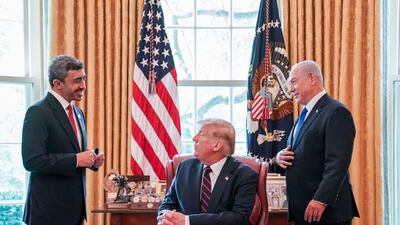
Sheikh Abdullah bin Zayed, UAE Minister of Foreign Affairs and International Co-operation, speaks to Donald Trump, US president at the time, and Israeli Prime Minister Benjamin Netanyahu in the Oval Office in September 2020. Ministry of Foreign Affairs and International Co-operation -
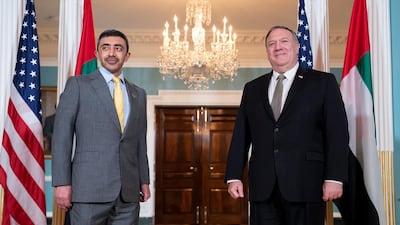
Sheikh Abdullah bin Zayed, UAE Minister of Foreign Affairs and International Co-operation, meets Mike Pompeo, US secretary of state at the time. Wam -
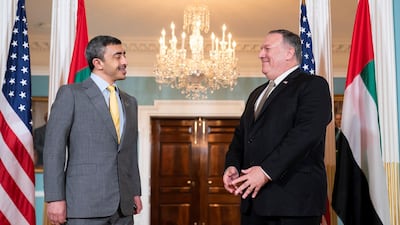
Sheikh Abdullah and Mr Pompeo in Washington. Wam -
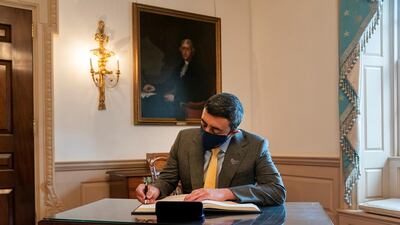
Sheikh Abdullah visits Washington in September last year. Wam -
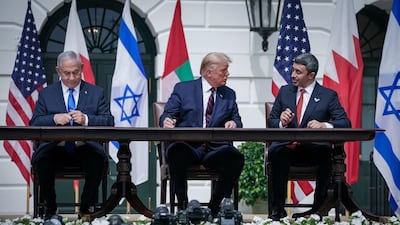
Sheikh Abdullah, UAE Minister of Foreign Affairs and International Co-operation, US President Donald Trump, centre, and Israeli Prime Minister Benjamin Netanyahu sign the Abraham Accord at the White House South Lawn. MOFAIC -
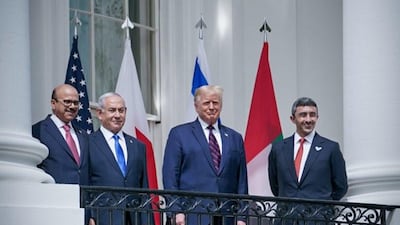
Sheikh Abdullah and, from left, Bahrain's Foreign Minister Abdullatif Al Zayani, Israeli Prime Minister Benjamin Netanyahu and US President Donald Trump at the White House. MOFAIC -
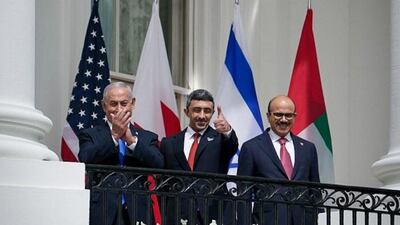
Sheikh Abdullah, Mr Al Zayani and Mr Netanyahu at the White House during the Abraham Accord signing ceremony. MOFAIC -
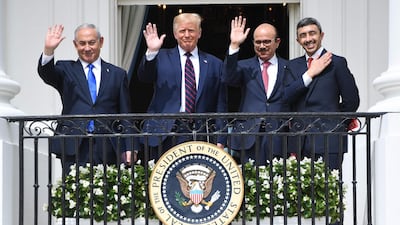
Sheikh Abdullah and, from left, Mr Netanyahu, Mr Trump and Mr Al Zayani wave from the Truman Balcony at the White House. AFP -
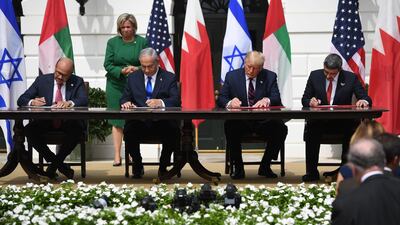
Sheikh Abdullah and, from left, Mr Al Zayani, Mr Netanyahu and Mr Trump sign the Abraham Accord. AFP -
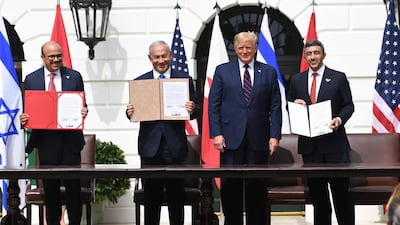
Sheikh Abdullah and, from left, Mr Al Zayani, Mr Netanyahu and Mr Trump after the signing ceremony. AFP -
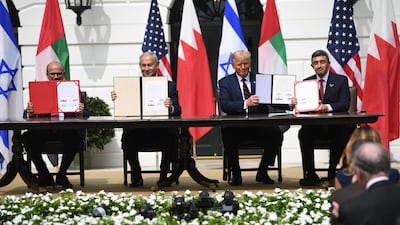
Sheikh Abdullah and, from left, Mr Al Zayani, Mr Netanyahu and Mr Trump after the signing ceremony. AFP -
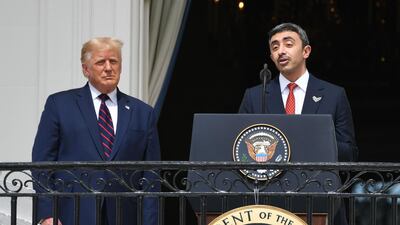
Sheikh Abdullah speaks from the Truman Balcony at the White House during the signing ceremony of the Abraham Accord. AFP -
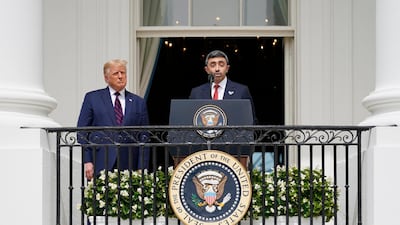
Sheikh Abdullah speaks as Mr Trump looks on before the signing of Abraham Accord on the South Lawn of the White House. AP -
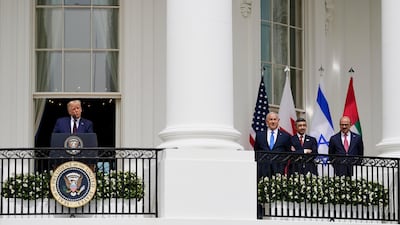
Sheikh Abdullah looks on from the White House as Mr Trump speaks at the Abraham Accord signing ceremony, also attended by Mr Al Zayani and Mr Netanyahu. AP -

Sheikh Abdullah bin Zayed, UAE Minister of Foreign Affairs and International Co-operation, Israeli Prime Minister Benjamin Netanyahu, left, and Bahraini Foreign Minister Abdullatif Al Zayani stand on the Blue Room Balcony during the signing ceremony. AP -
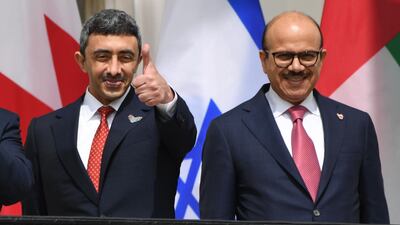
Sheikh Abdullah and Mr Al Zayani shortly before participating in the signing of the Abraham Accord. AFP -
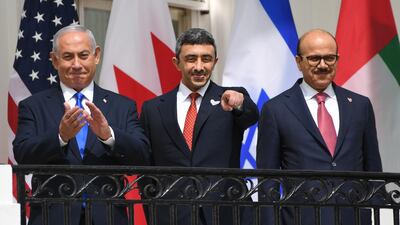
Sheikh Abdullah, with Mr Netanyahu, left, and Mr Al Zayani at the signing of the Abraham Accord on the South Lawn of the White House. AFP -
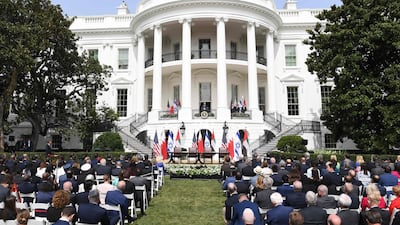
US President Donald Trump speaks from the Truman Balcony at the White House during the signing ceremony of the Abraham Accord. AFP -
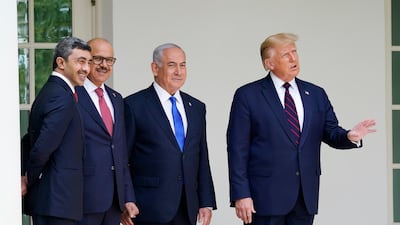
President Donald Trump walks to the Abraham Accord signing ceremony at the White House with Sheikh Abdullah bin Zayed, UAE Minister of Foreign Affairs and International Co-operation, Israeli Prime Minister Benjamin Netanyahu, and Bahrain's Foreign Minister Abdullatif Al Zayani. AP -
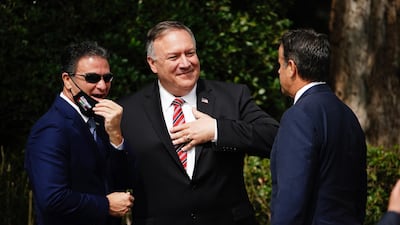
US Secretary of State Mike Pompeo arrives at the White House to attend the Abraham Accord signing ceremony hosted by President Donald Trump. EPA -
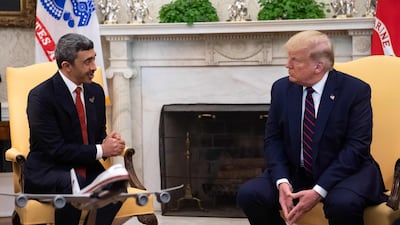
Sheikh Abdullah bin Zayed, UAE Minister of Foreign Affairs and International Co-operation, meets US President Donald Trump in the Oval Office of the White House before the signing of Abraham Accord. AFP -
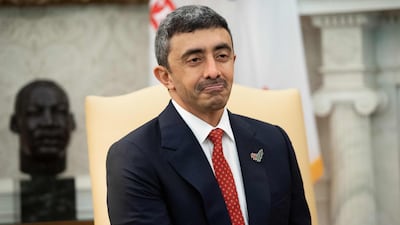
Sheikh Abdullah bin Zayed, UAE Minister of Foreign Affairs and International Co-operation, in the Oval Office. AFP -
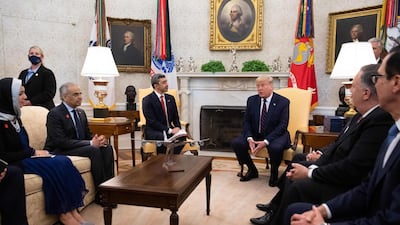
Sheikh Abdullah bin Zayed, UAE Minister of Foreign Affairs and International Co-operation, meets US President Donald Trump in the Oval Office of the White House. AFP -
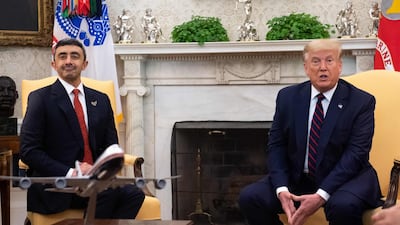
Sheikh Abdullah with Mr Trump in the Oval Office. AFP -
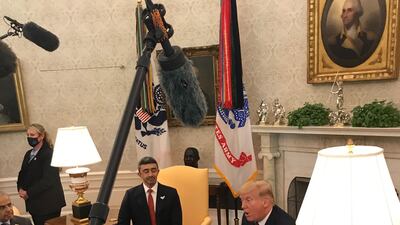
Sheikh Abdullah bin Zayed, UAE Minister of Foreign Affairs and International Co-operation, with by President Donald Trump at the White House. Mustafa Alrawi / The National -
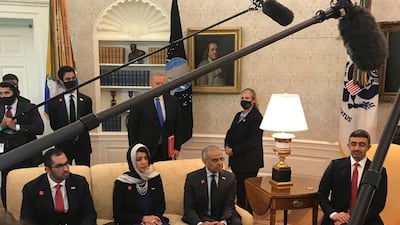
The UAE delegation led by Sheikh Abdullah bin Zayed, Minister of Foreign Affairs and International Co-operation, with US President Donald Trump at the White House. Mustafa Alrawi / The National -
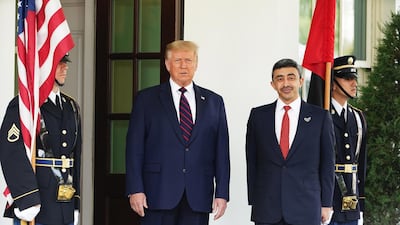
Sheikh Abdullah bin Zayed, UAE Minister of Foreign Affairs and International Co-operation, is welcomed to the White House by US President Donald Trump. EPA -
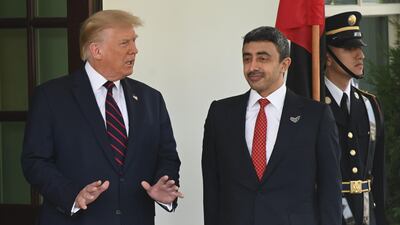
Sheikh Abdullah and Mr Trump outside the White House. AFP -
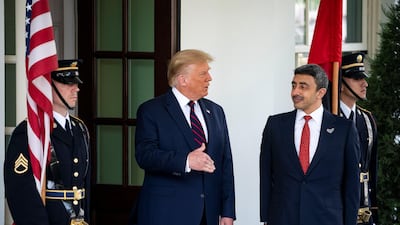
Sheikh Abdullah bin Zayed speaks to Mr Trump after arriving at the White House. Reuters -
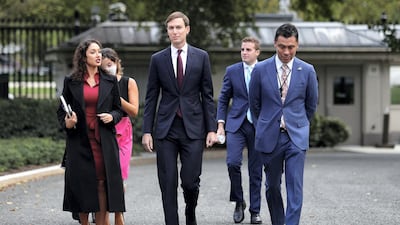
White House Senior Adviser Jared Kushner walks away following a television interview on the North Lawn at the White House in Washington. Reuters -
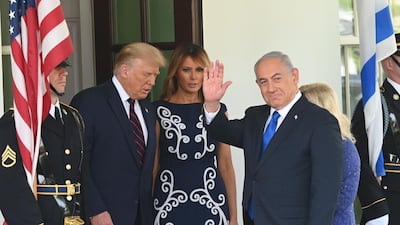
US President Donald Trump and First Lady Melania Trump welcome the arrival of Prime Minister of Israel Benjamin Netanyahu and his wife Sara on the North Lawn of the White House in Washington DC. AFP -
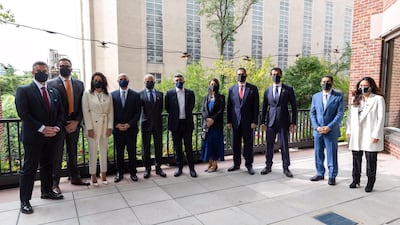
A delegation of senior UAE officials led by Sheikh Abdullah bin Zayed, UAE Minister of Foreign Affairs and International Co-operation, prepares to depart for the White House to sign the Abraham Accord. MOFAIC -
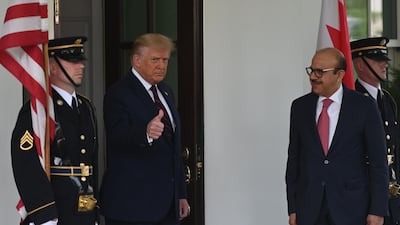
US President Donald Trump welcomes Bahraini Foreign Minister Abdullatif Al Zayani. AFP -

Bahraini Foreign Minister Abdullatif Al Zayani arrives at the White House in Washington DC. AFP -
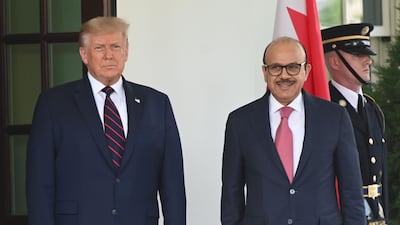
US President Donald Trump welcomes Bahraini Foreign Minister Abdullatif Al Zayani on the North Lawn of the White House in Washington, DC. AFP -
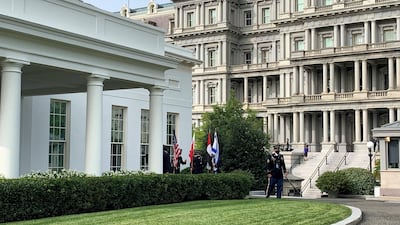
Preparations at the White House for the signing of the Abraham Accord. -
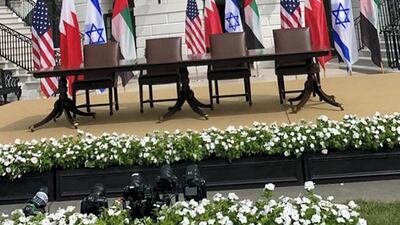
Preparations under way at the White House for the signing of the Abraham Accord. -
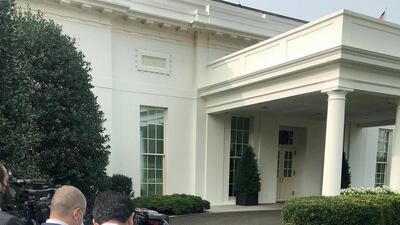
Preparations under way at the White House for the signing of the Abraham Accord. -

Preparation at the White House for the signing of the Abraham Accord. The National


The strategy launch came just a day after National Security Council Spokesman John Kirby hinted that Mr Biden will "review" its bilateral relationship with Saudi Arabia as a result of the OPEC+ bloc's decision to cut oil production amid economic uncertainty.
White House National Security Adviser Jake Sullivan told reporters on Wednesday that Mr Biden will wait for thorough engagement with Congress before making concrete decisions on reshaping Washington's relationship with Riyadh.
"These are, of course, consequential decisions. And he was clear yesterday that he has embarked on that process. And he's doing so with purpose of looking out for US interests and values, as we think about the future of the US Saudi relationship," Mr Sullivan said.
Washington, a top donor of military aid to Israel, re-asserted its commitment to Israeli defence systems, despite recent international controversy over the IDF's apparent killing of Palestinian-American journalist Shireen Abu Akleh, and the ongoing illegal Israeli occupation of Palestinian territory.
On counter-terrorism operations in the Middle East and beyond, the strategy emphasised a shift from “US-led, partner-enabled to one that is partner-led, US-enabled,” and highlighted last year's end to the Afghanistan war.
-
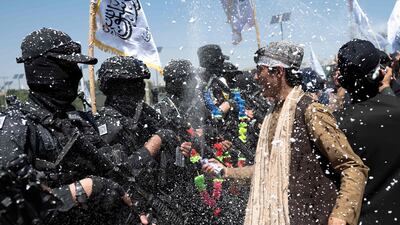
Taliban fighters and supporters celebrate at Ahmad Shah Massoud square in Kabul on August 31, 2022. AFP -
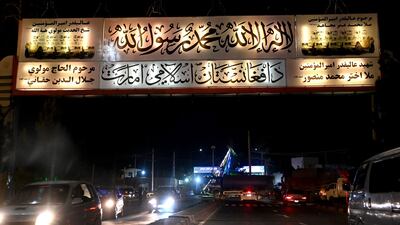
A banner hung in Kabul by Taliban authorities to mark the first anniversary of the departure of US-led foreign forces from Afghanistan. AFP -

Taliban fighters set off fireworks near the former US embassy in Kabul to celebrate the anniversary. AFP -
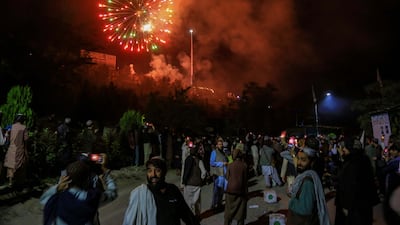
The Taliban government declared August 31 a national holiday in Afghanistan, as part of the celebrations marking the first anniversary of the end of two decades of foreign presence. EPA -
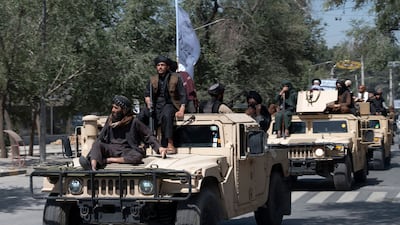
Taliban fighters take to the streets to celebrate. AFP -
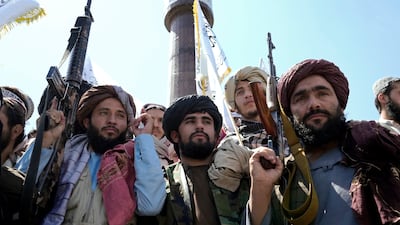
Taliban fighters in front of the US embassy in Kabul. AP Photo -

Children with Taliban flags celebrate the anniversary. AP Photo -

A Taliban convoy in Kabul on Wednesday. Reuters -
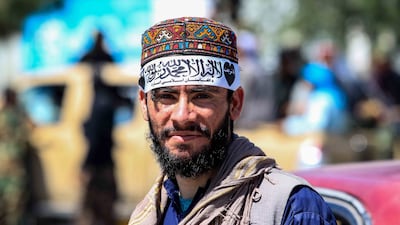
The Taliban celebrate the first anniversary of the US withdrawal outside the former US embassy in Kabul. EPA -
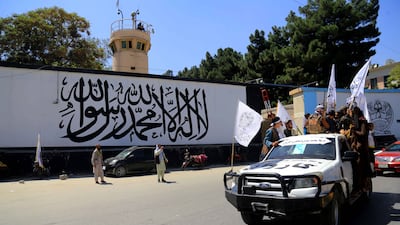
Taliban fighters celebrate the anniversary of the US withdrawal. EPA -
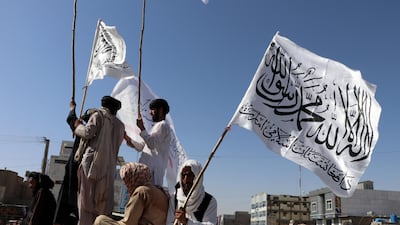
Celebrations in Kandahar. EPA -
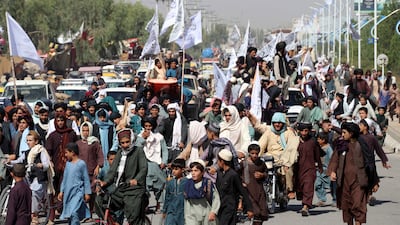
A celebratory parade in Kandahar. EPA -
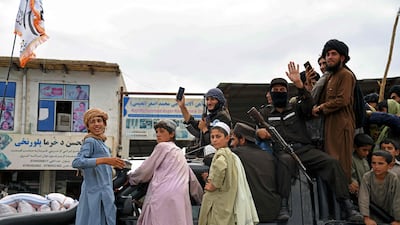
Taliban fighters and supporters during a parade in Kandahar. AFP -
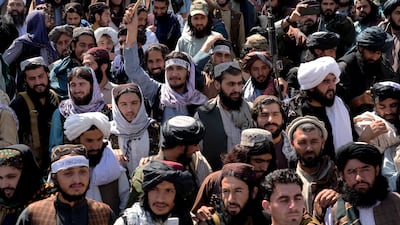
Taliban fighters and supporters in Kabul. AP Photo -
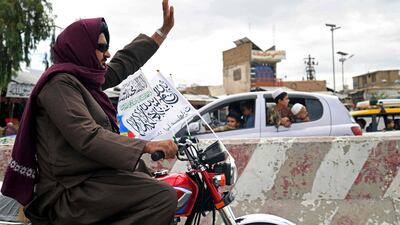
A Taliban fighter during the anniversary parade in Kandahar. AFP


Major power competition
The White House security strategy asserted one of its central goals is to address major-power competition and the shifting nature of the international order.
The White House said Russia's February 24 invasion of Ukraine played a part in delaying the strategy's long-awaited release, but the war has not significantly shifted Mr Biden's broader foreign policy goals.
"We thought it would be imprudent in such a fast moving and consequential moment, where it was really unclear exactly what direction that were would take to go out with the strategy," said Mr Sullivan.
"We think what has actually unfolded over the last six months, which has defied many of the expectations and conventional wisdom, is a vindication of taking our time and being methodical in putting forward the strategy. I don't believe that the war in Ukraine is fundamentally alter Joe Biden's approach to foreign policy."
The national security strategy also stresses the need for a foreign policy that balances the interests of global allies with those of middle-class Americans.
“We understand that if the United States is to succeed abroad, we must invest in our innovation and industrial strength, and build our resilience, at home,” the strategy states.
“Likewise, to advance shared prosperity domestically and to uphold the rights of all Americans, we must proactively shape the international order in line with our interests and values.”

