

US President Joe Biden once again called for a ban on AR-15-style rifles as he spoke on his administration's efforts to tackle gun violence — a top concern among American voters heading into the midterm elections — in the swing state of Pennsylvania on Tuesday.
"It's time to ban these weapons," he told a crowd gathered in Wilkes-Barre, about 30 kilometres south of his childhood home town of Scranton.
With the midterm elections approaching, the president urged supporters to vote for leaders who supported banning assault rifles.
"It's time to hold every elected official's feet to the fire and ask them if they're for banning assault weapons, yes or no, ask them." he said. "If the answer's no, vote against them."
A recent spate of shootings in Oregon, Illinois, New York and the nation's capital has brought gun violence once again to the fore.
As the midterms approach, many Republican candidates are portraying Democrats as unwilling to fight growing crime rates in some parts of the country.
Republicans have also tried to pin them to the “defund the police” movement that arose out of the racial justice protests in 2020, though Mr Biden has never supported curtailing police funds.
Mr Biden's “Safer America Plan” asks Congress for $37 billion in funding to support law enforcement and crime prevention programmes. Part of the request, if approved, includes funding to hire and train an additional 100,000 police officers, a White House fact sheet showed.
Mr Biden made it clear on Tuesday that he was "opposed to defunding the police" and "opposed defunding the FBI".
Pennsylvania will be a key battleground state in November, home to a competitive Senate race that could determine which political party controls the upper chamber of Congress, and the president was in full campaign mode as he kicked off his more than 30-minute speech by rallying support for Democratic candidates in the state.
But some Democratic candidates have wrestled with whether to join Mr Biden on the campaign trail, fearing his low approval ratings could negatively affect their campaigns.
Uvalde shooting: Robb Elementary School to be demolished, says mayor
-
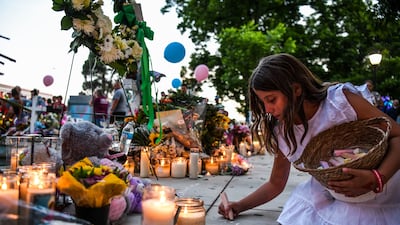
Alanna De Leon writes the name of her friend, Annabelle Rodriguez, who died in the shooting. AFP -
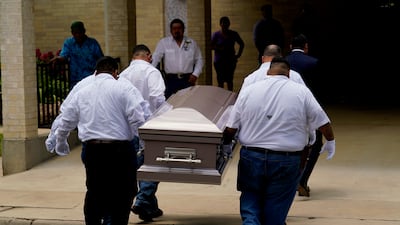
Pallbearers carry the coffin of Amerie Jo Garza into Sacred Heart Catholic Church. AP -
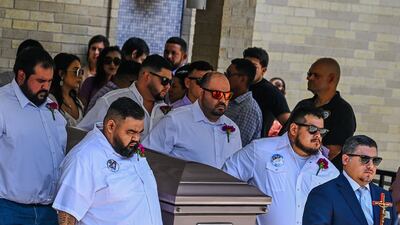
Pallbearers carry the coffin of Amerie Jo Garza, who died in the mass shooting at Robb Elementary School. AFP -

A memorial in Town Square, Uvalde, Texas, for victims of the Robb Elementary school shooting. Reuters -
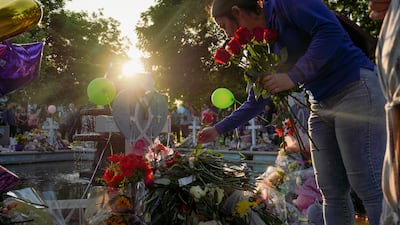
A woman places a rose on Layla Salazar’s memorial cross, who was one of the victims that died in the shooting. Reuters -
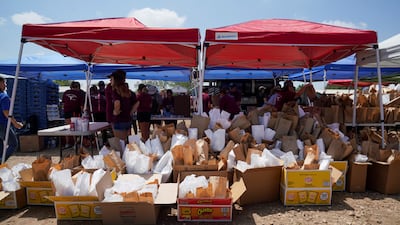
Bags with brisket sandwiches and a snack that will be sold at a fundraiser for families of the victims. Reuters -
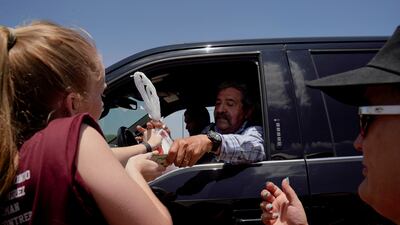
Ashtyn Leigh, 18, hands a man a brisket meal. Reuters -

A choir sings in front of the memorial. Reuters -
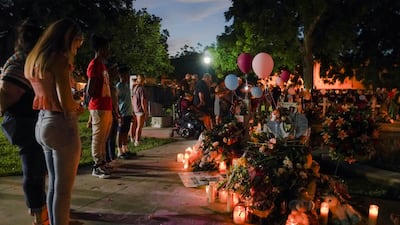
People pray in front of memorial crosses. Reuters -
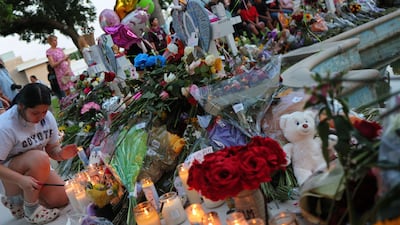
Nineteen children and two adults were killed in the shooting. AFP -
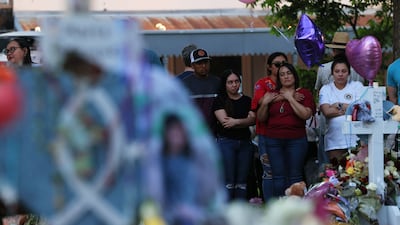
People visit a memorial for the victims. AFP -
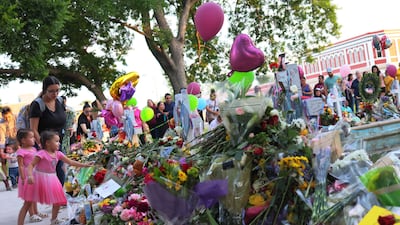
Flowers are left outside the school. AFP -

Twenty-one empty chairs are seen outside of a daycare center as a memorial for the victims. AP Photo -
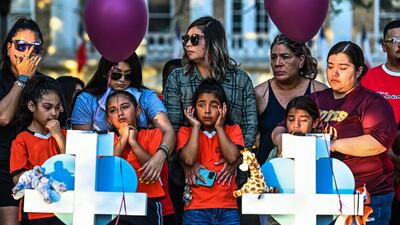
Football teammates of Tess Mata, who died in the Texas school shooting, cry as they visit a makeshift memorial outside the Uvalde County Courthouse. AFP -
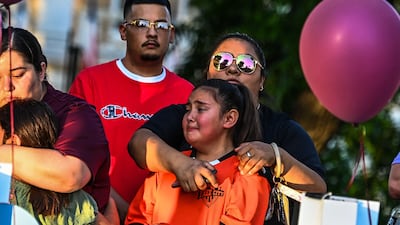
A football teammate of shooting victim Tess Mata cries, supported by her mother. AFP -
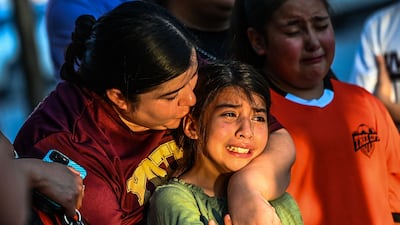
Texas police faced angry questions over why it took an hour to stop the gunman who murdered 19 children and two teachers in Uvalde, as video emerged of desperate parents begging officers to storm the school. AFP -
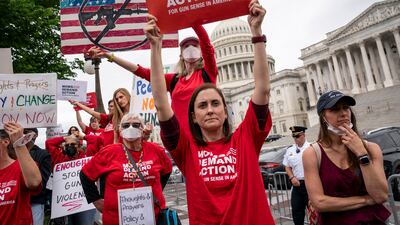
Activists join Senate Democrats outside the Capitol, in Washington, to demand action on gun control legislation after the killings at the Texas elementary school this week. AP -
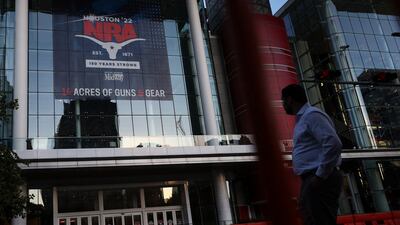
The George R Brown Convention Centre, site of the National Rifle Association annual convention. Days after the deadliest mass school shooting in Texas history, the gun lobbyist group is meeting in Houston, from Friday until Sunday. Reuters -
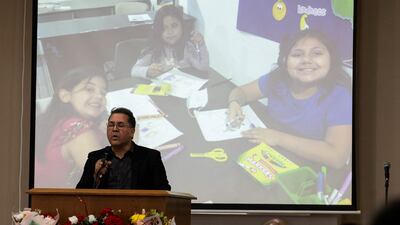
Pastor Carlos Contreras preaches to his congregation as photos of some of the children killed in the mass shooting at Robb Elementary flash on the screen at Primera Iglesia Bautista, in Uvalde. Reuters -
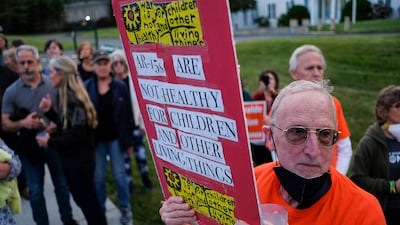
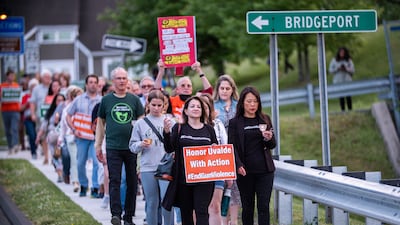
People march after a vigil held to stand with the Uvalde families and demand an end to gun violence in Newtown, Connecticut. AP -
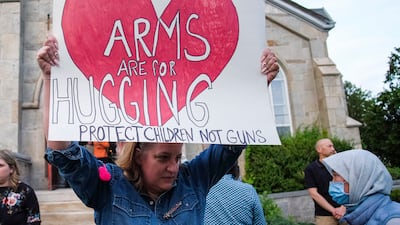
A woman holds up a banner at the end of the vigil in Newtown, Connecticut. AP -
Newtown was the scene of the 2012 attack at Sandy Hook Elementary School, when 20 pupils and six teachers were killed by a gunman. AP -
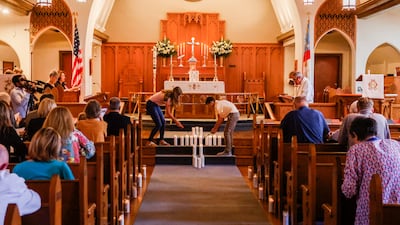
Candles are lit for each victim as people pray at St Philip's Episcopal Church. EPA -
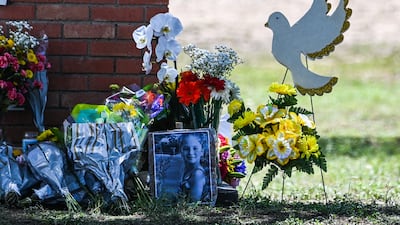
A makeshift memorial in front of Robb Elementary School. AFP -

Omahar Padillo with his son Omahar Jr, 12, during a community prayer, in Pharr, Texas, for the shooting victims at Robb Elementary School. AP -
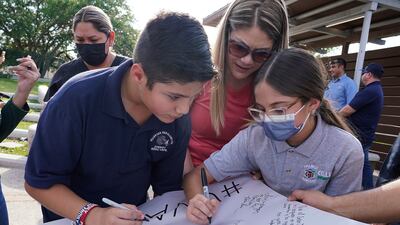
Omahar Padillo Jr, 12, and his sister Samantha, 9, with their mother, Silvia Padillo, write messages in support of the victims at Robb Elementary School. AP -
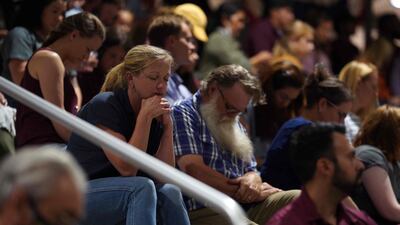
A vigil for the victims of the mass shooting at Robb Elementary School. AFP -
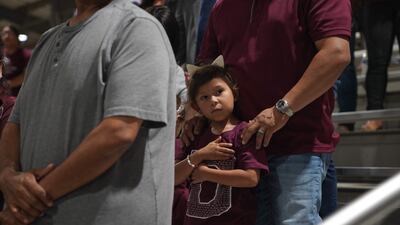
A young mourner at the vigil in Uvalde, Texas. AFP -
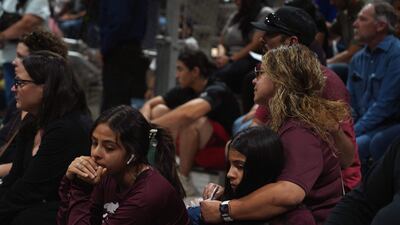
Families at the vigil. AFP -
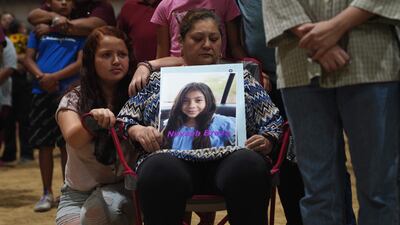
A woman holds a photo of Nevaeh Bravo, who was killed in the mass shooting, during a vigil for the victims of the massacre in Uvalde, Texas. AFP -
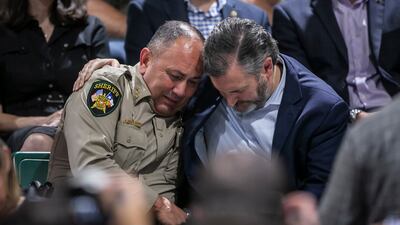
Uvalde County Sheriff Ruben Nolasco is comforted by Senator Ted Cruz during a vigil at the Uvalde County Fairplex Arena. AP -
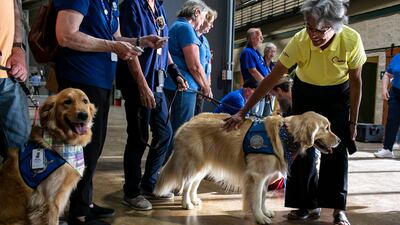
Diana Karau of Uvalde with a therapy dog named Tritan before a vigil to honour those killed at Robb Elementary. AP -

Gun-control advocates Dana Cibulski, left, and Judi Giannini attend a vigil outside the National Rifle Association headquarters in Fairfax, Virginia after the mass shooting in Uvalde, Texas. AFP -

Uziyah Garcia, 8, was among those killed in the shooting at Robb Elementary School in Uvalde, Texas. AP -
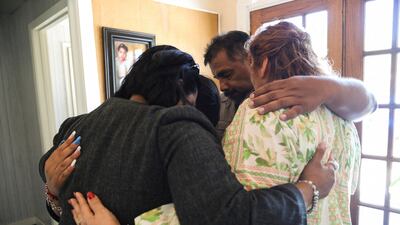
Pastor Jaime Cabralez, the uncle of shooting victim 10-year-old Eliahana Cruz Torres, is surrounded in prayer at his church in Uvalde, Texas on Wednesday. Reuters -

A woman embraces a child outside Willie de Leon Civic Centre, in Uvalde, where pupils were taken after the school shooting. Bloomberg -
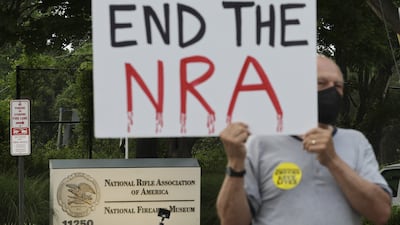
Gun-control advocates hold a vigil outside the National Rifle Association (NRA) headquarters in Fairfax, Virginia. AFP -
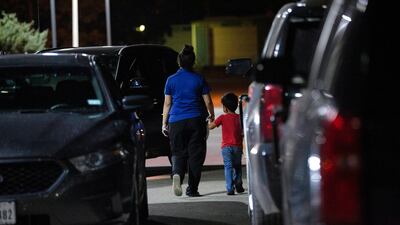
A woman and child leave the Civic Centre. Reuters


John Fetterman, the Democratic candidate for US senator, who Mr Biden praised as "a powerful voice for working people", did not join him in Wilkes-Barre on Tuesday but planned to meet him at another event next week.
Celebrity heart surgeon Mehmet Oz, the Republican candidate who is endorsed by former president Donald Trump, has sought to portray the Democrat as reckless on crime policy.
A recent UChicago Harris/AP-NORC poll found that three quarters of Americans consider gun violence to be a major problem, and eight in 10 believe gun violence is on the rise.
A majority of respondents are in favour of banning certain types of weapons, but more people support regulations that limit who is able to purchase guns.
"We're living in a country awash with weapons of war," the president said in his remarks. "Weapons that weren't designed to hunt but are designed to take on an enemy."
An exasperated Mr Biden asked the crowd: "What's the rationale for these weapons outside of a war zone?"
Mr Biden's remarks on Tuesday are part of a stretch of travel intended to buoy Democrats' chances in the midterms.
On Thursday, he is expected to deliver a primetime address in Philadelphia on what the White House has billed as “the continued battle for the soul of the nation”. Next week he is scheduled to attend events in Pittsburgh and the state of Wisconsin.
Agencies contributed to this report

