


FBI agents raided former president Donald Trump's Mar-a-Lago estate in Florida to retrieve classified documents, US Attorney General Merrick Garland confirmed on Thursday as he said he personally signed the warrant.
The raid focused on at least 10 boxes of documents that the National Archives said had been taken in breach of laws pertaining to presidential records.
The Washington Post reported that the FBI was attempting to recover, among other things, classified documents relating to nuclear weapons.
“I personally approved the decision to seek a search warrant,” Mr Garland said at a news conference on Thursday shortly after he requested a judge unseal the warrant to make it public.
The department has come under heavy criticism from Republicans after the FBI conducted a search at Mr Trump's sprawling Florida estate earlier this week.
The search warrant was approved by the court on August 5, three days before the raid, the docket states.
The Justice Department filed the request to unseal the warrant after Mr Trump's public confirmation of the search and the “substantial public interest in this matter”, Mr Garland said.
The attorney general also condemned the “unfounded attacks” on the department's integrity that were lobbied against its agents after the FBI raid.
“I will not stand by silently when their integrity is unfairly attacked,” he said.
“They protect the American people from violent crime, terrorism and other threats to their safety while safeguarding our civil rights.”
The former president slammed the raid as a “weaponisation of the justice system” and as a politically motivated move by President Joe Biden, though the White House said Mr Biden was not given advanced notice of the raid and that he respected the department's independence.
-
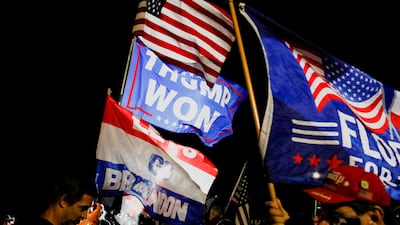
Supporters of former US president Donald Trump gather outside his Mar-a-Lago home in Palm Beach, Florida, after he said FBI agents raided it. Reuters -
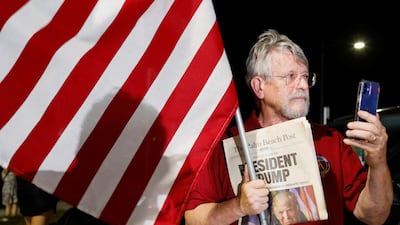
A supporter of Mr Trump holds a flag and an old newspaper outside the former president's Mar-a-Lago home. Reuters -

The FBI searched the estate as part of an investigation into whether the former US leader took classified records from the White House to his Florida residence. The Palm Beach Post / AP -
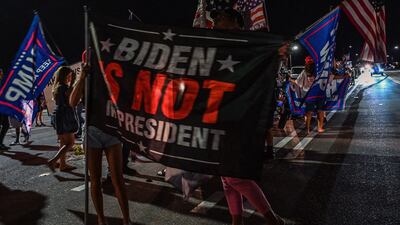
Despite the January 6 hearings and an FBI raid, some still believe that Mr Trump won the 2020 election. AFP -

Supporters gathered outside Mar-a-Lago in Florida as it was was being searched by FBI agents in what Mr Trump called an act of 'prosecutorial misconduct'. AFP -
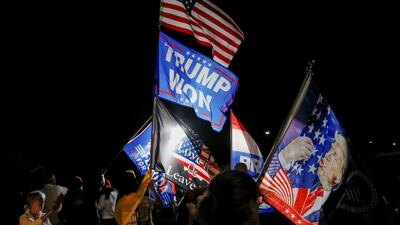
Trump supporters in Palm Beach, Florida outside Mar-a-Lago on Monday night. Reuters -
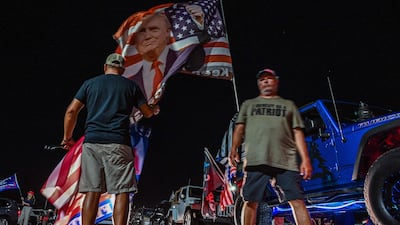
It is claimed that the former US president took documents from the White House and disposed of them at Mar-a-Lago. AFP -

Mr Trump was in New York when the search took place. Reuters -

Mr Trump alleges that no other president has been subjected to such treatment. AFP -
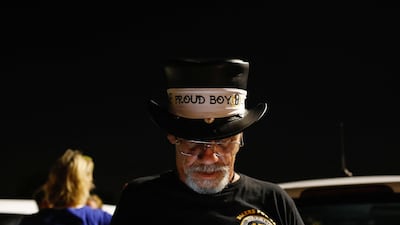
A member of the far-right Proud Boys group outside Mar-a-Lago. Reuters -
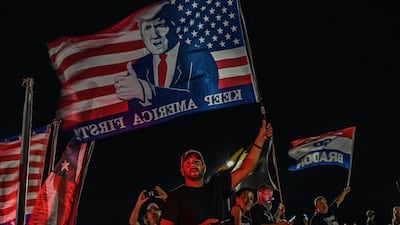
Mr Trump compared the FBI raid to Watergate. AFP


Republicans, hurrying to the former president's defence, launched complaints against the Justice Department. House Minority Leader Kevin McCarthy threatened to launch an investigation of the department if the party won control of the lower chamber of Congress later this year.
Writing directly to Mr Garland, he said “preserve your documents and clear your calendar”.
FBI Director Christopher Wray earlier slammed the “deplorable and dangerous” threats issued against law enforcement officials by Trump supporters.
Mr Wray declined to comment on the raid during a news conference in Omaha, Nebraska, on Wednesday.
FBI agents also seized the phone of Trump ally Scott Perry, the Republican congressman said. Mr Perry did not reveal why the device was confiscated.
Donald Trump supporters outside Mar-A-Lago - in pictures
-
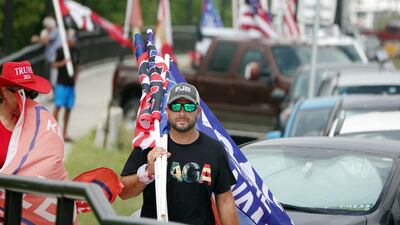
Supporters of former US president Donald Trump protest against the FBI raid at Mar-a-Lago in Palm Beach, Florida. South Florida Sun-Sentinel / AP -
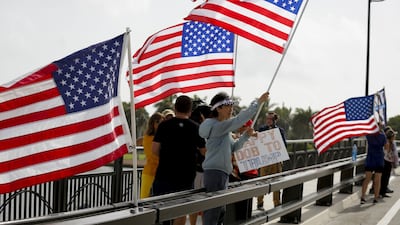
Trump supporters demonstrate outside Mar-a-Lago. Bloomberg -
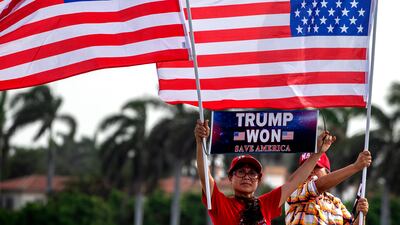
Trump supporters wave flags and hold signs outside Mar-a-Lago after the FBI carried out a search warrant at the former president's residence. EPA -
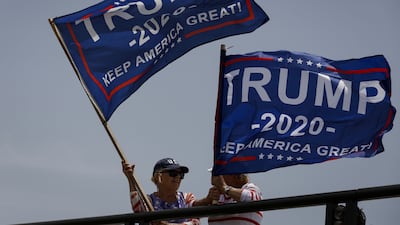
Mr Trump is facing intensified legal and political pressure after FBI agents searched his Florida home to investigate whether he took classified documents from the White House when he left office. Bloomberg -
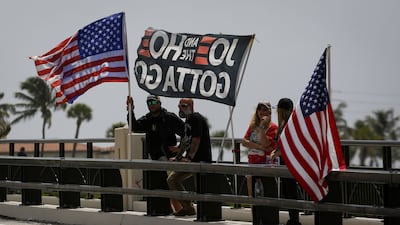
Supporters of Mr Trump demonstrate outside Mar-a-Lago in Palm Beach. Bloomberg -
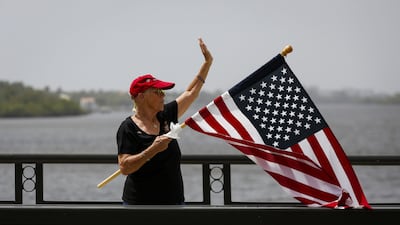
A Trump supporter waves a flag outside Mar-a-Lago. Bloomberg -
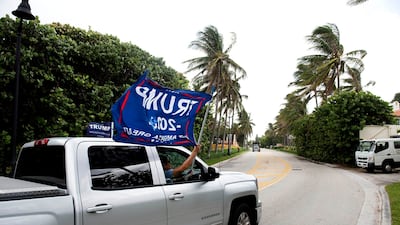
A Trump supporter drives past the former president's estate. AP -
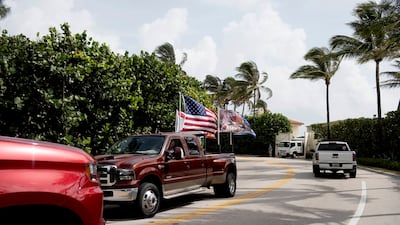
Trump supporters, members of the media and law enforcement gather near Mar-a-Lago. The Palm Beach Post / AP -
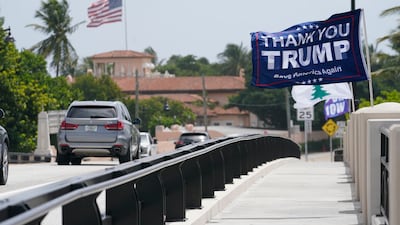
A flag flies in the air near former President Donald Trump's Mar-a-Lago estate. AP -
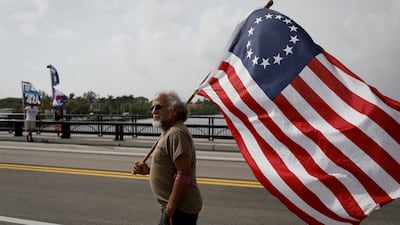
A Trump supporter holds the Betsy Ross flag at a gathering outside the former president's Mar-a-Lago home. Reuters



