


Experts on Yemeni maritime issues have raised concerns over a recent deal between the UN and Yemen’s Houthi rebels to unload a leaky oil platform that threatens to spill its cargo into the Red Sea.
A maritime security analyst and a former UN investigator said the deal might avert environmental chaos, but it also grants the Houthis a free replacement for the FSO Safer, even though the group has reneged on past deals.
“This is a triple win for Houthis, who already sold the oil in the FSO Safer and now will save face without paying one dollar,” said Fernando Carvajal, research director at South24 and a former UN investigator.
“Whatever deal by the UN ends the potential catastrophe at Ras Isa [oil terminal] is a good deal, but keep in mind that this is potentially worse than” previous efforts to broker deals with the Houthis, Mr Carvajal said.
The UN and the Houthis on March 5 signed an agreement to unload about 1.1 million barrels of oil from the vessel, which is stranded 8 kilometres off Ras Isa port on Yemen’s Houthi-held west coast.
The agreement, a copy of which was obtained by The National, says the UN is “committed to providing and supplying a replacement equivalent to the FSO Safer suitable for export” to the rebels within 18 months.
The Houthis are to grant access to the vessel but “bear no financial obligations”, says the deal.
The timeline has yet to be established, as the UN must first raise hundreds of thousands of dollars to carry out the inevitably complicated and delicate maritime operation.
Ian Ralby, chief executive of maritime security consultancy IR Consilium, said he was “cautiously optimistic” about the deal but that “time was running out” for the UN to raise cash for an effective operation.
-
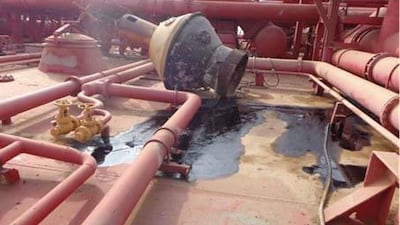
The deck of Yemen's 'FSO Safer', which has not been maintained for years. Photos: IR Consilium -
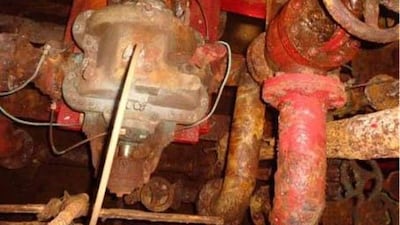
Corrosion in the boiler system. The severity of the ship's physical deterioration remains unclear. -
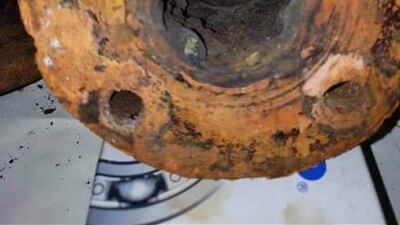
The vessel has been called a 'ticking time-bomb' as gases are building up in its chambers. -
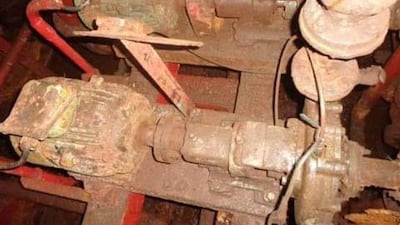
The ship's corroded auxiliary utility system. -
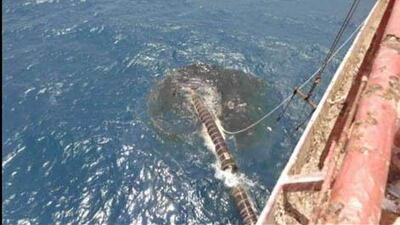
The external piping system broke down on April 22, 2019, leading to an oil spill. -
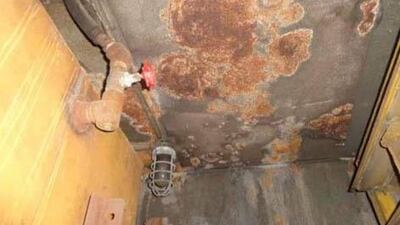
The vessel lacks a functioning cathodic system to protect it from corrosion. -
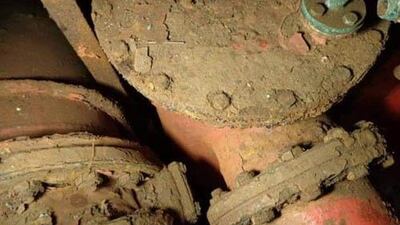
The leaky vessel still contains 1.1 million barrels of oil. -
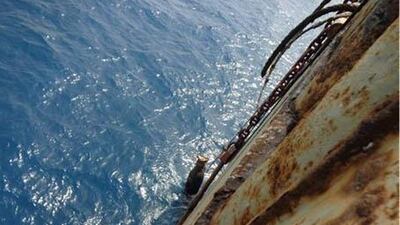
The hull of the 'FSO Safer', which could be sold for scrap.


“The devil is definitely in the details and there's a lot that will have to be worked out in order to first implement this initial agreement,” Mr Ralby said.
The Houthis’ replacement vessel, he said, would “preserve the equity” the group has in the FSO Safer so they could carry out long-held plans to export Yemeni crude in the future.
“They see that as being the potential backbone of a future Houthi economy,” Mr Ralby said.
“This would give them the prospect of that or at least maintain that prospect indefinitely.”
A Houthi spokesman did not immediately comment.
Houthi officials have previously approved UN missions to the offshore platform but later changed their minds.
UN spokesman Stephane Dujarric said he would not go “into the details” of the Houthis’ replacement vessel.
“Our focus right now is on dealing with the immediate ecological threat,” Mr Dujarric said.
Environmentalists and the UN have for years warned of the threat posed by the decrepit FSO Safer, which could rupture at any moment and lead to a disaster four times worse than the 1989 Exxon Valdez spill near Alaska.
Peter-Derrek Hof, the Dutch ambassador to Yemen, on Tuesday called the tanker a “ticking time bomb” and voiced support for UN efforts.
A major spill would hurt tourism, fishing and desalination plants across Yemen, Saudi Arabia, Israel, Jordan, Egypt, Sudan, Eritrea and Djibouti, and impede a shipping lane that carries about 10 per cent of global trade.
Yemen has been mired in civil war since 2014, when the Iran-backed Houthi rebels took control of the capital and much of the north, later forcing the government to leave Sanaa.
A Saudi Arabia-led military coalition entered the war in March 2015 at the request of the government.

