


The US on Monday said that time is fast running out for a deal that would see Iran return to the 2015 nuclear accord.
“We only have a handful of weeks left to get a deal, after which it will, unfortunately, be no longer possible to return to the JCPOA,” a senior US official told reporters, using the Iran deal's formal name, the Joint Comprehensive Plan of Action.
“We are in the final stretch … This can't go on forever because of Iran's nuclear advances,” the official added, as talks between signatories of the 2015 agreement drag on in Vienna with little sign of progress.
The US is increasingly concerned about Tehran’s shortened breakout capability — the time it would take for Iran to develop nuclear weapons — and a long list of breaches of the agreement.
If no new agreement is reached, the US official predicted that western political and economic pressure would mount on Iran.
He said, however, that a path towards progress remains open.
“There are still significant gaps. I don't want to, in any way, understate those. But we are in a position where the conversations are businesslike and where we can see the path to a deal, if those [political] decisions are made and if it's done quickly,” the official said.
-
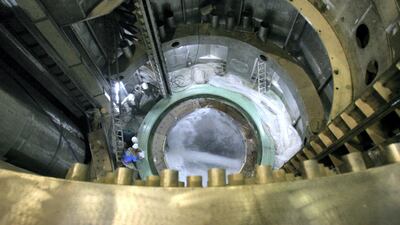
Russian contractors work at the Bushehr nuclear reactor site in 2007. The plant opened four years later. Bloomberg -
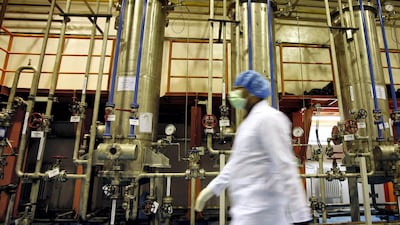
An Iranian technician at the International Atomic Energy Agency inspects the country's Isfahan plant in 2007. Tehran is no longer co-operating with the agency at nuclear sites across the country. EPA -

Workers wait to begin constructing a second reactor at the Bushehr nuclear power plant in 2019. AFP -
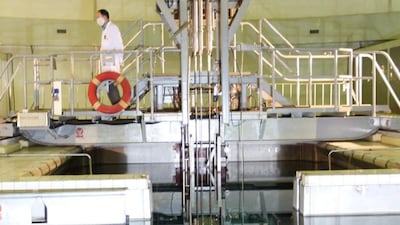
A metal-encased rod with 20 per cent enriched nuclear fuel is inserted into a reactor in Tehran in 2012. AFP -
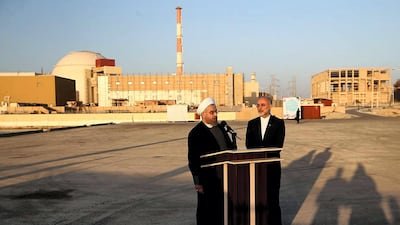
Fomer Iranian President Hassan Rouhani and the country's Atomic Energy Organisation chief Ali Akbar Salehi speak at the Bushehr nuclear site in 2015. AFP -
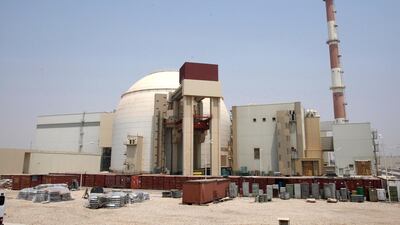
Iran's Bushehr nuclear plant has been restarted. EPA -
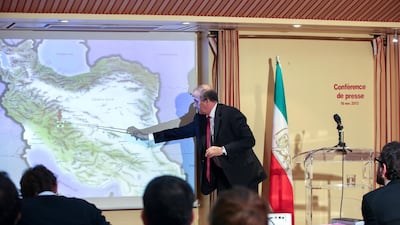
Mehdi Abrichamtchi, chairman of the Peace and Security Committee at the National Council of Resistance of Iran, shows journalists the location of a secret nuclear site in Iran in 2013. AFP -
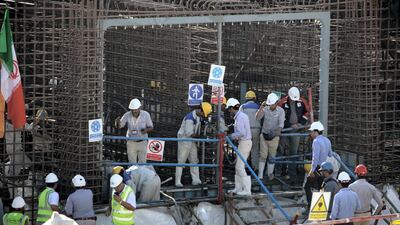
Workers prepare to begin the construction of a second reactor at the Bushehr site. AFP


As negotiators return to their capitals following two weeks of talks in Vienna, the US is stressing the importance of action.
“Now is the time for political decisions, there’s also urgency and if we don’t move with that urgency, that opportunity will very soon disappear,” the official said.
Washington is also hoping to engage in direct talks with Iran.
Tehran has rejected that proposal over the past two years, leaving President Joe Biden's administration no choice but to rely on partners to act as go-betweens.
“This is not a matter of asking Iran to do us a favour with direct talks. If Iran doesn't want to talk to us, that is, of course, their decision … This is a favour to the process,” he said.
In the past week, Iran appeared open to the possibility of holding direct talks with the US, but only when a deal is close.
“We have no indication that it is going to be the case when we reconvene,” the US official said.
Asked if there is any news on the release of four US hostages in Iran that the Biden administration has linked to a return to the deal, the official said those discussions continue “with the urgency and priority that they require".
Recent departures within the US negotiating team include the exit of deputy envoy Richard Nephew, a moderate voice and a proponent of sanctions as deterrence against Tehran.
The official expressed regret over Mr Nephew's departure, but stressed the US negotiating team is enacting the administration’s policy, noting, “this is not a matter of a person".
Diplomatic sources in Washington told The National that Mr Nephew had fundamental disagreements with the US envoy, Robert Malley, including being sidelined in the talks.
If a deal is reached, the US official said the next objective would be “to get, at some point, a discussion, a regional discussion” that will address Iran’s “destabilising activities” in the Middle East.
Meanwhile, Iran told the International Atomic Energy Agency on Monday it had stopped production at its Tesa complex in Karaj last June and transferred work to another site, the watchdog said.
The move responded to a "security concern" after the attack, with the new site "better protected", a European diplomat told AFP.
The complex, located near the capital Tehran, hosted a workshop to build parts for centrifuges, which are used to enrich uranium.
Iran has sharply accelerated its nuclear activities in the years since 2018, when US president Donald Trump withdrew from the 2015 international nuclear deal and imposed sweeping sanctions on Tehran.

