


A group of key US senators are floating the possibility of aid cuts to Tunisia and an assistance package for Lebanon, marking a potentially significant reversal of fortunes on Capitol Hill for both countries.
Democrat Chris Murphy threatened to cut Tunisian aid over President Kais Saied’s failure to form a new government following his freezing of Parliament, while another senator raised the possibility of a “mini Marshall Plan” for Lebanon after meeting with Prime Minister Najib Mikati.
“Tunisia’s president has declared a state of emergency and that state of emergency needs to end swiftly,” Mr Murphy told reporters on a press call following a meeting with Mr Saied in Tunis.
“We spent about two and a half hours with the president, talking about the concerns of the United States, about the president’s unwillingness to form a new government and end the state of emergency. I made it clear to the president that it’s much harder for the United States Congress to continue to deliver aid to Tunisia if this crisis continues.”
Mr Murphy, the head of the Senate’s Middle East panel, and three other Democrats have recently returned from a congressional visit to Tunisia, Lebanon, Israel, the West Bank and Greece.
Tunisia quickly became a regional favourite among the purse-string holders in Congress following its 2011 democratic revolution, and members have happily lavished millions of dollars in US assistance on the tiny North African country every year since.
The House of Representatives granted the Biden administration’s request for $197 million in Tunisian aid when it passed its foreign aid bill in July. But that vote occurred a mere two days after Mr Saied froze the Tunisian Parliament, and the full legislative text had been drafted weeks before that.
Since then, the US has continued to lose patience as Mr Saied consolidates power by decree.
The White House sent a delegation of senior officials to Tunisia to relay a message to Mr Saied from President Joe Biden saying that he must appoint a prime minister-designate — something the Tunisian president has so far refused to do.
The Senate is expected to release and vote on its own version of the foreign aid bill in the coming weeks, giving Mr Murphy ample opportunity to convince his colleagues in both chambers to cut Tunisian aid unless Mr Saied appoints a prime minister-designate.
Conversely, Lebanon has generated more goodwill on Capitol Hill following Friday’s announcement that its political elite had formed a new government under Mr Mikati.
Democrat Richard Blumenthal, who joined Mr Murphy in Lebanon, raised the prospect of a badly needed Lebanese aid package during the press call.
“I wouldn’t discount or dismiss the idea of a mini Marshall Plan for Lebanon because our security interests depend on it,” said Mr Blumenthal, referring to the US foreign aid initiative for western European countries following the Second World War.
David Hale, a US diplomat and former ambassador to Lebanon, indicated in May that the State Department is also working on a foreign assistance package for Beirut.
Pro-Israel hardliners in Congress have repeatedly criticised US support for the Lebanese Armed Forces, and members across the ideological spectrum have expressed frustration over Lebanon's failure to form a government for more than a year after the Beirut port blast.
That failure has exacerbated Lebanon's economic crisis, preventing Beirut from enacting the reforms necessary to unlock desperately needed cash from institutions such as the International Monetary Fund and the World Bank.
-
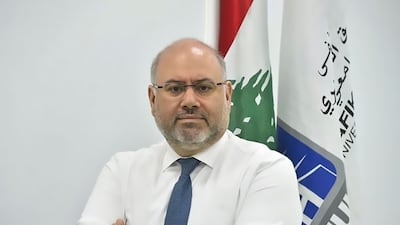
Health Minister Firass Abiad, a gastrointestinal surgeon, is the chairman of the board of directors of Lebanon’s largest hospital, the Rafik Hariri Hospital. Photo: NNA -
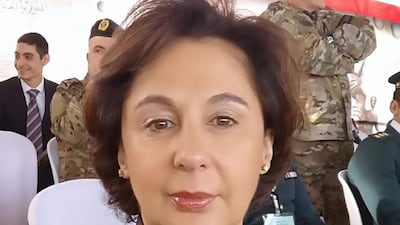
Minister of Administrative Development Najla Riachi is the only woman in the Cabinet and has served in a number of diplomatic positions, including as Lebanon’s permanent representative to the UN from 2007 to 2017. Photo: NNA -
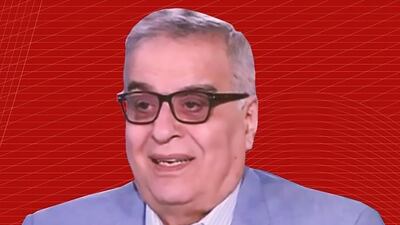
Foreign Affairs Minister Abdallah Bou Habib served as Lebanon’s ambassador to the US between 1983 and 1990 and has worked for the Wold Bank. Photo: NNA -
Interior Minister Bassam Al Mawla was a judge of the Chamber of First Instance in Beirut before heading the North Lebanon criminal court. Photo: NNA -
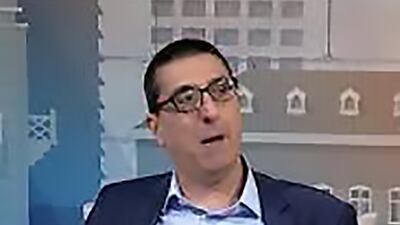
Social Affairs Minister Hector Hajjar has worked for NGOs including Caritas and 'Risala Assalam' which supports people with special needs. Photo: NNA -

Economy Minister Amin Salam is a corporate lawyer and economist with a degree in leadership and management from the Harvard Kennedy School. Photo: NNA -
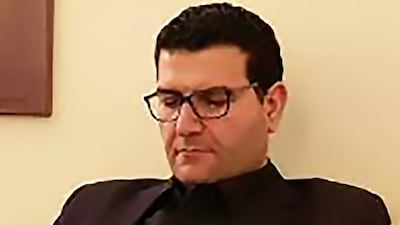
Agriculture Minister Abbas Al Hajj Hassan is a former journalist who worked at France 24 in Paris. He studied law and political science in France. Photo: NNA -
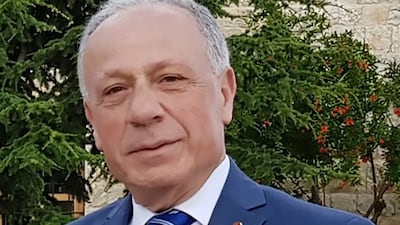
Defence Minister Maurice Salem served as the army's head of military medicine until his retirement at the rank of brigadier in 2012. Photo: NNA -

Minister of the Displaced Issam Sharafeddine is a pharmacist by training who branched out into the business world in the 1990s when he started producing soaps, cosmetics and cleaning products. Photo: NNA -
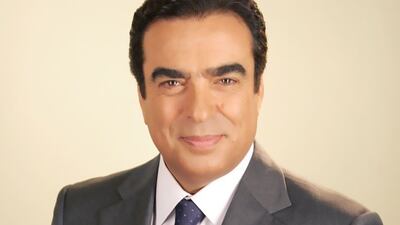
Information Minister George Kordahi worked as a journalist for MBC FM Radio in London and Lebanese television channel LBC. He is also a goodwill ambassador for the UN Environment Programme. Photo: NNA -

Public Works and Transport Minister Ali Hamieh holds a PhD in electronics and optical communications from the University of Western Brittany in France. He is a lecturer at a number of local universities. Photo: NNA -
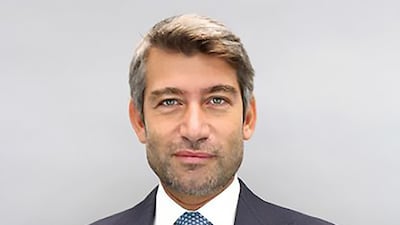
Energy Minister Walid Fayyad is managing director of the Mena division at international consulting firm Partners in Performance. Photo: NNA -
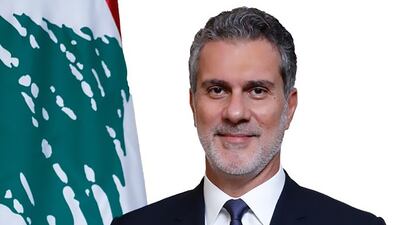
Tourism Minister Walid Nassar has worked as a consultant for Lebanon’s participation in Expo 2020 Dubai. Photo: NNA -
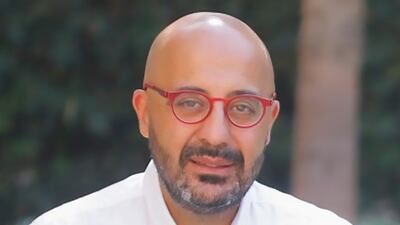
Environment Minister Nasser Yassin is the current director of the Crisis Observatory at the American University of Beirut. Photo: NNA -
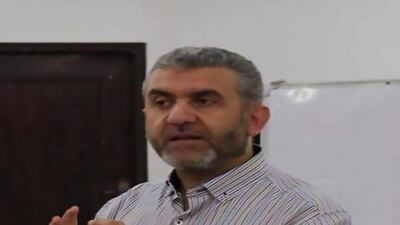
Labour Minister Moustafa Bayram is one of Hezbollah’s ministers in the Cabinet. He was appointed head legal observer in the audit department of the Council of Ministers in 1998. Photo: NNA -
Sports and Youth Minister George Kallas has held a number of administrative positions in Lebanese newspapers and universities and as a lecturer at the faculty of documentation and information at the Lebanese University. Photo: NNA -

Education Minister Abbas Halabi is a former judge and vice chairman of the board of directors and legal counsel at Lebanese bank BBAC and holds a degree in French and Lebanese law from Saint Joseph University in Beirut. He is vice president of the Lebanese National Commission for Unesco. Photo: Unesco -
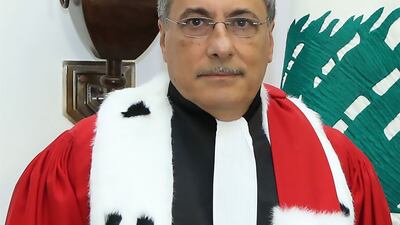
Justice Minister Henry Khoury is the former head of the State Shura Council. Photo: NNA -
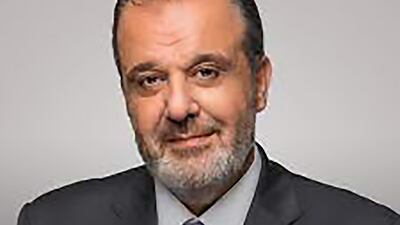
Industry Minister George Boujikian is a businessman who has founded several Lebanese companies including pharmaceutical companies Technoline and BioDiamond Middle East. He holds both Lebanese and Canadian citizenship. Photo: NNA


In the meantime, the prices of consumer goods, food and fuel continue to skyrocket amid rapid inflation, fuelling popular unrest against the Lebanese political elite.
Mr Murphy noted that the senators observed “lines for gas stretched around city blocks” while driving through Beirut.
The senators criticised Iran’s circumvention of the Lebanese caretaker government through the delivery of two ships full of fuel to the paramilitary group Hezbollah, with Democrat Chris Van Hollen deriding it as a “PR stunt".
However, they endorsed a proposal under discussion between Lebanon, Syria, Jordan and Egypt to ease the fuel crisis, despite continuing US sanctions on Damascus.
“We look forward to working with the Biden administration on this alternative of power from Egypt to Jordan and Syria into Lebanon,” said Mr Van Hollen. “That does require a waiver or some other issue to address the [Syria sanctions] provisions.”
The currency crisis has also placed the Lebanese Armed Forces in dire financial straits. It will need as much as $100m in additional cash over the next year to pay its soldiers’ salaries. Enlisted Lebanese soldiers are currently living on less than $90 a month.
Mr Biden issued a memorandum on Tuesday aimed at providing $47m in aid to the Lebanese Armed Forces in the hopes of freeing up cash to pay soldiers’ salaries.
Still, it remains to be seen whether the new Lebanese government will be able to rein in the rampant corruption in the country, another major drag on the spiralling economy.
“The future prime minister certainly talked the right talk, and now he’s really got to walk that walk,” said Mr Blumenthal.

