
The US and Britain are temporarily deploying a combined total of 3,600 troops to Afghanistan to enable “the safe and orderly departure” of diplomats and others as the Taliban continue a blitz across the country and set their sights on Kabul, officials said on Thursday.
The bulk of the forces will be American, with the Pentagon sending 3,000 troops to Kabul's airport. The troops will come from two Marine infantry battalions and will arrive in the next two days, Pentagon spokesman John Kirby said.
Britain's Ministry of Defence meanwhile said it was sending 600 troops to Afghanistan on a “short-term basis to provide support to British nationals leaving the country".
Mr Kirby also announced that an additional 1,000 US troops were headed to Qatar to help with visa processing for the ongoing evacuation of former translators and other Afghans who had worked with Americans in Afghanistan.
And up to 4,000 US soldiers from North Carolina’s Fort Bragg were headed to Kuwait to be on standby in case more troops were needed for the Kabul mission, he said.
Mr Kirby said the new deployment did not alter the US goal of fully withdrawing from Afghanistan by the end of the month, under a deadline set by President Joe Biden in April.
The US has rapidly pulled its troops out of Afghanistan in recent months, with only about 650 remaining before Thursday's announcement.
Mr Kirby insisted the new US mission did not amount to a full-scale evacuation and brushed off a question about whether Kabul was destined to end up echoing the chaotic scenes of the 1975 fall of Saigon as America lost the Vietnam War.
“Nobody is abandoning Afghanistan,” Mr Kirby said, and added that the US forces were “doing the right thing at the right time, protecting our people".
“This is about the safe movement of our people in Afghanistan,” he said.
Earlier in the day, the US embassy in Kabul urged all American citizens to leave Afghanistan immediately.
A security alert called for US citizens to leave “using available commercial flight options” as “given the security conditions and reduced staffing, the embassy’s ability to assist US citizens in Afghanistan is extremely limited even within Kabul".
The State Department also announced it would be further reducing its current civilian staff at the embassy in Kabul. The Pentagon will temporarily send the additional troops to the Hamid Karzai International Airport while the State Department retreats.
“We are further reducing our civilian footprint in Kabul in light of the evolving security situation,” State Department spokesman Ned Price told reporters.
“We expect to draw down to a core diplomatic presence in Afghanistan in the coming weeks.”
He said the embassy will nonetheless remain open in its current location — at least for now — and that staff will continue to process Special Immigrant Visas for Afghans who helped the US military and their families.
The embassy first ordered the departure of employees who could fulfil their duties outside of Afghanistan on April 27.
Britain is also urging all its nationals to leave Afghanistan.
“The additional deployment of approximately 600 troops is in light of the increasing violence and rapidly deteriorating security environment in the country,” the Ministry of Defence said.
“In parallel, the number of staff working at the British embassy in Kabul has been reduced to a core team focused on providing consular and visa services for those needing to rapidly leave the country.”
Sir Laurie Bristow, the UK’s ambassador to Afghanistan, will continue to lead a small team that will relocate from the embassy compound in Kabul's heavily fortified Green Zone “to a more secure location".
-
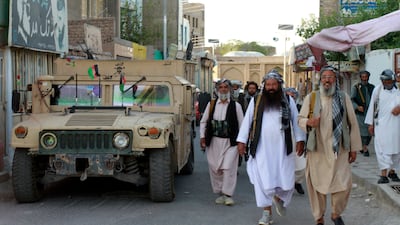
Members of the militia loyal to Ismail Khan, a former Mujahideen commander, walk in the city of Herat after security forces took back control following fighting between Taliban and Afghan security forces. AP -
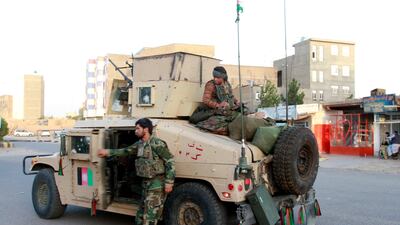
Afghan security personnel patrol the city of Herat. AP -

Members of the militia loyal to Ismail Khan, a former Mujahideen commander, congregate in Afghanistan's Herat province. AP -
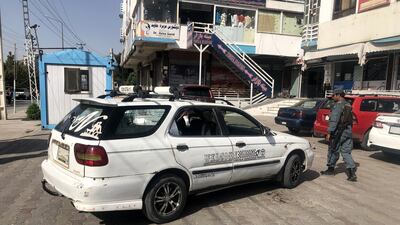
Afghan security officials inspect the scene of the assassination of Dawa Khan Menapal, the head of the Afghan government's information centre, in Kabul. EPA -
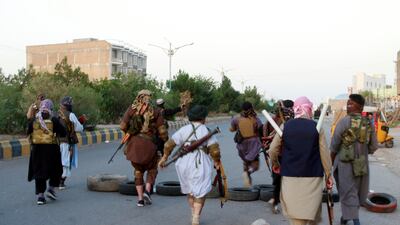
Militia members make their way through the city of Herat. AP -
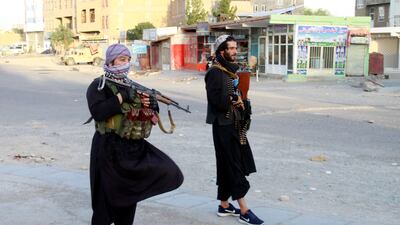
Herat's streets are deserted, apart from armed groups on patrol. AP -
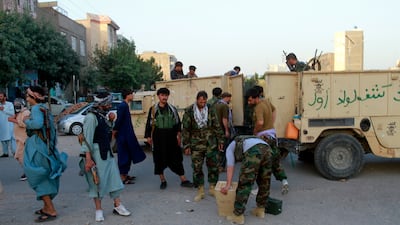
Locals in Herat are becoming increasingly worried about the prospect of war. AP


US Secretary of State Antony Blinken and Defence Secretary Lloyd Austin both spoke with Afghan President Ashraf Ghani on Thursday to co-ordinate the diplomatic drawdown.
The new deployments come as the Taliban have reportedly taken Herat, Afghanistan’s third-largest city, after laying siege for the past several weeks.
Herat is the 11th provincial capital to fall to the Taliban this week.
The Taliban have also captured the city of Ghazni, located 150 kilometres from Kabul.
Rapid Taliban offensives have prompted Afghan civilians to flee en masse to Kabul, raising fears that suicide bombers could enter the capital alongside displaced persons.
AP contributed to this report.

