


Live updates: Follow the latest news on Israel-Gaza
Scotland’s First Minister Humza Yousaf has urged Britain to call for a ceasefire between Israel and the Hamas militant group that controls the Gaza Strip, where his parents in-law are “trapped”.
The leader of the Scottish National Party piled pressure on Foreign Secretary James Cleverly to use positive British-Israeli relations to push for civilians in the densely populated Palestinian territory to be given safe passage out.
Gaza is under an Israeli air, sea and land blockade.
It is feared tens of thousands of civilians in Gaza could die if Israel’s army continues its bombing and launches a ground assault, which it is expected to do.
In a letter to Mr Cleverly on Tuesday, Mr Yousaf appealed to him to intervene in a bid to persuade Israel’s government to open a humanitarian corridor.
“Too many innocent people have already lost their lives as a consequence of these completely unjustifiable and illegitimate attacks by Hamas,” Mr Yousaf wrote.
“However, innocent men, women and children cannot, and should not, pay the price for the actions of a terrorist group.”
He spoke on Monday about how his wife's parents were stuck in Gaza after a visit to her 93-year-old grandmother.
“As a close friend and ally of Israel, I therefore ask the UK government to call on the government of Israel to ensure innocent civilians are protected, and to put in place an immediate ceasefire to allow the safe passage of civilians through the Rafah border,” he said in his letter.

Israeli air strikes and artillery hit the area near the Rafah border crossing between Gaza and Egypt on Tuesday, Egyptian officials said. It was the third in 24 hours.
Explosions on Monday forced authorities to suspend operations.
The crossing is the only one in Gaza not controlled by the Israeli authorities and the sole exit route for 2.3 million Palestinians living in the strip.
Mr Yousaf also called for essential supplies to be taken into Gaza, after Israel's Defence Minister Yoav Gallant ordered a “complete siege” on the territory, saying Israeli authorities would cut electricity and block the entry of food, water and fuel.
The Scottish National Party leader, born in Glasgow to Pakistani immigrants, said Israel “should open a humanitarian corridor into Gaza to allow supplies, including food, fuel, water and medical supplies, for those civilians who are trapped, helpless and cannot leave.”
Mr Yousaf's wife said she feels like she is “just living in a nightmare” after her parents became trapped.
Nadia El-Nakla told the BBC that her parents, Elizabeth and Maged El-Nakla, “continually” tell her “they feel like they are going to die”.
“There is no electricity from 2pm their time, which was just a few hours ago," she said. "No electricity means no hospital supplies, it means no food. You can’t even preserve the food that you have.
“I don’t know what it means for them in the long-term, I don’t know what’s about to happen to them.
“For me, my number one is my family being safe.”
Hamas’s large-scale attack on Israel, launched in the early hours of Saturday, left more than 1,200 people dead, including about 260 young revellers at the Supernova music festival near the Gaza border.
Israel has responded by striking Hamas targets in Gaza, killing more than 1,000 people.
Mr Yousaf’s call came as Irish Prime Minister Leo Varadkar urged Israel to show “restraint” in its response to Hamas’s attacks.
“From Ireland’s point of view, we are saying to Israel that yes you have a right to defend yourself, you’re surrounded by enemies who want to end your existence, but any response must be proportionate,” Mr Varadkar told the Irish broadcaster RTE.
He said while there is “a lot of solidarity internationally for Israel at the moment”, there is a risk that this could “fall apart if Israel goes too far in terms of its actions in Gaza".
“There’s a risk then of violence flaring up in the West Bank, in Lebanon and other places so we’re very much calling for restraint,” Mr Varadkar said.
Israeli Prime Minister Benjamin Netanyahu warned the bombardment was “only the beginning” of his military’s response to the terrorist assault.
Antony Blinken, the US Secretary of State, is expected to visit Israel later on Wednesday.
Israel-Gaza war latest – in pictures
-
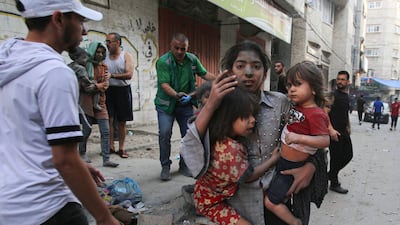
A Palestinian girl holds two children as she stands on a street in Gaza city as Israel continues to launch air strikes. AFP -
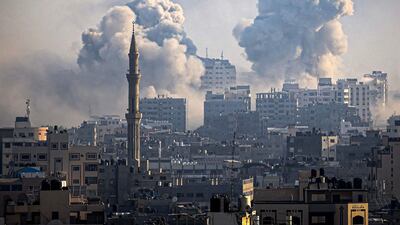
Smoke plumes billow during Israeli air strikes on Gaza city. AFP -
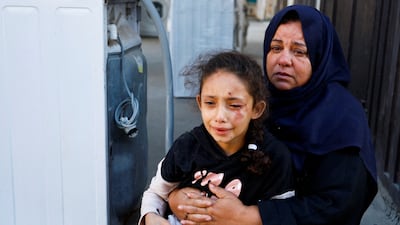
A Palestinian girl following an Israeli air strike in Khan Younis. Reuters -
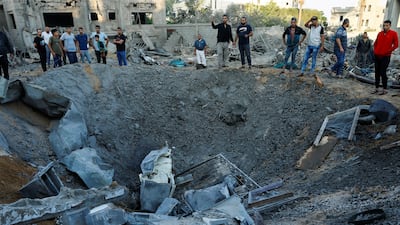
Palestinians survey the rubble of a house destroyed in Israeli strikes in Khan Younis, in the southern Gaza Strip. Reuters -
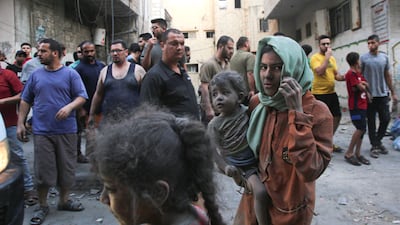
A Palestinian woman, covered in dust, carries a child in Gaza city. AFP -
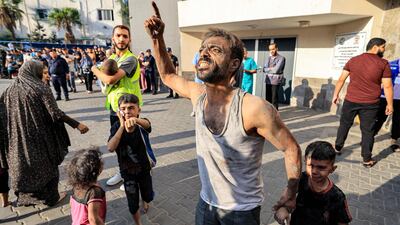
A Palestinian man with a child outside al-Shifa hospital in Gaza city. AFP -
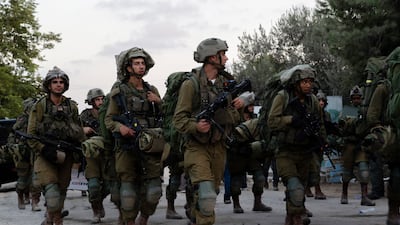
Israeli soldiers walk through Kibbutz Be'eri. Days earlier Hamas militants killed more than a hundred civilians near the border with Gaza. Getty Images -
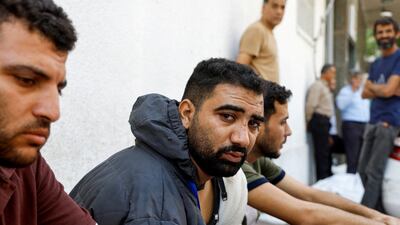
A wounded Palestinian man Ala Al-Kafarneh, who survived Israeli strikes, attends a hospital in Gaza city. Mr Al-Kafarneh lost his pregnant wife and several members of his family in air strikes after they fled Beit Hanoun. Reuters -
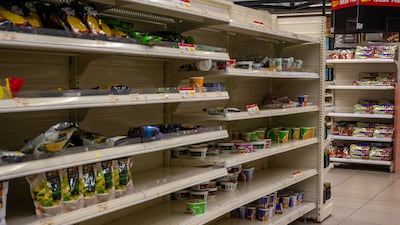
Supermarket shelves containing dry goods are left depleted in Tel Aviv. Getty Images -
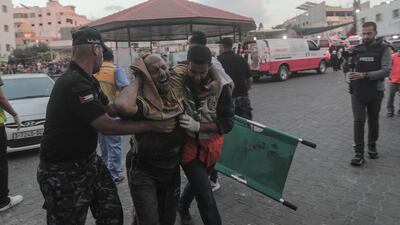
An injured Palestinian man arrives at Al-Shefa hospital in Gaza city. EPA -
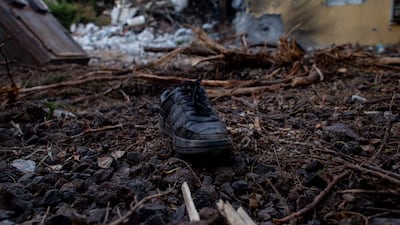
A boot lies on the ground outside a damaged house in Be'eri, Israel. EPA -
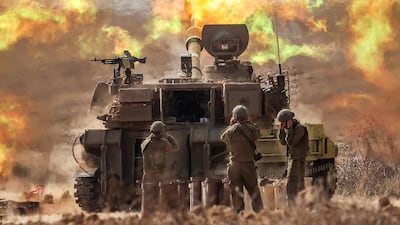
An Israeli army self-propelled howitzer near the border with Gaza in southern Israel. AFP -
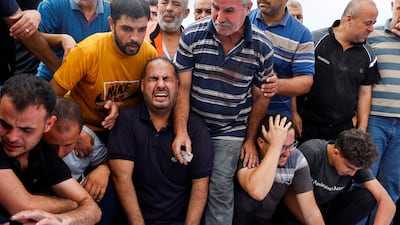
Palestinian mourners during the funerals of Al-Agha family members killed in Israeli strikes in Khan Younis in the southern Gaza Strip. Reuters -
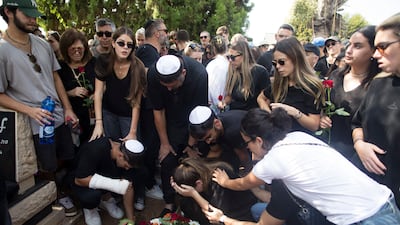
Family and friends of May Naim, 24, who was killed by Palestinians militants at a party near the Israeli border with the Gaza Strip, during her funeral in Gan Haim, Israel. Getty Images -
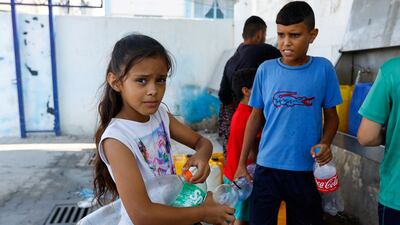
Palestinian children in Khan Younis fill bottles with water from public taps during the conflict with Israel. Reuters -
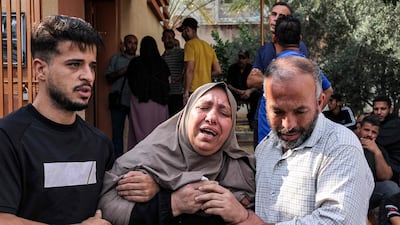
Men outside a morgue in Khan Yunis console a woman mourning loved ones killed in an Israeli air strike. AFP -

A Palestinian girl injured in Israeli strikes is taken to hospital in Gaza City. Reuters -
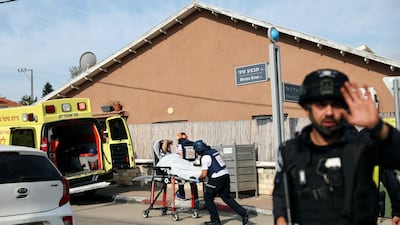
An Israeli woman is evacuated by paramedics following a rocket attack launched from the Gaza Strip into Israel, in Sderot. Reuters -
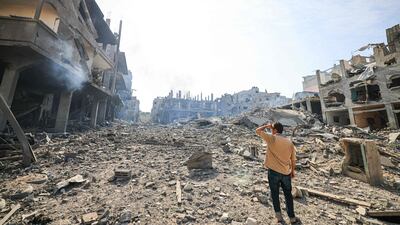
A man looks at the destruction in the ravaged Jabalia refugee camp, following overnight Israeli air strikes. AFP -
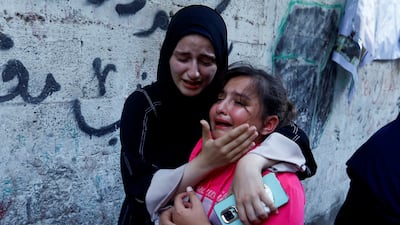
The daughter of Zakaria Abu Maamar, a member of Hamas's political office, at her father's funeral, after he was killed in an air strike in Khan Younis. Reuters -
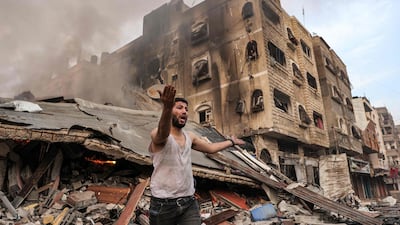
A collapsed building after an Israeli bombardment in Gaza City. AFP -
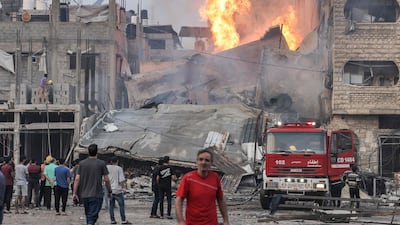
Firefighters attend a burning building after an Israeli bombardment in Gaza City. AFP -
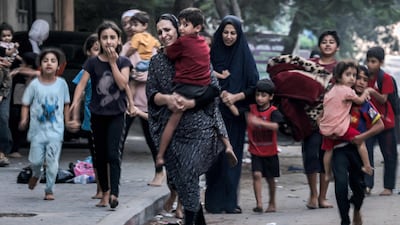
Women and children in Gaza City. AFP -
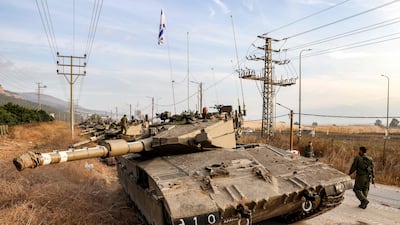
An Israeli army soldier passes a Merkava battle tank in northern Israel near the border with Lebanon. AFP -
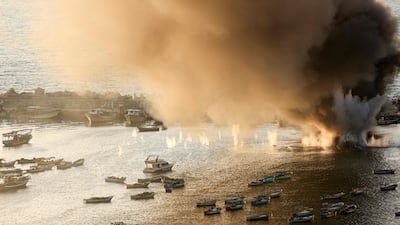
An Israeli strike on the port of Gaza City. AFP -
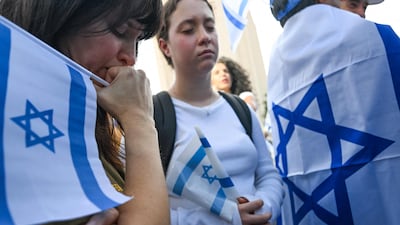
Demonstrators outside the West Los Angeles Federal Building in California during a rally in support of Israel. AFP -
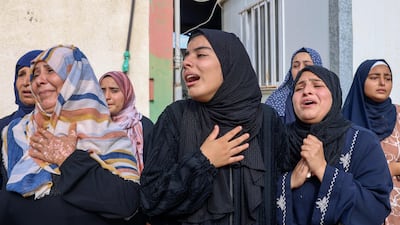
Mourners at the funeral of Palestinians killed in overnight Israeli shelling in Khan Younis in Gaza. AFP -
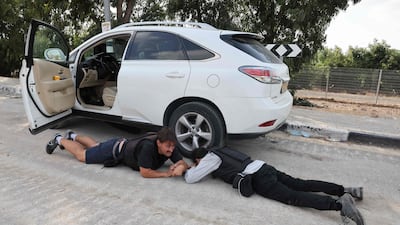
Israeli journalists take cover during a rocket attack from Gaza in the southern Israeli kibbutz of Kfar Aza near the border. AFP -

Palestinians rescue a young girl from the rubble of a destroyed residential building following an Israeli air strike. AP -

Mourners at the graveside of Eden Guez, who was killed as she attended a festival that was attacked by Hamas gunmen from Gaza. Reuters -
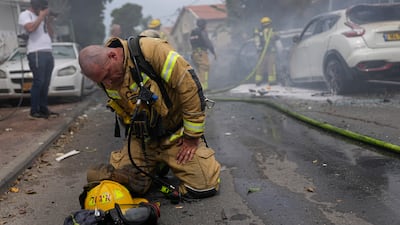
An Israeli fireman recovers after extinguishing cars set on fire by a rocket fired from Gaza. AP -
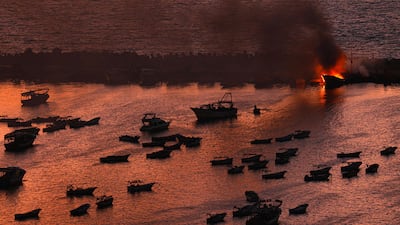
Smoke billows from a boat after a strike by Israel on the port of Gaza City. AFP -

Destroyed residential buildings in Gaza City. AP -

Rockets from Gaza launched towards Israel. Reuters -

A Palestinian woman sits among the rubble in the destroyed Al-Ramal neighborhood following an Israeli air strike in Gaza City. EPA -
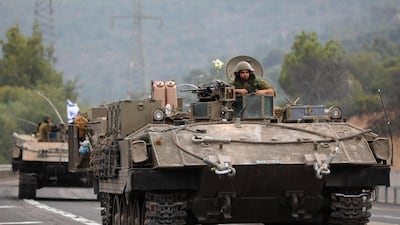
Israeli soldiers in armoured vehicles near the northern town of Kiryat Shmona close to the border with Lebanon. AFP -

Buildings destroyed by Israeli strikes in Gaza city. Reuters -
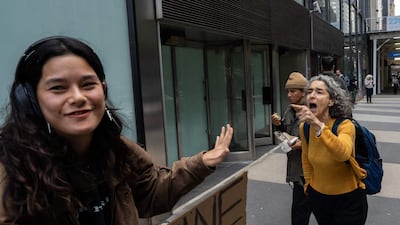
Nicole Izsak, right, confronts a Palestinian supporter near the Israeli consulate in New York, claiming her cousin is being held hostage in Gaza. AFP -
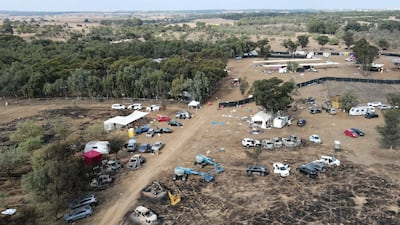
The abandoned site of the Supernova music festival, besieged by Hamas militants in southern Israel. AFP -
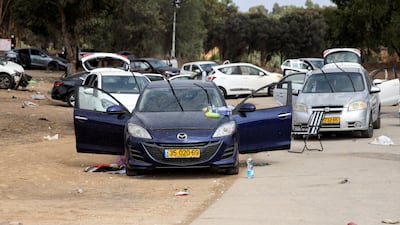
An attack on the site by Hamas gunmen from Gaza left at least 260 people dead. Reuters -
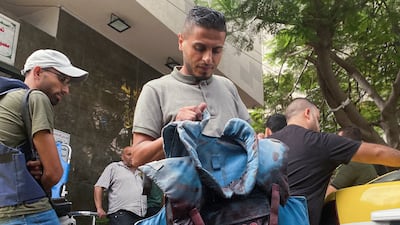
A man carries a blood-stained flak jacket belonging to a Palestinian journalist, who was killed with two colleagues when an Israeli missile hit a hospital building while they were outside reporting, in Gaza city. Reuters -
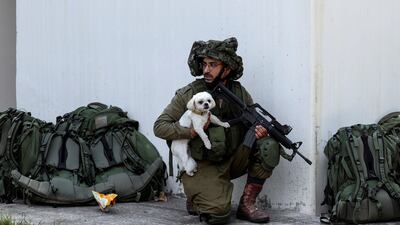
An Israeli soldier holds a rescued dog as he takes position near a bomb shelter in Kibbutz Kfar Aza, southern Israel. Reuters -

Protesters chant and wave the Palestinian flag at a rally in Melbourne, Australia. Getty Images -
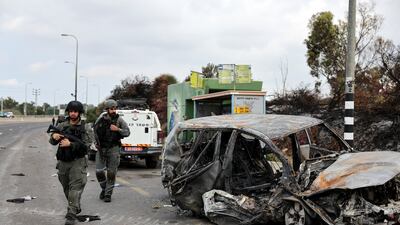
Israeli border police walk past a burnt-out car as rockets are launched from the Gaza Strip towards Israel, in Ashkelon, southern Israel. Reuters -

Palestinians amid the rubble following Israeli air strikes that razed a neighbourhood in Gaza city. AP -
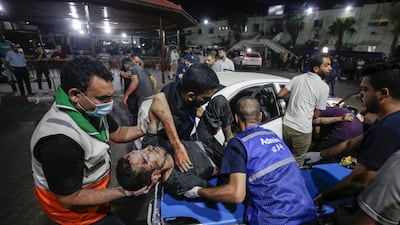
Palestinians carry a wounded man at Al Shifa Hospital in Gaza city. EPA -
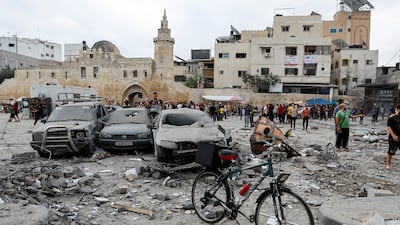
Palestinians inspect damage in the aftermath of Israeli strikes in Khan Younis, southern Gaza Strip. Reuters



