


Follow the latest news from the coronation of King Charles here
A choir at Westminster Abbey will continue a royal tradition on Saturday by singing the hymn Zadok the Priest at the most sacred moment of King Charles III's coronation.
The hymn by German composer Georg Frederick Handel has been played at every British coronation since 1727.
It was composed for the coronation of King George II, who was born in Germany and was a patron of Handel.
The name refers to the biblical story of King Solomon being anointed by the priest Zadok and the Prophet Nathan.
The Old Testament tale is also the origin of the procedure in which the king is anointed with holy oil by the Archbishop of Canterbury — the moment at which the hymn is sung.
Outside of royal events, an adapted version of Zadok the Priest was composed in 1992 as the anthem for football's Champions League.
The coronation of King Charles III — in pictures
-
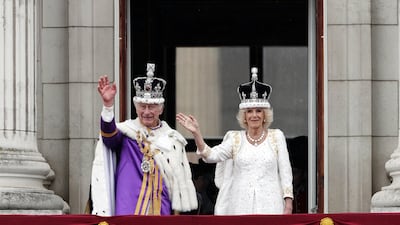
King Charles III and Queen Camilla on the balcony of Buckingham Palace, London, following the coronation. PA -
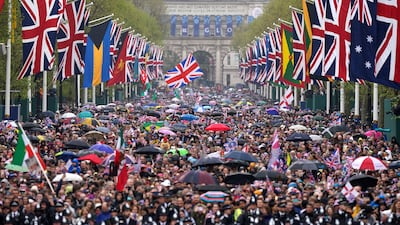
Crowds fill the Mall following the coronation. PA -

The British Royal Air Force's aerobatic team, the Red Arrows, perform a fly-past over Admiralty Arch in central London. AFP -
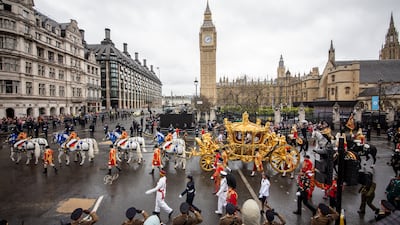
King Charles and Queen Camilla are carried in the Gold State Coach, pulled by eight Windsor Greys, as the Coronation Procession passes through Parliament Square on its way to Buckingham Palace. PA -
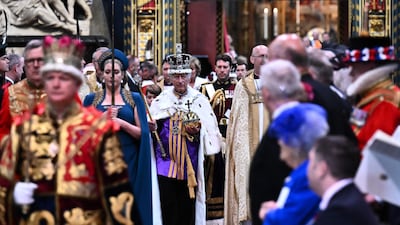
King Charles wearing the Imperial state Crown carrying the Sovereign's Orb and Sceptre leaves Westminster Abbey. AFP -
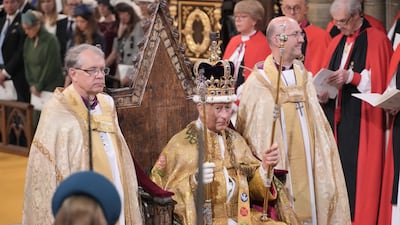
King Charles is crowned with St Edward's Crown at Westminster Abbey. PA -

King Charles sits to receive the St Edward's Crown. AP -
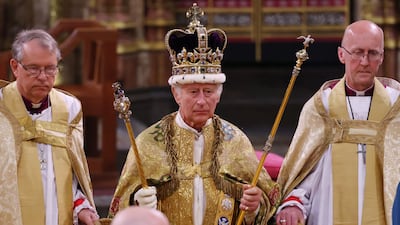
King Charles rises after he is crowned. Getty -
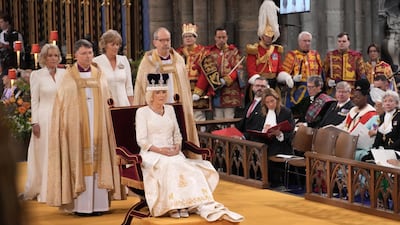
Queen Camilla is crowned with Queen Mary's Crown. PA -

King Charles wearing the St Edward's Crown and Queen Camilla wearing the Queen Mary's Crown during the coronation ceremony. PA -
Prince William and Catherine, Princess of Wales, followed by Princess Charlotte and Prince Louis, arrive for the coronation. AP -
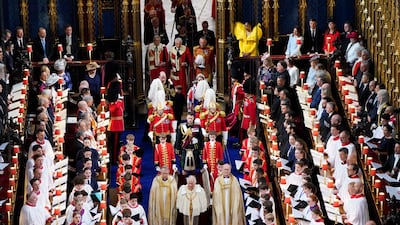
King Charles enters Westminster Abbey. Getty -

King Charles at Westminster Abbey as the coronation ceremony begins. PA -
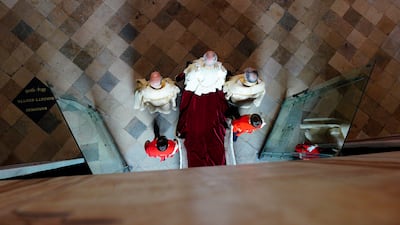
King Charles arrives for his coronation at Westminster Abbey. PA -

The Diamond Jubilee State Coach travels along The Mall. PA -
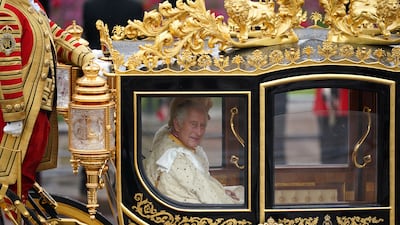
King Charles in the Diamond Jubilee State Coach as the King's Procession passes along The Mall to the coronation ceremony at Westminster Abbey. PA -

King Charles and Queen Consort Camilla travel from Buckingham Palace in the Diamond Jubilee Coach. Getty Images -

King Charles travels to Buckingham Palace to prepare for his coronation. Reuters -

The motorcade of King Charles and Queen Consort Camilla travel across London from St James's Palace to Buckingham Palace. PA -

People awaiting the coronation procession to begin shelter from the rain in London. Reuters -
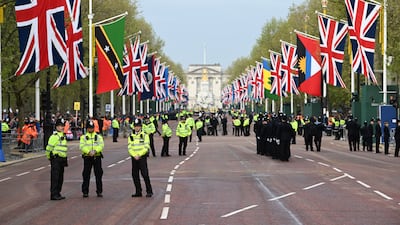
Pfficers from London's Metropolitan Police gather on The Mall before the coronation of King Charles. AP -
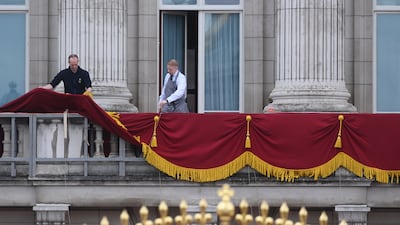
Members of staff prepare the balcony of Buckingham Palace. EPA -
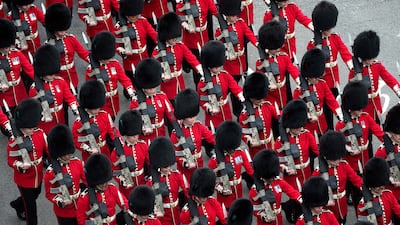
Coldstream Guards march in London. Reuters -
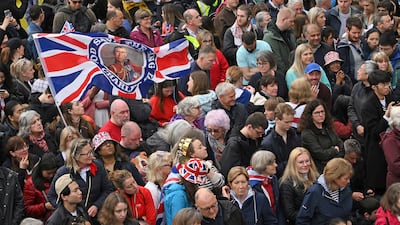
Well-wishers line the route of the coronation procession. AP -
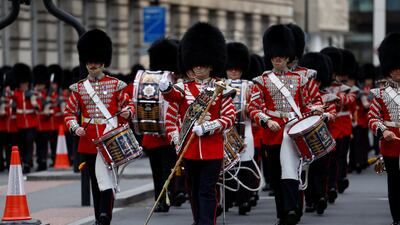
Troops in full ceremonial uniform arrive at Waterloo train station from their barracks and march across Westminster Bridge in London. Reuters -

People enter the festive spirit as they wait to watch King Charles's coronation procession on The Mall in London. Rueters -
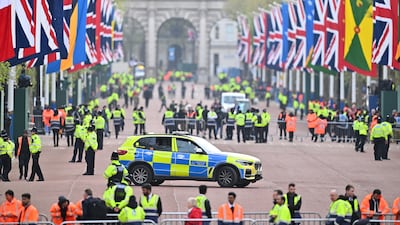
Metropolitan Police officers and security staff gather on The Mall. Getty -
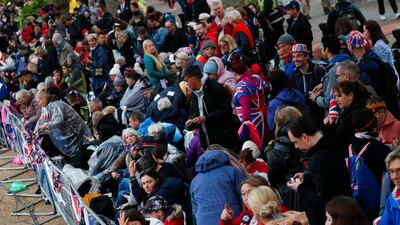
Crowds form along the Mall in anticipation of the coronation procession. Getty -
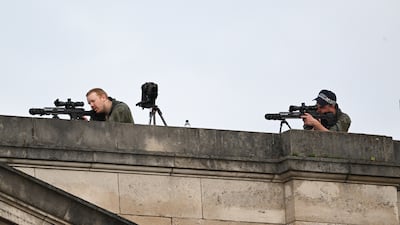
Armed Metropolitan Police officers on roof of Buckingham Palace. EPA -
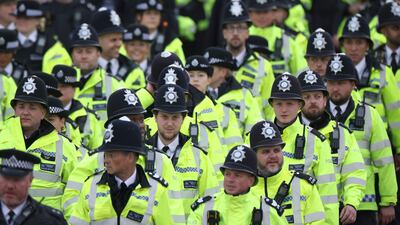
Metropolitan Police officers arrive on the Mall. Getty -
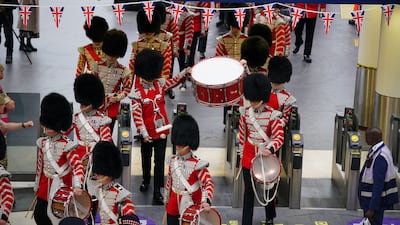
Members of the armed forces taking part in the coronation processions arrive at Waterloo train station. PA


King Charles's music
As well as traditional music, the coronation features 12 newly commissioned pieces from UK and Commonwealth composers.
Seven of the composers are female, in what is believed to be the first time music written by women is featuring in a coronation.
Buckingham Palace said the king had personally shaped the musical programme for the service, which includes a performance by the official Royal Harpist.
The harp, regarded as the Welsh national instrument, is a nod to King Charles's former role as Prince of Wales.
Prince Philip tribute
Greek Orthodox music will be played in a tribute to the king's late father, who was born Prince Philip of Greece and Denmark.
The choristers are a mixture of the Choir of Westminster Abbey and other choirs from around the UK.
Fanfares will be played by trumpeters from the British military.
The service concludes with a singing of the national anthem, God Save The King.
It will include a rarely-heard second verse that includes the lyrics: “May he defend our laws / and ever give us cause / to sing with heart and voice / God Save The King”.

