

A widowed British-Sudanese father said he told his three children “it was like a hide-and-seek game” when his home was caught in the middle of a gunfight in Sudan.
Munzir Salman, 37, who has dual citizenship, spoke while he and his children waited to fly to the UK through Larnaca, Cyprus.
Mr Salman said he was at home in Khartoum with his children when Sudanese soldiers were ambushed by Rapid Support Forces troops outside his block of flats.
“What happened was some army soldiers were coming through and they were ambushed by the RSF,” he said.
“They then ran behind my house and they were shooting at each other. I was in the middle.
“It was horrendous and, unfortunately, it’s not the first time I’ve had gunshots around me. I’m a single father of three kids so I had to stay calm for them.
“I had to tell them it was like a game and told them it was like a hide-and-seek game.
“It was an experience they had never been through before. It was very scary but I tried to make it a game for them.
“I explained the danger before trying to make it like Tom and Jerry, where the people outside were Tom and we were Jerry.”
Mr Salman lived in Sudan until he turned 10, thereafter moving to Toxteth in Liverpool, where he lived for 16 years.
He then moved to Dubai before returning to Sudan in 2013 where he had his three children, Siddig, 11, Shaden, eight, and Yasmin, six, with his wife, who died in the coronavirus pandemic in 2020.
Meanwhile, a British businessman has described hiding in basements for three days with no food or water to avoid the fighting in Khartoum.
Ibrahim Ibrahim, who owns a security company in Birmingham, travelled to Sudan in February to visit family for the first time in nearly a decade — leaving his wife and four children at home.
Mr Ibrahim, 37, was on his way to buy a return plane ticket from a travel agency in the centre of the Sudanese capital when fighting broke out between military and militia forces on the morning of April 15.
“Suddenly, everybody was running," he said from an airbase near Khartoum.
“I saw a lot of people get shot and dying in front of my eyes, people getting injured. It was really terrible.”
Mr Ibrahim hid in the basements of abandoned buildings for three days, covering himself with sheets of cardboard or plywood. To avoid detection, he moved only at night.
“I was hiding for three days with no food, no water,” he said.
“You go to the wrong road, you’re going to get shot. One way you’ve got the army, the other you’ve got militia.
“I tried to move in the middle of night slowly, slowly until I got out [of central Khartoum].
“I couldn’t tell what day it is. Everywhere there is guns shooting, tanks and bombing.
“I worried a lot about not seeing my children and my wife again.
“My family was worrying and tried to call me but my battery’s dead. Everybody I know was trying to call me to help me to escape.”
After three days, he knocked on the door of a family who took him in, gave him food and water and allowed him to charge his phone.
Having contacted the British Foreign Office, Mr Ibrahim travelled to an airstrip on the outskirts of Khartoum on Wednesday morning, hoping to be flown out.
First evacuees arrive at Stansted Airport
The first flight carrying British citizens from Sudan landed at Stansted Airport on Wednesday afternoon.
Women and children including babies in prams were among those who arrived after escaping the conflict-torn nation. Staff were on hand to assist elderly people in wheelchairs.
Anxious friends and family waited at the airport to be reunited with relatives and loved ones.
Many of the arrivals clutched Red Cross bags containing supplies.
Britain runs evacuation flights for UK citizens fleeing Sudan fighting - video
British citizens in Sudan have described being told to to make a chaotic and dangerous journey to the airstrip without a military escort.
“We are not seeing those who are making that travel having significant issues," Prime Minister Rishi Sunak's spokesman said.
But Sudanese-British citizen Tarig Babikir, 42, who used to live in Coventry, told of the challenge of making it to Wadi Saeedna amid the continuing violence.
“It’s complete anarchy right now, complete chaos. Anyone can rob you, anyone can shoot you,” Mr Babikir said.
Sudan crisis latest — in pictures
-
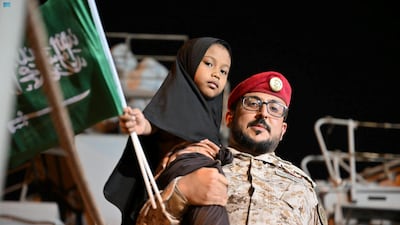
A member of the Saudi Navy carries a child from a ship at Jeddah's port during the kingdom's evacuation of civilians from Sudan. Reuters -
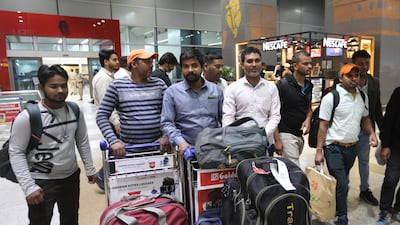
Indian nationals evacuated from Sudan arrive at Indira Gandhi International Airport in New Delhi. EPA -
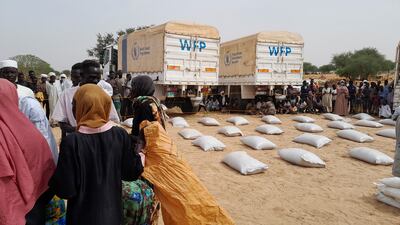
Sudanese refugees queue to receive aid from the World Food Programme near the border between Sudan and Chad in Adre, Chad. Reuters -
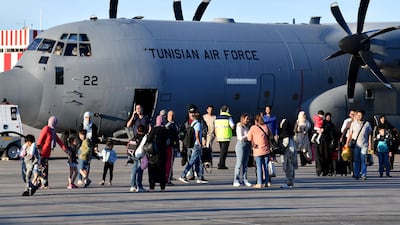
Tunisian citizens evacuated from Sudan leave a military aircraft upon their arrival at Tunis-Carthage International Airport. AFP -
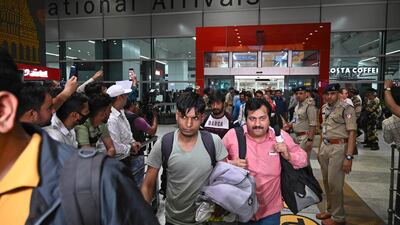
Indians evacuated from Sudan arrive on a flight at the Indira Gandhi International Airport in New Delhi, India. AP Photo -

Moroccan nationals, who have been evacuated from Sudan, arrive at Mohammed V airport in Casablanca, Morocco. EPA -
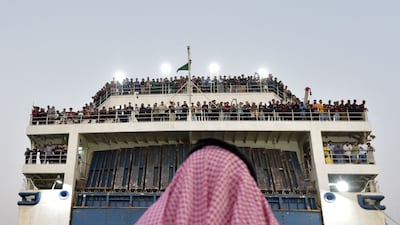
A boat with 1,687 civilians from more than 50 countries fleeing violence in Sudan, arrives at King Faisal naval base in Jeddah, Saudi Arabia. AFP -

RSF fighters in the East Nile district of greater Khartoum. AFP -
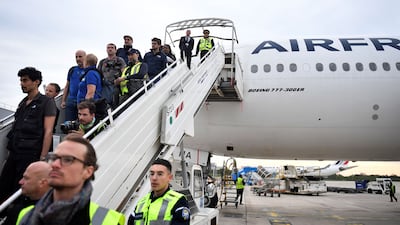
Passengers disembark a plane from Djibouti at Roissy-Charles-de-Gaulle airport near Paris after being evacuated from Sudan. AFP -
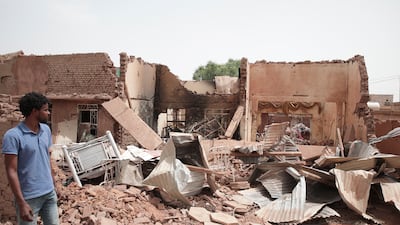
Buildings destroyed in recent fighting in Khartoum, Sudan. AP -
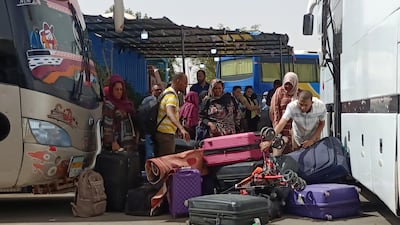
Passengers fleeing the fighting in Sudan arrive at Wadi Karkar bus station in Aswan, Egypt. EPA -
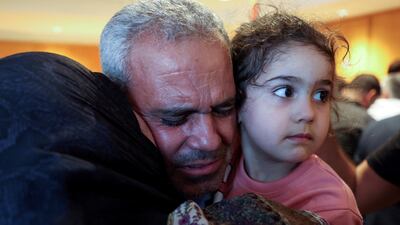
Ali Mazloum, a Lebanese citizen who was evacuated from Sudan, is welcomed upon his arrival at Beirut airport. Reuters -
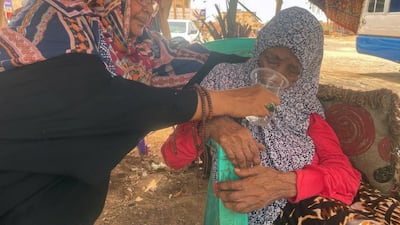
A woman helps another after fleeing clashes between the paramilitary Rapid Support Forces and the army in Khartoum. Reuters -
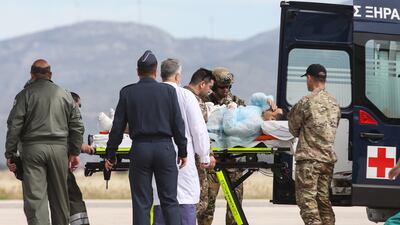
Soldiers attend to Greek citizens evacuated from Sudan as they disembark from a military aircraft in Attica, Greece. EPA -
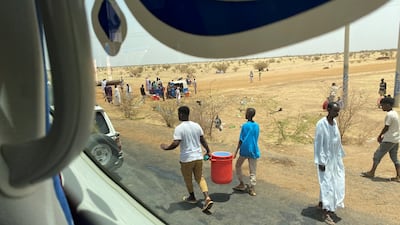
People carry hibiscus juice and cold water for those being evacuated from Khartoum to Port Sudan. Reuters -
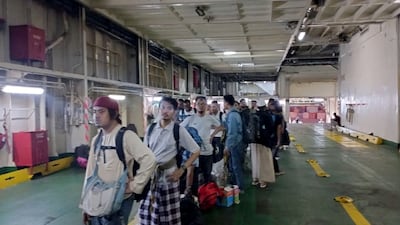
Thais wait to be evacuated by boat at a port in Sudan. EPA -
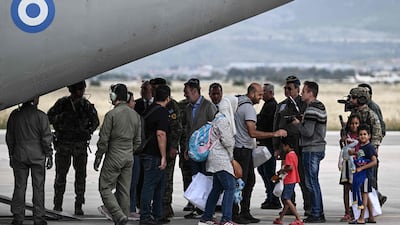
Greek citizens arrive from Sudan on a military plane in Elefsina, south of Athens. AFP -

Japan's senior Vice Foreign Minister Shunsuke Takei welcomes his country's citizens in Djibouti after they were rescued from Sudan. AFP -
A member of the Saudi Royal Navy carries a child who was rescued from Sudan, in Jeddah. Reuters -
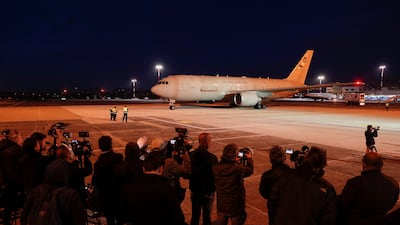
A military plane carrying evacuees arrives at Ciampino Airport near Rome, Italy. Reuters -
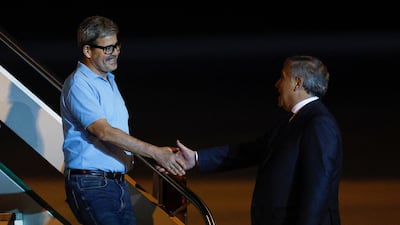
Italy's Foreign Minister Antonio Tajani greets the country's ambassador to Sudan, Michele Tommasi, as he arrives at Ciampino Airport. Reuters -
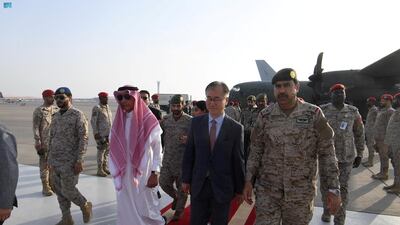
South Korea's ambassador to Saudi Arabia, Park Joon-yong, at a Saudi Air Force base in Jeddah, where he met diplomats from his country evacuated from Sudan by the kingdom's air force. Reuters -
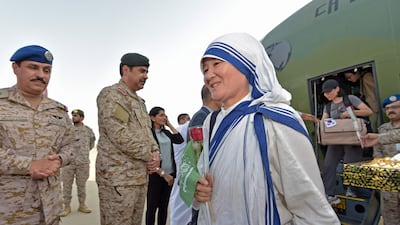
Having fled from Sudan, a South Korean nun disembarks from a military plane after landing at King Abdullah Air Base in Jeddah. AFP -
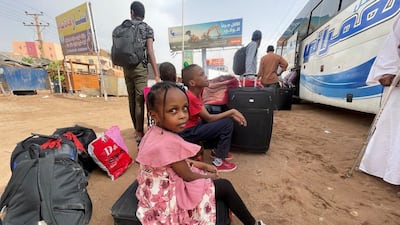
People gather as they seek to escape the violence in Khartoum. Reuters -

Spanish diplomatic personnel and citizens wait to disembark from a military plane after being evacuated from Sudan, in Djibouti. Reuters -
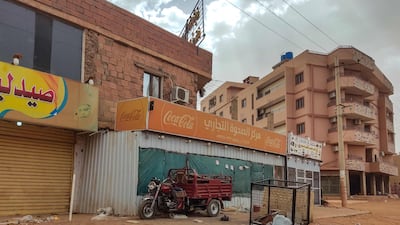
A closed pharmacy and shops in the south of Khartoum as battles rage in the capital between the army and paramilitaries. AFP -
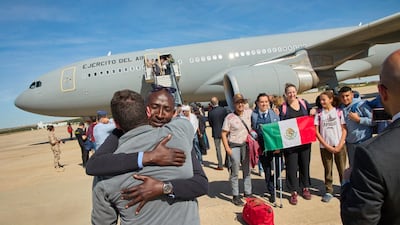
Passengers from Sudan disembark from a Spanish Air Force plane at Torrejon Airbase in Madrid. AP -
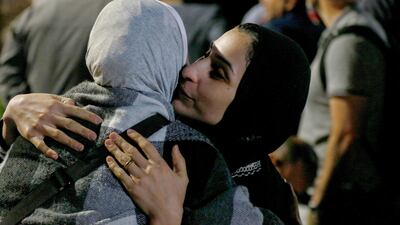
People evacuated from Sudan arrive at a military airport in Amman. AFP -
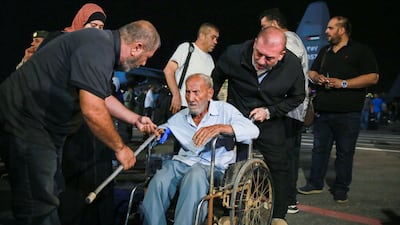
Jordan was among those countries to have rapidly flown its citizens in Sudan to safety. AFP -
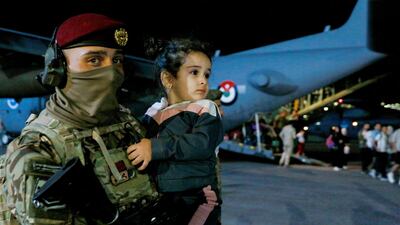
This child was one of those to have arrived safely in Amman. AFP -
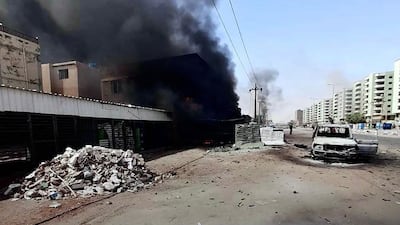
A building in Khartoum burns as violence rages in Sudan. EPA -
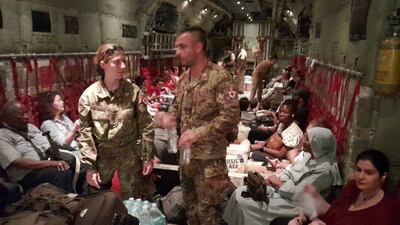
Italian citizens are flown out of the Sudanese capital on a military aircraft. Reuters -
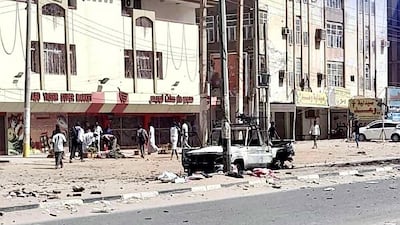
The fighting has caused heavy damage to parts of Khartoum. EPA -
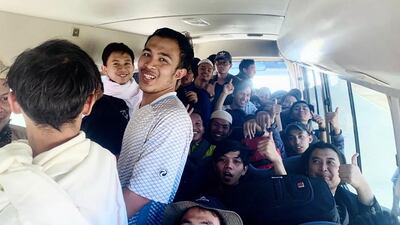
Indonesian citizens travel on a bus during an evacuation operation in Khartoum. EPA -
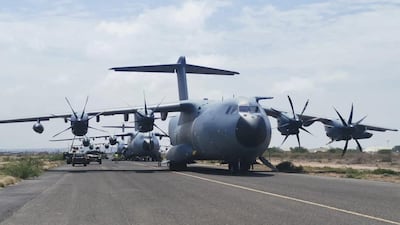
A Spanish military aircraft takes off from Khartoum as European countries rescue citizens from Sudan. Reuters -
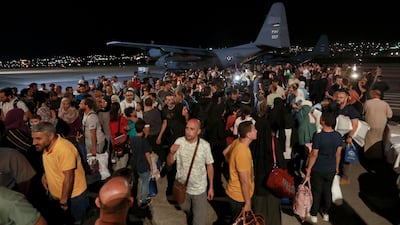
Jordanians arrive at a military airport in Amman after their evacuation from Sudan to escape the fighting. AP -

French troops arrive at an air base in Djibouti to prepare to evacuate about 100 people from Sudan. AFP -
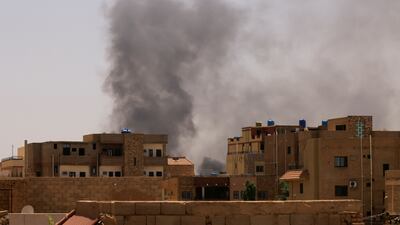
Smoke rises from buildings during clashes between the paramilitary Rapid Support Forces and the Sudanese army in Khartoum. Reuters -
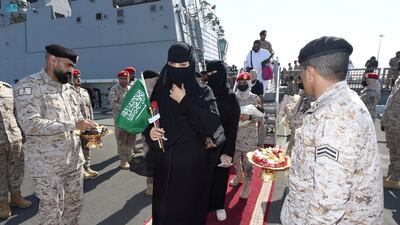
Saudis are met by Saudi Royal Navy staff as they arrive at Jeddah on the Red Sea after being evacuated from Sudan. Reuters -

The streets of southern Khartoum bear the scars of fighting between two factions of the Sudanese military. AFP -
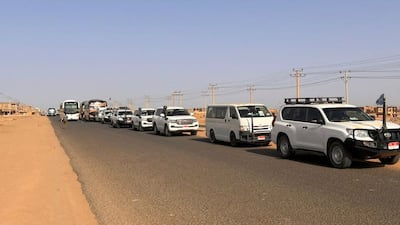
A convoy leaves Khartoum for Port Sudan as fighting between military factions in the Sudanese capital continues. AFP -

A civilian convoy leaving Khartoum for Port Sudan. AFP -

Saudi citizens and people of other nations are evacuated by the Saudi Royal Navy from Port Sudan to escape the conflict. Reuters -

A photo from October 2017 of the US embassy in Khartoum. AFP -
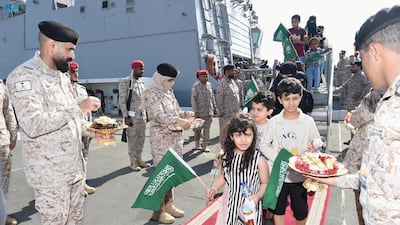
Saudi citizens are met by Saudi Royal Navy staff as they arrive at Jeddah after being evacuated from Sudan. Reuters -

Smoke hangs over Khartoum as factions belonging to the Sudanese Army and the Rapid Support Forces go back to trading gunfire after a ceasefire failed. AP


A UK-born student trying to flee Sudan said she did not have enough petrol to make the dangerous one-hour drive from the outskirts of Khartoum to the airstrip.
"I’m trying to get there but the problem is the vehicles that we have have no gas, and the petrol stations are empty," said Samar Eltayeb, 20, from Birmingham.
“There’ll be constant flights within the next few days but if I can’t find gas to get there, then I’m stuck.”
A man who arrived in the UK on Wednesday described the experience as a “nightmare”.
The man, who did not give his name, said: “It’s absolutely fantastic to be back. It’s been a nightmare. We’ve never seen anything like it before.
“We saw it on the television before but we never thought it was going to happen to a peaceful country like Sudan.”
He described the capital Khartoum as a “ghost city” and said everyone was fleeing.
“We are very grateful to the British servicemen and women who risked their lives to come to Sudan and help us out,” he said.
“There are more people stranded there and I think there should be more awareness to those stranded. We were very lucky but not everyone was as lucky we are.
“I was in the middle of the conflict. There was bombing and shelling, the house next to us was shelled. It was like a Bond movie, I’ve never seen anything like it before.”
Evacuation flights continue to rescue British nationals from Sudan
The British evacuation mission from Sudan has lifted 536 people to safety on six flights as the military races against time to rescue citizens while a fragile ceasefire holds.
The Foreign, Commonwealth and Development Office said “in a fast-moving situation” these were the figures at 9pm on Wednesday “with further flights to come”.
Another two RAF flights were expected to take off from the Wadi Saeedna air strip near the capital Khartoum.
Foreign Secretary James Cleverly has said the UK “cannot guarantee” how many more flights will depart when the 72-hour ceasefire in Sudan expires on Thursday night.
Downing Street said the flights have been “full or close to full”, with no “significant issues” faced by the evacuees.
More than 2,000 British citizens have registered in Sudan under evacuation plans, but thousands more could be in the country.
Mr Sunak's official spokesman said the operation in Khartoum was “running smoothly” and there was currently “no issue with capacity”.
The official said most of the people on the planes were British but that some were also citizens of allied countries.
He had not been informed of “large-scale problems” of non-British passport holders turning up and being told they are not eligible.
Downing Street hopes to carry on with flights throughout the week and does not believe there will be a need to “leave the airport imminently”.
The ceasefire has largely held since it began in the early hours of Monday.
Brig Dan Reeve, chief of joint force operations, said at least 500 people could be flown out from the airstrip every day and that the evacuation window was “not conditional on that ceasefire holding”.
“I can see no reason at the moment why we can’t continue to do that for as long as the Prime Minister wants us to,” he told journalists.
Mr Sunak was asked by the Scottish National Party’s Westminster leader Stephen Flynn whether he would deport child refugees who arrive in the UK without authorisation, under plans to “stop the boats”.
The Prime Minister told the Commons of the country’s “proud record” of supporting asylum seekers, but did not commit to a new safe and legal route for those fleeing Sudan.
HMS Lancaster is progressing towards Port Sudan, the Red Sea dock about 800km from Khartoum that could possibly be used in a seaborne operation — although with fuel shortages and crowded motorways, the journey could prove difficult for many.
British forces are expected to take over command of the operation in Wadi Saeedna from German troops on Wednesday.
About 160 British service personnel have been sent to the airfield, but the security of the site is being maintained by the Sudanese Armed Forces.
The military is ready to use force if the site comes under attack, although the troops are primarily there to help with logistics and providing air traffic control.
Families with children or elderly relatives, or people with medical conditions, are being given priority for the flights.
Only British passport holders and immediate family members with existing UK entry clearance are being told they are eligible.
Citizens have been warned that all travel within Sudan is “conducted at your own risk”.
UK accused of delaying Germany’s evacuation
The UK has reportedly been accused of delaying Germany’s efforts to evacuate its citizens from Sudan at the weekend.
The BBC reported it was told by senior German political sources that Britain’s mission to extract its embassy staff led to a temporary blockade of the airfield near Khartoum, from which later evacuation flights have taken off.
The sources claimed that British forces landed without the permission of the Sudanese army, angering them so that they barred access to the site.
German rescuers “lost at least half a day” as negotiations to use the airstrip took place, according to the broadcaster.
The British were forced to pay the Sudanese army before leaving, one source told the BBC.
Germany and other European nations were hoping to use the Wadi Saeedna airfield to fly their citizens to safety.
In an apparent swipe at the UK’s initial handling of the crisis, German Foreign Minister Annalena Baerbock said Berlin would not leave civilians “to their own devices” as it completed its evacuation.
Announcing the completion of Germany’s evacuation efforts on Tuesday, Ms Baerbock said that “unlike in other countries”, it had included all German nationals and their partners, and not just diplomatic personnel.
The UK started its mission to evacuate when a ceasefire was brokered between the warring factions.
The UK Ministry of Defence has been contacted for comment.
A spokesman for the department told the BBC: “It is not accurate to suggest that Britain’s efforts to evacuate embassy staff from Sudan last weekend slowed down Germany’s plans.”

