

Follow the latest Sudan updates here
More than 1,200 military personnel were sent to evacuate British diplomats and their families from Sudan on Sunday.
Elite British troops flew into Khartoum on board an American military aircraft, media reports revealed.
In about an hour, the troops drove to the British embassy, picked up evacuees, made their way through battle-scarred Khartoum to a departure airfield and were soon in the air again.
When the team landed in Khartoum, they rounded up a number of local vehicles and drove to the embassy.
At least 30 people, including children, were in the evacuation party. Other reports put the number closer to 100.
The troops escorted the evacuees through several checkpoints heading for Wadi Seidna, about 30km north of Khartoum.
Two Royal Air Force transport planes from RAF Akrotiri in Cyprus landed at the airfield.
The Hercules and A400M Atlas planes are propeller-driven, so better suited to the rough airfield than jet aircraft. They took off as soon as they could.
The 16 Air Assault Brigade, the Royal Marines and the RAF were involved in the evacuation of the embassy in Khartoum, the Foreign Office said.
The Sudanese army have been fighting against the paramilitary Rapid Support Forces for more than a week and more than 400 people were reported to have been killed.
Speaking to the BBC, Defence Secretary Ben Wallace said the evacuation was complex, as the embassy was located between the two warring factions' headquarters.
Prime Minister Rishi Sunak paid tribute to the “bravery” of the military personnel and the “commitment” of embassy staff.
-
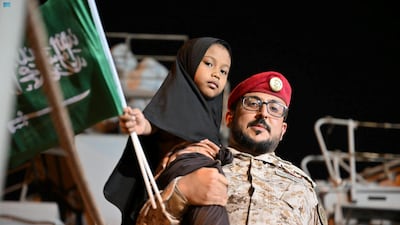
A member of the Saudi Navy carries a child from a ship at Jeddah's port during the kingdom's evacuation of civilians from Sudan. Reuters -
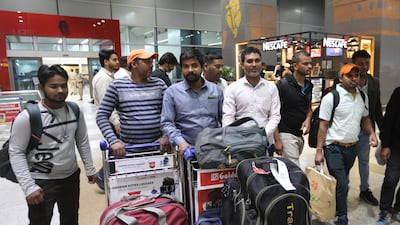
Indian nationals evacuated from Sudan arrive at Indira Gandhi International Airport in New Delhi. EPA -
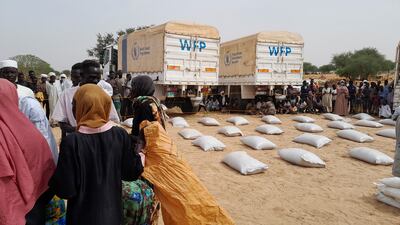
Sudanese refugees queue to receive aid from the World Food Programme near the border between Sudan and Chad in Adre, Chad. Reuters -
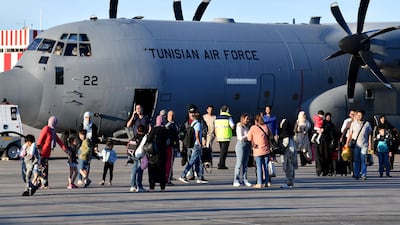
Tunisian citizens evacuated from Sudan leave a military aircraft upon their arrival at Tunis-Carthage International Airport. AFP -
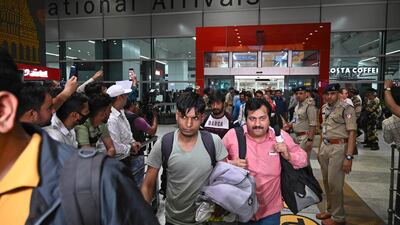
Indians evacuated from Sudan arrive on a flight at the Indira Gandhi International Airport in New Delhi, India. AP Photo -

Moroccan nationals, who have been evacuated from Sudan, arrive at Mohammed V airport in Casablanca, Morocco. EPA -
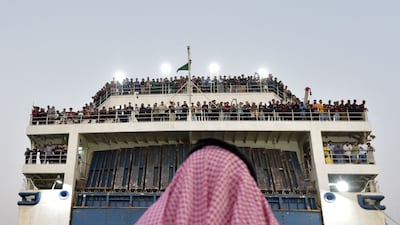
A boat with 1,687 civilians from more than 50 countries fleeing violence in Sudan, arrives at King Faisal naval base in Jeddah, Saudi Arabia. AFP -

RSF fighters in the East Nile district of greater Khartoum. AFP -
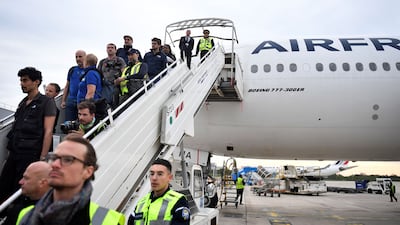
Passengers disembark a plane from Djibouti at Roissy-Charles-de-Gaulle airport near Paris after being evacuated from Sudan. AFP -
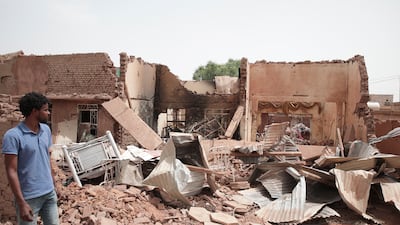
Buildings destroyed in recent fighting in Khartoum, Sudan. AP -
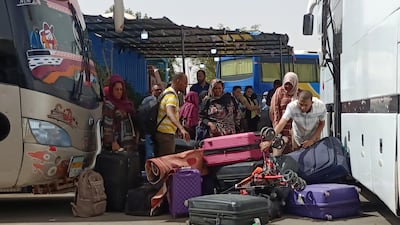
Passengers fleeing the fighting in Sudan arrive at Wadi Karkar bus station in Aswan, Egypt. EPA -
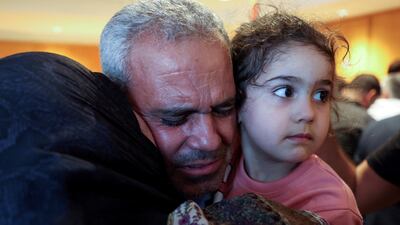
Ali Mazloum, a Lebanese citizen who was evacuated from Sudan, is welcomed upon his arrival at Beirut airport. Reuters -
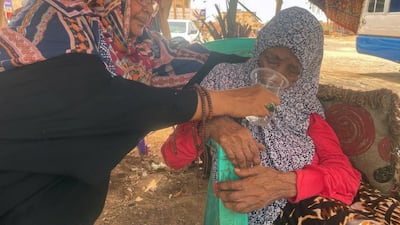
A woman helps another after fleeing clashes between the paramilitary Rapid Support Forces and the army in Khartoum. Reuters -
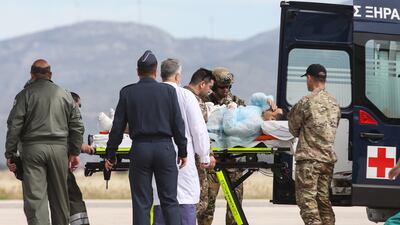
Soldiers attend to Greek citizens evacuated from Sudan as they disembark from a military aircraft in Attica, Greece. EPA -
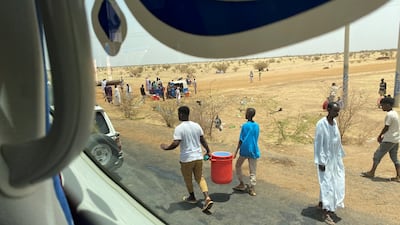
People carry hibiscus juice and cold water for those being evacuated from Khartoum to Port Sudan. Reuters -
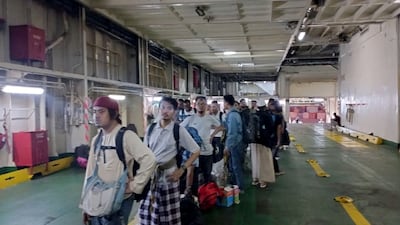
Thais wait to be evacuated by boat at a port in Sudan. EPA -
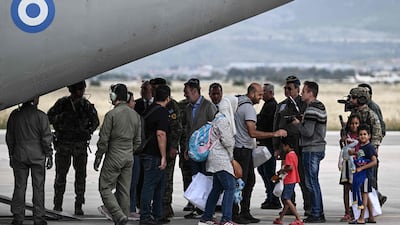
Greek citizens arrive from Sudan on a military plane in Elefsina, south of Athens. AFP -

Japan's senior Vice Foreign Minister Shunsuke Takei welcomes his country's citizens in Djibouti after they were rescued from Sudan. AFP -
A member of the Saudi Royal Navy carries a child who was rescued from Sudan, in Jeddah. Reuters -
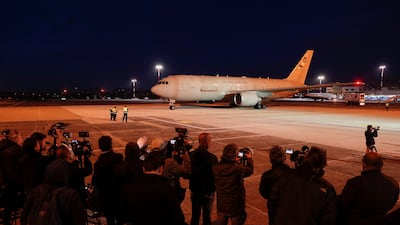
A military plane carrying evacuees arrives at Ciampino Airport near Rome, Italy. Reuters -
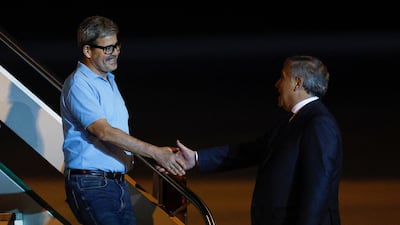
Italy's Foreign Minister Antonio Tajani greets the country's ambassador to Sudan, Michele Tommasi, as he arrives at Ciampino Airport. Reuters -
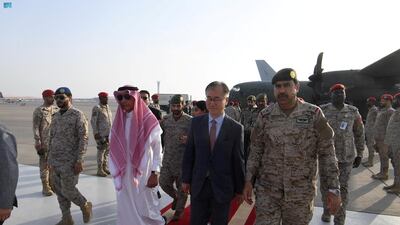
South Korea's ambassador to Saudi Arabia, Park Joon-yong, at a Saudi Air Force base in Jeddah, where he met diplomats from his country evacuated from Sudan by the kingdom's air force. Reuters -
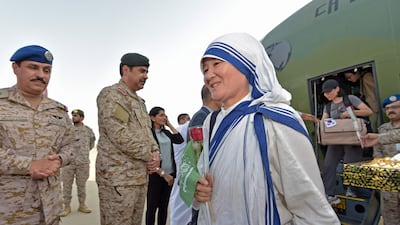
Having fled from Sudan, a South Korean nun disembarks from a military plane after landing at King Abdullah Air Base in Jeddah. AFP -
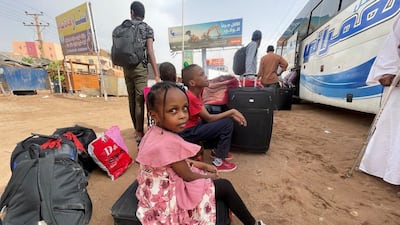
People gather as they seek to escape the violence in Khartoum. Reuters -

Spanish diplomatic personnel and citizens wait to disembark from a military plane after being evacuated from Sudan, in Djibouti. Reuters -
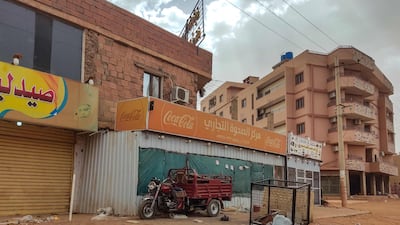
A closed pharmacy and shops in the south of Khartoum as battles rage in the capital between the army and paramilitaries. AFP -
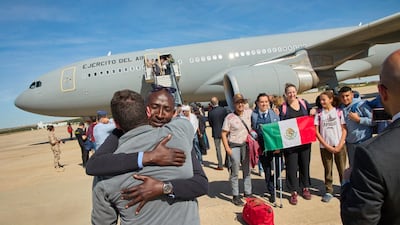
Passengers from Sudan disembark from a Spanish Air Force plane at Torrejon Airbase in Madrid. AP -
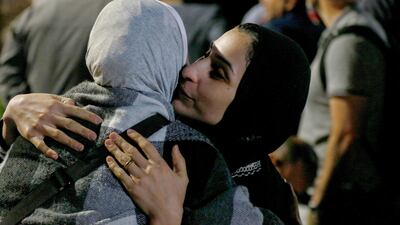
People evacuated from Sudan arrive at a military airport in Amman. AFP -
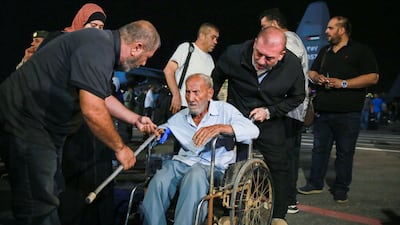
Jordan was among those countries to have rapidly flown its citizens in Sudan to safety. AFP -
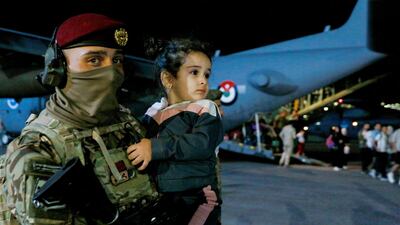
This child was one of those to have arrived safely in Amman. AFP -
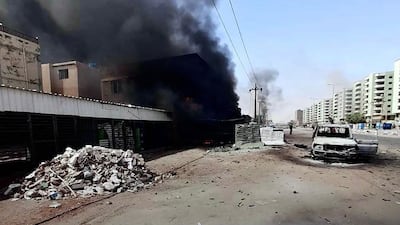
A building in Khartoum burns as violence rages in Sudan. EPA -
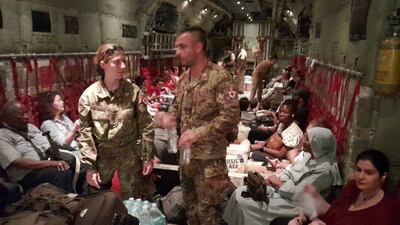
Italian citizens are flown out of the Sudanese capital on a military aircraft. Reuters -
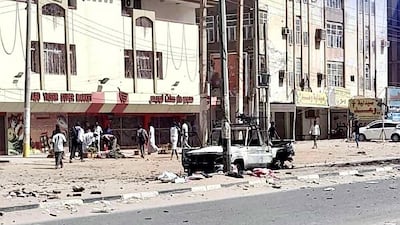
The fighting has caused heavy damage to parts of Khartoum. EPA -
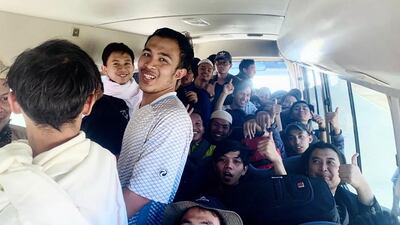
Indonesian citizens travel on a bus during an evacuation operation in Khartoum. EPA -
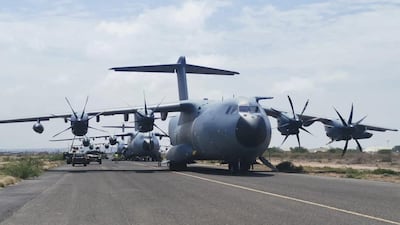
A Spanish military aircraft takes off from Khartoum as European countries rescue citizens from Sudan. Reuters -
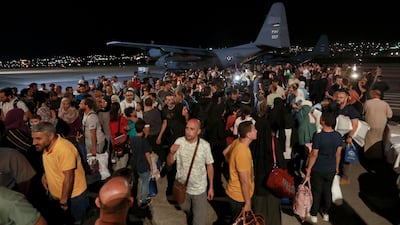
Jordanians arrive at a military airport in Amman after their evacuation from Sudan to escape the fighting. AP -

French troops arrive at an air base in Djibouti to prepare to evacuate about 100 people from Sudan. AFP -
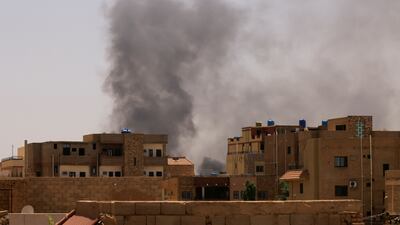
Smoke rises from buildings during clashes between the paramilitary Rapid Support Forces and the Sudanese army in Khartoum. Reuters -
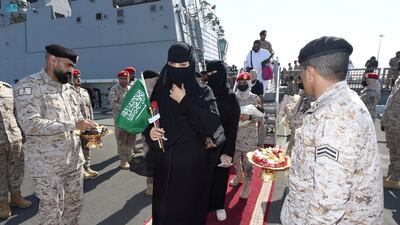
Saudis are met by Saudi Royal Navy staff as they arrive at Jeddah on the Red Sea after being evacuated from Sudan. Reuters -

The streets of southern Khartoum bear the scars of fighting between two factions of the Sudanese military. AFP -
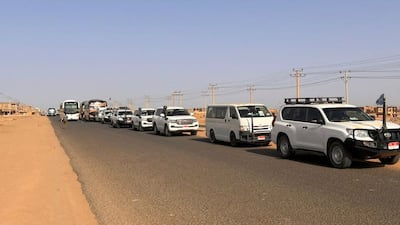
A convoy leaves Khartoum for Port Sudan as fighting between military factions in the Sudanese capital continues. AFP -

A civilian convoy leaving Khartoum for Port Sudan. AFP -

Saudi citizens and people of other nations are evacuated by the Saudi Royal Navy from Port Sudan to escape the conflict. Reuters -

A photo from October 2017 of the US embassy in Khartoum. AFP -
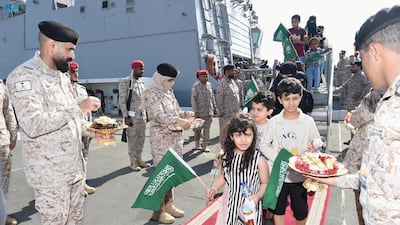
Saudi citizens are met by Saudi Royal Navy staff as they arrive at Jeddah after being evacuated from Sudan. Reuters -

Smoke hangs over Khartoum as factions belonging to the Sudanese Army and the Rapid Support Forces go back to trading gunfire after a ceasefire failed. AP


“UK armed forces have completed a complex and rapid evacuation of British diplomats and their families from Sudan,” he said.
He thanked the Egyptian government for its assistance in the operation during a phone call with President Abdel Fattah El Sisi on Sunday.
“They agreed that the UK and Egypt would co-ordinate with other international partners, including the African Union, on urgent diplomatic efforts to secure a ceasefire and support the transition to a stable civilian government,” a Downing Street spokeswoman said.
“The Prime Minister also thanked President El Sisi for Egypt's support in the operation to evacuate British embassy staff from Khartoum today, and they discussed further options for ensuring safe passage for civilians wanting to leave Sudan.”
Mr Sunak said that the evacuation was a response to escalating violence and threats against foreign diplomats and embassy properties.
“We are continuing to pursue every avenue to end the bloodshed in Sudan and ensure the safety of British nationals remaining in the country,” he said.
Mr Sunak called for an “immediate and prolonged” ceasefire that would allow civilians to leave Sudan.
“I urge the parties to lay down their arms and implement an immediate humanitarian ceasefire to ensure civilians can leave conflict zones,” he said.
The US, France and Italy have also evacuated their staff as the conflict continues.
A UK government representative said it was working around the clock to ensure remaining British citizens in Sudan were safe.
“The UK government will do all we can to ensure the safe passage of our citizens in what remains a very challenging context.
“In the meantime, our advice to British nationals is to shelter in place and contact the Foreign Office to register your location and contact details.”

