


Follow the latest news on the earthquake in Turkey and Syria
The UK would lift sanctions on Syria if they were seen to be holding back the delivery of aid to earthquake victims, a Foreign Office minister has said.
Andrew Mitchell suggested Britain could follow the lead of the US in pausing the punitive measures aimed at Bashar Al Assad’s regime after the colossal disaster.
The development minister’s comments came ahead of the UN aid chief Martin Griffiths’s visit to Syria on Monday. He said the 7.8 earthquake in Turkey and Syria has caused the “worst event in 100 years in this region” and said the UN was failing the victims.
During an interview on the BBC on Sunday, Mr Mitchell touched on the possibility of sanctions relaxation, but insisted “at the moment we are able to get what we want through and that's the key thing”.
He said the UK’s Conservative government will “do everything we can to ensure aid gets through to the suffering”.
Asked if the UK would roll back sanctions, he said: “Specifically here, were sanctions to hold us back in any way, we would seek to have them lifted.”
A girl, 10, on Sunday became the latest survivor of the quake to be pulled from the rubble. Her rescue, after an astonishing six days underground, happened amid fears the death toll could hit 50,000.
As of Sunday morning, the number of people known to have died as a result of the disaster had passed 28,000.
Regions in Syria that were hit by the quake included government-held territory and rebel-controlled areas.
MPs in the British Parliament last week condemned Mr Al Assad for his regime’s “heinous” bombing of a rebel-held town shortly after the disaster.
Marea, a town 35km north of Aleppo, was shelled by government forces, lawmakers said, as locals were scrambling to rescue people from the rubble.
Mr Griffiths is due to visit Aleppo and Damascus on Monday. He told Sky News the needs of people in north-western Syria, where the quake struck, are “huge”.
Speaking from the Turkey-Syria border where lorries were being loaded with UN aid, he said “we’re ramping up the operation because the needs in north-western Syria are huge even before this earthquake let alone now.”
He said he is also seeking authorisation from the UN Security Council to open up more crossing points on the boundary “to maximise the volume of supplies we get through to people” in Syria.
“It’s an open and shut case on humanitarian terms why we need those extra crossing points now to save lives and to provide some sort of assistance to the people as they come into the post-rescue phase,” he added.
Tobias Ellwood, a Conservative MP and chairman of the defence select committee in the House of Commons, has backed his call for more crossing points between Turkey and Syria.
Speaking to Sky News, he said he wanted to see a UN Security Council resolution that calls for “full access to allow more border crossings to open, more aid agencies to be able to get into northern Syria, particularly the city of Aleppo.”
He said after the disaster, the UK government should allocate the same amount of aid to affected communities in Syria as those in Turkey.
Emirati rescuers search for survivors in Syria — in pictures
-

Emirati rescuers search for survivors amid the rubble of a collapsed building in Latakia, northwest of the Syrian capital, following the deadly earthquake. All photos: AFP -
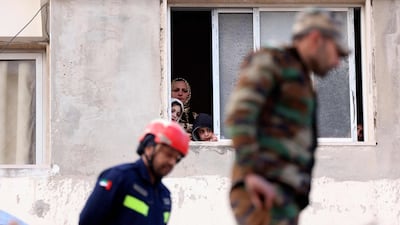
An Emirati rescuer, accompanied by a Syrian soldier, searches for survivors -
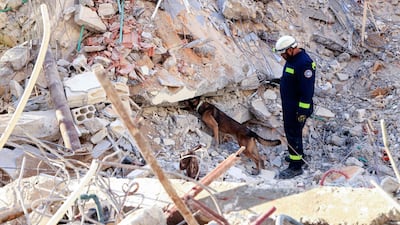
Aftershocks following the February 6 earthquake have added to the death toll -

Rescuers sift through rubble in Jableh -
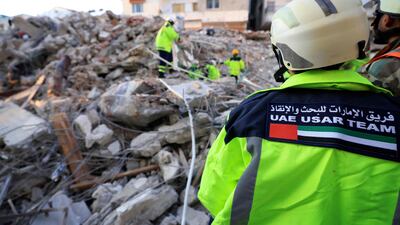
The 7. 8-magnitude earthquake has caused widespread disruption in Syria -
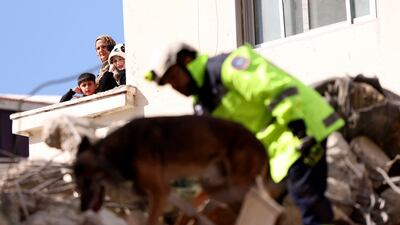
A rescue dog joins the search -

Emirati rescuers sift through the rubble -
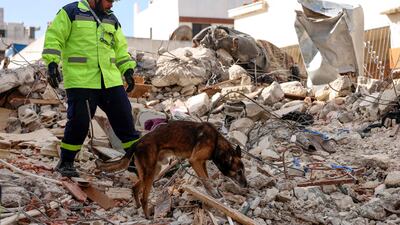
An Emirati rescuer, with the help of a dog, searches for survivors -
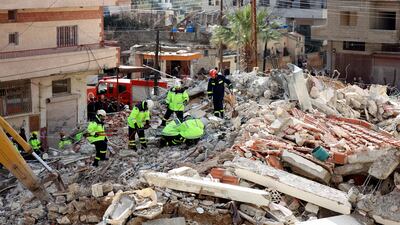
Emirati rescuers sift through the rubble



