• A new set of stamps is being issued by the Royal Mail to mark 100 years since the discovery of Tutankhamun’s tomb. All photos: PA
    A new set of stamps is being issued by the Royal Mail to mark 100 years since the discovery of Tutankhamun’s tomb. All photos: PA
  • One of the stamps features British Egyptologist Howard Carter examining the golden sarcophagus of Tutankhamun
    One of the stamps features British Egyptologist Howard Carter examining the golden sarcophagus of Tutankhamun
  • Royal Mail worked with experts at the Griffith Institute – the centre for Egyptology at the University of Oxford – on the stamp issue
    Royal Mail worked with experts at the Griffith Institute – the centre for Egyptology at the University of Oxford – on the stamp issue
  • David Gold, Royal Mail’s director of external affairs and policy, said: 'The discovery of Tutankhamun’s tomb by British archaeologist Howard Carter has inspired generations of people around the world'
    David Gold, Royal Mail’s director of external affairs and policy, said: 'The discovery of Tutankhamun’s tomb by British archaeologist Howard Carter has inspired generations of people around the world'
  • A colourful falcon pendant adorns one of the new stamps.
    A colourful falcon pendant adorns one of the new stamps.
  • The artefacts, from the Grand Egyptian Museum, were photographed by renowned professional photographer of art and architecture, Araldo De Luca
    The artefacts, from the Grand Egyptian Museum, were photographed by renowned professional photographer of art and architecture, Araldo De Luca
  • The head of the outermost coffin.
    The head of the outermost coffin.
  • The main set of eight stamps features a selection of some of the most significant and well-preserved items
    The main set of eight stamps features a selection of some of the most significant and well-preserved items
  • Objects in the antechamber of the tomb feature on this first-class stamp
    Objects in the antechamber of the tomb feature on this first-class stamp
  • The ‘gold throne’, perhaps the most important item among the entire contents of the tomb, is also featured
    The ‘gold throne’, perhaps the most important item among the entire contents of the tomb, is also featured

Royal Mail marks centenary of Tutankhamun discovery with new stamps


Neil Murphy
  • English
  • Arabic

A new set of stamps is being issued by the Royal Mail to mark 100 years since the discovery of Tutankhamun’s tomb.

Britain's postal service is joining celebrations for the centenary of the historic discovery, which has been marked worldwide with a series of events and showcases.

The Royal Mail has unveiled eight stamps that include depictions of a selection of some of the most significant and well-preserved artefacts found in the tomb, including fans, a falcon pendant and the mask of Tutankhamun.

The “gold throne”, perhaps the most important item among the entire contents of the tomb, is also featured.

The artefacts, from the Grand Egyptian Museum, were photographed by renowned professional photographer of art and architecture Araldo De Luca.

A miniature sheet contains an additional four stamps that capture the discovery of Tutankhamun’s Tomb through a selection of photographs taken by Harry Burton — a pioneer of archaeological photography.

The Royal Mail worked with Egyptologists at the Griffith Institute — the centre for Egyptology at the University of Oxford — on the stamp issue.

David Gold, the Royal Mail’s director of external affairs and policy, said: “The discovery of Tutankhamun’s tomb by British archaeologist Howard Carter has inspired generations of people around the world.

“It has shaped historians’ understanding of the religion, rituals and culture of ancient Egypt to this day. We are delighted to have this opportunity to mark the centenary of that moment in these beautiful stamps.”

Tutankhamun — in pictures

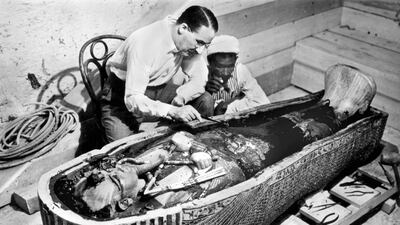
  • Howard Carter examines the golden sarcophagus of Tutankhamun in Egypt in 1922. All photos: Getty Images
    Howard Carter examines the golden sarcophagus of Tutankhamun in Egypt in 1922. All photos: Getty Images
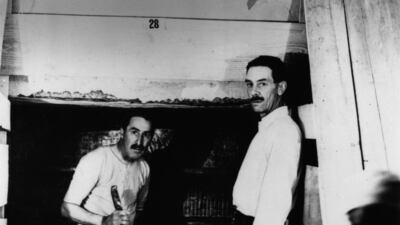
  • Carter opening the wall of the inner chamber of Tutankhamun's tomb.
    Carter opening the wall of the inner chamber of Tutankhamun's tomb.
  • Carter hands over the key to the recently-discovered tomb in the Valley of the Kings.
    Carter hands over the key to the recently-discovered tomb in the Valley of the Kings.
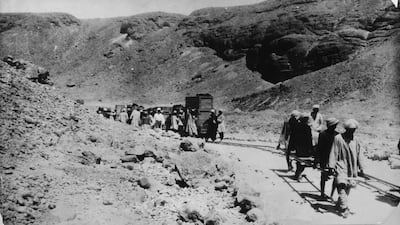
  • Workers build a single-track railway through the Valley of the Kings for transporting relics from Luxor, in 1923.
    Workers build a single-track railway through the Valley of the Kings for transporting relics from Luxor, in 1923.
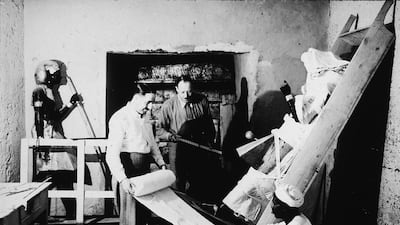
  • Howard Carter, right, and archaeologist Arthur Callender remove objects from the antechamber of the tomb of Tutankhamun, in 1923.
    Howard Carter, right, and archaeologist Arthur Callender remove objects from the antechamber of the tomb of Tutankhamun, in 1923.
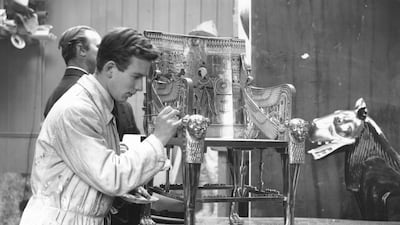
  • The treasures of the tomb are artfully replicated by experts for the British Empire Exhibition in 1924.
    The treasures of the tomb are artfully replicated by experts for the British Empire Exhibition in 1924.
  • A corridor to a stairway in Tutankhamun's tomb in 1925.
    A corridor to a stairway in Tutankhamun's tomb in 1925.
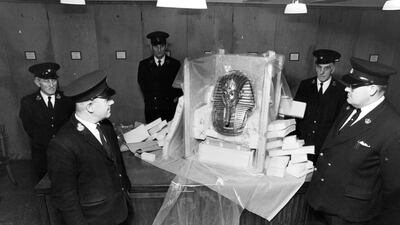
  • British Museum guards come face to face with ancient death mask of Tutankhamun, in 1972.
    British Museum guards come face to face with ancient death mask of Tutankhamun, in 1972.
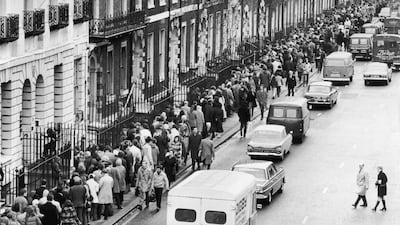
  • Queues in London for the British Museum's 1972 exhibition of artefacts from the tomb of Tutankhamun.
    Queues in London for the British Museum's 1972 exhibition of artefacts from the tomb of Tutankhamun.
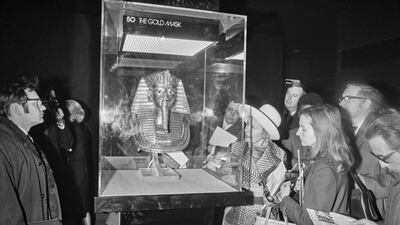
  • The gold death mask of the boy king at the British Museum in London in 1972. Getty Images
    The gold death mask of the boy king at the British Museum in London in 1972. Getty Images
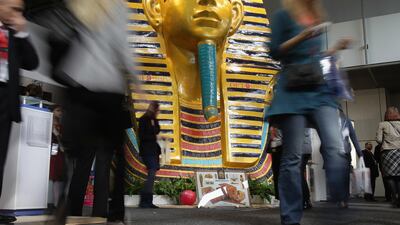
  • A giant Tutankhamun mask at a tourism trade fair in Berlin in 2011.
    A giant Tutankhamun mask at a tourism trade fair in Berlin in 2011.
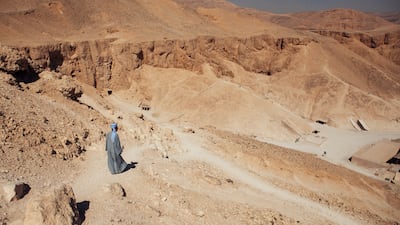
  • The Valley of the Kings in 2013.
    The Valley of the Kings in 2013.
  • King Tut on tour. The burial mask on display in 2015 in Munich.
    King Tut on tour. The burial mask on display in 2015 in Munich.
'Saand Ki Aankh'

Produced by: Reliance Entertainment with Chalk and Cheese Films
Director: Tushar Hiranandani
Cast: Taapsee Pannu, Bhumi Pednekar, Prakash Jha, Vineet Singh
Rating: 3.5/5 stars

Avatar: Fire and Ash

Director: James Cameron

Starring: Sam Worthington, Sigourney Weaver, Zoe Saldana

Rating: 4.5/5

What vitamins do we know are beneficial for living in the UAE

Vitamin D: Highly relevant in the UAE due to limited sun exposure; supports bone health, immunity and mood.Vitamin B12: Important for nerve health and energy production, especially for vegetarians, vegans and individuals with absorption issues.Iron: Useful only when deficiency or anaemia is confirmed; helps reduce fatigue and support immunity.Omega-3 (EPA/DHA): Supports heart health and reduces inflammation, especially for those who consume little fish.

Indoor cricket in a nutshell

Indoor Cricket World Cup - Sep 16-20, Insportz, Dubai

16 Indoor cricket matches are 16 overs per side

8 There are eight players per team

There have been nine Indoor Cricket World Cups for men. Australia have won every one.

5 Five runs are deducted from the score when a wickets falls

Batsmen bat in pairs, facing four overs per partnership

Scoring In indoor cricket, runs are scored by way of both physical and bonus runs. Physical runs are scored by both batsmen completing a run from one crease to the other. Bonus runs are scored when the ball hits a net in different zones, but only when at least one physical run is score.

Zones

A Front net, behind the striker and wicketkeeper: 0 runs

B Side nets, between the striker and halfway down the pitch: 1 run

Side nets between halfway and the bowlers end: 2 runs

Back net: 4 runs on the bounce, 6 runs on the full

Updated: November 24, 2022, 12:01 AM