


A British-born environmentalist who was released on furlough with an electronic tag from Iran's notorious Evin prison in July has been sent back to the jail.
Morad Tahbaz, 66, was staying with his family in the capital Tehran when he was taken by Iranian authorities.
Mr Tahbaz's family tweeted: "Early this morning, Morad Tahbaz was taken back to Evin Prison after a temporary furlough.
"This was the 'deal' that [former British prime minister Liz Truss sold out Morad for, instead of bringing him home with the other hostages months ago.
"Rishi Sunak, you have the chance to right this wrong. Free Morad."
UK Foreign Office minister Lord Tariq Ahmad also called for Mr Tahbaz's release.
“The Tahbaz family have confirmed that Morad has been returned to Evin prison by the Iranian authorities," he said.
"By continuing his horrendous ordeal with these cruel tactics, Iran sends a clear message to the international community that Iran does not deliver on its commitments.
“We call on Iran to release Morad so he may rejoin family in Tehran immediately.
"We will continue to work closely with our US partners to hold Iran to account, and to secure Morad’s permanent release and departure from Iran.”
Daughter of Morad Tahbaz stages protest in London - in pictures
-
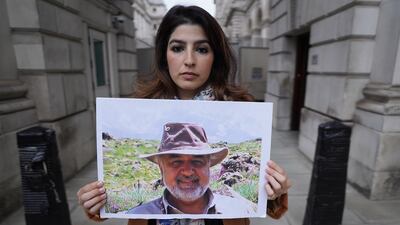
Roxanne Tahbaz holds a picture of her father Morad Tahbaz, who is jailed in Iran, at a protest outside the Foreign Office in London. PA -
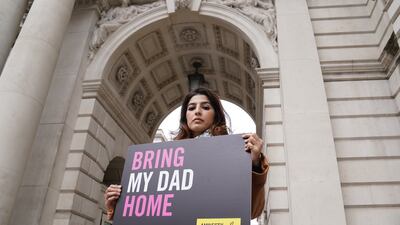
Ms Tahbaz says there has been a betrayal of her father by the UK government. PA -
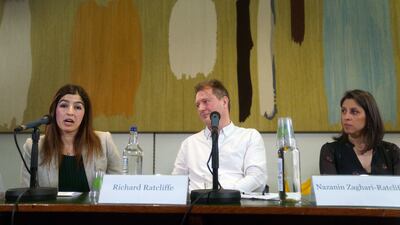
Ms Tahbaz speaking at a press conference in March alongside Nazanin Zaghari-Ratcliffe and Richard Ratcliffe, following Nazanin's release from detention in Iran. Getty images -
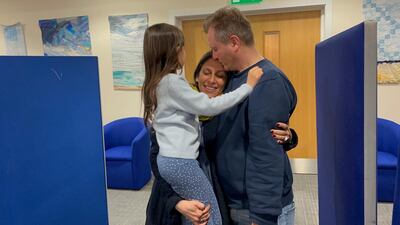
Mrs Zaghari-Ratcliffe reunited with her husband and their daughter Gabriella after being held for six years in Iran. Photo: @TulipSiddiq via Twitter -
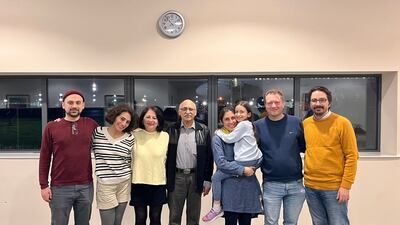
Mrs Zaghari-Ratcliffe and Anoosheh Ashoori, centre, with their families. Photo: @lilika49 via Twitter -
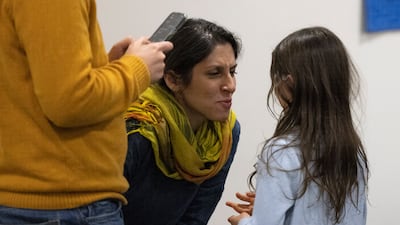
Mrs Zaghari-Ratcliffe with her daughter at RAF Brize Norton airbase. EPA -
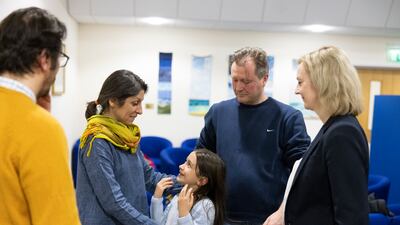
Mrs Zaghari-Ratcliffe with her daughter Gabriella, husband Richard and British Foreign Secretary Liz Truss at RAF Brize Norton. EPA -
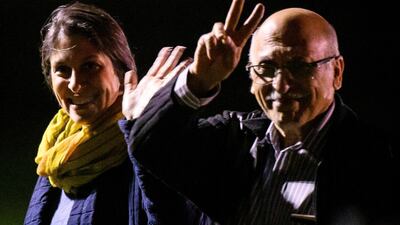
Nazanin Zaghari-Ratcliffe and Anoosheh Ashoori on their release. Reuters -
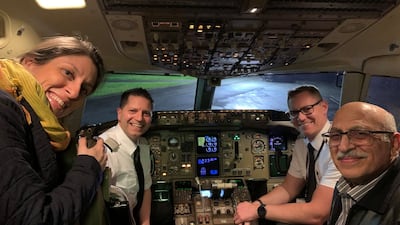
Ms Zaghari-Ratcliffe and Mr Ashoori with the cabin crew in Brize Norton. Reuters -
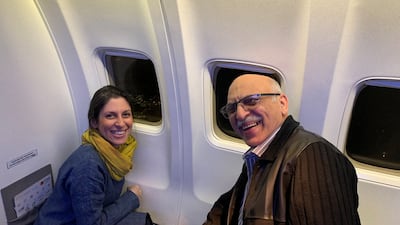
Ms Zaghari-Ratcliffe and Mr Ashoori as their plane flies over London. Reuters -
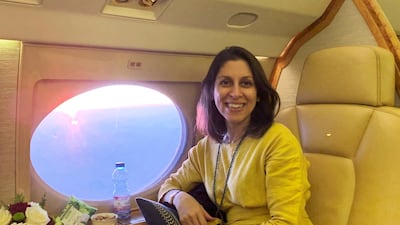
Ms Zaghari-Ratcliffe sits in a plane en route to London after taking off from Teheran. Reuters -
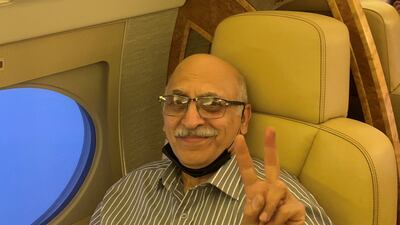
Mr Ashoori gestures as he sits in the plane heading to London. Reuters -
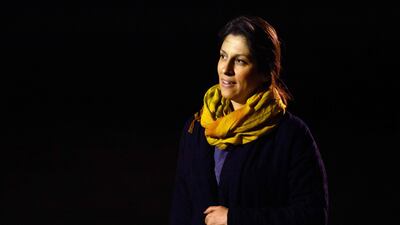
Ms Zaghari-Ratcliffe was arrested in Tehran in April 2016 as she prepared to fly back to the UK, having taken her daughter Gabriella to see relatives. AFP -
She was accused of plotting to overthrow the Iranian government and sentenced to five years in jail, spending four years in Tehran’s Evin Prison and one under house arrest. Photo: Tulip Siddiq / Twitter -
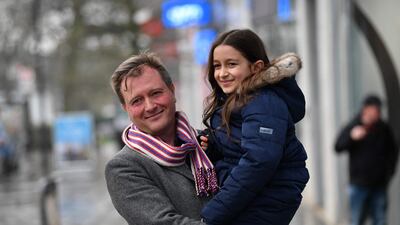
Richard Ratcliffe with daughter Gabriella outside their house in London on Wednesday. AFP -
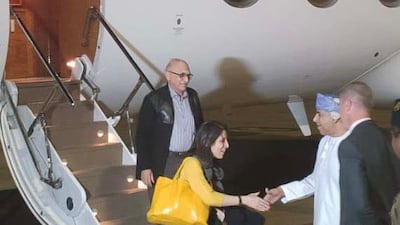
Ms Zaghari-Ratcliffe and Mr Ashoori arrive in Oman en route to the UK. Photo: @badralbusaidi / Twitter -
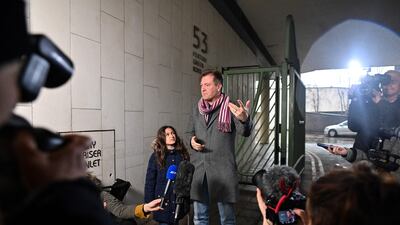
Mr Ratcliffe went on a hunger strike in October 2021 in protest at the UK government’s failure to secure his wife's release. AFP -
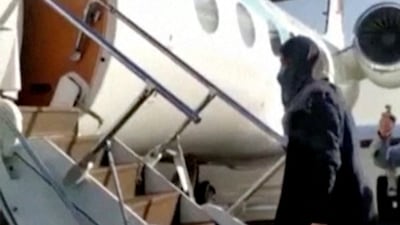
Ms Zaghari-Ratcliffe boards a plane as she prepares to leave Tehran. Reuters -
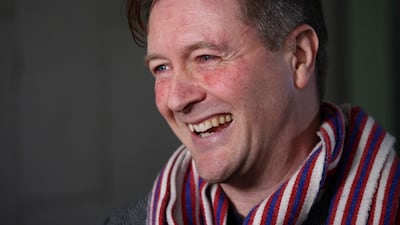
Mr Ratcliffe told the media that the family plan to find solace elsewhere for a few days. Reuters -
Gabriella was not yet two when her mother was arrested. Photo: Tulip Siddiq / Twitter


In March, the UK said it had secured Mr Tahbaz’s furlough, along with the release and return of British Iranians Nazanin Zaghari-Ratcliffe and Anoosheh Ashoori.
This came after the UK government finally agreed to settle a £400 million ($465m) debt to Iran dating back to the rule of the Shah in the 1970s.
But two days later, Mr Tahbaz was forced to return to Evin prison.
In July, Mr Tahbaz was allowed medical care on another temporary furlough with his family in Tehran on the condition that he wore an ankle bracelet.
It is understood that then foreign secretary Liz Truss told Mr Tahbaz’s family that the UK could not secure his full departure from Iran because he is also an American citizen, and Iranian authorities were having discussions with the US.
On Wednesday, Ms Zaghari-Ratcliffe said she would continue to speak up Mr Tahbaz and other detainees.
"My story is the story of many people in Iran who remain in prison. I've got the responsibility to be their voice," she said.
Rishi Sunak through the years - in pictures
-
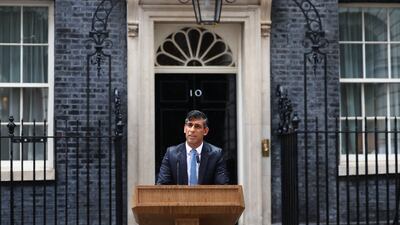
British Prime Minister Rishi Sunak announces July 4 as the date for the 2024 general election at No 10 Downing Street. Here, The National looks back at his political career. Getty Images -
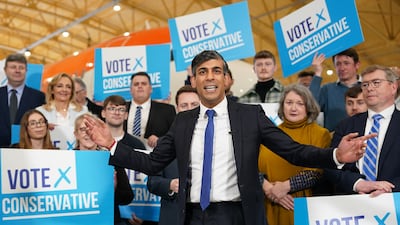
Mr Sunak during local election campaigning in Teesside in May 2024. Getty Images -
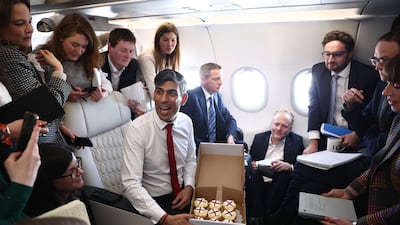
Mr Sunak presents cupcakes to journalists on board a plane on the way to Warsaw in April 2024. Getty Images -
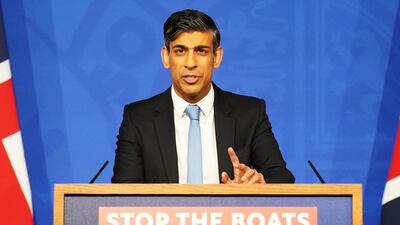
Mr Sunak during a press conference in Downing Street in January after the Safety of Rwanda Bill passed its third reading in the House of Commons. Getty Images -
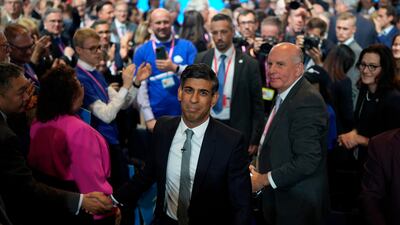
Being applauded after his speech at the Conservative Party conference in October 2023. Getty Images -
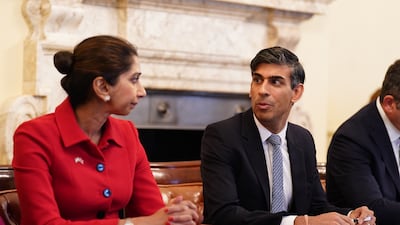
Looking pensive alongside then-home secretary Suella Braverman at No 10 in October 2023. She didn't last much longer in the cabinet. Getty Images -
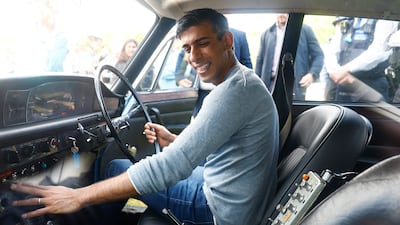
Mr Sunak sits in an old Special Branch police vehicle which was used to transport former prime minister Margaret Thatcher, in July 2023. Getty Images -

On board Border Agency cutter HMC Seeker during a visit to Dover in June 2023. Getty Images -
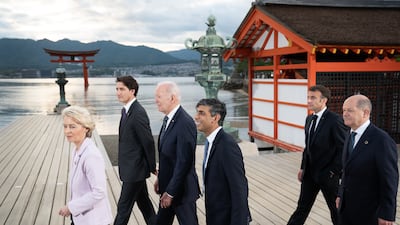
Mr Sunak alongside European Commission President Ursula von der Leyen, Canada's Prime Minister Justin Trudeau, US President Joe Biden, French President Emmanuel Macron and German Chancellor Olaf Scholz during the G7 Summit in May 2023. Getty Images -
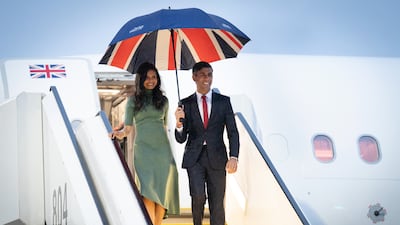
Mr Sunak and his wife Akshata Murty arriving in Japan ahead of the G7 Summit in May 2023. Getty Images -
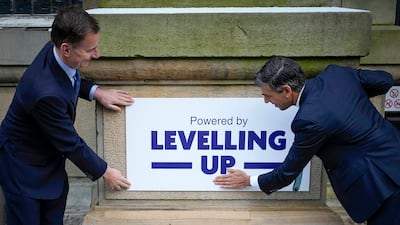
Mr Sunak and Chancellor Jeremy Hunt sending a message at Accrington Market Hall in January 2023. Getty Images -
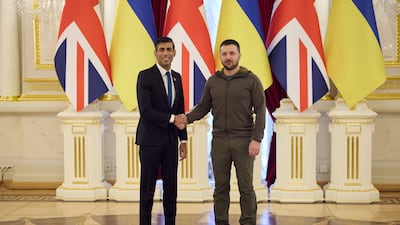
Mr Sunak and Ukrainian President Volodymyr Zelenskyy meet in Ukraine's capital Kyiv in November 2022. Getty Images -

King Charles III welcomes Mr Sunak during an audience at Buckingham Palace, where he invited the newly elected leader of the Conservative Party to become Prime Minister and form a new government in October 2022. Getty Images -
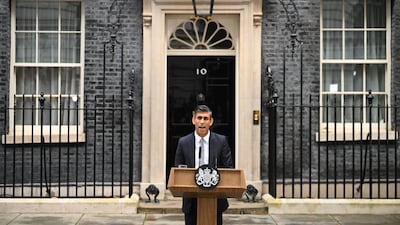
Mr Sunak makes a statement outside No 10 in October 2022 after taking office. Getty Images -
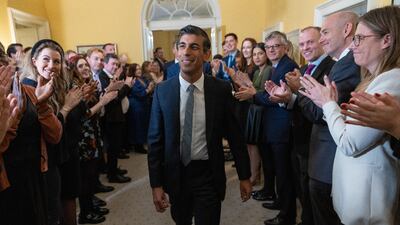
Mr Sunak arrives inside Number 10 in October 2022. Photo: Simon Walker/ No 10 Downing Street -
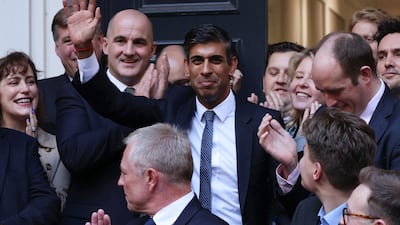
Greeted by colleagues at Conservative Party HQ after having been announced winner of the leadership contest in October 2022. Getty Images -
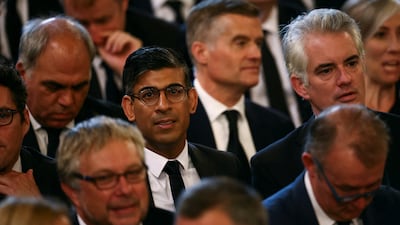
Mr Sunak at Westminster Hall in London following the death of Queen Elizabeth II in September 2022. PA -

Mr Sunak visits his family's old business, Bassett Pharmacy, on the campaign trail in August 2022. Getty Images -
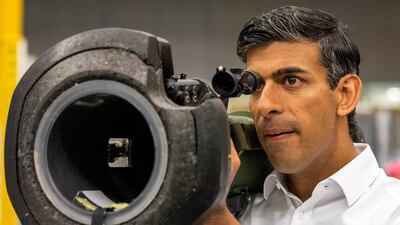
Mr Sunak looks at an NLAW anti-tank launcher during a visit to the Thales Defence System plant in Belfast in August 2022. Getty Images -
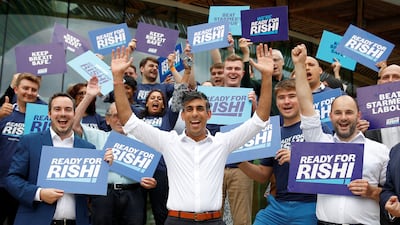
At a hustings event in Exeter in August 2022. Getty Images -
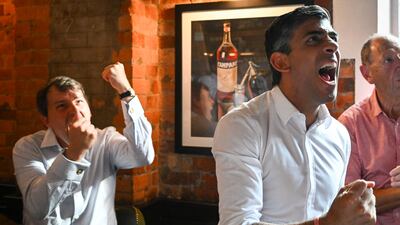
Celebrates England's first goal as he watches the Women's Euro 2022 final in Salisbury in July 2022. Getty Images -
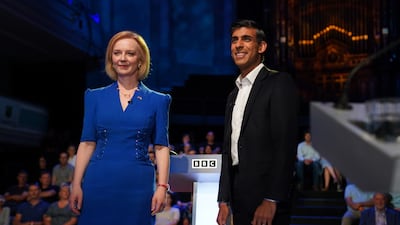
Mr Sunak and Ms Truss take part in the BBC Leadership debate at Victoria Hall, Hanley, in July 2022. Getty Images -
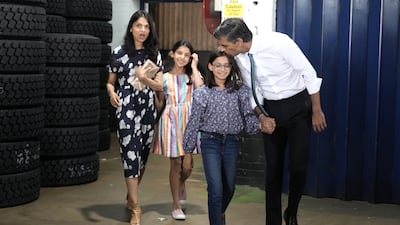
With daughters Krisna and Anoushka and wife Akshata Murthy in July 2022. Getty Images -
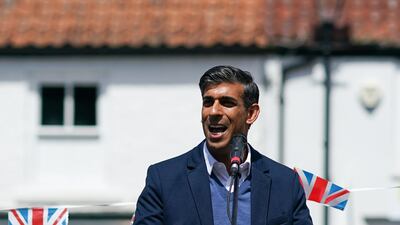
Opening the Great Ayton Village Fete during the queen’s Platinum Jubilee celebrations in June 2022. Getty Images -
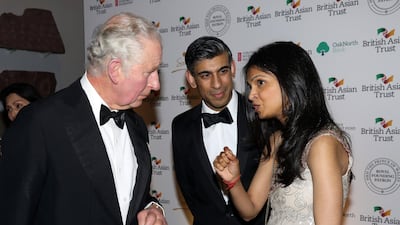
Mr Sunak and Ms Murthy speak to then-Prince Charles at a British Asian Trust event in February 2022. Getty Images -
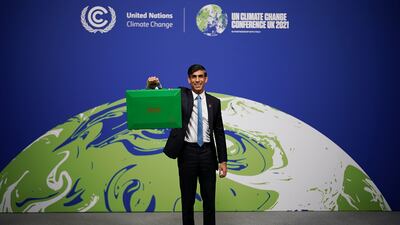
Mr Sunak arrives at COP26 in Glasgow in November 2021 when he was chancellor. Getty Images -
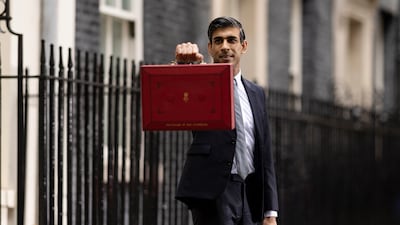
Holding the budget box as he departs 11 Downing Street to deliver his Autumn Budget in October 2021. Getty Images -
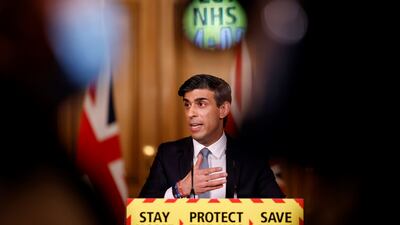
At a press conference on the 2021 Budget in London in March 2021. Getty Images -
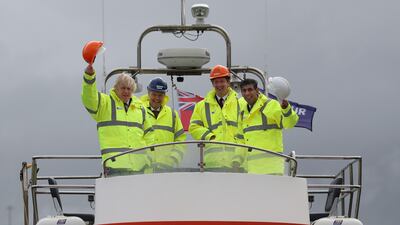
With former prime minister Boris Johnson during a visit to PD Ports on the River Tees in March 2021. Getty Images -
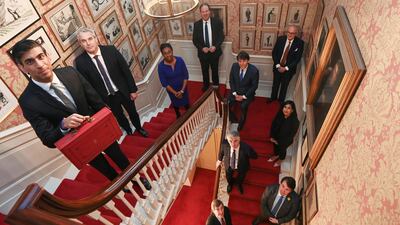
Mr Sunak poses with the budget box at 11 Downing Street in March 2021. Getty Images -
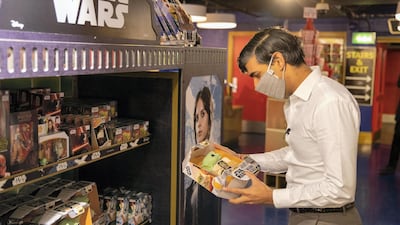
Meeting staff back at work after being furloughed at Hamleys toy shop in London, December 2020. Photo: HM Treasury -
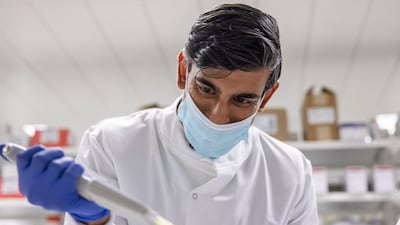
Mr Sunak visits the Imperial Clinic Research Facility at Hammersmith Hospital, London, in November 2020. Getty Images -
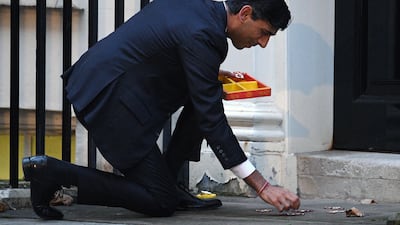
Lighting a candle for Diwali on Downing Street, November 2020. Getty Images -
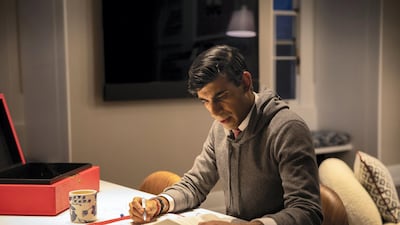
Working on a speech in his flat above 11 Downing Street in November 2020. Photo: HM Treasury -
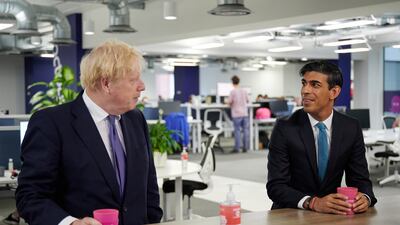
Mr Johnson and Mr Sunak visit the headquarters of Octopus Energy in London in October 2020. Getty Images -
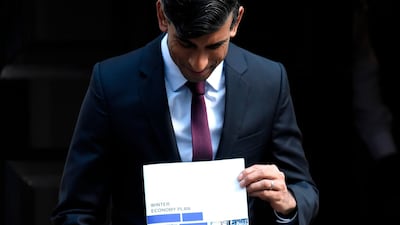
With his 'Winter Economy Plan' outside 11 Downing Street in September 2020. AFP -
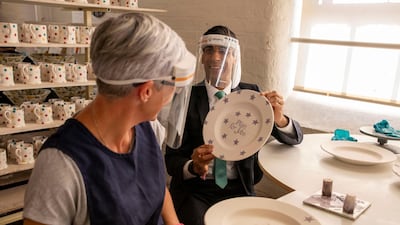
Decorating a plate at Emma Bridgewater pottery in Stoke pottery in September 2020. Getty Images -
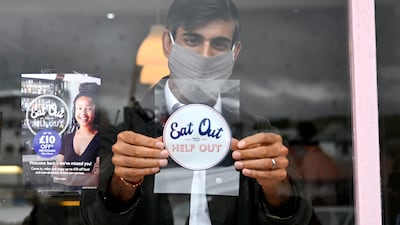
Promoting 'eat out to help out' on the Isle of Bute, Scotland, in August 2020. Getty Images -
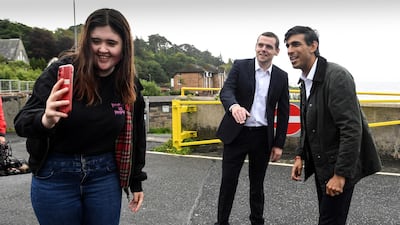
A member of the public takes a selfie with Rishi Sunak during a visit to Scotland in August 2020. AFP -

Visiting a Wagamama restaurant in central London in July 2020. Photo: HM Treasury -
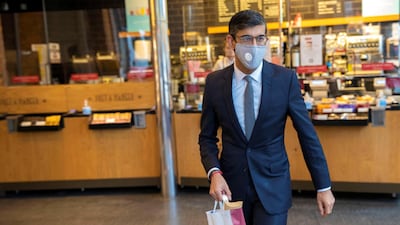
Rishi Sunak visits a Pret A Manger in Westminster in July 2020. HM Treasury -
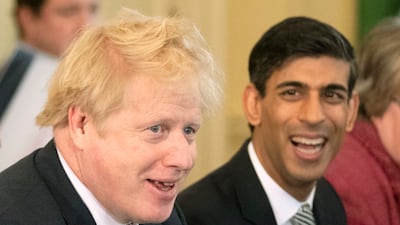
With Mr Johnson at his first Cabinet meeting after a reshuffle at 10 Downing Street in February 2020. Getty Images -
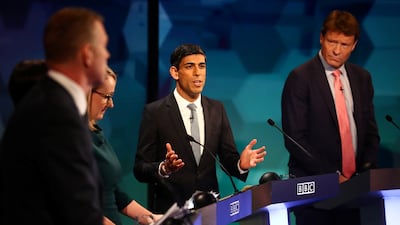
Mr Sunak speaks during a general election debate in Cardiff in November 2019. Getty Images


Mr Tahbaz, a prominent conservationist and board member of the Persian Wildlife Heritage Foundation, was arrested during a crackdown on environmental activists in January 2018.
The British-Iranian national was sentenced to 10 years in prison with his colleagues on vague charges of spying for the US and undermining Iran’s security.
His wife has also been placed under a travel ban by Iranian authorities.
Nazanin Zaghari-Ratcliffe and Anoosheh Ashoori released – in pictures
-
Nazanin Zaghari-Ratcliffe reunited with her husband, Richard Ratcliffe, and their daughter, Gabriella, after being held for six years in Iran. Photo: @TulipSiddiq via Twitter -
Ms Zaghari-Ratcliffe and Anoosheh Ashoori, centre, with their families. Photo: @lilika49 via Twitter -
Nazanin Zaghari-Ratcliffe with her daughter at RAF Brize Norton airbase. EPA -
Nazanin Zaghari-Ratcliffe with her daughter Gabriella, husband Richard and British Foreign Secretary Liz Truss at RAF Brize Norton. EPA -
Nazanin Zaghari-Ratcliffe and Anoosheh Ashoori were released in March 2022. Reuters -
Ms Zaghari-Ratcliffe and Mr Ashoori with the cabin crew in Brize Norton. Reuters -
Ms Zaghari-Ratcliffe and Mr Ashoori as their plane flies over London. Reuters -
Ms Zaghari-Ratcliffe sits in a plane en route to London after taking off from Teheran. Reuters -
Mr Ashoori gestures as he sits in the plane heading to London. Reuters -
Ms Zaghari-Ratcliffe was arrested in Tehran in April 2016 as she prepared to fly back to the UK, having taken her daughter Gabriella to see relatives. AFP -
She was accused of plotting to overthrow the Iranian government and sentenced to five years in jail, spending four years in Tehran’s Evin Prison and one under house arrest. Photo: Tulip Siddiq / Twitter -
Richard Ratcliffe with daughter Gabriella outside their house in London on Wednesday. AFP -
Ms Zaghari-Ratcliffe and Mr Ashoori arrive in Oman en route to the UK. Photo: @badralbusaidi / Twitter -
Mr Ratcliffe went on a hunger strike in October 2021 in protest at the UK government’s failure to secure his wife's release. AFP -
Ms Zaghari-Ratcliffe boards a plane as she prepares to leave Tehran. Reuters -
Mr Ratcliffe told the media that the family plan to find solace elsewhere for a few days. Reuters -
Gabriella was not yet two when her mother was arrested. Photo: Tulip Siddiq / Twitter
Amnesty International urged Foreign Secretary James Cleverly to increase pressure on the Iranian authorities for Mr Tahbaz’s release, and meet with his family.
“This is, of course, terrible news for Morad and a very distressing development for his family," said Sacha Deshmukh, the charity’s UK chief executive.
“Morad is a conservationist who should never have been jailed in the first place, and we want to see the foreign secretary stepping up pressure on the Iranian authorities to secure his immediate and unconditional release, and his return to the UK along with his wife Vida.
“The foreign secretary must urgently meet with the family to outline the UK’s plans to secure Morad’s freedom, while pushing hard for full and unfettered consular access while Morad remains in detention.”
Nazanin Zaghari-Ratcliffe speaks for first time since release from Iran - video
This latest development in his case follows the US imposing new sanctions on Iranian officials, including the head of Evin prison and Islamic Revolutionary Guard Corps commanders, over Tehran's "brutal ongoing crackdown" of protests, the Treasury announced.
US Secretary of State Antony Blinken said the latestsanctions were imposed 40 days after the death of Mahsa Amini, 22, who died while in custody of Iran's "so-called morality police".
The US has blamed Iran's morality police for the death of Amini, who was taken into custody in Tehran on September 13 for wearing her headscarf too loosely.
Amini, of Kurdish origin, died three days later.
The Treasury imposed sanctions on 10 people, including two senior IRGC leaders and provincial officials from Sistan and Baluchestan province, which has seen some of the deadliest violence against protesters since demonstrations began last month.
Amini's death has sparked protests that have involved women taking off their veils, with crowds calling for the downfall of Iranian supreme leader Ayatollah Ali Khamenei.
Thousands have been detained by security forces and more than 200 killed, including children, rights groups said.
On Wednesday, Ms Zaghari-Ratcliffe spoke out about the protests in Iran, saying they had reached a point of "no return" as demonstrators demand wide reforms.
She spent six years detained in Iran until she was freed in March after successful negotiations between the British and Iranian governments.
She was visiting her parents in Iran when she was arrested in 2016 and separated from her daughter.
On Wednesday, Ms Zaghari-Ratcliffe gave a speech to the Thomson Reuters Foundation's charity Trust Conference and criticised the situation in Iran.
She said the government's suppression of the demonstrations and shutting down of the internet showed the regime was scared of losing control.
"The anger has been building up for many, many years," Ms Zaghari-Ratcliffe said.
"We can see a coming together for one single goal and that is freedom. The protests are really, really powerful this time. I don't think we've ever seen the unity we're seeing now."
She described Amini's death as the "spark for an explosion".
"There is a generational shift which plays a massive role in the new movement," said Ms Zaghari-Ratcliffe, who works for the foundation as a project manager.
"This is the generation of social media and TikTok and the internet. They know more about the world and their rights than we did. They have a lot more courage than we did."
'Is that mummy?' Emotional scenes as Nazanin and Anoosheh are reunited with their families - video
On Tuesday, the UK announced it was considering taking “very strong action” against Iran after a clampdown by Tehran's security forces that included firing live ammunition and bird shot at protesters, the British Parliament was told on Tuesday.
MPs urged the government to impose sanctions on the Islamic Revolutionary Guard Corps and press for a UN investigation into alleged human rights abuse.
Iranian security forces were filmed firing tear gas during a raid on a girl’s school in Tehran on Monday, with many videos of the incident being posted on social media.
Ministers will also investigate claims that family members of Iran’s leaders are applying for British passports to seek refuge in London.
Thousands defy Iranian police to mourn Mahsa Amini - video
The UK is looking “at all options to hold Iran to account”, MPs were told, as they held a debate over the protests.
“The Iranian regime’s use of live ammunition and birdshot against protesters is barbaric,” Foreign Office minister Gillian Keegan told the Commons.
Ms Keegan accused the regime in Tehran of having a “flagrant disregard for human rights”.
“We condemn the Iranian authorities," she said. "Obviously we’ve taken very strong action.
“We condemn the crackdown on protesters, journalists and internet freedom, and the use of violence in response to the expression of fundamental rights by women or any other members of Iranian society is wholly unjustifiable.
“We will continue to work, including with our international partners, to explore all options for addressing Iran’s human rights violations."
Iran protests 40 days since Masha Amini's death - in pictures
-
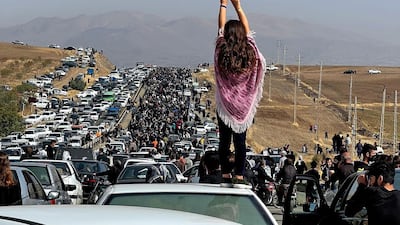
An unveiled woman stands on top of a vehicle as thousands make their way towards Aichi cemetery in Saqez, Mahsa Amini's home town, to mark 40 days since her death. AFP -
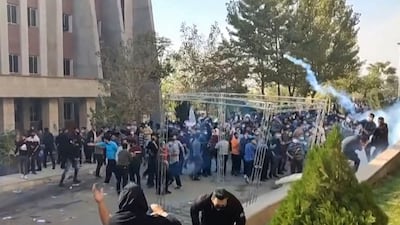
Protesters attempt to dodge projectiles fired at them during clashes at Iran's Islamic Azad University in Tehran. AFP -
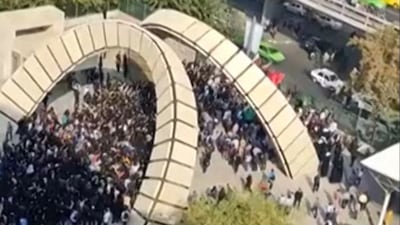
Protesters gather at Amirkabir University of Technology in Tehran. AFP -
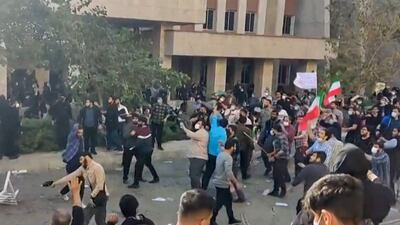
A man, bottom left, fires a weapon during the clashes at Islamic Azad University. AFP -
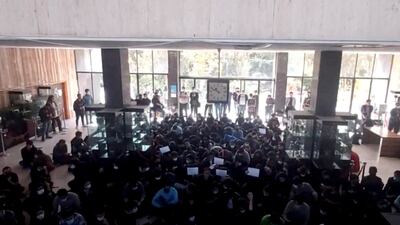
Protesters chant at a vigil for Amini at the entrance of the Khajeh Nasir Toosi University of Technology in Tehran. Reuters -
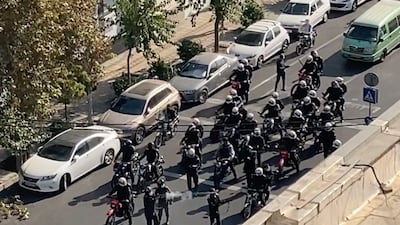
Iranian police arrive to disperse a protest marking 40 days since Amini's death. AP -
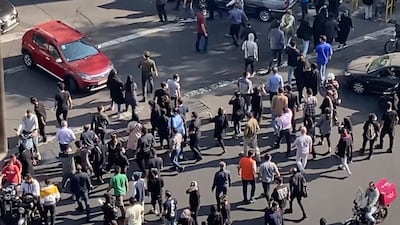
People block an intersection during a protest to mark 40 days since Amini's death. AP -
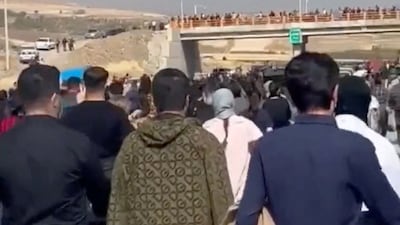
People march down the motorway towards Aichi cemetery near Saqez, where Amini is buried. Reuters -
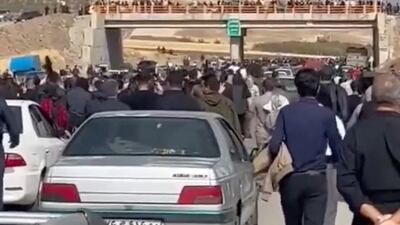
People march towards Aichi cemetary. Reuters -
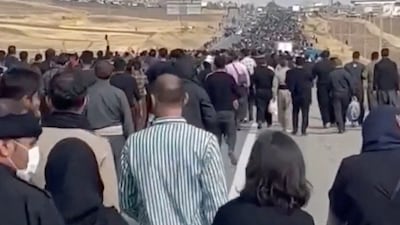
Protesters walk towards the cemetery. Reuters -

A view of demonstrators walking to the cemetery. Reuters -
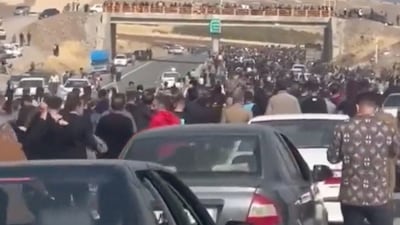
Cars line the street as people march towards the cemetery. Reuters -

Protesters march towards the cemetery 40 days after Amini's death. Reuters


Iran imposed sanctions on British institutions and people last week after the UK blacklisted Iran's morality police amid protests over the death of Amini.
Britain's National Cyber Security Centre and the Government Communications Headquarters, known as the GCHQ, were among seven institutions listed.
Conservative MP Bob Stewart said he had heard “substantial rumours” that Iranian elites were trying to make London “a place of safe refuge” and were applying for British passports.
Ms Keegan said in response: "Obviously we have our own rule of law here in the UK but in relation to the rumours he has heard about passports, I haven’t heard those but I will certainly look into that.”

