

Queen Elizabeth II dies — follow the latest news as the world mourns
Coca-Cola, Cadbury and Heinz are among about 800 companies that will have to reapply for a royal warrant as the prestigious label became void after the death of Queen Elizabeth II.
Retailers Fortnum & Mason and Waitrose, and brands including Twinings tea and Bollinger champagne, are also among those that proudly advertise the late monarch’s coveted coat of arms on their stores and packaging.
But the Royal Warrant Holders Association says warrants became void when the queen died.
"The royal household will review warrant grants upon a change of the reigning sovereign,” the association's website says.
But it says that “the company or individual may continue to use the royal arms in connection with the business for up to two years, provided there is no significant change within the company concerned”.
“It’s been our highest honour to supply the royal households with Heinz products since 1951, and we sincerely hope to be able to continue doing so for many years to come," a Heinz spokeswoman said.
“However, at this time, our thoughts are with the members of the Royal Family. Everyone at Heinz is deeply saddened by the passing of Her Majesty Queen Elizabeth II and we offer our sincerest condolences.
"We are so grateful for the extraordinary service Her Majesty gave to the nation.”
Rehearsals for procession of Queen Elizabeth's coffin in London - in pictures
-
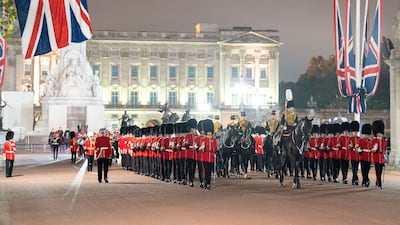
An early morning rehearsal for the procession of Queen Elizabeth's coffin in London. PA -
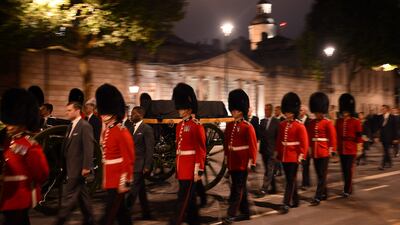
Grenadier Guards, a unit of the Household Division Foot Guards, take part in the rehearsal. AFP -
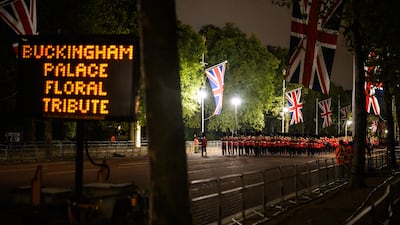
Queen Elizabeth's coffin will be transferred from Buckingham Palace by gun carriage in a ceremonial procession taking place on Wednesday. Getty Images -
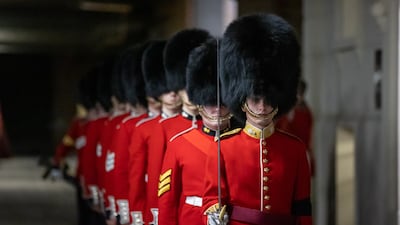
Members of the of the Grenadier Guards form up at Wellington Barracks ahead of a final full dress rehearsal. EPA -
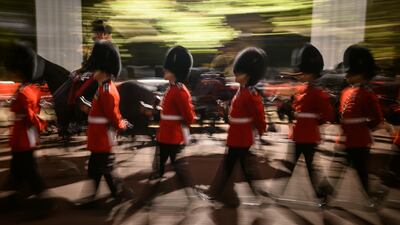
Guardsmen march from Buckingham Palace to the Palace of Westminster during the early morning rehearsal. Getty Images -
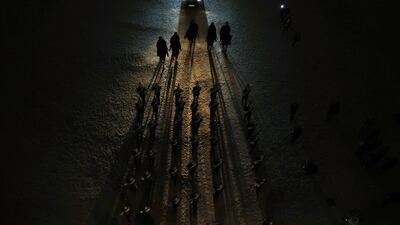
'Tri-Service' personnel taking part in a full dress rehearsal in London. EPA -
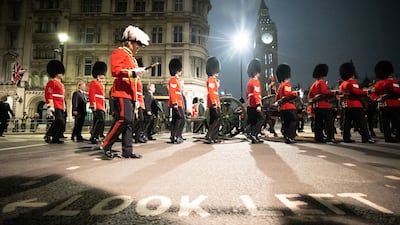
Grenadier Guards march past Big Ben in central London. PA


Companies are eligible for a royal warrant if they supply products or services on a regular and continuing basis to the royal households for not less than five years out of the past seven.
Applicants are also required to demonstrate that they have an appropriate environmental and sustainability policy and action plan.
The distinctive image of the royal coat of arms depicts the lion of England, unicorn of Scotland and a shield divided into four quarters followed by the words “by appointment to Her Majesty the Queen”.
About 30 royal warrants are granted a year, and the same number are withdrawn.
There are about 875 royal warrants at any one time, held by about 800 companies or people, but it changes almost monthly.
The UK mourns Queen Elizabeth II - in pictures
-
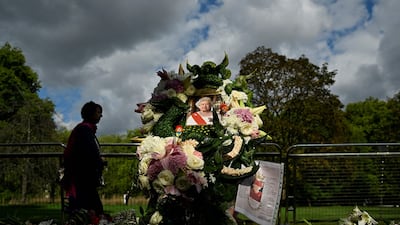
A tribute altar for Queen Elizabeth II in Green Park in London. AFP -
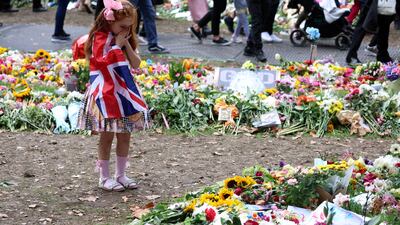
Ann Doran, 6, looks at floral tributes left in Green Park. Reuters -
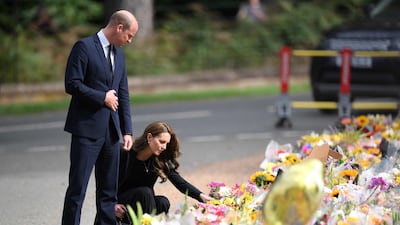
Britain's Prince William, Prince of Wales, and Catherine, Princess of Wales, look at floral tributes on the Sandringham Estate. AFP -
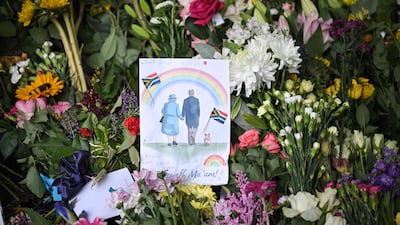
A drawing of the queen and her husband Prince Philip among flowers outside Windsor Castle. AFP -

Members of the public view floral tributes in Green Park, near Buckingham Palace. PA -
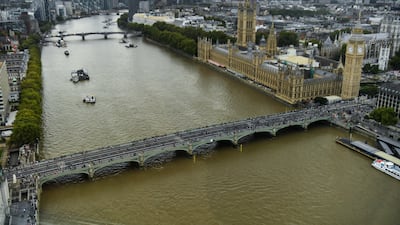
People queue on a bridge over the river Thames to pay their respects to Queen Elizabeth in London. Reuters -
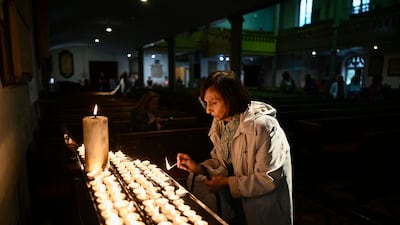
A member of the public lights a candle at Windsor Parish Church. AFP -
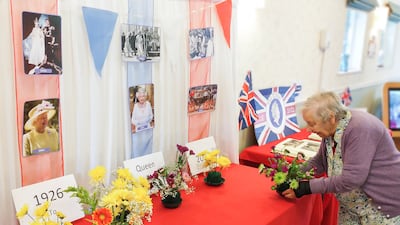
Residents of the Lawn care home in Alton, Hampshire, decorate an area with photographs of Queen Elizabeth, bunting and their own flower arrangements. PA -

Lloyd's of London chief John Neal delivers remarks honouring the life of Queen Elizabeth during a remembrance ceremony in the atrium of the company's offices in London. Getty Images -
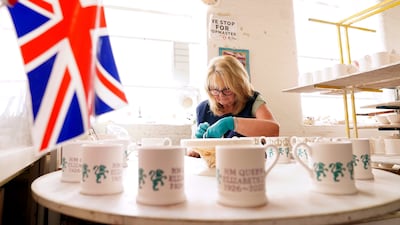
Joyce Buckley, a sponge decorator at Emma Bridgewater pottery in Stoke-on-Trent, Staffordshire, paints a commemorative mug. PA -
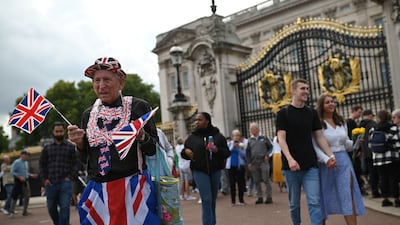
A royalist standing in front of Buckingham Palace. AFP -
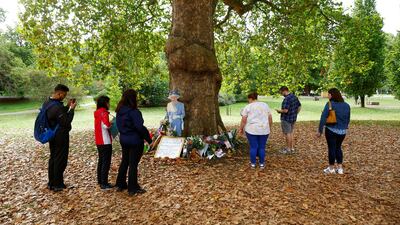
Tributes to Queen Elizabeth are viewed at St James's Park in London. Reuters -
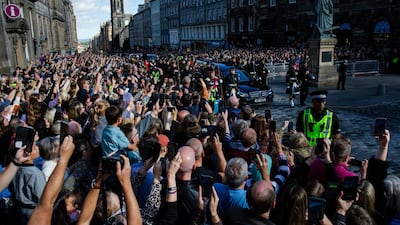
Crowds gather outside St. Giles' Cathedral on the Royal Mile as the queen's coffin passes in Edinburgh. Bloomberg -
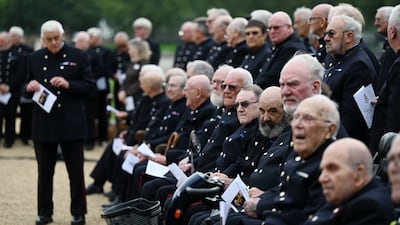
Chelsea Pensioners attend a Drumhead service of remembrance, with readings and prayers, in London. Getty Images -
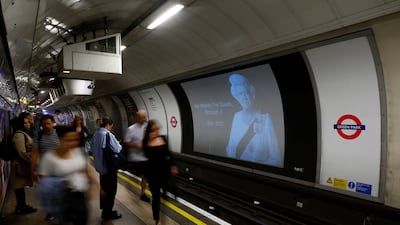
An image of Queen Elizabeth at Green Park Tube station. Reuters -
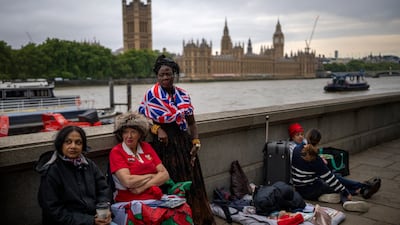
Vanessa, Anne and Grace, from left to right, wait opposite the Palace of Westminster to be first in line bidding farewell to Queen Elizabeth in London. AP -
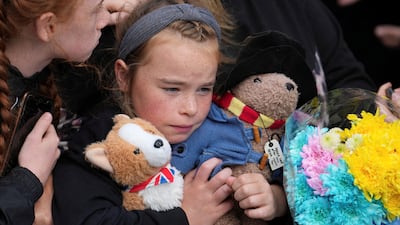
A young girl holds Paddington Bear and Corgi stuffed toys while waiting to watch the procession of Queen Elizabeth's coffin from the Palace of Holyroodhouse to the Royal Mile in Edinburgh. Reuters -
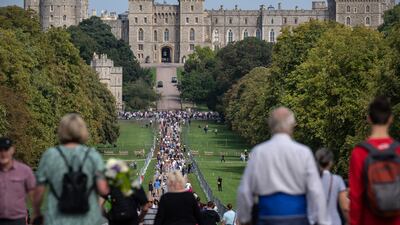
Well-wishers outside Windsor Castle. Getty Images -
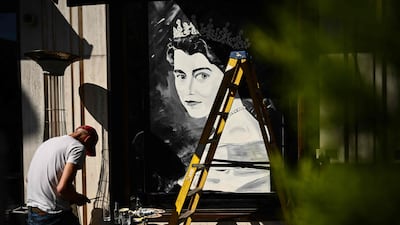
Lloyd Smith paints a portrait of Queen Elizabeth in London. AFP -

A child lays flowers outside the Palace of Holyroodhouse in Edinburgh. AP -
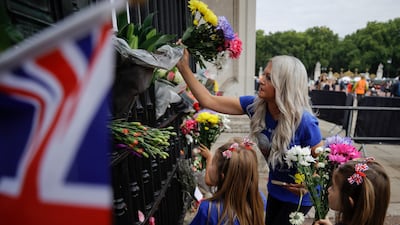
A family leaves flowers outside Buckingham Palace. EPA -
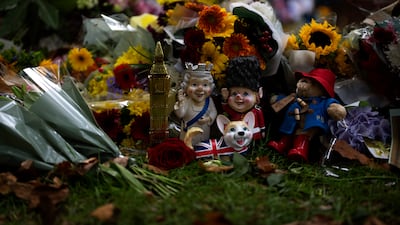
Flowers and tributes, including sunflowers and a Paddington Bear, are left for Queen Elizabeth at the Green Park memorial in London. AP -
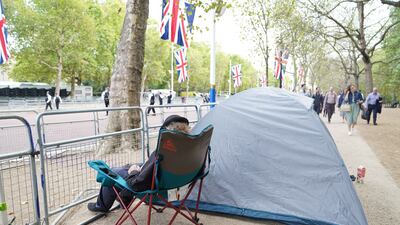
People start to camp on The Mall ahead of Queen Elizabeth's coffin being taken from Buckingham Palace on Wednesday afternoon by procession on a Gun Carriage to the Palace of Westminster. PA -
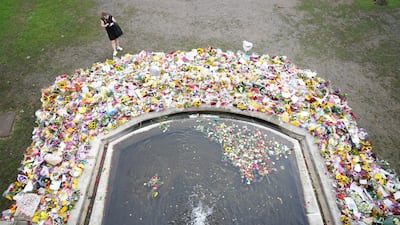
Flowers left in St James's Park, London. PA -
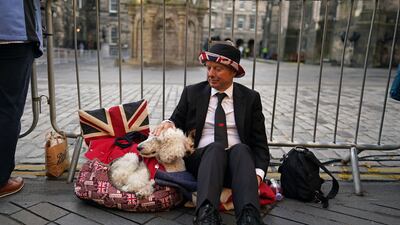
A man with his dog arrive early as they wait to view the cortege carrying the coffin of Queen Elizabeth in Edinburgh. Getty Images -
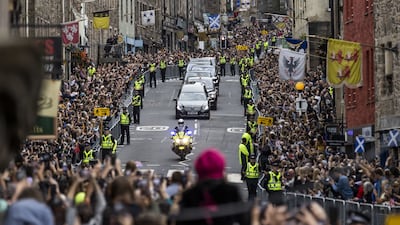
Members of the public gather on the Royal Mile in Edinburgh to watch the hearse carrying the coffin of Queen Elizabeth to the Palace of Holyroodhouse. PA -

Crowds watch as the hearse continues its journey to the Palace of Holyroodhouse from Balmoral. PA -
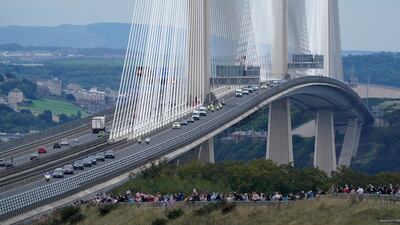
The hearse passing over Queensferry Crossing on its way to Edinburgh. PA -

Flowers left at the Sandringham Estate, one of the queen's residences. EPA -
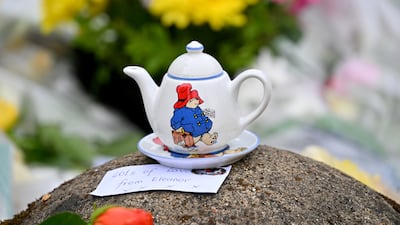
A Paddington Bear teapot at the Sandringham Estate. EPA -
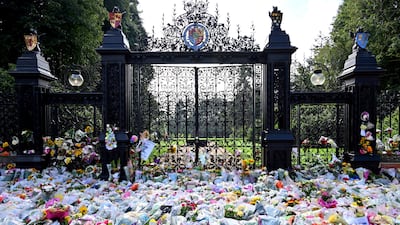
Flowers left at the gates of the Sandringham Estate. EPA -

Flowers, cards and messages left in St James's Park in London. EPA -
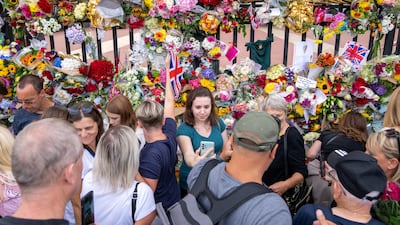
People lay flowers at Buckingham Palace in London. Reuters


A royal warrant is usually granted for up to five years and reviewed in the year before it is due to expire so that a decision can be made as to whether it should be renewed for another period of up to five years.
Other brands and food and drink companies that were granted warrants by the late Queen Elizabeth II include Premier Foods, Unilever, British Sugar, Britvic, Martini, Dubonnet, Johnnie Walker, the Famous Grouse owner Matthew Gloag and Son, Gordon’s and Pimm’s.

