


Last week's record-breaking heatwave in Britain was made at least 10 times more likely by human-caused climate change, a new study by a team of international scientists has found.
The UK’s extreme temperatures were higher than climate models predict — suggesting the consequences of climate change for heatwaves could be even worse than previously thought, the scientists warned.
Researchers from the World Weather Attribution initiative said the 10-fold increase in the chances of extreme heat in the UK due to climate change is a conservative estimate.
And while the searing heat, which led to temperatures peaking above 40ºC for the first time in the UK, is still a very rare occurrence in today’s climate, it would be “almost impossible” without global warming.
Mariam Zachariah, from the Grantham Institute for Climate Change, Imperial College London, said: “Even with a conservative estimate, we see a large role of climate change in the UK heatwave.
“Under our current climate that has been altered by greenhouse-gas emissions, many people are experiencing events during their lifetime that would have been almost impossible otherwise.”
A record temperature for the UK of 40.3ºC was set in Coningsby, Lincolnshire, on July 19 — 1.6°C hotter than the previous record set only three years ago.
The heat caused widespread disruption to transport networks and hundreds of fires, including devastating blazes that destroyed homes and pushed London to the brink of power cuts. Scorching temperatures are expected to have caused hundreds of deaths.
-
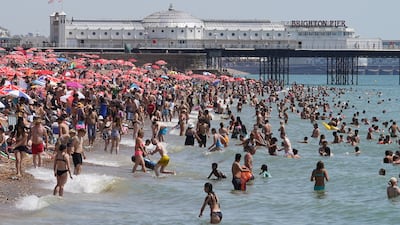
People basking in the sun on a crowded Brighton beach. The temperature in Britain smashed through the 40ºC barrier for the first time in recorded history. PA -
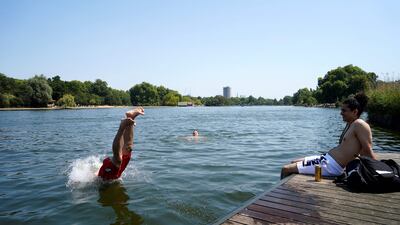
A man dives into the Serpentine Lake to cool off in Hyde Park, west London. AFP -
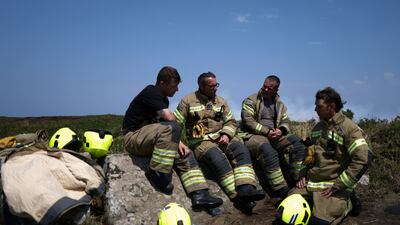
Firefighters rest as they attend a gorse bush fire, near Zennor, Cornwall. Reuters -
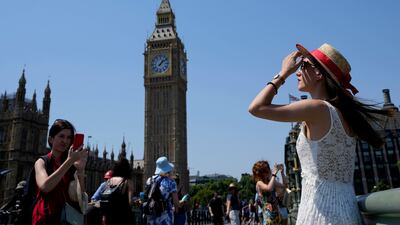
A tourist wears a hat to shield herself from the sun on Westminster Bridge in central London. AP -
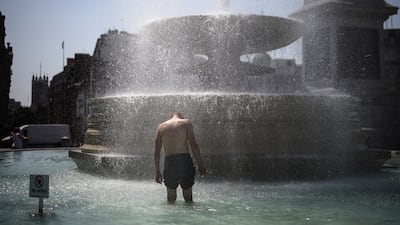
A man cools off at Trafalgar Square, central London. Reuters -
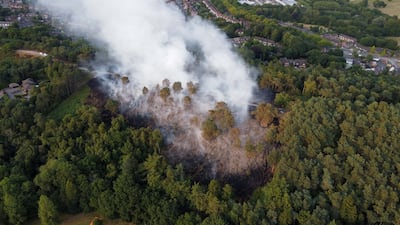
Firefighters respond to a large wildfire in woodland at Lickey Hills Country Park on the edge of Birmingham. PA -
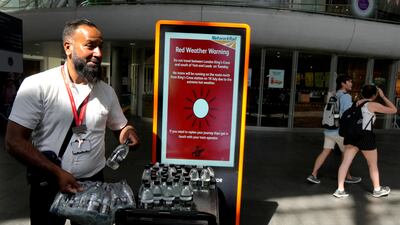
A railway worker hands out bottles of water to passengers at London's King's Cross, where there are train cancellations due to the heat. AP -
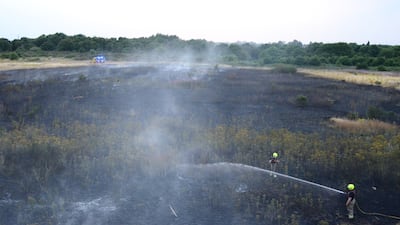
Firefighters control a grass fire in Ravenswood, Suffolk. PA -

Train tracks are painted white to help with the heat at Alexandra Palace train station in London. PA -
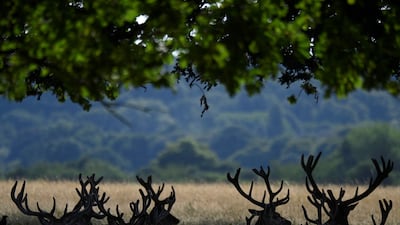
Deer rest in the shade at London's Richmond Park. Reuters -

An empty freezer section at Sainsbury's Nine Elms in London. PA -

Chippy the chimpanzee enjoys an ice treat at Blair Drummond Safari and Adventure Park, near Stirling. AP -

A student dips her head into the fountain at Trafalgar Square, London. Getty Images -
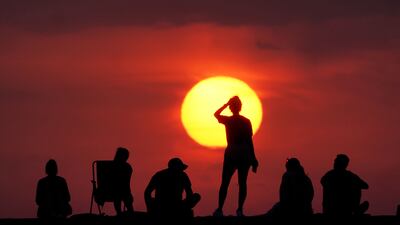
People turn out to watch the sunrise on Tuesday morning at Cullercoats Bay, North Tyneside. PA -

A digital thermometer displaying a temperature of 39°C on a London Underground train. PA -

A fan finds a way to keep cool while watching the Women's Euro 2022 football match between Italy and Belgium at Manchester City Academy Stadium. AP -

An aerial view shows swimmers at Hathersage Swimming Pool, west of Sheffield in northern England. AFP -
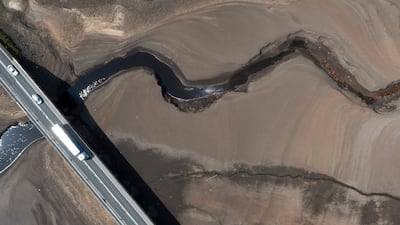
Traffic crosses a bridge at Woodhead Resevoir in West Yorkshire as water levels dip dangerously low. AP -

A man leaps from the top of a tree into the River Cam, in Cambridge. Getty Images -
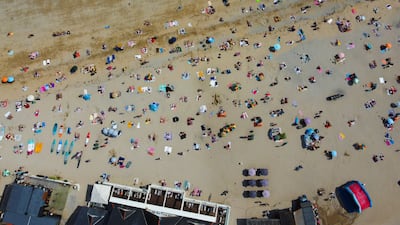
A packed Gyllyngvase beach in Falmouth. Getty Images -

A police officer gives water to a sentry in heavy ceremonial uniform, outside Buckingham Palace in central London. AP -
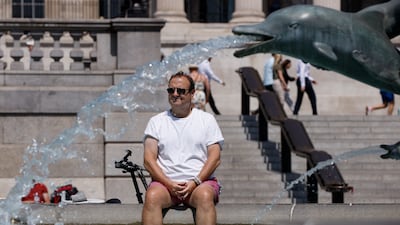
A man cools off in a fountain in London. Reuters -

A man sunbathes at the harbour in Mousehole, Cornwall. AP -
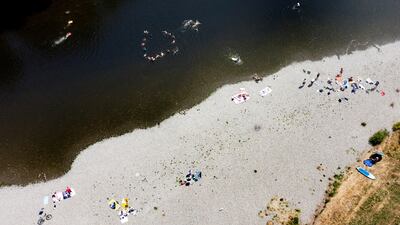
People swim in the River Wye. Reuters -

Passengers feel the heat on the London Underground. The operator advised its customers not to use the metro during the worst of the heatwave. AP -

Palm House supervisor Will Spolestra waters the plants at the Royal Botanical Gardens Kew, west London, where temperatures inside the greenhouses are cooler than outside during the heatwave. PA -

Dry grass at Greenwich Park, south-east London. AP -

A swimmer takes an early morning dip in the cool water of Jesus Green Lido in Cambridge, eastern England. Getty Images -

Assistant horticulturalist Katie Martyr checks the temperature at the Cambridge University Botanic Garden. Forecasts are for record temperatures exceeding 40°C. Getty Images -
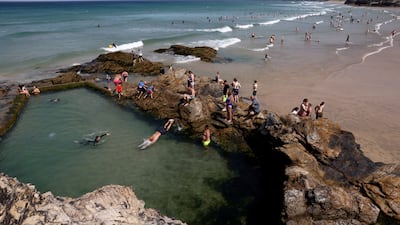
Bathers keep cool in a tidal pool at Perranporth Beach in Cornwall, south-west England. Reuters -
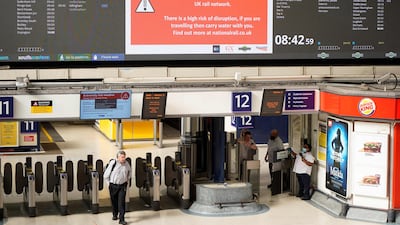
Message boards at London's Victoria Station warn passengers of potential disruption to train services due to the extreme heat. AFP -
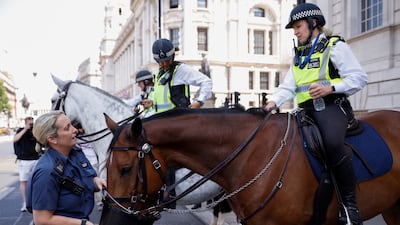
Zorro the police horse drinks water from a bucket to cool down during hot weather, on Whitehall in London. Reuters -
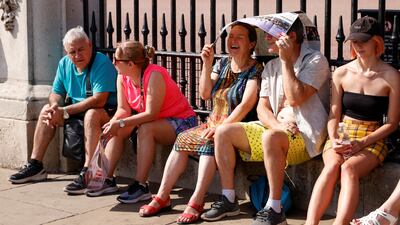
People use a map to shelter from the sun outside Buckingham Palace in London. Reuters -
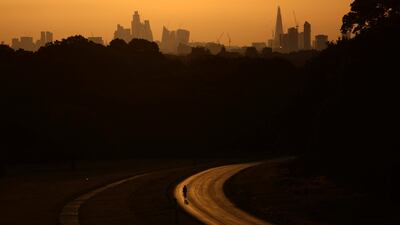
A cyclist rides through Richmond Park in south-west London at sunrise on Monday. Reuters -
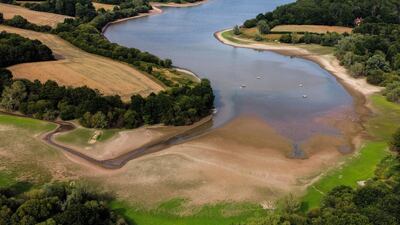
The reduced water level at Weir Wood reservoir, near Crawley, south-east England. The UK's Met Office has issued its first 'red warning' for exceptional heat. AFP -
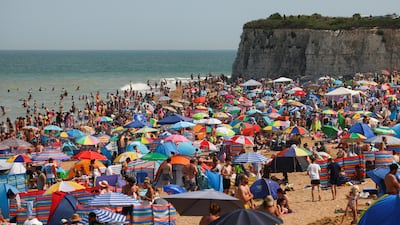
A crowded beach at Joss Bay in Broadstairs, south-east England. Reuters -
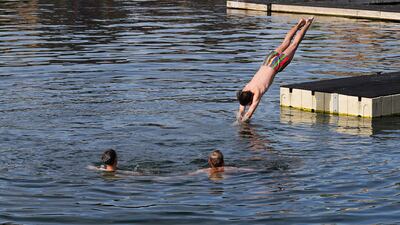
Swimmers take the plunge to escape the heat in east London. Reuters -
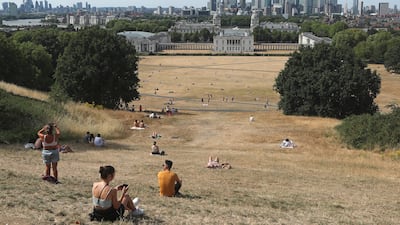
Sunbathers on the parched grass in Greenwich Park, south-east London. AP -
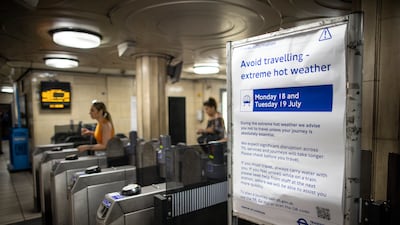
A sign advises people not to travel on the London Underground during the heatwave. EPA


The study looked at the annual maximum temperatures over two days across the region of England and east Wales, which had the Meteorological Office’s first red alert warning for extreme heat issued for July 18-19.
It also examined the change in frequency and intensity of the maximum daily temperature seen at three locations: London’s St James’s Park, Cranwell in Lincolnshire, which is close to Coningsby, and Durham, where temperatures broke their previous record high by 4ºC.
Researchers used computer modelling to compare the likelihood of the temperatures recorded in the heatwave under the current climate with a world without the 1.2ºC of global warming since the 19th century.
The modelling suggests climate change, driven by more heat-trapping greenhouse gases put into the atmosphere by human activity, had made a heatwave as intense as the UK’s at least 10 times more likely and probably even more. However, the research said this was still likely to happen only once in 100 years.
-

A residential area after a large fire in Wennington, Greater London. Several fires broke out across England as the UK experienced a record-breaking heatwave. Getty Images -

Residents look at buildings destroyed by fire in Wennington. Getty -

Firefighters tackle a grass fire during the heatwave in Mow Cop, Staffordshire. Reuters -
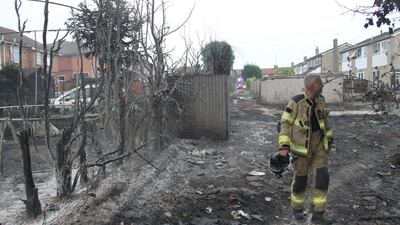
Firefighters in Maltby, after a fire started on scrubland before spreading to outbuildings, fences and homes in South Yorkshire. PA -
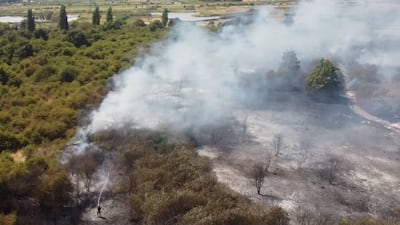
The scene after a fire at Dartford Marshes. PA -
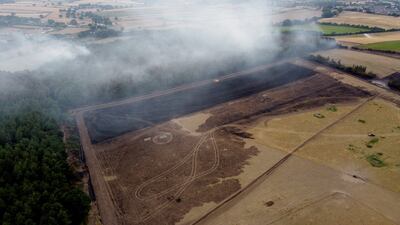
Burnt woodland is seen as smoke rises from the trees following a fire in Blidworth. Getty Images -
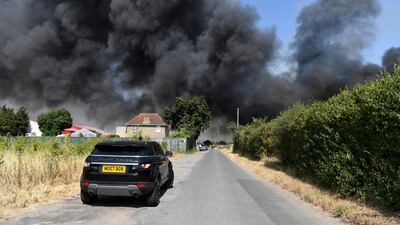
A car drives towards a fire in East London. Reuters -
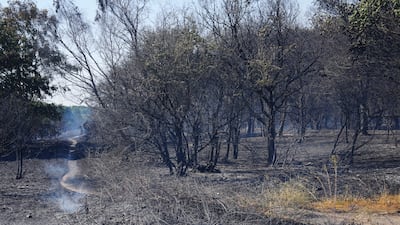
Burnt woodland in Dartford Heath, England, after a fire on Tuesday. Getty -
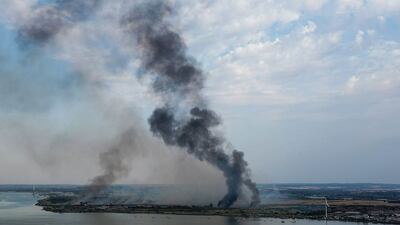
Smoke columns rise from Dartford, Kent, where a fire erupted earlier in the day. AFP -
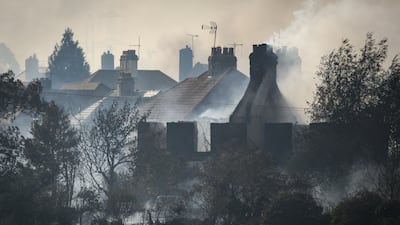
Smoke rises from Wennington neighbourhood fires in England on Tuesday. Getty -
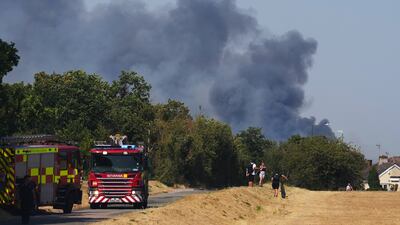
Emergency services tackle a fire on Dartford Heath. Grass fires broke out around the country during an intense heatwave. Getty -
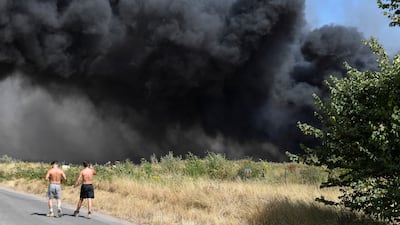
People look on as a fire burns in East London. Reuters -
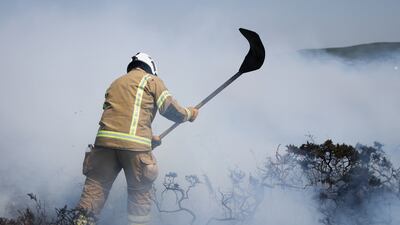
A firefighter attends a gorse bush fire during a heatwave near Zennor, Cornwall. Reuters -

Smoke pours from a blaze in the village of Wennington, east London. PA -
Firefighters hose down a grass fire in Ravenswood in Suffolk. PA -
Firefighters rest after attending a gorse bush fire near Zennor in Cornwall. Reuters -
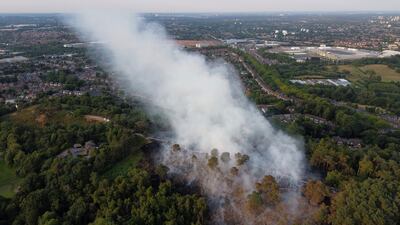
A large wildfire in woodland at Lickey Hills Country Park on the edge of Birmingham. AP -
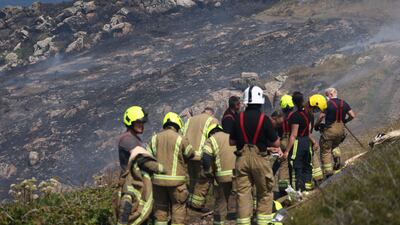
Smoke from the fire near Zennor, Cornwall. Reuters -
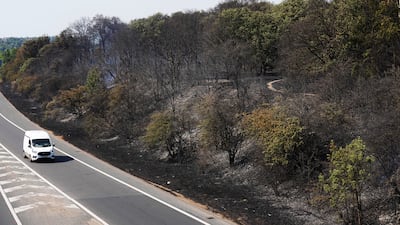
Burnt woodland alongside a motorway near Dartford Heath. Getty -
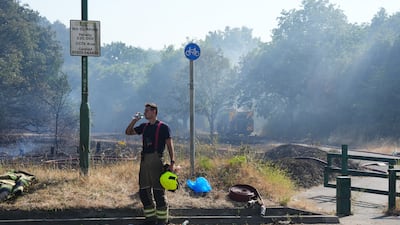
A firefighter has a drink of water after the major blaze on Dartford Heath. Getty


“Two years ago, scientists at the UK Met Office found the chance of seeing 40ºC in the UK was now one in 100 in any given year, up from one in 1,000 in the natural climate," said Fraser Lott, climate monitoring and attribution scientist at the Met Office Hadley Centre.
“It’s been sobering to see such an event happen so soon after that study, to see the raw data coming back from our weather stations.”
But the researchers also warned extreme heat in western Europe is rising faster than climate models predict.
While the models suggest climate change had increased temperatures in the heatwave by 2ºC, analysis of historical weather records indicate it would be about 4ºC cooler in pre-industrial times. This is before global warming started to drive up temperatures.
"In Europe and other parts of the world, we are seeing more and more record-breaking heatwaves causing extreme temperatures that have become hotter faster than in most climate models," said Friederike Otto, from the Grantham Institute for Climate Change, Imperial College London.
“It’s a worrying finding that suggests that if carbon emissions are not rapidly cut, the consequences of climate change on extreme heat in Europe, which already is extremely deadly, could be even worse than we previously thought.”
While it will take weeks for figures for the number of extra deaths seen during the heatwave, there have been estimates of more than 840 more people dying in England and Wales on July 18 and 19.
The researchers warn older people, those with chronic health conditions and children are particularly vulnerable to extreme heat. Urban areas such as London have had extra high levels of heat being trapped by the city.
There are also significant inequalities that worsen the situation, with poorer neighbourhoods in cities such as London lacking green space, shade, and water which can help people cope during heatwaves.
Climate change has increased average global and regional temperatures, which means natural spikes in heat are driven higher and occur more frequently.
It can also contribute to drier conditions and soils, which have been seen in much of Europe this year. These in turn exacerbate heatwaves because there is less water in the environment to absorb heat as it evaporates.

