


The head of the Foreign Office admitted the country has “lessons to learn” following the UK's chaotic evacuation of Afghanistan alongside other international forces last year.
The permanent under secretary, Sir Philip Barton, again expressed his regret that he did not return from leave as Kabul fell to the Taliban after a scathing report by MPs.
Afghan allies and British troops had been let down by “deep failures of leadership” as Sir Philip and former foreign secretary Dominic Raab both remained on holiday as the Taliban took control of the country, said the Commons Foreign Affairs Committee.
“If I had my time again, I would have come back from my leave earlier. That is what I should have done,” Sir Philip said while speaking before the House of Lords International Relations Committee.
He said that the crisis surrounding the fall of the Afghan capital to the Taliban last August was “one of the most complex and challenging” the department had ever faced.
“We did manage to evacuate 15,000 people against an original planning assumption of six. That is more than any other country apart from the US. All of us wish we could have evacuated more people,” he said.
Sir Philip said that once the immediate crisis phase was over, he had put in place a “proper exercise” to establish what lessons could be learnt, which led to a series of changes within the department.
-
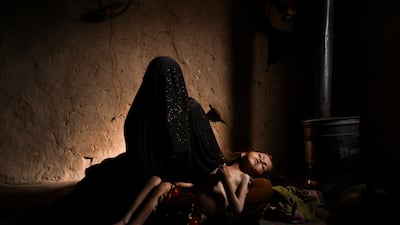
Fatima holds her daughter Nazia, 4, who is suffering from acute malnutrition, at their house near Herat, western Afghanistan, December 16, 2021. Two years ago, Nazia was a plump toddler, Fatima says. Aid groups say more than half the population faces acute food shortages. AP Photo -
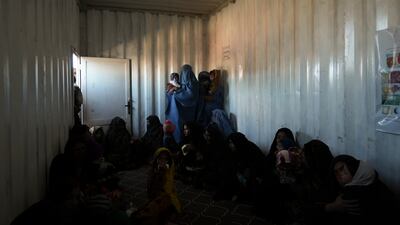
Afghan women at a makeshift clinic run by World Vision at a settlement near Herat. The aid-dependent country’s economy was already teetering when the Taliban seized power in mid-August. The consequences have been devastating for a country battered by four decades of war, a punishing drought and the coronavirus pandemic. AP Photo -
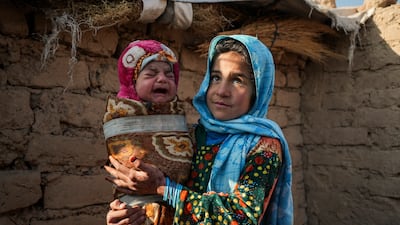
Qandi Gul holds her brother outside their home in a camp for those displaced by war and drought near Herat. Qandi's father sold her into marriage without telling his wife, taking a down payment so he could feed his family of five children. AP Photo -
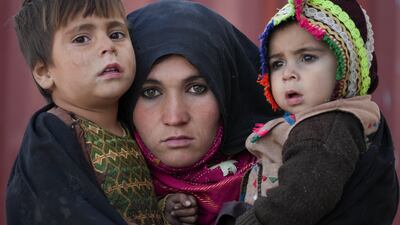
An Afghan woman with her children outside a makeshift clinic at a sprawling settlement of mud brick huts housing those displaced by war and drought near Herat. AP Photo -
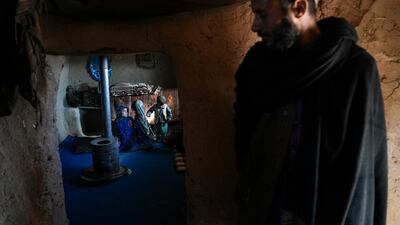
Hamid Abdullah outside a room where his children are playing at a settlement near Herat. Mr Abdullah is selling his young daughters into arranged marriages, desperate for money to treat his chronically ill wife, who is pregnant with their fifth child. AP Photo -
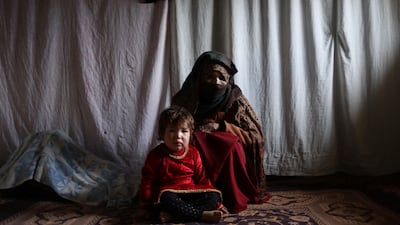
Kubra, 57, with her grandchild in a house in Bamiyan, Afghanistan, December 22, 2021. 'We got two sacks of flour last spring that we're still using. After that, we have to have faith that God will help us," Kubra says. Reuters -
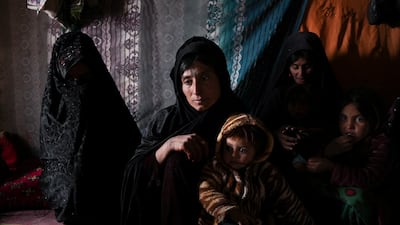
Guldasta and members of her family in their house at a settlement near Qala-e-Naw, Afghanistan. Guldasta says that after days with nothing to eat, she told her husband to take their son Salahuddin, 8, to the bazaar and sell him to buy food for the others. AP Photo -
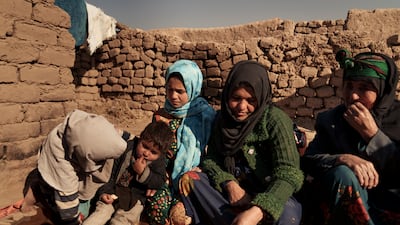
Aziz Gul, second from right, and her 10-year-old daughter Qandi, centre, outside their home with other family members, near Hera. Qandi's father sold her into marriage without telling his wife, Aziz, taking a down-payment so he could feed his family. AP Photo


“We did embed those in the way in which we approached the invasion of Ukraine in February,” he said.
In its report published last month, the Foreign Affairs Committee said there had a “total absence of a plan” for Afghans who supported the British mission, despite knowing for 18 months that an evacuation may be necessary if the US were to withdraw its troops.
Sir Philip acknowledged the speed of the collapse of the western-backed Afghan government had come as a surprise, but insisted planning had been under way for a possible military airlift since the start of the year.
“No one, including the Taliban themselves, foresaw the speed at which that happened,” he said.
“Our main effort in the first half of last year was trying to avoid a Taliban takeover. In parallel, we did work up our contingency plans including … planning with the [Ministry of Defence] for a military evacuation.”
Earlier, shadow foreign secretary David Lammy flew to Afghanistan to highlight the worsening humanitarian “catastrophe”, as millions of people face starvation.
Mr Lammy and shadow international development minister Preet Gill, who is travelling with him, are thought to be the first UK politicians to visit the country since the return of the Taliban.
Labour said the trip was made possible by the UN Office for the Co-ordination of Humanitarian Affairs and that there would not be any meetings with Taliban officials or representatives.
Mr Lammy said the scramble to leave last year had damaged the UK’s reputation and he called on the government to set out a “comprehensive strategy” to alleviate the ensuing humanitarian crisis.
“The government downgraded the UK’s international reputation and made the whole world less safe with its calamitous handling of the withdrawal from Afghanistan last summer,” he said.
“Today, millions of Afghanistan’s civilians are suffering from starvation, with some even forced to sell body parts to feed their families.
“The UK government’s woeful lack of leadership that was so visible last year is continuing as it ignores the humanitarian catastrophe.”

