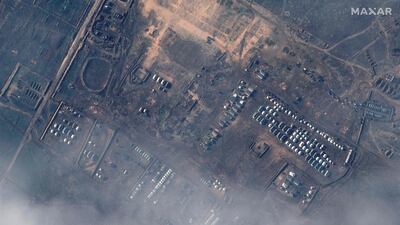
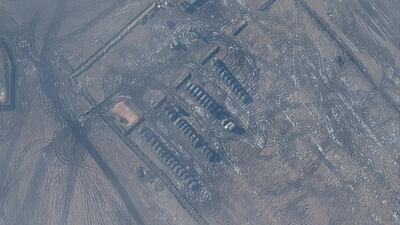
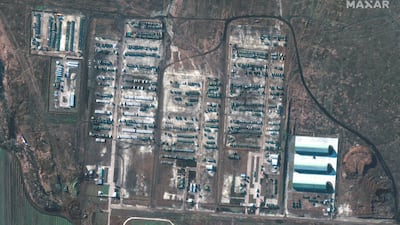
Britain is providing further “self-defence” weapons and training to Ukraine amid concerns over a possible Russian invasion.
Defence Secretary Ben Wallace said light anti-armour defensive weapons systems would be supplied to Ukraine, with a “small number” of UK personnel travelling to the country to provide training.
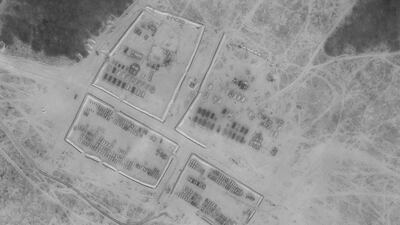
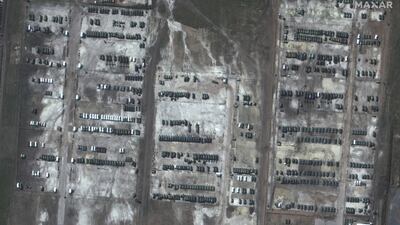
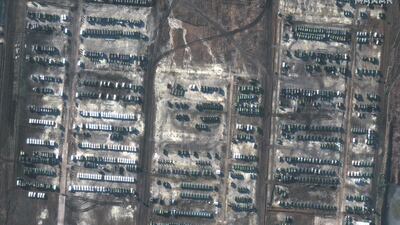
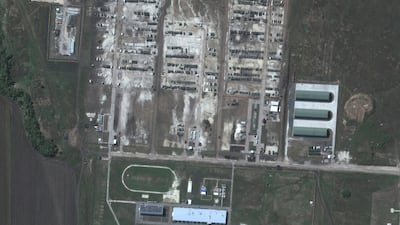
He told MPs there is “real cause of concern” over the scale of the force being assembled by the Kremlin, which is supported by Russian air and maritime forces.
Russia’s presence and levels of readiness are contributing to a “destabilising and coercive atmosphere that risks miscalculation at best and at worst conflict”, Mr Wallace added.
He invited his Russian counterpart, Sergey Shoygu, to visit London “in the next few weeks” to discuss “issues related to mutual security concerns and engage constructively in good faith”.
After highlighting previous work as part of Operation Orbital, the UK’s training mission in Ukraine, Mr Wallace outlined the new support being provided.
“In light of the increasingly threatening behaviour from Russia and in addition to our current support, the UK is providing a new security assistance package to increase Ukraine’s defensive capabilities,” he told the Commons.
“We have taken the decision to supply Ukraine with light anti-armour defensive weapons systems.
“A small number of UK personnel will provide early stage training for a short period of time, within the framework of Operation Orbital, before returning to the United Kingdom.
“This security assistance package complements the training capabilities Ukraine already has and those that are also being provided by the UK and other allies in Europe and the United States.
“Ukraine has every right to defend its borders and this new package of aid further enhances its ability to do so.”
He emphasised, however, that “this support is for short-range and clearly defensive weapon capabilities; they are not strategic weapons and pose no threat to Russia; they are to use in self-defence".
Mr Wallace reiterated there is a “package of international sanctions ready to go” should any “destabilising action” by Russia in Ukraine take place.
He noted any invasion will be viewed as an “occupation”, and added: “I fear it could lead to a huge loss of life on all sides.
“The current difficult relationship with the Kremlin is not the one we wish it to have with the United Kingdom, it does not have to be this way.”
Mr Wallace went on to say: “We wish to be friends with the Russian people as we have been for hundreds of years. And there is a world in which we can establish a mutually beneficial relationship with Russia.
“I still remain hopeful that diplomacy will prevail. It is President Putin’s choice whether to choose diplomacy and dialogue, or conflict and the consequences.”

Lexus LX700h specs
Engine: 3.4-litre twin-turbo V6 plus supplementary electric motor
Power: 464hp at 5,200rpm
Torque: 790Nm from 2,000-3,600rpm
Transmission: 10-speed auto
Fuel consumption: 11.7L/100km
On sale: Now
Price: From Dh590,000
%3Cp%3EMATA%0D%3Cbr%3EArtist%3A%20M.I.A%0D%3Cbr%3ELabel%3A%20Island%0D%3Cbr%3ERating%3A%203.5%2F5%3C%2Fp%3E%0A
Zakat definitions
Zakat: an Arabic word meaning ‘to cleanse’ or ‘purification’.
Nisab: the minimum amount that a Muslim must have before being obliged to pay zakat. Traditionally, the nisab threshold was 87.48 grams of gold, or 612.36 grams of silver. The monetary value of the nisab therefore varies by current prices and currencies.
Zakat Al Mal: the ‘cleansing’ of wealth, as one of the five pillars of Islam; a spiritual duty for all Muslims meeting the ‘nisab’ wealth criteria in a lunar year, to pay 2.5 per cent of their wealth in alms to the deserving and needy.
Zakat Al Fitr: a donation to charity given during Ramadan, before Eid Al Fitr, in the form of food. Every adult Muslim who possesses food in excess of the needs of themselves and their family must pay two qadahs (an old measure just over 2 kilograms) of flour, wheat, barley or rice from each person in a household, as a minimum.
SPECS
%3Cp%3E%3Cstrong%3EEngine%3A%3C%2Fstrong%3E%201.5-litre%204-cylinder%3Cbr%3E%3Cstrong%3EPower%3A%3C%2Fstrong%3E%20101hp%3Cbr%3E%3Cstrong%3ETorque%3A%3C%2Fstrong%3E%20135Nm%3Cbr%3E%3Cstrong%3ETransmission%3C%2Fstrong%3E%3A%20Six-speed%20auto%3Cbr%3E%3Cstrong%3EPrice%3A%3C%2Fstrong%3E%20From%20Dh79%2C900%3Cbr%3E%3Cstrong%3EOn%20sale%3A%3C%2Fstrong%3E%20Now%3C%2Fp%3E%0A
More on Coronavirus in France
Key facilities
- Olympic-size swimming pool with a split bulkhead for multi-use configurations, including water polo and 50m/25m training lanes
- Premier League-standard football pitch
- 400m Olympic running track
- NBA-spec basketball court with auditorium
- 600-seat auditorium
- Spaces for historical and cultural exploration
- An elevated football field that doubles as a helipad
- Specialist robotics and science laboratories
- AR and VR-enabled learning centres
- Disruption Lab and Research Centre for developing entrepreneurial skills
Ten tax points to be aware of in 2026
1. Domestic VAT refund amendments: request your refund within five years
If a business does not apply for the refund on time, they lose their credit.
2. E-invoicing in the UAE
Businesses should continue preparing for the implementation of e-invoicing in the UAE, with 2026 a preparation and transition period ahead of phased mandatory adoption.
3. More tax audits
Tax authorities are increasingly using data already available across multiple filings to identify audit risks.
4. More beneficial VAT and excise tax penalty regime
Tax disputes are expected to become more frequent and more structured, with clearer administrative objection and appeal processes. The UAE has adopted a new penalty regime for VAT and excise disputes, which now mirrors the penalty regime for corporate tax.
5. Greater emphasis on statutory audit
There is a greater need for the accuracy of financial statements. The International Financial Reporting Standards standards need to be strictly adhered to and, as a result, the quality of the audits will need to increase.
6. Further transfer pricing enforcement
Transfer pricing enforcement, which refers to the practice of establishing prices for internal transactions between related entities, is expected to broaden in scope. The UAE will shortly open the possibility to negotiate advance pricing agreements, or essentially rulings for transfer pricing purposes.
7. Limited time periods for audits
Recent amendments also introduce a default five-year limitation period for tax audits and assessments, subject to specific statutory exceptions. While the standard audit and assessment period is five years, this may be extended to up to 15 years in cases involving fraud or tax evasion.
8. Pillar 2 implementation
Many multinational groups will begin to feel the practical effect of the Domestic Minimum Top-Up Tax (DMTT), the UAE's implementation of the OECD’s global minimum tax under Pillar 2. While the rules apply for financial years starting on or after January 1, 2025, it is 2026 that marks the transition to an operational phase.
9. Reduced compliance obligations for imported goods and services
Businesses that apply the reverse-charge mechanism for VAT purposes in the UAE may benefit from reduced compliance obligations.
10. Substance and CbC reporting focus
Tax authorities are expected to continue strengthening the enforcement of economic substance and Country-by-Country (CbC) reporting frameworks. In the UAE, these regimes are increasingly being used as risk-assessment tools, providing tax authorities with a comprehensive view of multinational groups’ global footprints and enabling them to assess whether profits are aligned with real economic activity.
Contributed by Thomas Vanhee and Hend Rashwan, Aurifer
In the Restaurant: Society in Four Courses
Christoph Ribbat
Translated by Jamie Searle Romanelli
Pushkin Press
Killing of Qassem Suleimani