

In June 1997, the world’s most famous woman spoke of the “stealthy killers” lurking below the surface.
Diana, Princess of Wales, who would have turned 60 on Thursday, said landmines left behind “mangled bodies” and scarred earth.
They were killing hundreds of innocent people a month in the world’s poorest countries and those who were lucky to survive the blast were injured for life. The outrage, she said, was that the world was doing nothing about it.
Addressing her trip to Angola in January that year – where she famously volunteered to walk down a narrow path cleared through an active minefield – she said leaders needed to act fast.
“I would like to see more done for those living in this no man’s land which lies between the wrongs of yesterday and the urgent needs of today,” she pleaded at a landmine survivors’ conference in London.
“I think we owe it. The more expeditiously we can end this plague on earth caused by the landmine, the more readily can we set about the constructive tasks to which so many give their hand in the cause of humanity.”
The Ottawa Treaty banning landmines was signed six months later. Today, it has 164 signatories.
-
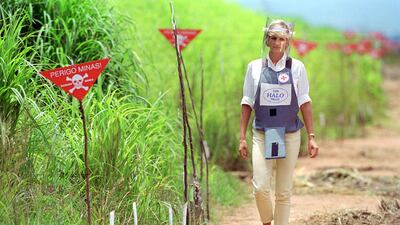
Princess Diana, wearing protective body armour, visits a minefield being cleared by the charity Halo in Huambo, Angola, in 1997. -
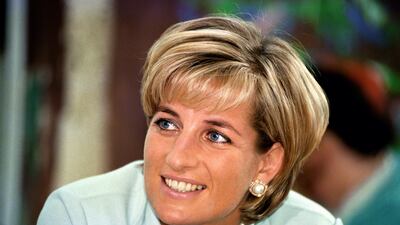
Princess Diana visits Leicester to open The Richard Attenborough Centre for Disability and Arts, in 1997. -
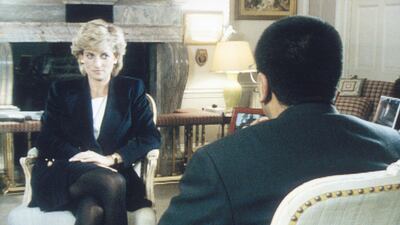
Martin Bashir speaking to Princess Diana in Kensington Palace, London, during the infamous Panorama interview which was broadcast on BBC TV in 1995. -
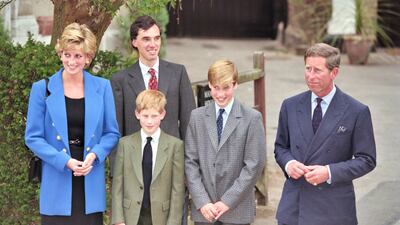
Princess Diana, Prince Harry, Prince William and Prince Charles outside Manor House on Prince William's first day at Eton College, in 1995. -
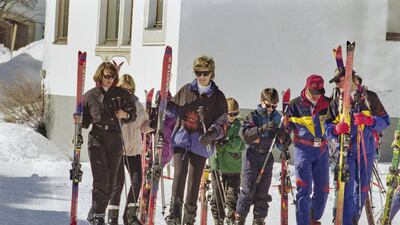
Princess Diana, Harry and William carry their skis during a skiing holiday in Lech am Arlberg, Austria, in 1994. -
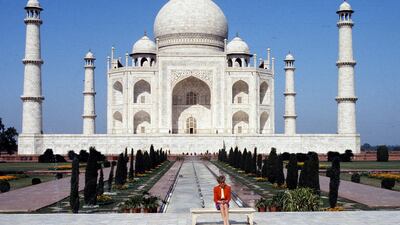
Princess Diana poses alone at the Taj Mahal during her visit to India, in 1992. -
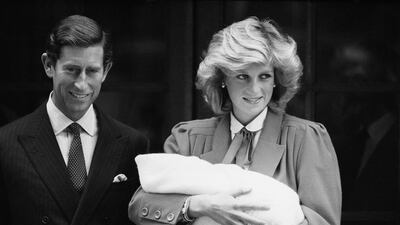
Princess Diana and Prince Charles with newborn Prince Harry, leave St Mary's Hospital in Paddington, London, in 1984. -

Princess Diana And Prince Charles watch an official event during their first royal Australian tour in 1983. -
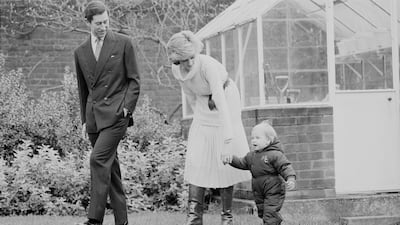
Princess Diana and Prince Charles with their son William in 1983. -

Princess Diana smiling as she prepares to embrace a woman in the crowd, on the streets of Carmarthen, Wales, in 1981. -
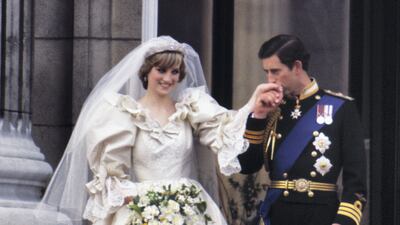
The Prince and Princess of Wales on the balcony of Buckingham Palace on their wedding day, July 29, 1981. -
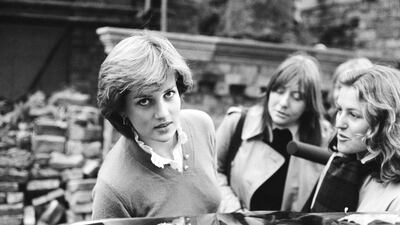
A 19-year-old Lady Diana Spencer speaks to the press while getting into a car in London, in 1980. -
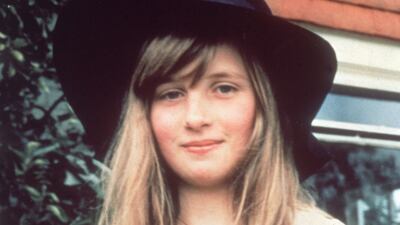
A 10-year-old Lady Diana Spencer during a summer holiday in Itchenor, West Sussex, in 1971.


Diana died on August 31, 1997, in a car crash in Paris while being chased by the paparazzi.
She didn’t live to see the treaty come into force but royal watchers have cited her work championing it as among her most defining legacies.
Prince William and Prince Harry, her sons, will unveil a new statue in her honour in the Sunken Garden at Kensington Palace.
Richard Fitzwilliams, royal commentator and former editor of The International Who’s Who, recalled a “truly remarkable human being” who touched lives around the world.
“Diana’s legacy is linked to her charitable achievements which were remarkable, most particularly her campaign against landmines and her work for Aids sufferers, which changed the attitudes of so many at an absolutely critical time,” he told The National.
“Despite her personal unhappiness, she was able to bring comfort to others. She was a truly remarkable human being, and there’s absolutely no doubt the public response when she died reflected the fact she has a very, very significant place in the hearts and minds of the British people.”
By interacting more intimately with the public – kneeling to the level of a child, hugging HIV/Aids patients, writing personal notes to her fans – she connected with people in a way that inspired other royals, including William and Harry, as the monarchy worked to become more human and remain relevant.
Mr Fitzwilliams said Diana “used her royal title to do good and to do good on a worldwide scale” even though her relationship with the British royal family was strained.
“There’s no question that she could be extremely difficult,” he said.
“But it’s just what she was able to achieve, to transcend personal unhappiness, to reach out to others. And clearly, she wanted to do it on a worldwide basis even more than she was a form of ambassador for Britain.”
James Cowan, a retired British Army major general who is now chief executive of the Halo Trust landmine clearing charity, said Diana had the “emotional intelligence that allowed her to see that bigger picture … but also to bring it right down to individual human beings”.
“She knew that she could reach their hearts in a way that would outmanoeuvre those who would only be an influence through the head.”

He added in a statement to The National: “Diana’s legacy has undoubtedly benefited millions in just two short decades, but the full impact will be felt by generations to come, when landmines will eventually become a relic of history.”
The unveiling of the statue, by Ian Rank-Broadley, comes at a difficult time for the royal family.
This year, William was forced to defend the monarchy after accusations of racism and insensitivity made by Harry and his wife, Meghan, the Duchess of Sussex.
The death of the Duke of Edinburgh appeared to do little to mend the rift, with Harry telling Oprah Winfrey in May his pleas for help while in poor mental health were met with “total silence or total neglect”.
The ceremony on Thursday will be William and Harry’s second public meeting since the latter resigned from royal duties a year ago.
Robert Lacey, a historian and author of Battle of Brothers: William, Harry and the Inside Story of a Family in Tumult, said people shouldn’t expect a quick resolution of the conflict because the men are fighting over core beliefs.
“It’s a matter of love versus duty, with William standing for duty and the concept of the monarchy as he sees it,” he said. “And then, from Harry’s point of view, love, loyalty to his wife. He is standing by her. These are very deeply rooted differences, so it would be facile to think that there can just be a click of the fingers.”
During his interview with Winfrey, Harry confirmed rumours that he and his brother had grown apart, saying “the relationship is ‘space’ at the moment”. He also said: “Time heals all things, hopefully.”
Harry also revealed his father, Prince Charles, had stopped taking his calls.
Historian Ed Owens, author of The Family Firm: Monarchy, Mass Media and the British Public 1932-1953, which examines the royal family’s public relations strategy, expected the pair would put aside their differences for the sake of their mother.
“We’re not going to see any acrimony or animosity between the brothers on Thursday,” he said.
“I think reconciliation is a long way off, but nevertheless these are expert performers. Harry and William have been doing this job for long enough now that they know that they’ve got to put, if you like, occasional private grievances … aside for the sake of getting on with the job.”
Mr Fitzwilliams said: “There are hurt feelings on both sides” and it was crucial the brothers talk to each other to clear the air.
“It’s also important that anything said doesn’t get into the media, otherwise, no one will say anything that’s meaningful,” he said.
“It’s very, very important to stress that what’s happened is a tragedy between the brothers and for the royal family.”

A critical moment could be next year, when Queen Elizabeth II celebrates her platinum jubilee, marking 70 years on the throne.
Under normal circumstances for such an occasion, the queen would want the whole family together on the balcony of Buckingham Palace, where the royals have traditionally gathered to wave to the public.
“Who’s going to be on the balcony at Buckingham Palace?” Mr Lacey said.
“That family grouping has surely got to include Meghan and Harry and their two children, Archie and Lili, alongside their cousins, the children of William and Kate.”
When will the statue be unveiled?
The statue will be unveiled on Thursday, on what would have been Diana’s 60th birthday, at the Sunken Garden in Kensington Palace in central London.
The garden was one of Diana’s favourite spots when she lived in the palace.
Who is the sculptor?
Ian Rank-Broadley has produced a number of pieces for the royal family.
His portraits of the queen feature on coins in the UK and across the Commonwealth.
The statue was originally intended to be made and unveiled in 2017, when it was commissioned.
“Ian is an extremely gifted sculptor and we know that he will create a fitting and lasting tribute to our mother,” William and Harry said at the time.
In his own statement, Rank-Broadley said: “It is my sole and highest intention to fulfil the expectations of Their Royal Highnesses in creating a lasting and fitting memorial to their late mother Diana, Princess of Wales.”
Who will be at the ceremony?
The Duke of Cambridge will join his brother Harry and other members of Diana’s family at the event.
Harry has flown from his home in California to attend.
Rank-Broadley, garden designer Pip Morrison and members of the statue committee will also be present.

