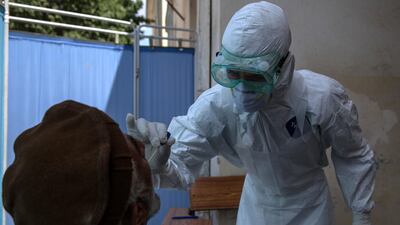
Covid-19 antibodies attack the spike protein in mild cases of coronavirus and other parts of the virus in more serious infections, according to a study by researchers at Stanford Medicine.
Immune response is also not the sole factor in determining the severity of infection and a patient's recovery prospects, the scientists have found.
The findings raise concerns over whether people can be reinfected and the prospect of repeat vaccinations to maintain a protective immune response.
"This is one of the most comprehensive studies to date of the antibody immune response to SARS-CoV-2 in people across the entire spectrum of disease severity, from asymptomatic to fatal," said Scott Boyd, associate professor of pathology at Stanford.
"We assessed multiple time points and sample types, and also analysed levels of viral RNA in patient nasopharyngeal swabs and blood samples. It's one of the first big-picture looks at this illness."
The study found that people with severe infections have low proportions of antibodies targeting the spike protein used by the virus to enter human cells compared with the number of antibodies targeting proteins of the virus's inner shell.
The researchers studied 254 people with asymptomatic, mild or severe infections. Of the people with symptoms, 25 were treated as outpatients, 42 were hospitalised outside the intensive care unit and 37 were treated in the intensive care unit. Twenty-five people in the study died of the disease.
Covid-19 binds to human cells via a structure on its surface called the spike protein. This protein binds to a receptor on human cells called ACE2.
Antibodies that recognise and bind to the spike protein block its ability to bind to ACE2, preventing the virus from infecting the cells, whereas antibodies that recognise other viral components are unlikely to prevent viral spread.
Current vaccine candidates use portions of the spike protein to stimulate an immune response.
"Although previous studies have assessed the overall antibody response to infection, we compared the viral proteins targeted by these antibodies," Prof Boyd said.
"We found that the severity of the illness correlates with the ratio of antibodies recognising domains of the spike protein compared with other nonprotective viral targets.
"Those people with mild illness tended to have a higher proportion of anti-spike antibodies, and those who died from their disease had more antibodies that recognised other parts of the virus."
Immune response not the only factor
Prof Boyd cautioned that antibody responses are not likely to be the sole determinants of someone's outcome. A study in November posited that even if antibodies fade, T-cells may offer some residual immunity six months after infection.
"Among people with severe disease, some die and some recover," he said. "Some of these patients mount a vigorous immune response, and others have a more moderate response. So there are a lot of other things going on.
"There are also other branches of the immune system involved. It's important to note that our results identify correlations but don't prove causation."
As in other studies, the researchers found that people with asymptomatic and mild illness had lower levels of antibodies overall than did those with severe disease.
"This is quite consistent with what has been seen with other coronaviruses that regularly circulate in our communities to cause the common cold," Boyd said.
"It's not uncommon for someone to get reinfected within a year or sometimes sooner.
"It remains to be seen whether the immune response to SARS-CoV-2 vaccination is stronger, or persists longer, than that caused by natural infection. It's quite possible it could be better. But there are a lot of questions that still need to be answered."
Foremost amongst these is whether a person who has already been infected should get the vaccine and when, said Prof Boyd.
_______________________________________
Coronavirus around the world gallery
-

Dr Diana Hristova, left and Dr Yanislav Mitkov pose for a portrait in the intensive care unit of Aleksandrovska Hospital in Sofia, Bulgaria. Getty Images -
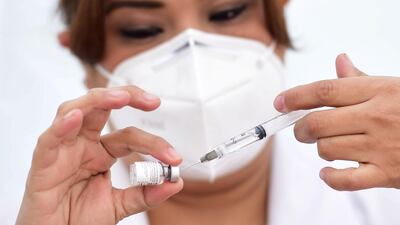
A nurse prepares a dose of the Pfizer/BioNtech Covid-19 vaccine at the General Hospital in Mexico City, Mexico. Reuters -
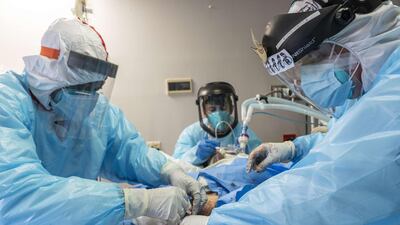
Dr Joseph Varon, right, and Jeffrey Ndove, left, perform a procedure for hypothermia treatment on a patient in the Covid-19 intensive care unit at the United Memorial Medical Centre in Houston, Texas. AFP -
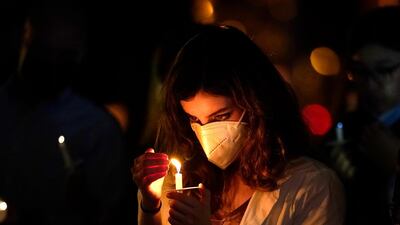
A woman holds a candle during an outdoor Christmas Eve Service of Lights at the Granada Presbyterian Church in Coral Gables, Florida. AP Photo -
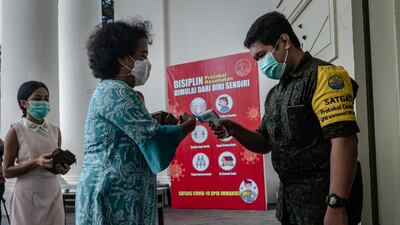
A woman gets her temperature checked before entering Immanuel Church in Jakarta, Indonesia. Getty Images -
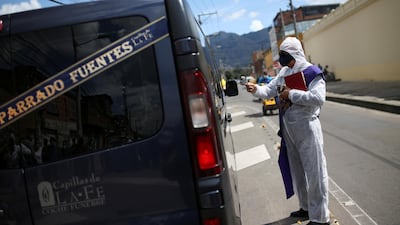
Victor Nieto, a Catholic deacon of the Capillas de la Fe funeral home, conducts a farewell ceremony for Jose Parrado, who died from Covid-19, outside Chapinero cemetery in Bogota, Colombia. Reuters -
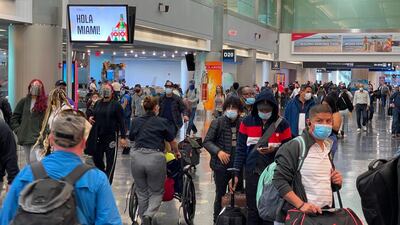
Travellers wear facemasks at Miami International Airport. AFP -

A shopper rides the escalator next to a giant Christmas tree at a mall in Ottawa, Ontario. The Canadian Press via AP -
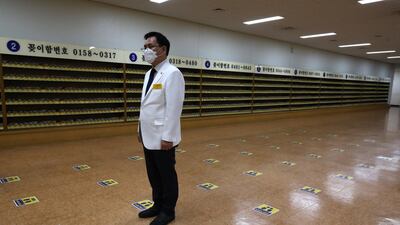
A man stands on social distancing signs during an online Christmas service from Yoido Full Gospel Church in Seoul, South Korea. Getty Images -
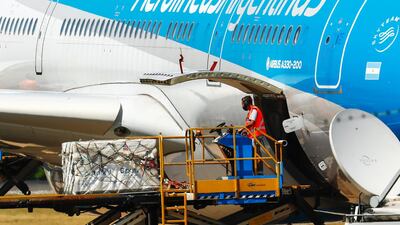
A container carrying part of the first batch of 300,000 doses of Sputnik V vaccine from Russia is downloaded from the plane after its arrival at Ministro Pistarini International airport in Ezeiza, Argentina. Getty Images -

A Covid-19 stay at home sign is seen at Manly Beach in Sydney, Australia. Getty Images -

A view from above shows Deacon Rey Marin, centre right, and Father Christopher Smith arrive in a procession during a Christmas Eve Roman Catholic Mass at Christ Cathedral in Garden Grove, California. AFP



