
The United States on Wednesday imposed sanctions on 39 individuals and entities including Syrian President Bashar Al Assad and his wife Asma to choke off revenue for his government in a bid to push it back to United Nations-led negotiations.
Those sanctioned under what is known as the 'Caesar Act' included the Syrian leader's siblings Maher and Bushra.
In a statement announcing the designations imposed under the Caesar Syria Civilian Protection Act - signed by US President Donald Trump in December - US Secretary of State Mike Pompeo said more sanctions against Assad government should be expected in the coming weeks and months.
"We anticipate many more sanctions and we will not stop until Assad and his regime stop their needless, brutal war against the Syrian people," Secretary of State Mike Pompeo said in a statement.
The Syrian leader stands accused of a slate of war crimes against his own people across the nine-year civil war, including ordering the use of chemical weapons in rebel-held areas in several widely-condemned cases.
The US said the “funder of these atrocities, Mohammed Hamsho, and the Iranian militia Fatemiyoun Division” were also sanctioned.
This is first time the Syrian leader's wife Asma Akhras Al Assad is designated by US sanctions.
The US statement said that "with the support of her husband and members of her Akhras family [she] has become one of Syria’s most notorious war profiteers. Now anyone doing business with any of these persons or entities is at risk of sanctions."
Syrian businessman and Secretary of the Damascus Chamber of Commerce Mohammed Hamsho was also sanctioned, along with Ghassan Ali Bilal and Samer Al Dana who head the Fourth Division of the Syrian Arab Army.
The individuals targeted include Maher Al Assad’s wife Manal Al Assad. They also target prominent Syrian businessmen and their spouses from the Hamsho family: Ahmad Sabir Hamsho, Amr Hamsho, Ali Hamsho, Rania Al Dabbas, and Sumaia Hamcho.
-
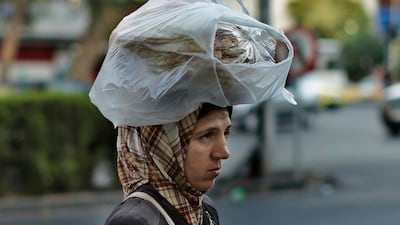
After nearly a decade of war, Syria is crumbling under the weight of a repressive, corrupt ruling elite, a pandemic and an economic downslide compounded by western sanctions. AP Photo -
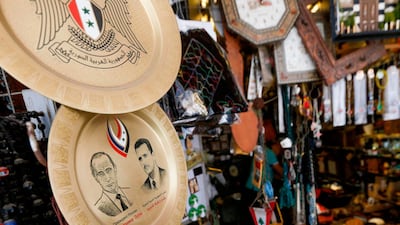
Souvenir plates bearing the Syrian flag and the portraits of Russian President Vladimir Putin and Syrian President Bashar Al Assad are pictured in a shop in a bazaar in old Damascus. AFP -
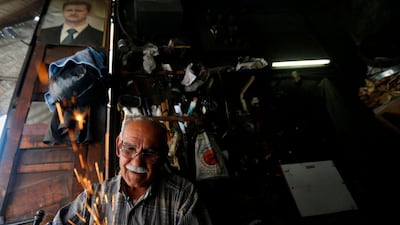
A man works in his metal workshop beneath a portrait of Syrian President Bashar Al Assad in old Damascus earlier this week. AFP -
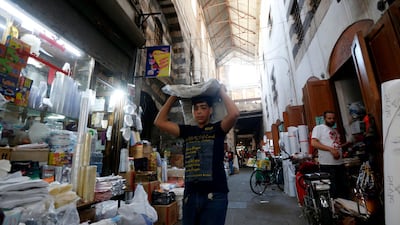
A Syrian boy carrying textiles is pictured in the bazaar in old Damascus. AFP -
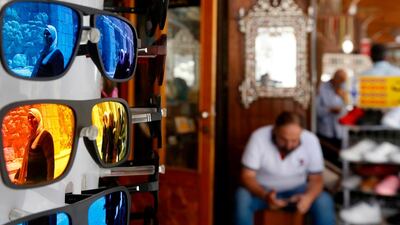
A Syrian shopkeeper waits for customers in a bazaar in old Damascus. AFP -
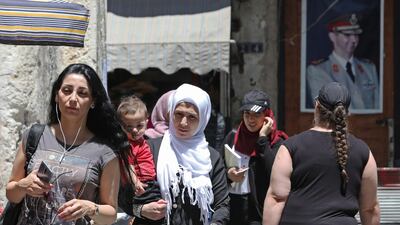
Syrians walk in old Damascus in front of a portrait of Syrian President Bashar Al Assad. AFP -
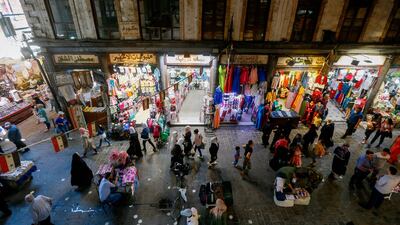
Syrian shoppers walk in the bazaar in old Damascus. AFP -
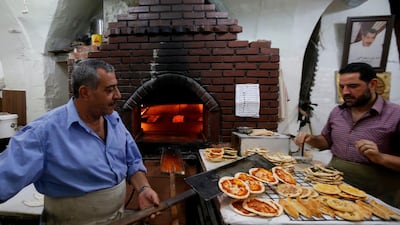
Syrian men work in their bakery in old Damascus. AFP -
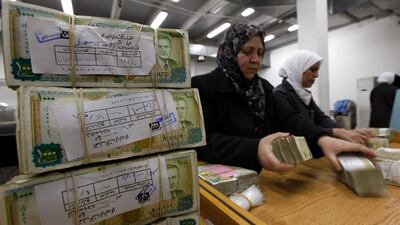
Employees stack packets of the Syrian pound in the Central Syrian Bank in Damascus. AP Photo -

An anti-Assad regime demonstration under way in Suweida, southern Syria, in early June 2020. AFP


James Jeffrey, US envoy to Syria and representative for the fight against ISIS, made it clear on Wednesday that these sanctions are just the tip of the iceberg and more will be coming under the 'Caesar Act'.
The act that passed with unanimous bipartisan support in Congress gives the administration broad authority to enact direct and secondary sanctions on anyone that funds the Assad regime, Mr Jeffrey explained in a call with reporters.
"The act represents the strong position of US Congress on actions of the Syrian government since 2011," he said. Asked by The National on the bandwidth of the secondary sanctions under Caesar and if they would target affiliates in Lebanon or other countries, Mr Jeffrey described broad authority in targeting.
“This legislation gives Treasury and State departments the authority to carry out sanction at various times furthering out policy goals laid out in legislation,” he said.
"The Caesar Act is very broad in secondary sanctions, allow us to sanction entities from other countries that are dealing with the government, if they are dealing in the aviation sector, in the oil and gas sector, or the reconstruction sector, we are looking very carefully and closely at everyone both Syrian and non-Syrian," Mr Jeffrey told The National.
The goal, he said, is “to put pressure on Mr Assad and the henchman around him to change their policies toward this conflict.”
The roll out of the sanctions was consulted with the European Union, the US envoy said.
On designating the women in the regime, particularly the first lady and the sister and Maher Al Assad's wife, Mr Jeffrey referenced a tactic to block any evasion of prior sanctions and transfer of assets within the family.
"In the case of the wife of President Assad she has participated in various activities in the financial and economic sector in support of this same oligarch economy..she is being sanctioned for her actions," Mr Jeffrey told The National. "The Caesar Act gives the authority to sanction family members, that's one of the powerful aspects of it."
“What we have seen is we sanction an individual for his/her actions and they simply move their assets to family members, so we are targeting their families,” Mr Jeffrey said. “We want to destroy financially these people, we want to make clear they have no ability to act in the international financial system for their ill thought gains, that they are not gonna be able to go shopping at Harrod’s in London, that they’re not gonna be able to buy first class tickets on Lufthansa to fly around, they will not be able to do anything with their money,” he pointed out.
More sanctions under Caesar are expected throughout the summer, The National has learned.
Separately, but also under the Caesar Act, the US Treasury Department sanctioned 24 individuals and entities who are actively supporting the reconstruction efforts of Syrian President Bashar Al Assad.
These include governor of Damascus Adel Anwar Al-Olabi, Damascus Cham Holding Company and its management and established ventures of the company. The sanctions from the US Treasury also targeted Nader Kalai and Khaled Al-Zubaidi and their entities. They are two Syrian businessmen with ties to the Assad regime, the statement said.
The White House said "today’s designations send a clear message that no individual or business should enter into business with or otherwise enrich such a vile regime."
"They are intended to hold the murderous Assad regime accountable. They are not directed at the Syrian people."

