Indian naval ship INS Vikramaditya, foreground, and Japan's helicopter carrier Izumo participate in the trilateral exercises between India, Japan and US in the Bay of Bengal in 2017. AP Photo

What is India's Indo-Pacific strategy?


  • English
  • Arabic

In recent weeks, the Indo-Pacific maritime domain has come into focus due to four developments with one common strand: China.

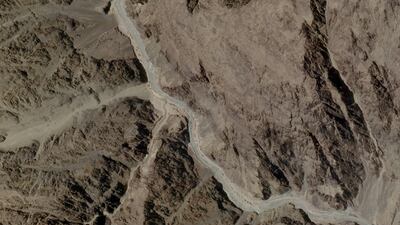
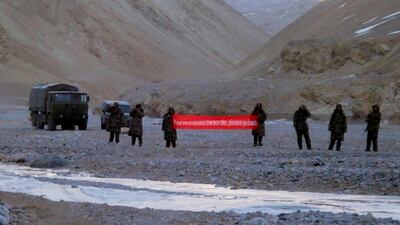
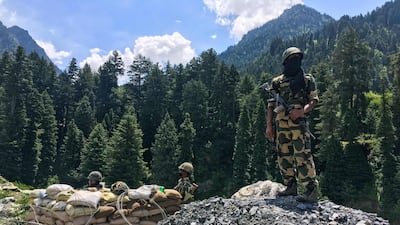
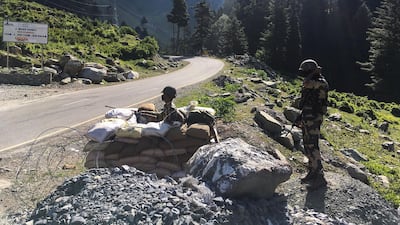
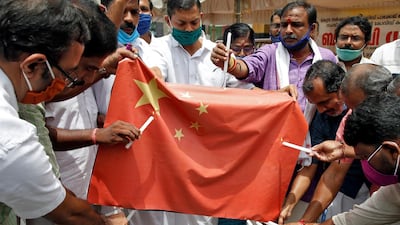
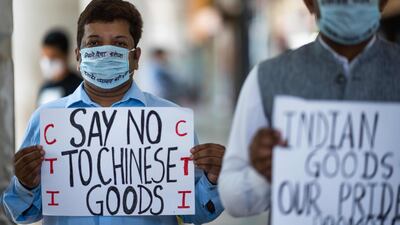
The most visible of them all has been the tense military stand-off between India and China along the contested Line of Actual Control, the 4,000-kilometre loose demarcation line that separates territories controlled by the two countries. An often articulated view is that, while naval power will not have a bearing on what is happening in the high Himalayas between the two Asian giants, it is a leverage that Delhi could consider using in order to manage an assertive Beijing.

The other three events pertain to reports recently released by the US Department of Defence and the German foreign ministry, as well as a China-Russia joint communique.

Assessed together, these documents point to the emergence of the Indo-Pacific as a domain for competition and a degree of contestation among the major interlocutors: China, Russia and US. This exigency would also hold a strategic and security relevance for India and other littoral nations of the Indian Ocean.

The world is in a state of uncertainty and flux due to the Covid-19 pandemic, and the geopolitics, in all likelihood, will be played out in the maritime continuum of the Indian and Pacific oceans.

The US DoD report and its naval/maritime focus on China is stark. The summary is that the People's Liberation Army Navy currently has more ships and submarines than the US Navy – 350 versus 293 – and that Beijing is determined to expand its footprint across the Indian Ocean. It notes that, in addition to the base in Djibouti, the Chinese military is seeking additional facilities in Myanmar, Thailand, Singapore, Indonesia, Pakistan, Sri Lanka, Kenya, Seychelles, Tanzania, Angola, and Tajikistan. Clearly, the geographical spread is expansive.

China’s determination to consolidate its position in the Indian Ocean Region (IOR) has its own strategic considerations, and this is subsumed in what Beijing refers to as the "Malacca Dilemma" – the fact that China is dependent on the sea lines of communication for its trade and energy requirements. Beijing is also cognisant of a centuries-old tenet that, for a major power to be truly credible, it must be able to maintain effective military presence in two of the world’s navigable oceans at will.

It is evident that the US, which enjoys its position as the No 1 military power, is determined not to allow China to displace it in a routine uncontested manner.

This framework illuminates the relevance of India in the geopolitics of the IOR, for it is in a favourable orientation due to geography and naval pedigree. While India’s naval/maritime capabilities are more modest than those of the US and China, the two bigger powers are aware that their respective geopolitical aspirations and anxieties specific to the IOR can be significantly impacted by the posture that India adopts.

Currently three major non-littoral powers that have a visible military presence in the IOR are the US (in Diego Garcia), France (in Reunion) and China (in Djibouti). It is also instructive that Germany has now identified the Indo-Pacific as a domain where it plans to take greater interest than it has in the past.

German Foreign Minister Heiko Maas has laid out his country's Indo-Pacific strategy. Getty Images
The geopolitics of the post-Covid-19 world will be played out in the maritime continuum of the Indian and Pacific oceans

Speaking at the release of his government's report, German Foreign Minister Heiko Maas said: “We are sending a clear message today – the Indo-Pacific region is a priority of German foreign policy. Our aim is to strengthen our relations with this important region and to expand our co-operation in the areas of multilateralism, climate change mitigation, human rights, rules-based free trade, connectivity, the digital transformation and, in particular, security policy."

Mr Maas further added that Germany wants to help shape the order in the Indo-Pacific so that it is “based on rules and international co-operation, not on the law of the strong". The allusion to China is unstated but evident.

Japan is also a stakeholder in the IOR. Shinzo Abe, who recently stepped down as prime minister, is seen as the prescient leader who first envisioned the confluence of the Indian and Pacific oceans as one strategic space. His country is a part of the "Quad" grouping that also includes Australia, India and the US – a cluster often referred to as a concert of maritime democracies committed to a free and open Indo-Pacific space that would be rule-based.

There is, however, an alternate formulation and a strongly held viewpoint that was articulated in Moscow at a meeting last week between the foreign ministers of China and Russia.

Chinese Foreign Minister Wang Yi, left, his Russian counterpart Sergei Lavrov have issued a joint communique criticising the US Indo-Pacific strategy. EPA

Their joint communique said: “We noted the destructive character of Washington’s actions that undermine global strategic stability. They are fuelling tensions in various parts of the world, including along the Russian and Chinese borders. Of course, we are worried about this and object to these attempts to escalate artificial tensions. In this context, we stated that the so-called ‘Indo-Pacific strategy’, as it was planned by the initiators, only leads to the separation of the region’s states, and is therefore fraught with serious consequences for peace, security and stability in the Asia-Pacific Region.”

For India, this is an anomalous development. It is because Delhi is a part of different groupings that place it under the same umbrella with Beijing and Moscow – the Russia-India-China trilateral grouping, Brics and the Shanghai Co-operation Organisation. Curiously, India was at the Moscow meeting where the China-Russia bilateral statement was issued.

In other words, squaring this nettlesome Indo-Pacific circle – even as it strives to retain its strategic autonomy along the troubled LAC in the Himalayas – will require India exerting a great deal of skill and diplomacy.

C Uday Bhaskar is director of the New Delhi-based think tank Society for Policy Studies

In numbers

Number of Chinese tourists coming to UAE in 2017 was... 1.3m

Alibaba’s new ‘Tech Town’  in Dubai is worth... $600m

China’s investment in the MIddle East in 2016 was... $29.5bn

The world’s most valuable start-up in 2018, TikTok, is valued at... $75bn

Boost to the UAE economy of 5G connectivity will be... $269bn 

RESULTS

1.45pm: Maiden Dh75,000 1,200m
Winner: Lady Parma, Richard Mullen (jockey), Satish Seemar (trainer).
2.15pm: Maiden Dh75,000 1,200m
Winner: Tabernas, Connor Beasley, Ahmed bin Harmash.
2.45pm: Handicap Dh95,000 1,200m
Winner: Night Castle, Connor Beasley, Satish Seemar.
3.15pm: Handicap Dh120,000 1,400m
Winner: Mystique Moon, Sam Hitchcott, Doug Watson.
3.45pm: Handicap Dh80,000 1,400m
Winner: Mutawakked, Szczepan Mazur, Musabah Al Muhairi.
4.15pm: Handicap Dh90,000 1,800m
Winner: Tafaakhor, Sandro Paiva, Ali Rashid Al Raihe.
4.45pm: Handicap Dh80,000 1,950m
Winner: Cranesbill, Fabrice Veron, Erwan Charpy.

UAE%20athletes%20heading%20to%20Paris%202024
%3Cp%3E%3Cstrong%3EEquestrian%3C%2Fstrong%3E%3Cbr%3EAbdullah%20Humaid%20Al%20Muhairi%2C%20Abdullah%20Al%20Marri%2C%20Omar%20Al%20Marzooqi%2C%20Salem%20Al%20Suwaidi%2C%20and%20Ali%20Al%20Karbi%20(four%20to%20be%20selected).%3Cbr%3E%3Cstrong%3EJudo%3C%2Fstrong%3E%3Cbr%3EMen%3A%20Narmandakh%20Bayanmunkh%20(66kg)%2C%20Nugzari%20Tatalashvili%20(81kg)%2C%20Aram%20Grigorian%20(90kg)%2C%20Dzhafar%20Kostoev%20(100kg)%2C%20Magomedomar%20Magomedomarov%20(%2B100kg)%3B%20women's%20Khorloodoi%20Bishrelt%20(52kg).%3Cbr%3E%3Cbr%3E%3Cstrong%3ECycling%3C%2Fstrong%3E%3Cbr%3ESafia%20Al%20Sayegh%20(women's%20road%20race).%3Cbr%3E%3Cbr%3E%3Cstrong%3ESwimming%3C%2Fstrong%3E%3Cbr%3EMen%3A%20Yousef%20Rashid%20Al%20Matroushi%20(100m%20freestyle)%3B%20women%3A%20Maha%20Abdullah%20Al%20Shehi%20(200m%20freestyle).%3Cbr%3E%3Cbr%3E%3Cstrong%3EAthletics%3C%2Fstrong%3E%3Cbr%3EMaryam%20Mohammed%20Al%20Farsi%20(women's%20100%20metres).%3C%2Fp%3E%0A
The 12 breakaway clubs

England

Arsenal, Chelsea, Liverpool, Manchester City, Manchester United, Tottenham Hotspur

Italy
AC Milan, Inter Milan, Juventus

Spain
Atletico Madrid, Barcelona, Real Madrid

Our family matters legal consultant

Name: Hassan Mohsen Elhais

Position: legal consultant with Al Rowaad Advocates and Legal Consultants.

Sun jukebox

Rufus Thomas, Bear Cat (The Answer to Hound Dog) (1953)

This rip-off of Leiber/Stoller’s early rock stomper brought a lawsuit against Phillips and necessitated Presley’s premature sale to RCA.

Elvis Presley, Mystery Train (1955)

The B-side of Presley’s final single for Sun bops with a drummer-less groove.

Johnny Cash and the Tennessee Two, Folsom Prison Blues (1955)

Originally recorded for Sun, Cash’s signature tune was performed for inmates of the titular prison 13 years later.

Carl Perkins, Blue Suede Shoes (1956)

Within a month of Sun’s February release Elvis had his version out on RCA.

Roy Orbison, Ooby Dooby (1956)

An essential piece of irreverent juvenilia from Orbison.

Jerry Lee Lewis, Great Balls of Fire (1957)

Lee’s trademark anthem is one of the era’s best-remembered – and best-selling – songs.

Tips for job-seekers
  • Do not submit your application through the Easy Apply button on LinkedIn. Employers receive between 600 and 800 replies for each job advert on the platform. If you are the right fit for a job, connect to a relevant person in the company on LinkedIn and send them a direct message.
  • Make sure you are an exact fit for the job advertised. If you are an HR manager with five years’ experience in retail and the job requires a similar candidate with five years’ experience in consumer, you should apply. But if you have no experience in HR, do not apply for the job.

David Mackenzie, founder of recruitment agency Mackenzie Jones Middle East

Brief scores:

Newcastle United 1

Perez 23'

Wolverhampton Rovers 2

Jota 17', Doherty 90' 4

Red cards: Yedlin 57'

Man of the Match: Diogo Jota (Wolves)

Living in...

This article is part of a guide on where to live in the UAE. Our reporters will profile some of the country’s most desirable districts, provide an estimate of rental prices and introduce you to some of the residents who call each area home. 

What it means to be a conservationist

Who is Enric Sala?

Enric Sala is an expert on marine conservation and is currently the National Geographic Society's Explorer-in-Residence. His love of the sea started with his childhood in Spain, inspired by the example of the legendary diver Jacques Cousteau. He has been a university professor of Oceanography in the US, as well as working at the Spanish National Council for Scientific Research and is a member of the World Economic Forum’s Global Future Council on Biodiversity and the Bio-Economy. He has dedicated his life to protecting life in the oceans. Enric describes himself as a flexitarian who only eats meat occasionally.

What is biodiversity?

According to the United Nations Environment Programme, all life on earth – including in its forests and oceans – forms a “rich tapestry of interconnecting and interdependent forces”. Biodiversity on earth today is the product of four billion years of evolution and consists of many millions of distinct biological species. The term ‘biodiversity’ is relatively new, popularised since the 1980s and coinciding with an understanding of the growing threats to the natural world including habitat loss, pollution and climate change. The loss of biodiversity itself is dangerous because it contributes to clean, consistent water flows, food security, protection from floods and storms and a stable climate. The natural world can be an ally in combating global climate change but to do so it must be protected. Nations are working to achieve this, including setting targets to be reached by 2020 for the protection of the natural state of 17 per cent of the land and 10 per cent of the oceans. However, these are well short of what is needed, according to experts, with half the land needed to be in a natural state to help avert disaster.

Tax authority targets shisha levy evasion

The Federal Tax Authority will track shisha imports with electronic markers to protect customers and ensure levies have been paid.

Khalid Ali Al Bustani, director of the tax authority, on Sunday said the move is to "prevent tax evasion and support the authority’s tax collection efforts".

The scheme’s first phase, which came into effect on 1st January, 2019, covers all types of imported and domestically produced and distributed cigarettes. As of May 1, importing any type of cigarettes without the digital marks will be prohibited.

He said the latest phase will see imported and locally produced shisha tobacco tracked by the final quarter of this year.

"The FTA also maintains ongoing communication with concerned companies, to help them adapt their systems to meet our requirements and coordinate between all parties involved," he said.

As with cigarettes, shisha was hit with a 100 per cent tax in October 2017, though manufacturers and cafes absorbed some of the costs to prevent prices doubling.

Desert Warrior

Starring: Anthony Mackie, Aiysha Hart, Ben Kingsley

Director: Rupert Wyatt

Rating: 3/5

Ant-Man and the Wasp

Director: Peyton Reed

Starring: Paul Rudd, Evangeline Lilly, Michael Douglas

Three stars

INFO
The specs
  • Engine: 3.9-litre twin-turbo V8
  • Power: 640hp
  • Torque: 760nm
  • On sale: 2026
  • Price: Not announced yet
Fixtures

50-over match

UAE v Lancashire, starts at 10am

Champion County match

MCC v Surrey, four-day match, starting on Sunday, March 24, play starts at 10am

Both matches are at ICC Academy, Dubai Sports City. Admission is free.

From Zero

Artist: Linkin Park

Label: Warner Records

Number of tracks: 11

Rating: 4/5

GOODBYE%20JULIA
%3Cp%3E%3Cstrong%3EDirector%3A%20%3C%2Fstrong%3EMohamed%20Kordofani%3C%2Fp%3E%0A%3Cp%3E%3Cstrong%3EStarring%3A%20%3C%2Fstrong%3ESiran%20Riak%2C%20Eiman%20Yousif%2C%20Nazar%20Goma%3C%2Fp%3E%0A%3Cp%3E%3Cstrong%3ERating%3A%3C%2Fstrong%3E%205%2F5%3C%2Fp%3E%0A

Mercer, the investment consulting arm of US services company Marsh & McLennan, expects its wealth division to at least double its assets under management (AUM) in the Middle East as wealth in the region continues to grow despite economic headwinds, a company official said.

Mercer Wealth, which globally has $160 billion in AUM, plans to boost its AUM in the region to $2-$3bn in the next 2-3 years from the present $1bn, said Yasir AbuShaban, a Dubai-based principal with Mercer Wealth.

Within the next two to three years, we are looking at reaching $2 to $3 billion as a conservative estimate and we do see an opportunity to do so,” said Mr AbuShaban.

Mercer does not directly make investments, but allocates clients’ money they have discretion to, to professional asset managers. They also provide advice to clients.

“We have buying power. We can negotiate on their (client’s) behalf with asset managers to provide them lower fees than they otherwise would have to get on their own,” he added.

Mercer Wealth’s clients include sovereign wealth funds, family offices, and insurance companies among others.

From its office in Dubai, Mercer also looks after Africa, India and Turkey, where they also see opportunity for growth.

Wealth creation in Middle East and Africa (MEA) grew 8.5 per cent to $8.1 trillion last year from $7.5tn in 2015, higher than last year’s global average of 6 per cent and the second-highest growth in a region after Asia-Pacific which grew 9.9 per cent, according to consultancy Boston Consulting Group (BCG). In the region, where wealth grew just 1.9 per cent in 2015 compared with 2014, a pickup in oil prices has helped in wealth generation.

BCG is forecasting MEA wealth will rise to $12tn by 2021, growing at an annual average of 8 per cent.

Drivers of wealth generation in the region will be split evenly between new wealth creation and growth of performance of existing assets, according to BCG.

Another general trend in the region is clients’ looking for a comprehensive approach to investing, according to Mr AbuShaban.

“Institutional investors or some of the families are seeing a slowdown in the available capital they have to invest and in that sense they are looking at optimizing the way they manage their portfolios and making sure they are not investing haphazardly and different parts of their investment are working together,” said Mr AbuShaban.

Some clients also have a higher appetite for risk, given the low interest-rate environment that does not provide enough yield for some institutional investors. These clients are keen to invest in illiquid assets, such as private equity and infrastructure.

“What we have seen is a desire for higher returns in what has been a low-return environment specifically in various fixed income or bonds,” he said.

“In this environment, we have seen a de facto increase in the risk that clients are taking in things like illiquid investments, private equity investments, infrastructure and private debt, those kind of investments were higher illiquidity results in incrementally higher returns.”

The Abu Dhabi Investment Authority, one of the largest sovereign wealth funds, said in its 2016 report that has gradually increased its exposure in direct private equity and private credit transactions, mainly in Asian markets and especially in China and India. The authority’s private equity department focused on structured equities owing to “their defensive characteristics.”

FROM%20THE%20ASHES
%3Cp%3EDirector%3A%20Khalid%20Fahad%3C%2Fp%3E%0A%3Cp%3EStarring%3A%20Shaima%20Al%20Tayeb%2C%20Wafa%20Muhamad%2C%20Hamss%20Bandar%3C%2Fp%3E%0A%3Cp%3ERating%3A%203%2F5%3C%2Fp%3E%0A