
Saudi Arabia on Saturday passed 50,000 cases of coronavirus, registering 2,840 new infections, bringing the kingdom’s total number of cases to 52,016.
Almost half – 23,666 – of Saudi Arabia’s Covid-19 patients have recovered. The death toll in the kingdom stands at 302.
Daily cases of the disease in Saudi Arabia exceeded 2,000 on Thursday.
As the number of cases grew, the country’s Minister of Industry and Mineral Resources, Bandar Alkhorayef, sought to reassure business owners.
The minister said his team was “constantly working to evaluate and address all the challenges facing the pioneers of the industrial sector in various parts of the kingdom”. He said that the crisis “despite its ferocity, has resulted in some gains that will serve the industrial sector in our country in the long term”.
-
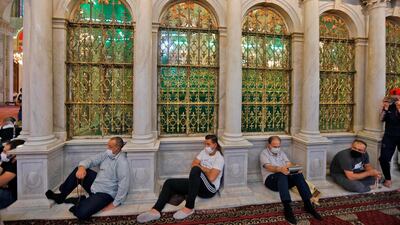
Syrian Muslims wearing face masks listen to the Friday prayer sermon at the Umayyad Mosque in Damascus, following the authorities' decision to allow prayers on Fridays in disinfected mosques with strict social distancing and protection measures to limit the spread of the coronavirus COVID-19 pandemic. President Bashar al-Assad warned earlier this month of a "catastrophe" in war-battered Syria if the easing of lockdown measures against coronavirus is mishandled. AFP -
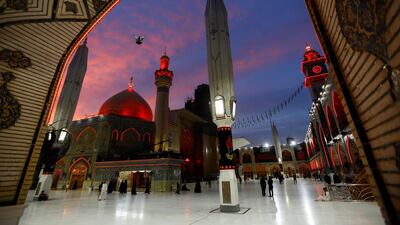
Shi'ite Muslims visit the Imam Ali shrine during the holy month of Ramadan, following the outbreak of the coronavirus disease (COVID-19), in the holy city of Najaf, Iraq. REUTERS -
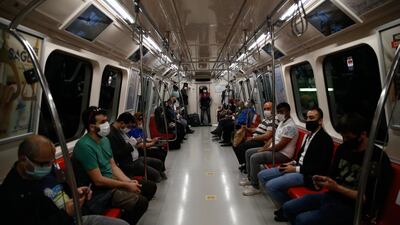
People observe social distancing on a metro carriage in Istanbul, a few hours before the weekend lockdown because of the coronavirus. Teenagers were able to leave their homes for the first time in 42 days on Friday, as their turn came for a few hours of respite from Turkey's coronavirus lockdowns. Turkey has subjected people aged 65 and over and those younger than 20, to a curfew for the past several weeks. AP Photo -
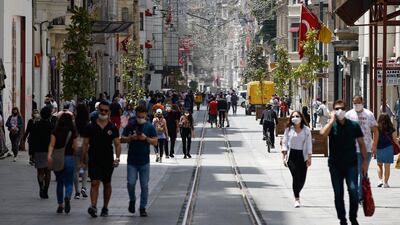
People walk on Istiklal street, the main shopping street in Istanbul, a few hours before the weekend lockdown due to the coronavirus. Teenagers were able to leave their homes for the first time in 42 days on Friday, as their turn came for a few hours of respite from Turkey's coronavirus lockdowns. Turkey has subjected people aged 65 and over and those younger than 20, to a curfew for the past several weeks. AP Photo -

A fighter loyal to Yemen's Huthi rebels acting as security, looks on while wearing a face mask and latex gloves and slinging a Kalashnikov assault rifle as volunteers part of a community-led initiative to prevent the spread of COVID-19 coronavirus disease gather in Yemen's capital Sanaa. AFP -

Algerian Food Bank volunteers, wearing face masks due to the COVID-19 coronavirus pandemic, prepare packages of food aid as part of the "SOLIRAM" solidarity campaign to assist families in need during the Muslim holy month of Ramadan, at the "20 August" (20 Aout 1955) Stadium in the capital Algiers. AFP -
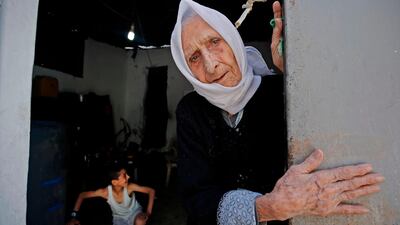
A Palestinian refugee elderly woman, who witnessed the 1948 Nakba, looks out of her house's entrance door at Al-Shati refugee camp in Gaza City, as Palestinians marked the 72nd anniversary of "Nakba" (Day of Catastrophe) inside their homes due to the COVID-19 coronavirus pandemic. The "Nakba" commemorates the mass displacement of more than 700,000 Palestinians who fled or were expelled from their homes in the 1948 war surrounding Israel's creation. AFP -
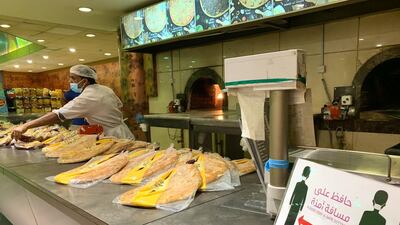
A sign reminds customers to stay at a safe distance from each other at a bakery in the nearly deserted Hayat mall in the Saudi capital Riyadh, after the lockdown measures due to the novel coronavirus were partially eased by the authorities. AFP -

People gather to buy hot sugar drenched 'bomboloni' donut, in the village of Sidi Bou Said near Tunis, Tunisia. After four days in Tunisia without COVID-19 infections, the Tunisian government has decided to ease the curfew from 11 pm to five am. This decision prompted people to leave their homes after breaking their fast. This is the case here in Sidi Bou Saïd, the Tunisians took advantage of the open donut shops to taste this typical pastry from the city. EPA -
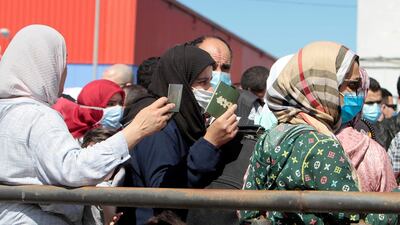
Several people show their passports at the Beni-Enzar border crossing in Melilla, Spain. Some 200 Moroccans have been able to return to their country this Friday after being trapped in Melilla for two months by the border closure that the Alawite authorities decreed on March 13 as a result of the coronavirus health crisis. EPA


The collective number of confirmed coronavirus cases in the UAE, Qatar, Kuwait, Bahrain, Oman and Saudi Arabia is more than 130,000.
Responding to a rise in cases, Kuwait entered a 20-day total lockdown on May 10, allowing citizens to leave home for essential shopping and exercise only.
Many in need of medical prescriptions had them delivered by an unusual courier service. The Kuwait Fire Service Directorate said on Friday it dropped off more than 30,000 prescriptions to citizens’ homes over 35 days.
Lt Col Dr Fayez Al Nassar, director of the fire service’s Vocational Health and Safety team, said that since the start of Kuwait’s full lockdown, the directorate had added 200 staff members to its unit, taking that total to 450, covering deliveries in all of the country’s governorates.
Kuwait currently has 13,802 cases of the virus, with 107 deaths.
A man in the country’s Salwa area went into mandatory quarantine beginning on Friday after breaking the rules applicable to citizens returning from abroad.
The authorities told state news service Kuna that a Kuwaiti man in his 50s was discovered exercising outdoors via a tracking bracelet all repatriated citizens are required to wear.
Returnees to Kuwait from abroad must wear the bracelet and quarantine at home for 28 days.
The Ministry of Health said the man would face legal action after his period of quarantine.
Qatar’s case count passed 30,000 with 1,547 new confirmed infections reported on Saturday. One more person died, bringing the country’s death toll to 15, according to official figures.
With 30,972 coronavirus infections among a population of about 2.7 million people, Qatar has one of the world’s highest per capita number of confirmed cases.
Confirmed cases in Oman jumped by 404 to reach 5,029, the Omani News Agency reported. Most of the new cases – 337 – were among expatriates. The sultanate's death toll from Covid-19 is 20.
British ministers praised Bahrain’s response to the virus on Friday and thanked its government for assisting in the return of UK citizens.
UK ambassador Roderick Drummond said he valued the co-operation of Bahrain in helping to carry out the return of Britons from India and other countries through Bahrain International Airport.
He said British citizens in Bahrain were comfortable with the health care and support provided to them.
“If you test Covid-19 positive, you become a guest of Bahrain for a month until no symptoms are shown. Meals and boarding are taken care of by the Kingdom," CEO of the Labour Market Regulatory Authority and Chairman of the National Committee to Combat Trafficking in Persons, Ausamah Al Absi told a virtual meeting of British MPs and their Bahraini counterparts.
“Xenophobia was one of our biggest concerns but people have shown that they are welcoming."
Bahrain has seen 6,655 of the virus and 12 deaths.

