


The Grand Mosques in Makkah will remain closed to the public throughout Ramadan, Saudi religious authorities said on Tuesday night just days before the expected start of the holy month.
The kingdom already stopped public prayers and closed mosques as part of its measures to halt the spread of coronavirus. The Kingdom has 10,484 confirmed cases and 103 deaths.
Ramadan is expected to begin later this week but religious authorities around the world have urged worshipers to remain home through the holy month so as not to spread the virus.
"The suspension of worshippers attending prayers will continue in Ramadan," Shiekh Abdul Rahman Al Sudais, the Imam of the Grand Mosque in Makkah, said in a series of tweets.
-
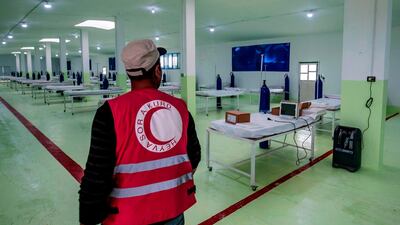
A 120-bed ward at a specialised hospital for coronavirus cases opened by the Kurdish Red Crescent about 10 kilometres from the Syrian city of Hasakeh after the first COVID-19 death was reported in the north-eastern region. AFP -
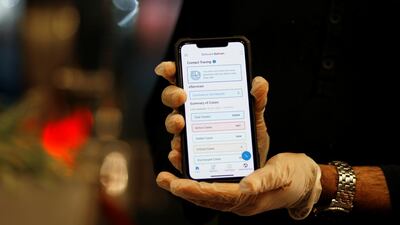
A man wearing protective gloves shows the interface of the app "Be Aware", launched by Bahrain's health authorities to contain the coronavirus disease, at a hotel in Manama, Bahrain. Reuters -
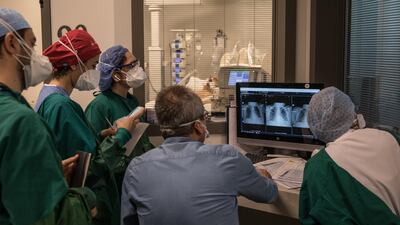
Doctors and nurses look at scans of a patient infected with the Covid-19 virus at the dedicated intensive care unit at the Acibadem Altunizade Hospital in Istanbul, Turkey. Getty -
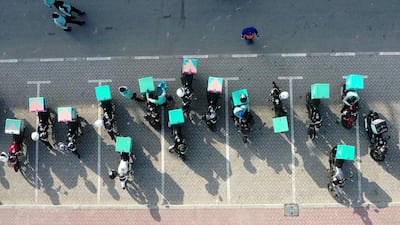
Motorbikes of a delivery company line up in Dubai. AFP -
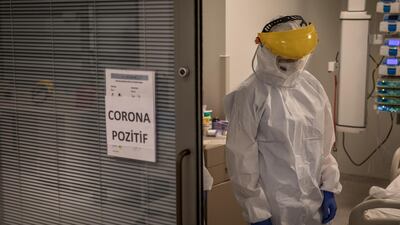
Medical staff attend to a patient infected with the coronavirus in the dedicated intensive care unit at the Acibadem Altunizade Hospital in Istanbul, Turkey. Getty -
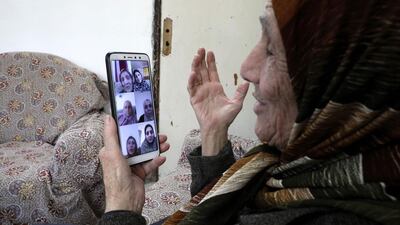
Palestinian Shahira Qafisheh, 85, video chats with her daughters during the coronavirus lockdown in the occupied West Bank city of Hebron. AFP -
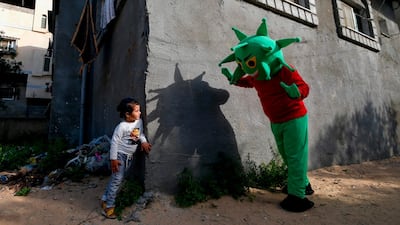
A Palestinian man wearing a coronavirus costume sewed by his sister plays with a girl in the central Gaza Strip amid the pandemic. AFP -
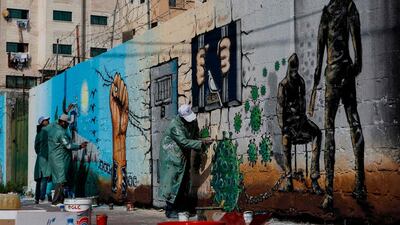
Palestinian artists paint a mural in a show of support for Palestinian prisoners held in Israeli jails amid the coronavirus pandemic, in Gaza City. AFP -
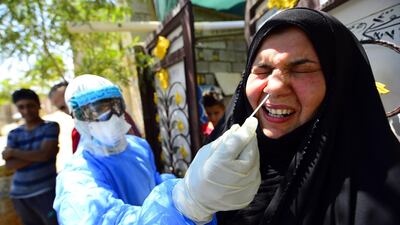
An Iraqi medic swabs a woman in Iraq's central city of Najaf, during the nationwide lockdown to stem the spread of the novel coronavirus. AFP -
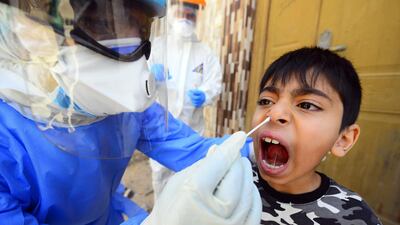
An Iraqi medic swabs a boy in Iraq's central city of Najaf, during the nationwide lockdown to stem the spread of the novel coronavirus. AFP -
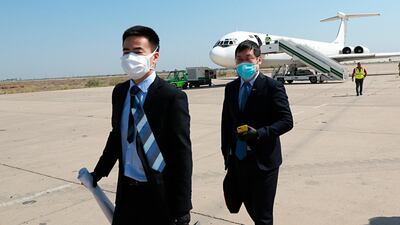
Chinese embassy officials react after the arrival of medical aid at Baghdad Airport in Iraq. AP -
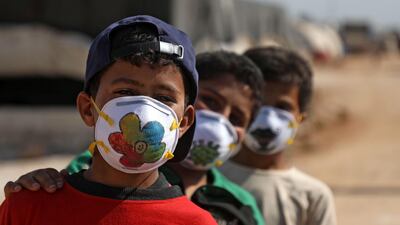
Displaced Syrian boys pose while wearing face masks decorated by artists during a Covid-19 awareness campaign at the Bardaqli camp in the town of Dana in Syria's north-west Idlib province. AFP -
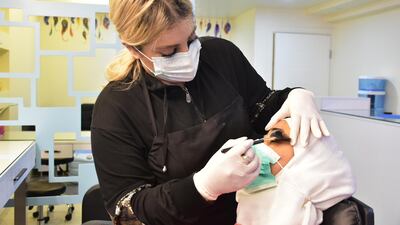
Female worker wearing masks and gloves works in teauty salon in one of the neighborhoods of Damascus, Syria. EPA -

A Bahraini triathlete Sameera Al Bitar wearing gloves and a mask takes her bicycle out of her car as she prepares for a training session, amid the outbreak of the coronavirus disease, in Manama, Bahrain. Reuters


He said that Imams will continue to lead prayers but the public would not be allowed to attend. "Only presidency staff and workers will be allowed to pray the 5 daily Salats [daily prayers] and Taraweeh [an additional evening prayer]".
Saudi Arabia announced in March that the grand Mosque would be closed to worshippers after suspending Umrah pilgrimages. Throughout the last two months, workers have been sterilising the complex and Shiekh Al Sudais said that 3,500 workers have been washing the complex "six times a day."
He added that the decision to keep the ban on attending prayers was made "to preserve the health" of worshippers and in accordance with public health measures.
The imam also said that prayers would be reduced in length but that two imams would continue to lead them. The customary practice for people to remain in mosques for a number of days during Ramadan would also be stopped at the Grand Mosque this year.
Mass Iftars common throughout Ramadan would be distributed to homes instead of held together. Umrah, he added, would remain suspended until further notice.
The highest religious authority in the kingdom this week called on Muslims to "set an example" by observing the coronavirus containment measures set by temporal authorities worldwide.
The Senior Ulama Council repeated a call by the mufti, Sheikh Abdulaziz Al Al Sheikh, for Muslims to perform Ramadan rituals at home.
The scholars said Muslims everywhere, whether citizens or residents in any country, must set "an example" in "exercising ultimate care" by obeying the safety protocol.
"Muslims should be an example to be emulated [and] worship while adhering to the precautionary and pre-emptive measures," they said.
The worldwide measures, the ulama said, generally conform to Sharia principles of "circumventing harm as much as possible".
Saudi Arabia's confirmed cases of Covid-19 passed 10,000 on Monday, when the health ministry announced another 1,122 infections of the novel coronavirus.
Official daily cases have increased by more than 1,000 since Friday, despite the issuance of strict guidelines to control the spread of infection.
The Health Ministry said it had registered 1,147 new cases in the last 24 hours and six more deaths, bringing the death toll from the contagion to 109.
The latest infections brought the officially recognised cases to 11,631 in Saudi Arabia, the world's top oil exporter and the largest country in the GCC.

