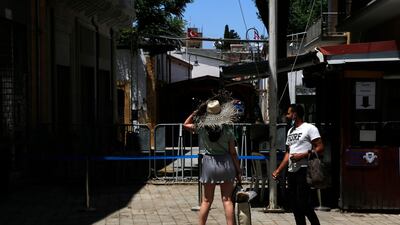

Checkpoints that link divided Cyprus will reopen on Friday after they closed because of Covid-19.
The crossings that bridge the Turkish-Cypriot north and Greek-Cypriot south have faced periodic closures since February 2020, causing chaos for those who cross for work or to visit family.
The UN mission to Cyprus said the decision to reopen came after the leaders of the rival administrations reached an agreement on "synchronising the two sides' respective Covid-19 measures concerning crossings".
“The reopening of all crossing points will facilitate free movement, promote people-to-people contacts, build trust and have an overall positive socioeconomic impact across the island for the benefit of all Greek-Cypriots and Turkish-Cypriots,” it said.
Under new rules, those crossing from north to south will require a seven-day negative antigen test or PCR Covid-19 test.
The development was welcomed by Judith Garber, US ambassador to Cyprus, who said “allowing Cypriots to meet, trade and move freely benefits all who call this island home”.
The French ambassador Salina Grenet-Catalano said the step "builds trust and facilitates the resumption of formal negotiations”.
Cyprus split in 1974 after a Turkish invasion triggered by a brief Greek-Cypriot coup.
Repeated peace talks failed to make much headway and the leaders of each administration have fundamentally contrasting views on the future of the island.

