


Live updates: follow the latest news on Russia-Ukraine
Austria on Monday joined Germany in saying it could live with an embargo on Russian oil which it had previously opposed, moving the European Union a step closer to such a move.
The Alpine country's Climate Minister Leonore Gewessler said Austria was "ready to pull its weight" if the European Commission proposes a Russian oil ban and it is approved by the EU's 27 members.
Like Germany, Austria has reduced its reliance on Russian oil and went through March without processing any of it at all, Ms Gewessler said before a meeting of the bloc's energy ministers.
It came as the EU stepped up preparations for potential fuel shortages as the ministers met in Brussels in the shadow of Russia’s threats to cut off supplies.
The emergency summit was called after Poland and Bulgaria had their Russian gas imports stopped for refusing to pay in roubles, a demand made by the Kremlin after sanctions linked to the invasion of Ukraine were imposed.
Russia had previously supplied about 40 per cent of the EU’s gas and many countries are highly reliant on those imports, leaving them vulnerable if more nations are blacklisted by Russian supplier Gazprom.
A note circulated by the French presidency invited member countries to explain how they were preparing for a potential supply crisis and what action they would like their EU neighbours to take in response.
The bloc was hoping to agree to a common line on gas amid confusion over how countries could deposit euros or dollars with Russia’s Gazprombank without breaching EU sanctions. Moscow's demand for roubles is seen as a ploy to defend its currency from those sanctions.
As countries scramble for alternative suppliers, Poland said it had started receiving gas through a new pipeline from Lithuania and that transmission via that route would increase by the end of the week.
Ministers were also expected to address gas storage for the coming winter after the European Commission proposed setting a minimum level below which stocks should not be allowed to fall.
-
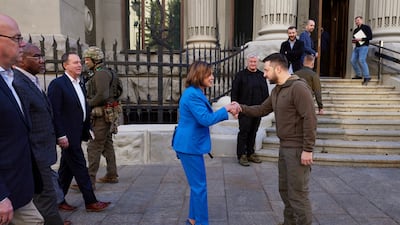
Ukrainian President Volodymyr Zelenskyy and US Speaker of the House Nancy Pelosi shake hands as they meet in Kyiv. AP -
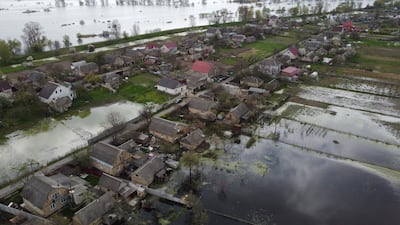
Floodwater edges towards homes in the small Ukrainian town of Demydiv. AFP -

Lila stands inside her apartment after a missile strike damaged a residential building in Dobropillia, in the Donetsk region of eastern Ukraine. Reuters -
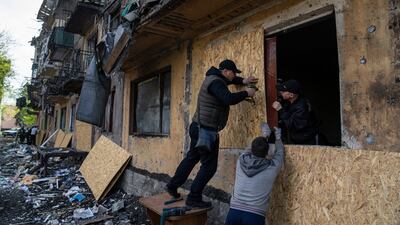
Residents board-up windows of a damaged apartment building with plywood after Russian shelling in Dobropillya, Donetsk region. AP -
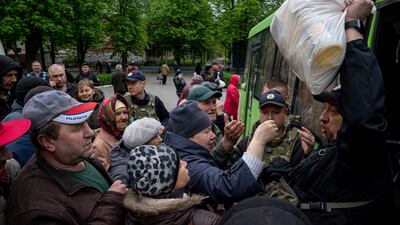
A police officer distributes humanitarian aid to people in Lyman, Donetsk. AP -
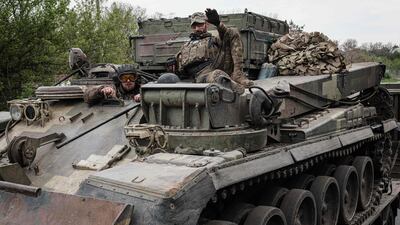
Ukrainian soldiers near Kramatorsk, eastern Ukraine. AFP -
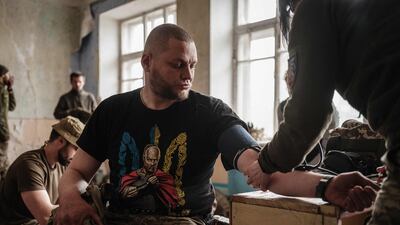
A Ukrainian soldier receives medical treatment as he and others rest after fighting on the front line for two months near Kramatorsk. AFP -
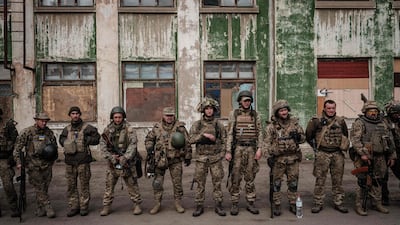
Exhausted Ukrainian soldiers arrive at an abandoned building to rest and for medical treatment after fighting on the front line near Kramatorsk. AFP -
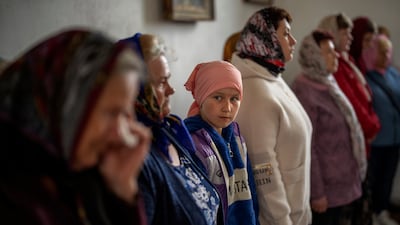
Ukrainians attend a solemn religious service to commemorate the fallen in the Russian occupation in Zdvyzhivka, on the outskirts of Kyiv. AP -

Hanna Selivon, 77, surveys what remains of her house, which she says was destroyed by Russian shelling on the outskirts of Chernihiv, Ukraine. Reuters -
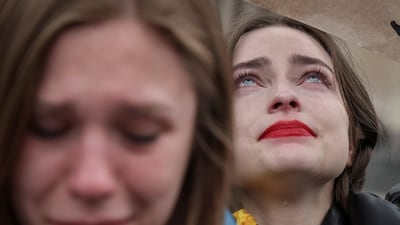
Women cry as they take part in a rally demanding international leaders organise a humanitarian corridor for the evacuation of Mariupol, the besieged Ukrainian city where thousands are trapped. Reuters -
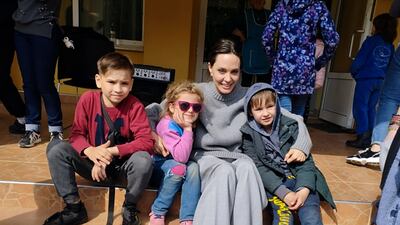
Angelina Jolie, Hollywood movie star and UNHCR goodwill ambassador, poses for photo with kids in Lviv, Ukraine. AP -
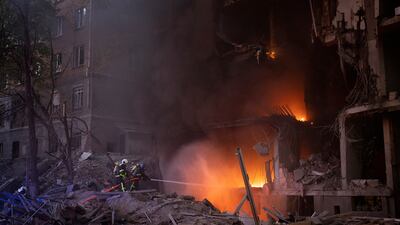
Firefighters try to put out a blaze after an explosion in Kyiv as Russia mounts attacks across Ukraine. AP -
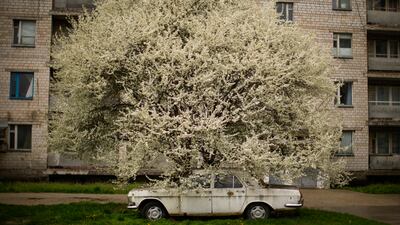
A car parked under a tree in the partially abandoned town of Chernobyl. AP -
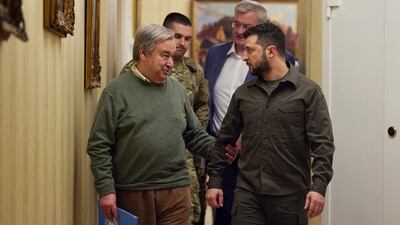
Ukrainian President Volodymyr Zelenskyy, right, and UN Secretary General Antonio Guterres leave a news conference in Kyiv. AP -
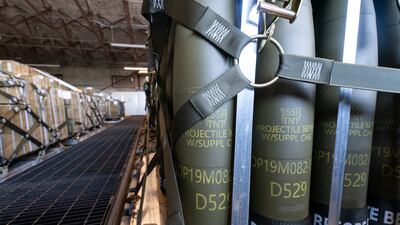
Military aid bound for Ukraine at Dover Air Force Base in Delaware. President Joe Biden has asked Congress to agree to $33 billion to bolster Ukraine's fight against Russia. AP -
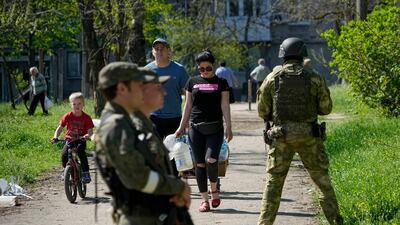
Members of the pro-Russia Donetsk People's Republic militia stand guard as civilians go to receive aid in Mariupol. AP -
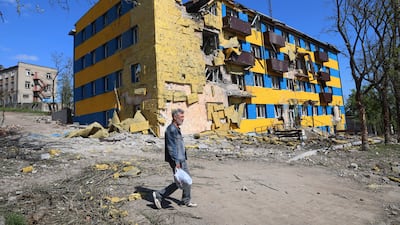
A destroyed building in the south-eastern city of Mariupol. AP -
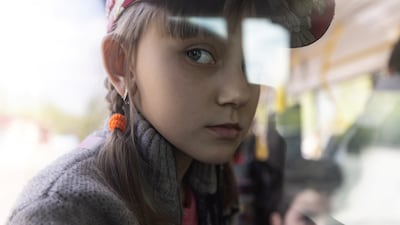
A Ukrainian girl with other civilians on a bus as they flee the violence in Slovyansk, in the Donetsk region. Reuters -
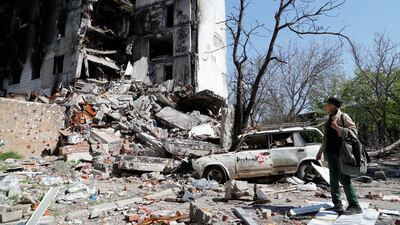
A block of flats reduced to rubble in Mariupol. Reuters -
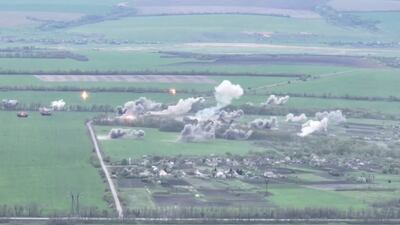
Explosions in a village near the eastern city of Izium. Reuters -
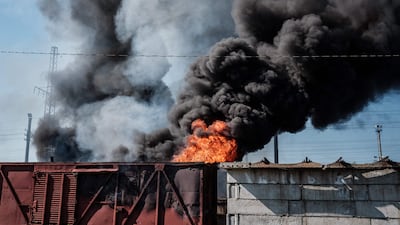
A car and piled sleepers in flames after shelling near Lyman station in Lyman, eastern Ukraine. AFP -
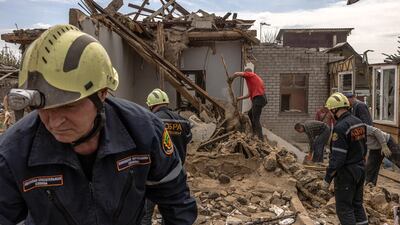
Residents and members of the Ukrainian emergency services clear debris after a recent Russian rocket attack in Zaporizhzhia, Ukraine. EPA -
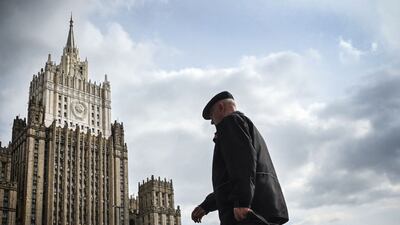
The Russian Foreign Ministry in Moscow, where spokeswoman Maria Zakharova recently said that Ukraine had either carried out the executions of civilians in Bucha itself or positioned the bodies so as to incriminate Russian forces. AFP -
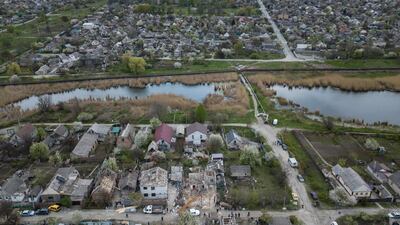
An aerial view of in a neighbourhood in Zaporizhzhia on the 65th day of the Russian invasion of Ukraine. AFP -
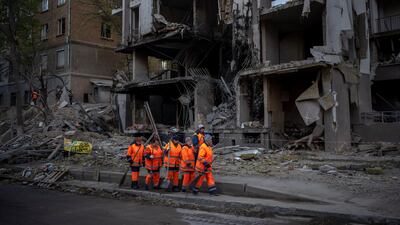
Clean-up crews at the site of an explosion in Kyiv, Ukraine. Russia struck the Ukrainian capital of Kyiv shortly after a meeting between President Volodymyr Zelenskyy and UN Secretary General Antonio Guterres. AP -
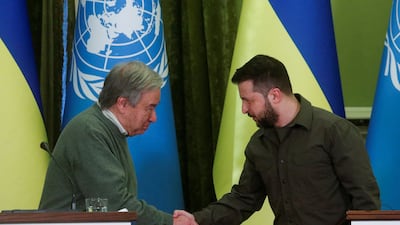
UN Secretary General Antonio Guterres and Ukraine's President Volodymyr Zelenskyy at a joint news conference in Kyiv as Russia's attack on Ukraine continues. Reuters -
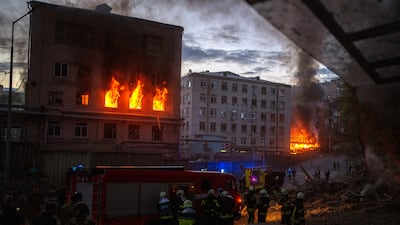
Russia struck Kyiv shortly after the meeting between President Volodymyr Zelenskyy and UN Secretary General Antonio Guterres. AP Photo -

Volodymyr Tykhonov, 76, opens the door of his garage, which is riddled with bullet holes, in Zahaltsi, Ukraine. Getty Images -
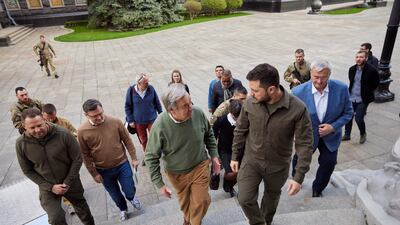
President Zelenskyy welcomes UN Secretary General Antonio Guterres before their meeting. Reuters -
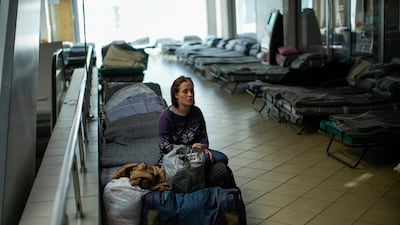
Iulia Shevchuk rests in a reception centre for displaced people in Dnipro, Ukraine. AP Photo -
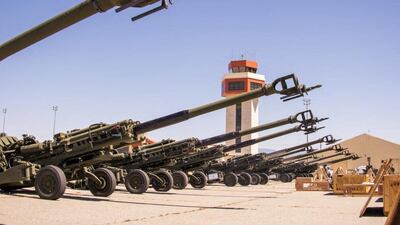
American 155 mm howitzers due to be being loaded on to a US Air Force plane to Ukraine. AFP -
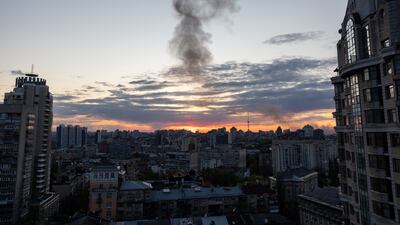
Smoke rises after an explosion at sunset in Kyiv. Getty Images -
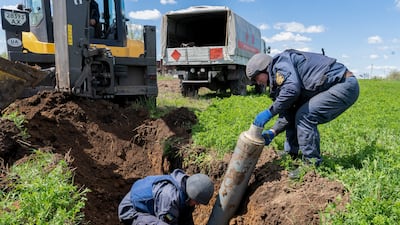
Ukrainian rescuers pull out a part of a rocket that remained after shelling in the eastern city of Kharkiv. EPA -
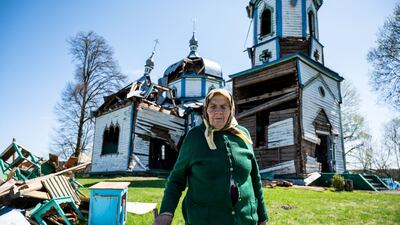
Lyubov, 85, stands in front of a 19th century wooden church, damaged by rocket attack, in the Zhytomyr region of Ukraine. Reuters -
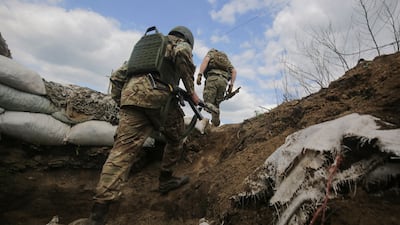
Ukrainian servicemen on patrol in Luhanske village. EPA


Oil debate
The softening of Austria's position on oil cleared another potential obstacle out of the way on that front, after Germany said it was now advocating an oil embargo by late summer.
Germany had previously held out against such a move for fear of causing economic chaos at home and punishing its own consumers rather than Russia.
But Europe's largest economy now says it has sufficiently reduced its dependence on Russian oil, from about 35 per cent to 12 per cent, that it could withstand an embargo that might have to be in place for years.
Most of the remaining portion comes from an oil refinery in eastern Germany whose supplies are harder to replace because it is owned by Russian company Rosneft, but this has not stopped Berlin from changing tack on an embargo.
“A few weeks ago, we knew we couldn’t have sustained it even for a month,” said Foreign Minister Annalena Baerbock. Sanctions should remain in place until Russian troops had left Ukraine’s internationally recognised territory, she said.
“It’s very important with every sanction that we bring into force that we can sustain it for years if necessary,” she said.
But Hungary, a leading sceptic of energy sanctions, signalled on Monday that it was not yet willing to support an oil embargo, which would need to be approved by all 27 members.
“Hungary’s stance on oil and gas sanctions on Russia remains unchanged: we do not support them,” Zoltan Kovacs, a spokesman for recently re-elected Prime Minister Viktor Orban, said on Monday.
Hungary did not stand in the way of a coal embargo passed last month and had previously hinted it would allow an oil ban to pass if there were sufficient alternatives.
The Czech Republic, which will take over the EU presidency from France in July, supports the idea of jointly purchasing gas from other suppliers such as Norway.

