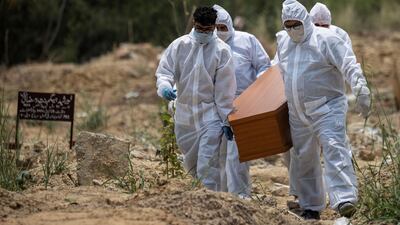
Delhi's coronavirus infections will climb to more than half a million by the end of July and it lacks the hospital capacity to handle such an outbreak, the city state's deputy chief minister said on Tuesday.
The warning came as harrowing accounts of people struggling to get a hospital bed in the Indian capital emerged, including some who said their loved ones died on the doorsteps of medical centres which refused to take them in.
Despite a vast lockdown of its 1.3 billion people imposed in March, the disease is spreading in India at one of the world's fastest rates as it re-opens a battered economy.
The caseload is the world's fifth largest and is set to overtake the United Kingdom in the next few days.
-

A Hindu devotee walks through a disinfection tunnel to enter the Bade Hanuman temple in Allahabad on June 8, 2020 as India reopened places of worship, hotels, restaurants and shopping malls after more than two months of lockdown to contain the spread of the novel coronavirus . AFP -
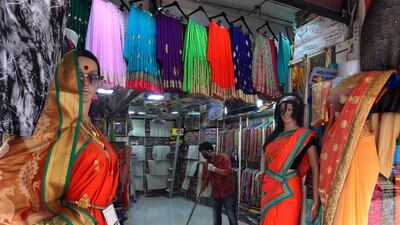
A salesman prepares a cloth shop to receive customers at a shopping centre in Mumbai. AP Photo -

Worshippers arrive for prayers at the Jamma Masjid in New Delhi. AFP -
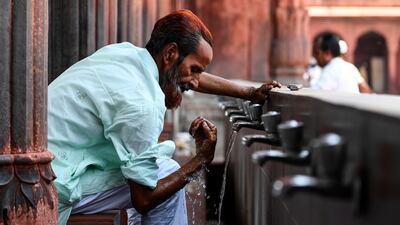
A man performs ablutions before praying at the Jamma Masjid. AFP -
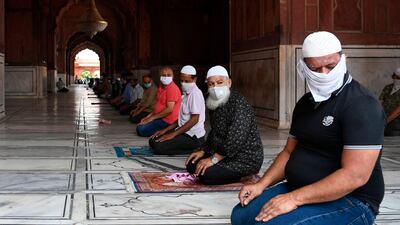
Muslim devotees offer prayers at the Jamma Masjid. AFP -
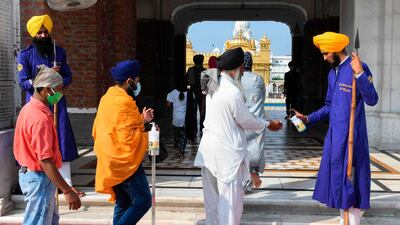
Sikh devotees arrive to pay their respects at the Golden Temple in Amritsar. AFP -

A couple enters the Golden Temple complex. AFP -

Hindu devotees wait in line to offer prayers at the Alopidevi temple in Allahabad on June 8, 2020. / AFP / SANJAY KANOJIA -
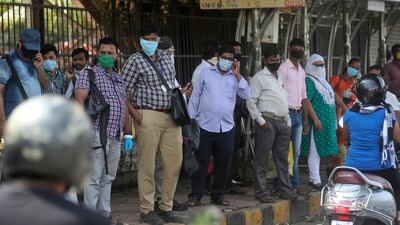
People wait for a bus in Mumbai, India's financial capital where some offices reopened on June 8, 2020. AP Photo -

Motorists ride through a busy street in Mumbai. AP Photo -
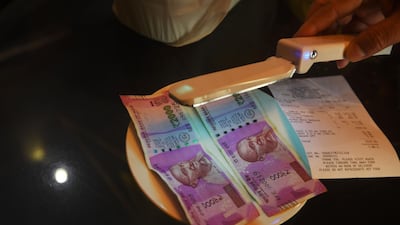
A waiter uses ultraviolet light to disinfect notes at a restaurant in Mumbai. AFP -

Beauticians tend to customers at a salon in a shopping mall in Ahmedabad. Reuters -
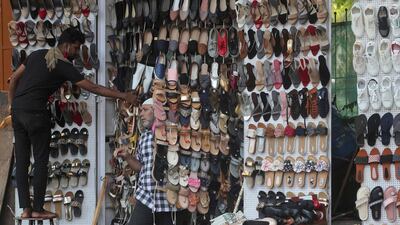
A shoe seller arranges his display in Mumbai. AP Photo -

A man prays inside the ISKCON temple in Ahmedabad. Reuters


Delhi, one of the hotspots in India, has nearly 29,000 cases, which will grow to 550,000 by the end of July, deputy chief minister Manish Sisodia told reporters. By then it will need 80,000 beds compared with its current capacity of nearly 9,000.
"For Delhi this is a big problem, if cases continue to rise," Mr Sisodia said.
Already the crisis is putting pressure on the health system. Aniket Goyal, a Delhi university student, said his grandfather was refused admission in six government-run hospitals last week because they said they had no beds even though a government app showed that beds were available.
When he went to the city's private health care facilities, they found the daily cost of treatment so high that they withdrew. The family filed a public interest petition in court seeking its intervention. The court set a hearing for the following week by which time the 78-year-old man had died.
"He was dying in front of our family every minute, we could not do anything," Goyal said.
Another resident tweeted she was standing outside the government-run Lok Nayak Jayaprakash hospital with her ailing father but it was not accepting him.
"We need to shift him to hospital.... He won't survive without help. Pls help," she said in a plea on Twitter.
An hour later she wrote to say that her father had died and the government had failed them. The hospital said in a statement that the patient was dead on arrival.
"The hospital staff is working non-stop for the last several months and are making every effort possible to ensure not a single life is lost," it said adding these were extraordinary circumstances.
A Delhi government coronavirus mobile app showed the city of more than 20 million people had 8,814 Covid-19 beds, with more than half occupied. Of the 96 hospitals listed, 20 had no beds available, the app showed on Tuesday.
The app also tracks the availability of ventilators, and data showed that only 260 of the 519 ventilators were in use.
"Delhi's health system is broken," said Congress MP Manish Tewari.

