• A demonstrator presents Sri Lanka's new 'Wildlife Minister' at President Gotabaya Rajapaksa's Cabinet meeting room in Colombo. Huge crowds had poured into the city to protest in previous days amid months of unrest sparked by the country's economic collapse. Reuters
    A demonstrator presents Sri Lanka's new 'Wildlife Minister' at President Gotabaya Rajapaksa's Cabinet meeting room in Colombo. Huge crowds had poured into the city to protest in previous days amid months of unrest sparked by the country's economic collapse. Reuters
  • Demonstrators take a break inside Prime Minister Ranil Wickremesinghe's residence in Colombo. Reuters
    Demonstrators take a break inside Prime Minister Ranil Wickremesinghe's residence in Colombo. Reuters
  • Children play the piano inside the president's house in Colombo. Reuters
    Children play the piano inside the president's house in Colombo. Reuters
  • A demonstrator poses for photographs where President Gotabaya Rajapaksa used to hold events. Reuters
    A demonstrator poses for photographs where President Gotabaya Rajapaksa used to hold events. Reuters
  • People wait to visit the presidential residence in Colombo after President Gotabaya Rajapaksa fled amid the country's economic turmoil. Reuters
    People wait to visit the presidential residence in Colombo after President Gotabaya Rajapaksa fled amid the country's economic turmoil. Reuters
  • Part of the private residence of Prime Minister Ranil Wickremesinghe was burnt by demonstrators. Reuters
    Part of the private residence of Prime Minister Ranil Wickremesinghe was burnt by demonstrators. Reuters
  • Demonstrators vandalised part of Prime Minister Ranil Wickremesinghe's house in Colombo. Reuters
    Demonstrators vandalised part of Prime Minister Ranil Wickremesinghe's house in Colombo. Reuters
  • Crowds flock to take a look inside the presidential palace in Colombo. EPA
    Crowds flock to take a look inside the presidential palace in Colombo. EPA
  • Part of Prime Minister Ranil Wickremesinghe's private residence was burnt by demonstrators. Reuters
    Part of Prime Minister Ranil Wickremesinghe's private residence was burnt by demonstrators. Reuters
  • People take a dip in a swimming pool at the presidential palace in Colombo. EPA
    People take a dip in a swimming pool at the presidential palace in Colombo. EPA
  • Protesters pretend to hold a Cabinet meeting in the meeting hall of the president's official residence. AP
    Protesters pretend to hold a Cabinet meeting in the meeting hall of the president's official residence. AP
  • Firefighters try to douse a fire at the residence of Sri Lanka's prime minister during protests in Colombo. AFP
    Firefighters try to douse a fire at the residence of Sri Lanka's prime minister during protests in Colombo. AFP
  • People watch the blaze. AFP
    People watch the blaze. AFP
  • An unidentified man poses for pictures while seated on President Gotabaya Rajapaksa’s chair at the presidential palace in Colombo, a day after it was overrun by anti-government protestors. AFP
    An unidentified man poses for pictures while seated on President Gotabaya Rajapaksa’s chair at the presidential palace in Colombo, a day after it was overrun by anti-government protestors. AFP
  • Protesters rest on sofas in the prime minister's residence. AP
    Protesters rest on sofas in the prime minister's residence. AP
  • Soldiers and police gather outside the burnt private residence of Prime Minister Ranil Wickremesinghe in Colombo. AP
    Soldiers and police gather outside the burnt private residence of Prime Minister Ranil Wickremesinghe in Colombo. AP
  • A security officer inspects a police vehicle, a day after it was vandalised by protesters in front of the residence of Sri Lanka's prime minister. AFP
    A security officer inspects a police vehicle, a day after it was vandalised by protesters in front of the residence of Sri Lanka's prime minister. AFP
  • Protesters stand on a vandalised police water cannon at the entrance to the president's official residence. AP
    Protesters stand on a vandalised police water cannon at the entrance to the president's official residence. AP
  • Protesters sing and dance after storming the Sri Lankan president's official residence. AP
    Protesters sing and dance after storming the Sri Lankan president's official residence. AP
  • Protesters crowd inside the president's official residence. EPA
    Protesters crowd inside the president's official residence. EPA
  • Protesters cheer inside the president's official residence. EPA
    Protesters cheer inside the president's official residence. EPA
  • A man picks up a tear-gas canister to throw it away as police try to disperse protesters in Colombo. AP
    A man picks up a tear-gas canister to throw it away as police try to disperse protesters in Colombo. AP
  • An injured protester during an anti-government demonstration in Colombo. EPA
    An injured protester during an anti-government demonstration in Colombo. EPA
  • The security forces fire tear gas and use water cannon to disperse an anti-government protest. EPA
    The security forces fire tear gas and use water cannon to disperse an anti-government protest. EPA
  • A protester walks in front of police during an anti-government protest, calling for the resignation of the president over his alleged failure to address Sri Lanka's economic crisis. EPA
    A protester walks in front of police during an anti-government protest, calling for the resignation of the president over his alleged failure to address Sri Lanka's economic crisis. EPA
  • Protesters gather inside the compound of Sri Lanka's Presidential Palace in Colombo. AFP
    Protesters gather inside the compound of Sri Lanka's Presidential Palace in Colombo. AFP
  • Protesters are demanding that President Gotabaya Rajapaksa resigns. AP Photo
    Protesters are demanding that President Gotabaya Rajapaksa resigns. AP Photo
  • Hundreds of people attended the rally. EPA
    Hundreds of people attended the rally. EPA
  • Security forces fire tear gas to disperse an anti government protest rally. EPA
    Security forces fire tear gas to disperse an anti government protest rally. EPA
  • Protesters throw back tear gas canisters fired by security forces. EPA
    Protesters throw back tear gas canisters fired by security forces. EPA

Sri Lankans hope change of government can save flagging tourism industry


  • English
  • Arabic

Sri Lankans are desperate for a promised transfer of power after the country's president and prime minister vowed to resign amid huge protests sparked by months of economic turmoil.

At the weekend, tens of thousands of protesters stormed the official residences of President Gotabaya Rajapaksa and Prime Minister Ranil Wickremesinghe, with many blaming them for the mismanagement that has led to shortages of food, fuel and medicine.

The demonstrators have vowed to continue occupying the residences until both men have stepped down.

Remarkable pictures beamed across the world showed protesters jumping into the president's swimming pool, lounging on sofas and holding their own mock Cabinet meetings.

Mr Rajapaksa is to formally resign on Wednesday, with Mr Wickremesinghe also promising to quit following chaotic scenes in which his private residence was set on fire.

Sri Lankans hope their departure — and that of the rest of the current cabinet — will unify the crisis-hit nation and help to salvage its ailing tourism sector.

A country on edge

Psychology lecturer Vishmi Ranatunga, 32, said she was among the vast crowds who took part in the demonstrations on Saturday.

“I feel like we're witnessing a revolution taking place,” she told The National by phone.

It was announced that the president and prime minister will resign on the 13th, people are sceptical about whether they will stick to their word
Vishmi Ranatunga,
university lecturer

“I was there in the crowd on Lotus Road which adjoins the presidential secretariat.

“It was a surreal experience to see that many people turn up to demand the president step down.”

She also said there was an air of scepticism among her fellow Sri Lankans at the announcement that both the president and prime minister would step down from power.

Anxious wait for July 13 decision-day

“Although it was announced that the president and prime minister will resign on the 13th, people are sceptical about whether they will stick to their word,” Ms Ranatunga said.

“Most people are anxious from the lack of clarity with what's going on politically.”

A Sri Lankan living in Dubai said he hopes the protests taking place in his home country bring about permanent change.

Beverney Shane, 31, who works for an advertising agency in the emirate, said it was a proud moment to see people storm the president’s house.

"I am still sceptical he will leave power. I know he has offered his resignation but we are all waiting until July 13th to see if he actually does," he said.

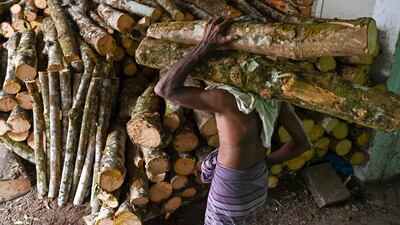
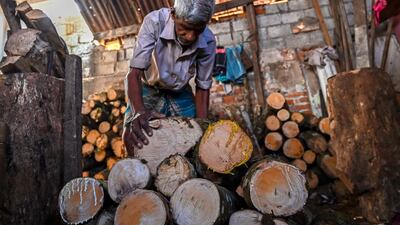
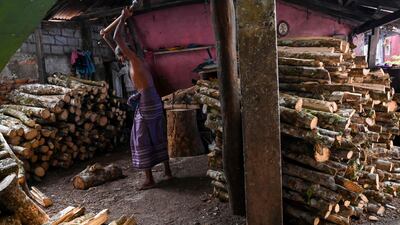
  • A lumberjack chops trees to feed the rising demand for firewood in Nehinna, Sri Lanka. All photos by AFP
    A lumberjack chops trees to feed the rising demand for firewood in Nehinna, Sri Lanka. All photos by AFP
  • A once relatively wealthy Sri Lanka is in the midst of a dire economic crisis.
    A once relatively wealthy Sri Lanka is in the midst of a dire economic crisis.
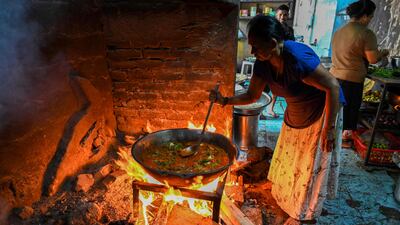
  • People are dealing with major gas shortages.
    People are dealing with major gas shortages.
  • Locals are being forced to return to cooking with firewood.
    Locals are being forced to return to cooking with firewood.
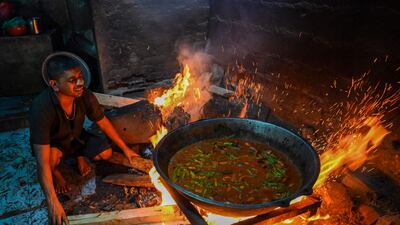
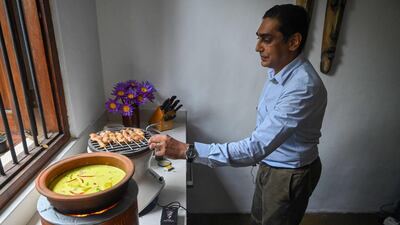
  • This man uses firewood to cook food at a hotel in Colombo.
    This man uses firewood to cook food at a hotel in Colombo.
  • Not only is there a shortage of gas in the country, there is also a lack of medical supplies.
    Not only is there a shortage of gas in the country, there is also a lack of medical supplies.
  • A man uses a charcoal cooker at home.
    A man uses a charcoal cooker at home.

“This is a dynasty that has been in charge of the country since around 2005 and God knows how much damage they have done to our economy in that time.”

He said the recent scenes — which have shocked many across the globe — would have come as little surprise to anyone who has been following events in Sri Lanka closely.

Anger boils over

“It’s something we’ve all seen coming for some time. If you look at how the country has suffered with the Easter Sunday attacks and then how it was affected by the pandemic,” he said.

“The decision to ban non-organic pesticides was the final straw for many people as it meant our exports were greatly reduced.”

The country brought the ban into place in April and Mr Shane said it has played a significant part in forcing Sri Lankans to take action against their government.

The other major factor, according to Mr Shane, was the cost of living increasing as a result of Russia’s invasion of Ukraine — which has led to fuel shortages and price increases around the world.

“There are many Sri Lankans who are skipping meals because they can’t afford to eat; that is not sustainable,” he said.

“The queues at the petrol stations are insane. It’s not uncommon for people to have to queue up for two to three days just to get fuel.

“The cost of living has practically tripled in the last two months but salaries have stayed the same.”

He said that he feels a sense of helplessness at being so far away from his fellow Sri Lankans in such a difficult time.

New hope for vital tourism sector

Sri Lankan President Gotabaya Rajapaksa is due to resign on Wednesday after fleeing his official residence shortly before demonstrators stormed it. Photo: Bloomberg

Karen Banister, a British woman who owns a holiday villa in Bentota, on Sri Lanka's south-west coast, said the prospect of a transition of power has instilled some hope again.

She said tourism is the only option for many businesses to earn foreign currency.

“It is the protests appearing violent that has probably put people off travelling here,” she said.

“The protesters have protested peacefully. It was the government, police and army that caused the problem.

“It has reached a peak and the president [is expected] to resign on Wednesday. Sri Lankans are united with this result and so there is hope again.”

Although May and June are out of season for Sri Lanka’s tourism sector, Ms Banister said there are hardly any new bookings for her villa for the usual busy season, which starts in October and November.

“I have bookings from repeat guests who will come as long as the situation is stabilised,” she said.

“For anyone visiting, it is safe for tourists — who are always welcome in Sri Lanka — but at the moment it is not a good idea to tour around until the fuel problem improves.

“Staying in one place with short trips would feel like being in a private villa at a very good price, but I would say for now keep away from Colombo city, not for the danger but the mayhem.

“Soon, tourists will be able to come happily for their holidays again and, in return, help Sri Lanka rise up.”

Visitors can help revive flagging fortunes

Tour operators and hoteliers in Sri Lanka said foreign tourists should not be put off travelling to the country because they could help breathe new life into its failing economy.

Some tourist companies reported a healthy outlook for tour bookings in July and August. However, they said few people are booking ahead for trips later in the year.

Sinthujan Kananathan, founder of Digital Tourism, said his company reported a drop in visitors in May, but things have since picked up.

“We had our highest number of tourist bookings since Covid-19 in April, but from May 9, when problems in the country really took off, we had many people cancel bookings,” he said.

“However, that only lasted a few weeks and from the end of May until the end of June we had many clients book drivers and tours with us.

“Because of the summer holiday season in Europe, bookings look healthy again for July and August.

“Fuel availability has gone down [owing to shortages] but the government has issued a special token system for tourist drivers in the country.”

Mr Kananathan has to register his drivers with the tourism board to access the fuel tokens.

Sinthujan Kananathan, founder of Digital Tourism. Photo: Sinthujan Kananathan

After providing details of each tour and the expected mileage, the government then decides how much fuel can be given.

In the past two months, a typical daily tour with the company, which employs more than 100 drivers, has increased from $50 to $65 to cover the rising costs, he said.

Digital Tourism has 32 tours booked for July and 47 for August, which is similar to years gone by given that the summer is their quiet season.

“Because of the changing situation in the country we have to be flexible so we do offer a full refund if visitors cannot make it,” Mr Kananathan said.

“I have been advising clients to book flights as late as possible so they can monitor what is happening in the country before committing to anything, but we do require a 50 per cent down payment for tours in advance.”

Last week, the UK’s Foreign Office advised against all but essential travel to Sri Lanka.

The announcement resulted in some UK airlines cancelling flights. However, scheduled flights from other countries including India, Germany and Austria are operating as usual.

Sri Lankan protests - in pictures

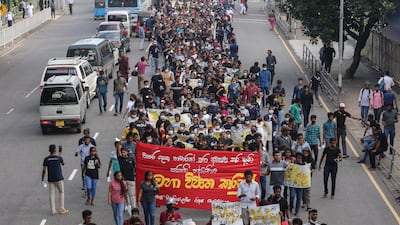
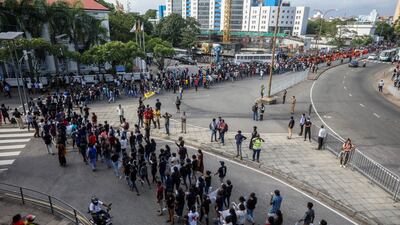
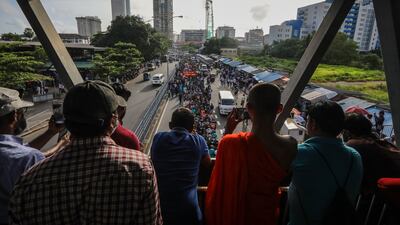
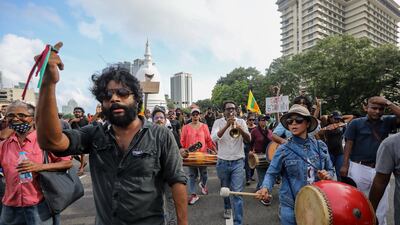
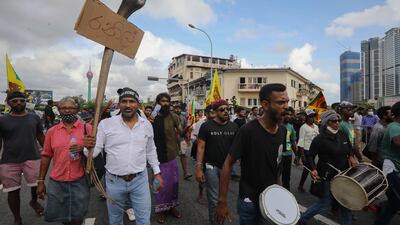
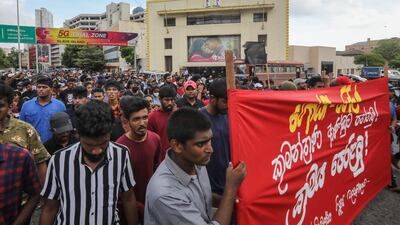
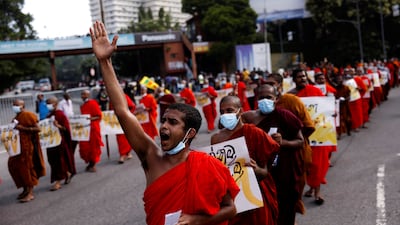
  • University students in Sri Lanka's capital Colombo attend a protest calling for the resignation of President Gotabaya Rajapaksa over his alleged failure to address the economic crisis in the country. Protests have been rocking the country for more than two months as Sri Lanka faces its worst-ever economic crisis due to the lack of foreign reserves, resulting in severe shortages in food, fuel, medicine, and imported goods. EPA
    University students in Sri Lanka's capital Colombo attend a protest calling for the resignation of President Gotabaya Rajapaksa over his alleged failure to address the economic crisis in the country. Protests have been rocking the country for more than two months as Sri Lanka faces its worst-ever economic crisis due to the lack of foreign reserves, resulting in severe shortages in food, fuel, medicine, and imported goods. EPA
  • University students in Sri Lanka's capital Colombo attend a protest calling for the resignation of President Gotabaya Rajapaksa over his alleged failure to address the economic crisis in the country. Protests have been rocking the country for more than two months as Sri Lanka faces its worst-ever economic crisis due to the lack of foreign reserves, resulting in severe shortages in food, fuel, medicine, and imported goods. EPA
    University students in Sri Lanka's capital Colombo attend a protest calling for the resignation of President Gotabaya Rajapaksa over his alleged failure to address the economic crisis in the country. Protests have been rocking the country for more than two months as Sri Lanka faces its worst-ever economic crisis due to the lack of foreign reserves, resulting in severe shortages in food, fuel, medicine, and imported goods. EPA
  • University students in Sri Lanka's capital Colombo attend a protest calling for the resignation of President Gotabaya Rajapaksa over his alleged failure to address the economic crisis in the country. Protests have been rocking the country for more than two months as Sri Lanka faces its worst-ever economic crisis due to the lack of foreign reserves, resulting in severe shortages in food, fuel, medicine, and imported goods. EPA
    University students in Sri Lanka's capital Colombo attend a protest calling for the resignation of President Gotabaya Rajapaksa over his alleged failure to address the economic crisis in the country. Protests have been rocking the country for more than two months as Sri Lanka faces its worst-ever economic crisis due to the lack of foreign reserves, resulting in severe shortages in food, fuel, medicine, and imported goods. EPA
  • University students in Sri Lanka's capital Colombo attend a protest calling for the resignation of President Gotabaya Rajapaksa over his alleged failure to address the economic crisis in the country. Protests have been rocking the country for more than two months as Sri Lanka faces its worst-ever economic crisis due to the lack of foreign reserves, resulting in severe shortages in food, fuel, medicine, and imported goods. EPA
    University students in Sri Lanka's capital Colombo attend a protest calling for the resignation of President Gotabaya Rajapaksa over his alleged failure to address the economic crisis in the country. Protests have been rocking the country for more than two months as Sri Lanka faces its worst-ever economic crisis due to the lack of foreign reserves, resulting in severe shortages in food, fuel, medicine, and imported goods. EPA
  • University students in Sri Lanka's capital Colombo attend a protest calling for the resignation of President Gotabaya Rajapaksa over his alleged failure to address the economic crisis in the country. Protests have been rocking the country for more than two months as Sri Lanka faces its worst-ever economic crisis due to the lack of foreign reserves, resulting in severe shortages in food, fuel, medicine, and imported goods. EPA
    University students in Sri Lanka's capital Colombo attend a protest calling for the resignation of President Gotabaya Rajapaksa over his alleged failure to address the economic crisis in the country. Protests have been rocking the country for more than two months as Sri Lanka faces its worst-ever economic crisis due to the lack of foreign reserves, resulting in severe shortages in food, fuel, medicine, and imported goods. EPA
  • University students in Sri Lanka's capital Colombo attend a protest calling for the resignation of President Gotabaya Rajapaksa over his alleged failure to address the economic crisis in the country. Protests have been rocking the country for more than two months as Sri Lanka faces its worst-ever economic crisis due to the lack of foreign reserves, resulting in severe shortages in food, fuel, medicine, and imported goods. EPA
    University students in Sri Lanka's capital Colombo attend a protest calling for the resignation of President Gotabaya Rajapaksa over his alleged failure to address the economic crisis in the country. Protests have been rocking the country for more than two months as Sri Lanka faces its worst-ever economic crisis due to the lack of foreign reserves, resulting in severe shortages in food, fuel, medicine, and imported goods. EPA
  • University students in Sri Lanka's capital Colombo attend a protest calling for the resignation of President Gotabaya Rajapaksa over his alleged failure to address the economic crisis in the country. Protests have been rocking the country for more than two months as Sri Lanka faces its worst-ever economic crisis due to the lack of foreign reserves, resulting in severe shortages in food, fuel, medicine, and imported goods. EPA
    University students in Sri Lanka's capital Colombo attend a protest calling for the resignation of President Gotabaya Rajapaksa over his alleged failure to address the economic crisis in the country. Protests have been rocking the country for more than two months as Sri Lanka faces its worst-ever economic crisis due to the lack of foreign reserves, resulting in severe shortages in food, fuel, medicine, and imported goods. EPA
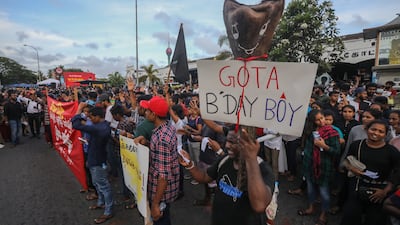
  • Members of the Inter University Students' Federation demand for Sri Lanka's President Gotabaya Rajapaksa to resign, amid the country's economic crisis, in Colombo. Reuters
    Members of the Inter University Students' Federation demand for Sri Lanka's President Gotabaya Rajapaksa to resign, amid the country's economic crisis, in Colombo. Reuters
The specs

Engine: 3.0-litre six-cylinder MHEV

Power: 360bhp

Torque: 500Nm

Transmission: eight-speed automatic

Price: from Dh282,870

On sale: now

Ten tax points to be aware of in 2026

1. Domestic VAT refund amendments: request your refund within five years

If a business does not apply for the refund on time, they lose their credit.

2. E-invoicing in the UAE

Businesses should continue preparing for the implementation of e-invoicing in the UAE, with 2026 a preparation and transition period ahead of phased mandatory adoption. 

3. More tax audits

Tax authorities are increasingly using data already available across multiple filings to identify audit risks. 

4. More beneficial VAT and excise tax penalty regime

Tax disputes are expected to become more frequent and more structured, with clearer administrative objection and appeal processes. The UAE has adopted a new penalty regime for VAT and excise disputes, which now mirrors the penalty regime for corporate tax.

5. Greater emphasis on statutory audit

There is a greater need for the accuracy of financial statements. The International Financial Reporting Standards standards need to be strictly adhered to and, as a result, the quality of the audits will need to increase.

6. Further transfer pricing enforcement

Transfer pricing enforcement, which refers to the practice of establishing prices for internal transactions between related entities, is expected to broaden in scope. The UAE will shortly open the possibility to negotiate advance pricing agreements, or essentially rulings for transfer pricing purposes. 

7. Limited time periods for audits

Recent amendments also introduce a default five-year limitation period for tax audits and assessments, subject to specific statutory exceptions. While the standard audit and assessment period is five years, this may be extended to up to 15 years in cases involving fraud or tax evasion. 

8. Pillar 2 implementation 

Many multinational groups will begin to feel the practical effect of the Domestic Minimum Top-Up Tax (DMTT), the UAE's implementation of the OECD’s global minimum tax under Pillar 2. While the rules apply for financial years starting on or after January 1, 2025, it is 2026 that marks the transition to an operational phase.

9. Reduced compliance obligations for imported goods and services

Businesses that apply the reverse-charge mechanism for VAT purposes in the UAE may benefit from reduced compliance obligations. 

10. Substance and CbC reporting focus

Tax authorities are expected to continue strengthening the enforcement of economic substance and Country-by-Country (CbC) reporting frameworks. In the UAE, these regimes are increasingly being used as risk-assessment tools, providing tax authorities with a comprehensive view of multinational groups’ global footprints and enabling them to assess whether profits are aligned with real economic activity. 

Contributed by Thomas Vanhee and Hend Rashwan, Aurifer

US PGA Championship in numbers

Joost Luiten produced a memorable hole in one at the par-three fourth in the first round.

To date, the only two players to win the PGA Championship after winning the week before are Rory McIlroy (2014 WGC-Bridgestone Invitational) and Tiger Woods (2007, WGC-Bridgestone Invitational). Hideki Matsuyama or Chris Stroud could have made it three.

Number of seasons without a major for McIlroy, who finished in a tie for 22nd.

4 Louis Oosthuizen has now finished second in all four of the game's major championships.

In the fifth hole of the final round, McIlroy holed his longest putt of the week - from 16ft 8in - for birdie.

For the sixth successive year, play was disrupted by bad weather with a delay of one hour and 43 minutes on Friday.

Seven under par (64) was the best round of the week, shot by Matsuyama and Francesco Molinari on Day 2.

Number of shots taken by Jason Day on the 18th hole in round three after a risky recovery shot backfired.

Jon Rahm's age in months the last time Phil Mickelson missed the cut in the US PGA, in 1995.

10 Jimmy Walker's opening round as defending champion was a 10-over-par 81.

11 The par-four 11th coincidentally ranked as the 11th hardest hole overall with a scoring average of 4.192.

12 Paul Casey was a combined 12 under par for his first round in this year's majors.

13 The average world ranking of the last 13 PGA winners before this week was 25. Kevin Kisner began the week ranked 25th.

14 The world ranking of Justin Thomas before his victory.

15 Of the top 15 players after 54 holes, only Oosthuizen had previously won a major.

16 The par-four 16th marks the start of Quail Hollow's so-called "Green Mile" of finishing holes, some of the toughest in golf.

17 The first round scoring average of the last 17 major champions was 67.2. Kisner and Thorbjorn Olesen shot 67 on day one at Quail Hollow.

18 For the first time in 18 majors, the eventual winner was over par after round one (Thomas shot 73).

Updated: July 11, 2022, 1:32 PM