



The Ethiopian government and rebel Tigray forces have agreed to cease hostilities after a two-year conflict that has killed hundreds of thousands of people in the north of the country.
The agreement was announced by an African Union envoy following peace talks in South Africa.
Both sides have formally agreed on “orderly, smooth and co-ordinated disarmament” along with “restoration of law and order”, “restoration of services” and “unhindered access to humanitarian supplies”, AU High Representative for the Horn of Africa Olesegun Obasanjo said in the first briefing on the talks, which began last week.
“Today is the beginning of a new dawn for Ethiopia, for the Horn of Africa and indeed for Africa as a whole,” added Mr Obasanjo from Pretoria, where an official agreement will be signed.
“This moment is not the end of this process, but the beginning of it.”

The UN hailed the announcement as a "welcome first step" to peace.
Secretary General Antonio Guterres hopes the agreement "can start to bring some solace to the millions of Ethiopian civilians that have really suffered during this conflict," spokesman Stephane Dujarric told reporters.
Implementation of the agreement is to be supervised and monitored by a high-level AU panel.
“It is now for all of us to honour this agreement,” said Redwan Hussein, the lead negotiator for Ethiopia’s government.
Ethiopian Prime Minister Abiy Ahmed sent troops into Tigray in 2020 after accusing the Tigray People's Liberation Front — a group that spent decades at the centre of Ethiopian politics — of attacking federal army camps.
Since then, the fighting in Africa's second most populous country has forced more than two million people from their homes.
Researchers estimate at least 600,000 people have died in Tigray, either as a direct result of the fighting or from related issues such as famine or the healthcare crisis sparked by the Ethiopian government's blockade of the northern region.
Doctors in the region have described running out of basic medicines like vaccines, insulin and food while people die of easily preventable diseases and starvation.
UN investigators have said the Ethiopian government was using “starvation of civilians” as a weapon of war.
A representative from the Tigray delegation said “painful concessions” were made during the talks to end the conflict, which was set to mark its second anniversary on Thursday.
Earlier on Wednesday, Mr Ahmed said "peace and development" would now be ushered in.
-
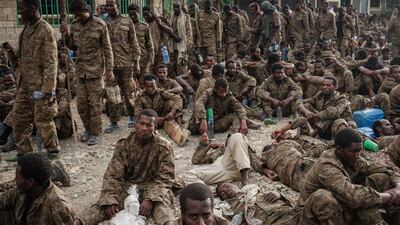
Captive Ethiopian soldiers arrive at the Mekele Rehabilitation Centre in Tigray, Ethiopia, after a four-day journey from Abdi Eshir. All photos: AFP -
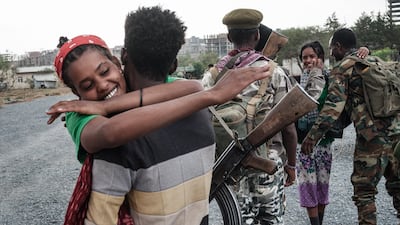
Women welcome Tigray People's Liberation Front fighters as they return to Mekele after seizing control of the city in June 2021. -
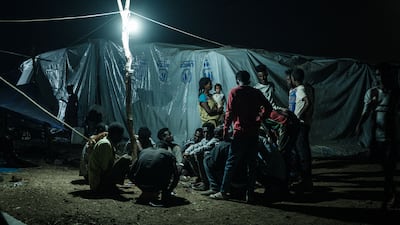
Ethiopians who fled the Tigray conflict wait to charge their phones at Um Raquba refugee camp in Gedaref, Sudan. -
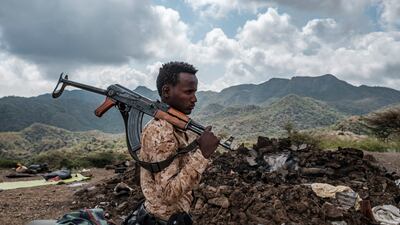
A member of the Afar Special Forces stands in front of the debris of a house on the outskirts of the village of Bisober in Tigray. -
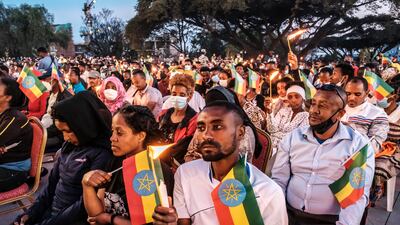
People hold candles and Ethiopian flags at a memorial service for the victims of the Tigray conflict in Addis Ababa. -

An Ethiopian refugee who fled fighting in Tigray waits behind a fence in a camp in Sudan. -
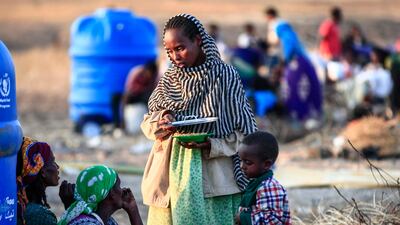
Refugees living in a camp in Sudan after fleeing violence in Tigray. -
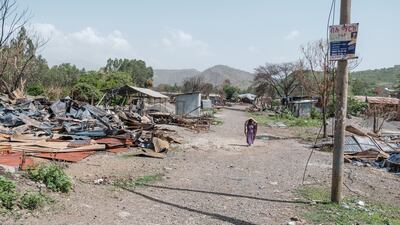
A woman walks among the remains of a destroyed factory in Ataye, Ethiopia, where more than 100 civilians died in a recent flare-up of violence. -
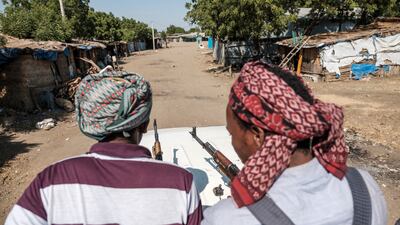
Two members of the Amhara militia ride in the back of a pick-up truck. Amharas and Tigrayans were uneasy neighbours before the current fighting, with tension over land sparking violent clashes. -

Militias from the Amhara region have been involved in the fighting in Tigray. -
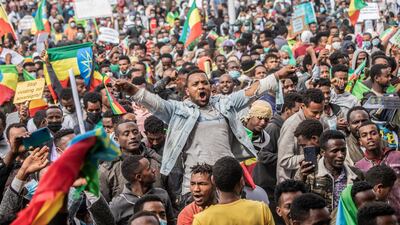
Tens of thousands of Ethiopians gather at a rally organised by the mayor of Addis Ababa to show support for the military's efforts in Tigray. -
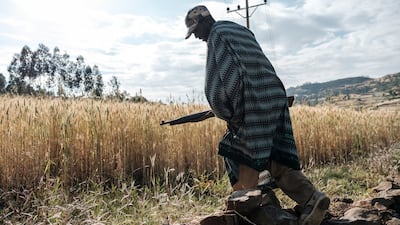
Zeleke Alabachew, farmer and militia fighter, tends to his land near the village of Tekeldengy, Ethiopia, Africa's second most populous nation. -
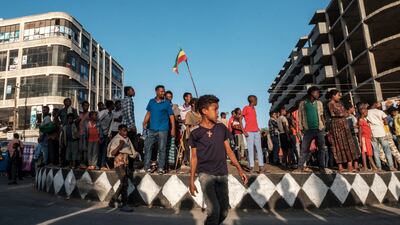
People celebrate the liberation of opposition leaders in the city of Alamata, Ethiopia. -
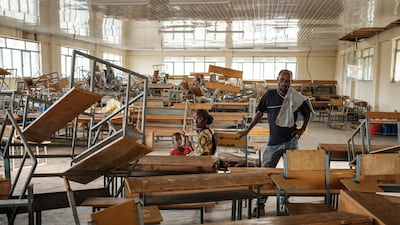
A family fleeing violence sit in a former classroom at May Weyni secondary school, now hosting 10,500 displaced people, in Mekele, capital of Tigray. -
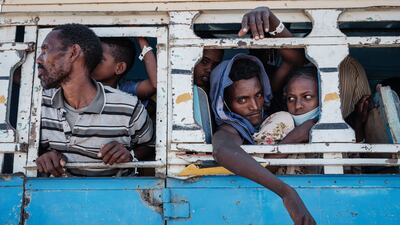
Ethiopian refugees travel to Sudan to escape violence in Tigray. -

Ethiopian refugees gather to celebrate the 46th anniversary of the Tigray People's Liberation Front at Um Raquba refugee camp in Gedaref, Sudan. The TPLF dominated Ethiopian politics before being ousted from their regional stronghold last year. -
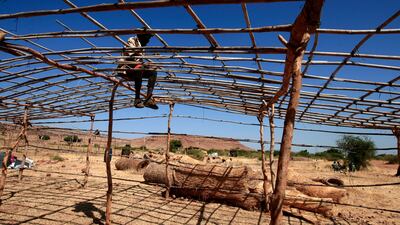
An Ethiopian refugee sets up a tent in a camp in the town of Gedaref, Sudan, after being transported from the border reception centre. -
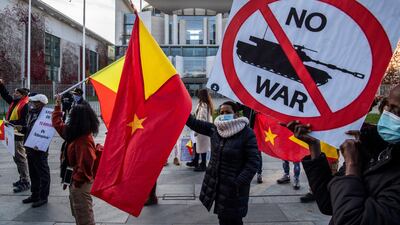
Pro-Tigrayan demonstrators display placards during a protest in front of the chancellery in Berlin. -
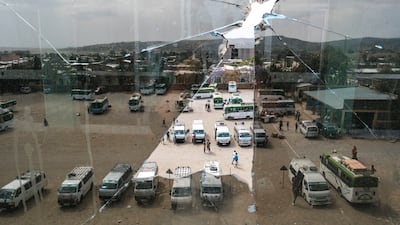
The aftermath of heavy shelling in Wukro, a city north of Mekele, in Ethiopia.
"We need to replicate the victory we got on the battlefield in peace efforts, too. We are finalising the war in northern Ethiopia with a victory," he said before the agreement was announced.
Forces from the Amhara region, which borders Tigray, have also been fighting the TPLF.
They were not part of the AU-brokered talks.
"Amharas cannot be expected to abide by any outcome of a negotiations process from which they think they are excluded,” AP quoted Tewodrose Tirfe, chairman of the Amhara Association of America, as saying.
Since negotiations began, intense fighting has continued unabated in Tigray, where government troops backed by the Eritrean army and regional forces have been waging artillery bombardments and air strikes, capturing a string of towns from the rebels.
A five-month ceasefire disintegrated in August and led to a rise in violence. Both sides have accused the other of atrocities, but it is hard to prove any claims due to an ongoing communications blackout and blockade by the Ethiopian government.
The United Nations-backed International Commission of Human Rights Experts on Ethiopia has found evidence of the government using drones in the conflict “in an arbitrary and indiscriminate manner,” commission members told journalists last week.
The commissioners said they have not done a comprehensive analysis of where Ethiopia obtained the drones, but they said they had confirmed the drone used in a strike that killed people in a displacement camp early this year came from Turkey.
- Additional reporting by agencies

