

Denmark's King Frederik X acceded to the throne on Sunday, ushering in a new era after his mother Queen Margrethe abdicated, with more than 100,000 Danes turning out for the unprecedented event.
After a final procession in a horse-drawn carriage through the streets of Copenhagen, Margrethe, 83, signed a declaration of abdication at Christiansborg Palace – a first in 900 years in Denmark – ending her 52-year reign and automatically making her son monarch.
She then left the Council of State, also attended by the government, the new king and queen, and their eldest son, the new Crown Prince Christian, 18.
She left the room with tears in her eyes, saying: “God bless the king.”
In front of a sea of Danes waving red-and-white flags, Prime Minister Mette Frederiksen then proclaimed 55-year-old Frederik the new king on the balcony of Christiansborg Palace, the seat of parliament and government.
Wrapped up against the cold, a visibly moved Frederik, clad in his gala admiral's uniform with gold epaulettes, blinked back tears and smiled as he waved to the crowd, estimated at more than 100,000 people by media outlets.
Like his mother, Frederik is hugely popular, enjoying the support of more than 80 per cent of Danes.
“My mother succeeded like few others in becoming one with her country,” he told the crowd.
“My hope is to become a unifying king for the future … It's a responsibility I assume with respect, pride and a lot of happiness,” he said, repeatedly placing his hand on his heart as the crowd cheered.

Frederik was then joined on the balcony by his Australian-born wife Mary, wearing a white dress with her dark hair swept back in a bun, and their four teenage children.
Mary is the first commoner to become queen in Denmark.
The crowd erupted in loud cheers as the new king and queen kissed on the balcony.
It is only the second time a Danish sovereign has stepped down. The last one was Erik III, almost nine centuries ago in 1146.
“Soul of the nation”
Aske Julius, a 27-year-old Copenhagen resident, called Margrethe “the embodiment of Denmark … the soul of the nation.”
“More than half of the Danish population has never known anything else but the queen,” he said.
Portraits and banners around the capital thanked the queen for her years of service, with cheeky signs in the metro declaring: “Thanks for the ride, Margrethe”.
Others read: “Long live the king”.
No foreign dignitaries or royals were invited to Sunday's succession, in line with Danish tradition, and there was no coronation or throne for the new monarch.

Margrethe chose to abdicate exactly 52 years to the day after she took over from her father, Frederik IX.
The queen stunned Danes when she announced her abdication in her annual televised New Year's Eve address, after having repeatedly insisted she would follow tradition and reign until her death.
Even her own family was only informed three days prior.
She attributed her decision to health issues after undergoing major back surgery last year.
Margrethe will retain her title of queen and may represent the royal family on occasion.
Experts say that passing the baton to her son now will give him time to flourish in his role as monarch, after gradually taking on increasing responsibilities.
-
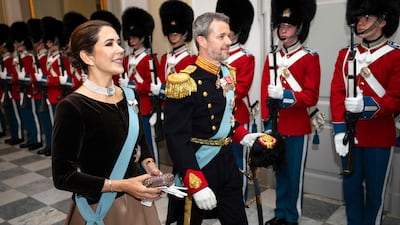
Crown Prince Frederik and Crown Princess Mary of Denmark arrive at Christiansborg Palace, in Copenhagen. AFP -
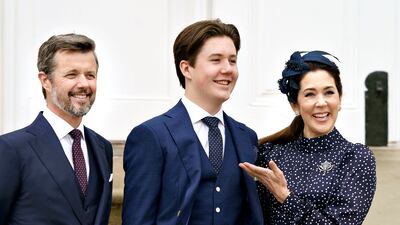
Crown Prince Frederik and Crown Princess Mary with their son, Prince Christian, at Fredensborg Castle Church, in 2021. AFP -

Crown Prince Frederik takes part in the Royal Run Sonderjylland Denmark, in 2021. AP -

Crown Prince Frederik swims with tuna as he takes part in tuna tagging in the waters off Skagen, Denmark, in 2021. EPA -
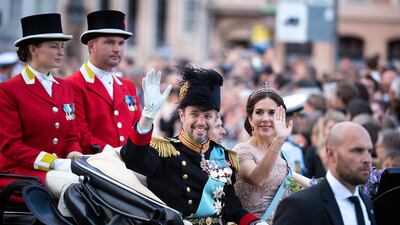
Crown Prince Frederik and Crown Princess Mary arrive by carriage at Christiansborg Castle on the Crown Prince's 50th birthday in 2018. EPA -
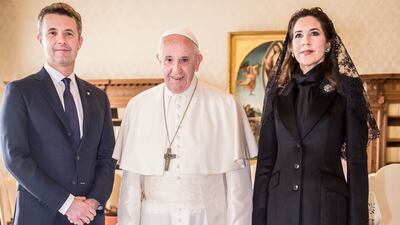
Crown Princess Mary and Crown Prince Frederik attend an audience with Pope Francis at the Vatican in 2018. EPA -
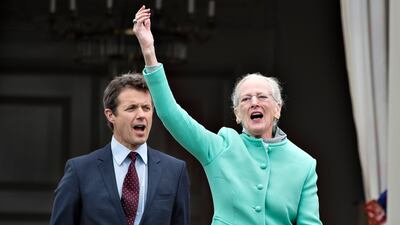
Queen Margrethe of Denmark with her son Crown Prince Frederik at Marselisborg Castle in 2017, to celebrate her 77th birthday. AP -
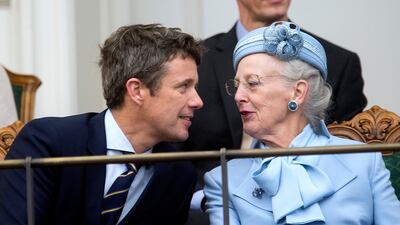
Queen Margrethe and Crown Prince Frederik attend the opening session of the Danish Parliament in Copenhagen in 2014. EPA -
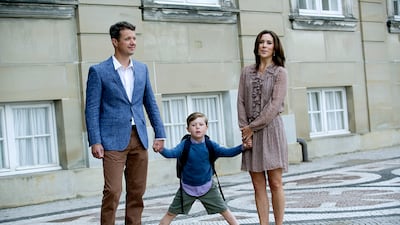
Prince Christian between his parents, Crown Prince Frederik and Crown Princess Mary on the way to his first day of school in Copenhagen, in 2011. EPA -
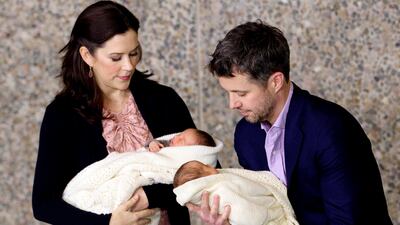
Crown Prince Frederik presents their newborn twins to the media at the Rigshospitalet, in Copenhagen, in 2011. AP -
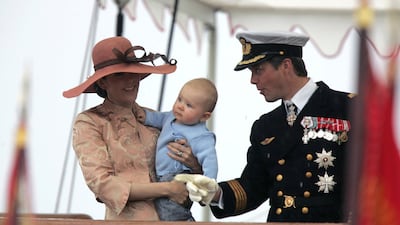
Crown Princess Mary, Crown Prince Frederik and their son, Prince Christian, wave to the crowd at Ronne, Denmark at their arrival on board the royal danish vessel Dannebrog in 2006. AP -
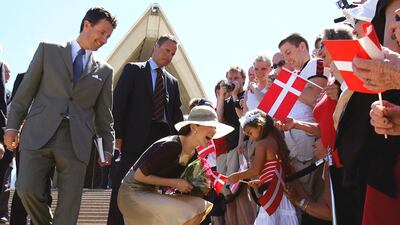
The royal couple greet people on the steps of the Sydney Opera House in Australia in 2005. AP -
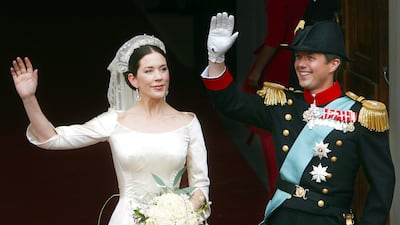
Crown Prince Frederik and his new wife Crown Princess Mary wave to the crowd following their wedding ceremony in Copenhagen in 2004. AP -
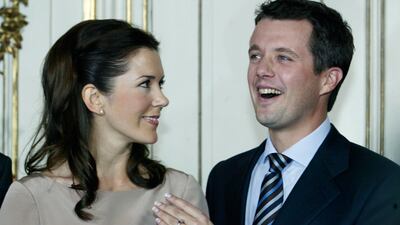
Crown Prince Frederik and his fiancee Mary Donaldson show the engagement ring at Fredensborg Castle in 2003. AP -
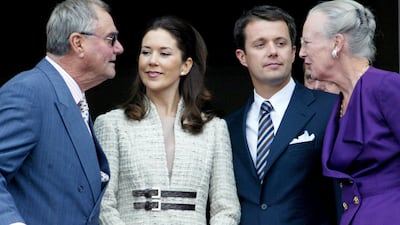
Crown Prince Frederik and his fiancee Mary Donaldson speak with Queen Margrethe and Prince Henrik as they appear on the balcony of the Christian IX Palace in Copenhagen in 2003. AP -
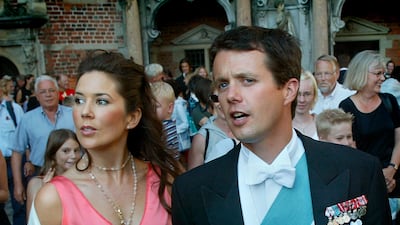
Crown Prince Frederik and Mary Donaldson attend a wedding at the Frederiksborg Castle Church in Hillerod, Denmark, in 2002. EPA -

Training with the Frogman Corps of the Royal Danish Navy in Nykoebing, Denmark, 1995. EPA -

As a soldier, in Hilleroed,1986. EPA -

Playing tennis in Aarhus, Denmark, 1982. EPA -
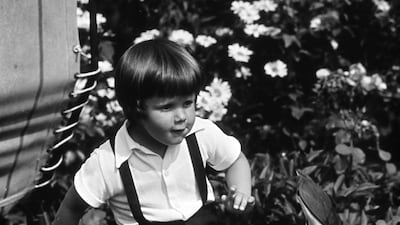
On holiday with his family at Caix Castle, in France, 1972. EPA -
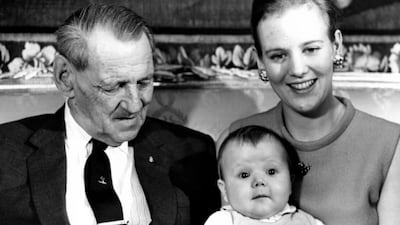
Denmark's King Frederik IX, Crown Prince Frederik, and Princess Margrethe in Copenhagen, in 1967. EPA


“She thinks the crown prince is totally ready to take over. And she wants to avoid a situation like in Great Britain where Prince Charles became King Charles after the age of 70,” historian Lars Hovbakke Sorensen told AFP.
He is expected to bring his own style to the monarchy, which dates back to the 10th century Viking era.
“He understood that he could not copy (the queen) and has managed to define his own image, his own ties to the Danish people,” another historian, Bo Lidegaard, said.
While his mother is known for her love of the arts and is an accomplished writer and artist, Frederik is an avid sportsman who champions environmental causes.
In Denmark the monarch's role is largely ceremonial, but he or she does sign legislation, formally presides over the forming of a government and meets with the cabinet regularly.
-

Queen Margrethe II of Denmark delivers her New Year's speech and announces her abdication in Copenhagen on December 31, 2023. EPA -

Queen Margrethe, Crown Prince Frederik and Crown Princess Mary during a New Year reception at Christiansborg Palace, Copenhagen, in January 2024. AFP -
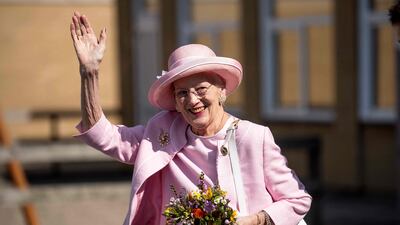
Queen Margreth visits Fredericia Municipality, Denmark, in September 2023. AFP -
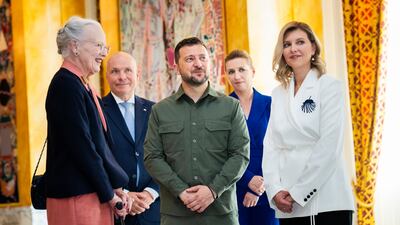
Queen Margrethe receives Ukraine's President Volodymyr Zelenskyy and first lady Olena Zelenska at Christiansborg in August 2023. EPA -

Queen Margrethe at the Royal Theatre in the Danish capital before a gala performance during the celebration of her 50th anniversary on the throne in September 2022. EPA -
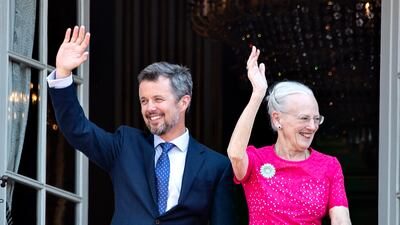
Crown Prince Frederik and Queen Margrethe wave from the balcony at Amalienborg Castle in Copenhagen on the Crown Prince's 50th birthday in May 2018. EPA -
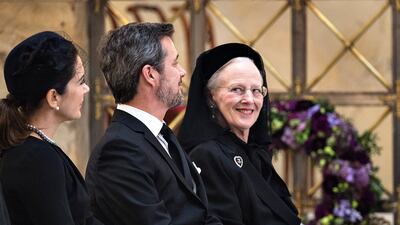
Queen Margrethe looks at Crown Prince Frederik during Prince Henrik's funeral at Christianborg Palace Church in February 2018. EPA -
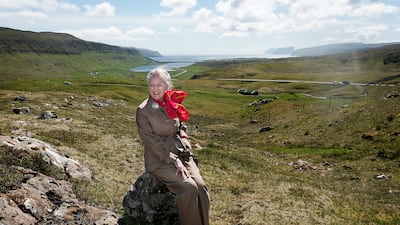
Queen Margrethe visiting the Sandoe on the Faroe Islands in 2016. EPA -

Queen Margrethe and Prince Henrik on their silver wedding anniversary at Fredensborg Castle, 1992. EPA -

Britain's Prince Philip, Queen Margrethe, Queen Elizabeth II and Prince Henrik wave from the balcony of Amalienborg Castle during the British royal couple's visit in 1979. EPA -
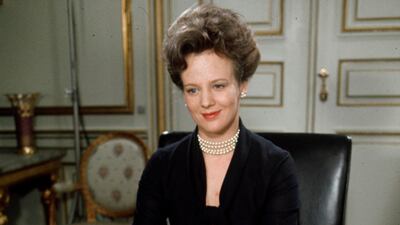
Queen Margrethe during her first televised New Year's speech, in Amalienborg Castle, 1972. EPA -
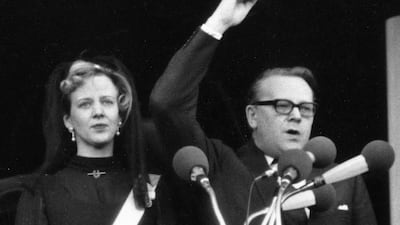
Princess Margrethe is proclaimed Queen of Denmark by Danish prime minister Jens Otto Krag on the balcony of Christiansborg Castle in 1972. EPA -
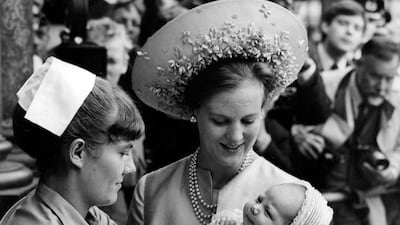
Crown Princess Margrethe with Prince Frederik during his baptism at Holmens Church in Copenhagen, 1968. EPA -
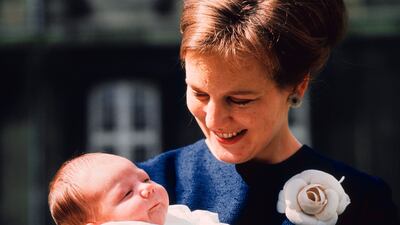
Crown Princess Margrethe with Prince Frederik in Copenhagen, 1968. EPA -
Denmark's King Frederik IX, Prince Frederik and Princess Margrethe in Copenhagen, 1967. EPA -
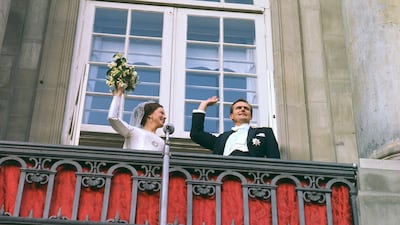
Princess Margrethe and Henri Laborde de Monpezat wave on their wedding day from the balcony at Amalienborg Castle in 1967. EPA -
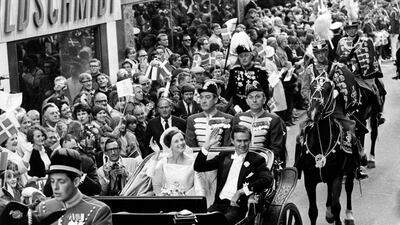
Princess Margrethe and Prince Henrik ride in a carriage through the streets of Copenhagen after their wedding in 1967. EPA -
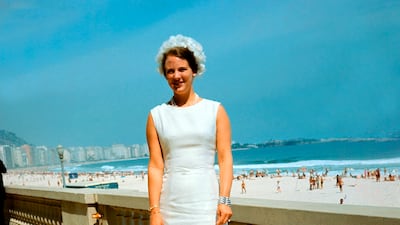
Princess Margrethe in Rio de Janeiro in 1966. EPA -
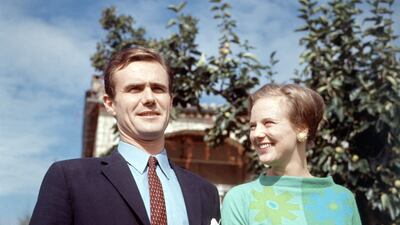
Princess Margrethe and Henri de Monpezat in France in 1966. EPA -

The three princesses, Margrethe, Benedikte and Anne Marie of Denmark, in Faroese national costumes in Klaksvig, Faroe Islands, 1963. EPA -
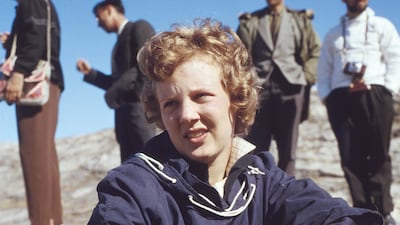
Princess Margrethe on her first visit to Greenland in 1960. EPA -

King Frederik with his three daughters, Princess Anne-Marie, Princess Benedikte and Princess Margrethe, in 1949. EPA



