


Ukraine’s President Volodymyr Zelenskyy expressed regret that the Nato summit had failed to formally invite his country to join, but said it was understandable Kyiv could not enter the alliance during a war with Russia.
Ukraine's wartime leader spoke after talks with Jens Stoltenberg in Vilnius a day after the 31-member group said it agreed that Ukraine should be a member but did not start the process immediately, leaving it up to a later decision.
Mr Zelenskyy said the success of the summit was that the G7 had provided a legal framework for support for his country and pledges of weapons for the military. Addressing the lack of a time frame in the process, Mr Zelenskyy said that it would have been optimum if the invitation had been extended on Tuesday. Nevertheless, Kyiv was firmly "on its way" to Nato.
"I would like to have success at this summit for everyone – for our children, soldiers – particularly [from] the security guarantees on our way to Nato," he said. "Not instead of Nato but security guarantees on our way to integration and today these guarantees will be confirmed by G7 countries.
"This will surely become a very important and specific success. We can state that the results of this summit are good, but should we receive an invitation, then that would be the optimum."
Describing the positive outcomes of the meeting, he said the G7 announcement carried most weight because it was the first security umbrella the country had secured since Russia launched its invasion.
Alongside the alliance's secretary general, Jens Stoltenberg, Mr Zelenskyy inaugurated the new Nato-Ukraine council, a body in which Ukraine will sit between the UK and Turkey and have equal status to other members of the alliance. "What is very important for the council is that it’s not an instrument of participation – it is an instrument of integration," he said. "That also gives us the spirit that we will be in Nato."
Mr Stoltenberg declared that the two sides met as equals in Vilnius but that one day that would switch to allies. "We are moving Ukraine closer to membership," he said. "We make decisions today that are the strongest most united message on path to membership Nato has ever issued to Ukraine.
"Many allies will commit today to providing long-term security assistance to Ukraine."
All members, including Kyiv, will have the power to call for crisis consultations if needed.
-
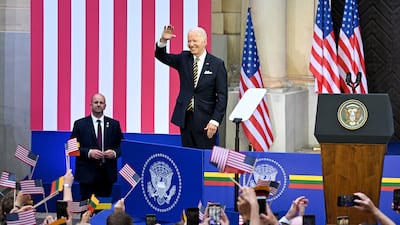
US President Joe Biden greets the audience as he delivers a speech at Vilnius University during the Nato summit. EPA -
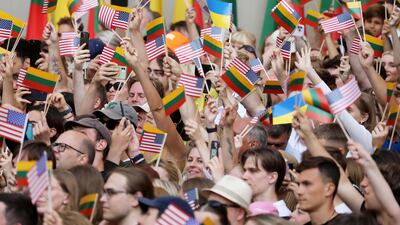
People raised US and Lithuanian flags as the US President delivered a speech. AFP -

Italian Prime Minister Giorgia Meloni held a press conference at the end of the Nato Summit in Vilnius. EPA -
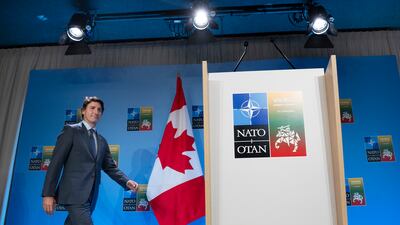
Canadian Prime Minister Justin Trudeau during a closing news conference. AP -
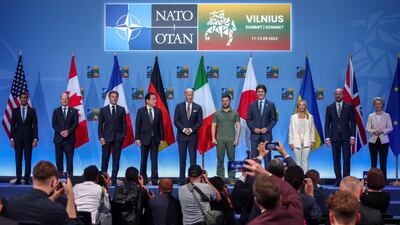
G7 leaders, President of the European Council Charles Michel, European Commission President Ursula von der Leyen and Ukraine's President Volodymyr Zelenskyy pose for a photo during an event to announce a Joint Declaration of Support to Ukraine during the Nato summit in Vilnius, Lithuania. Reuters -
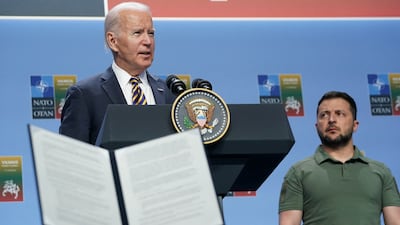
US President Joe Biden and Mr Zelenskyy during the announcement of the joint declaration. Reuters -
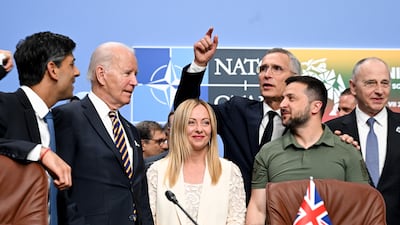
Britain's Prime Minister Rishi Sunak, Mr Biden, Italy's Prime Minister Giorgia Meloni, Nato Secretary General Jens Stoltenberg and Mr Zelenskyy. EPA -
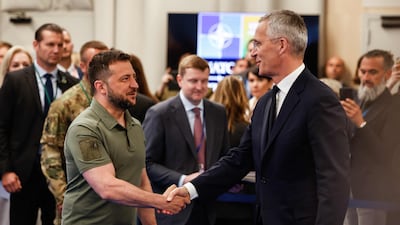
Mr Stoltenberg shakes hands with Mr Zelenskyy ahead of their joint press conference. AFP -
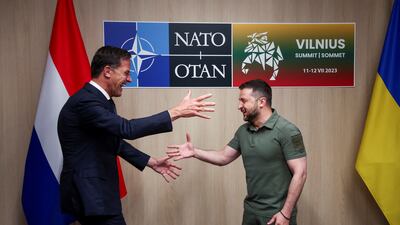
Mr Zelenskyy with Netherlands Prime Minister Mark Rutte. Reuters -
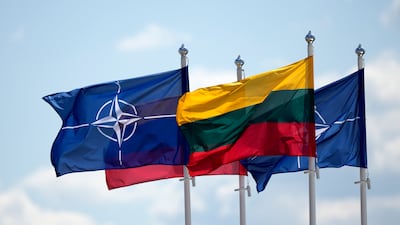
A Nato and Lithuanian flag at the venue on the second day of the summit. AP -

Turkish President Recep Tayyip Erdogan with Greece's Prime Minister Kyriakos Mitsotakis. Reuters -
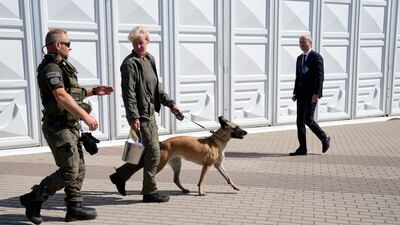
Security forces patrol near the venue in Vilnius. AP -

Mr Zelenskyy with Mr Sunak. Getty -
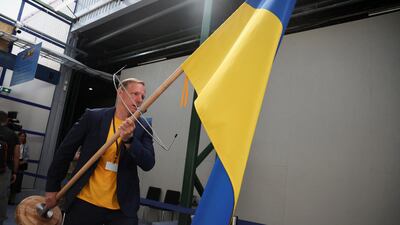
A Ukrainian flag is carried into the venue. Reuters -
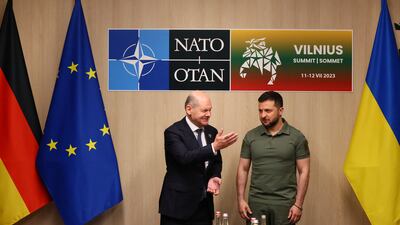
Mr Zelenskyy and German Chancellor Olaf Scholz during the Nato leaders summit in Vilnius. Reuters -
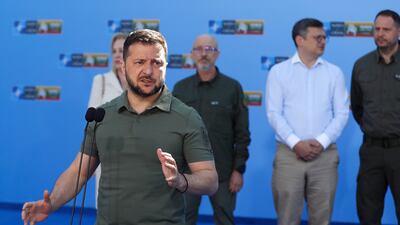
Mr Zelenskyy spoke with the media when he arrived. AP -
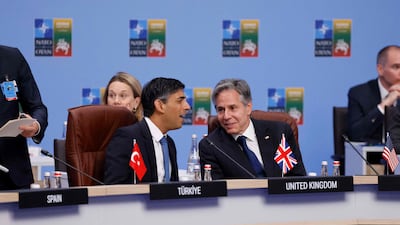
Mr Sunak talking with US Secretary of State Antony Blinken. AFP -
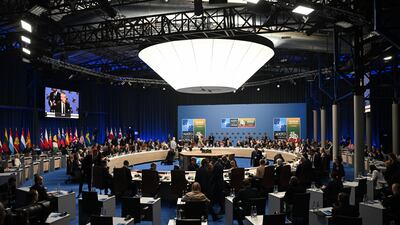
Participants at the summit in Vilnius. Getty -
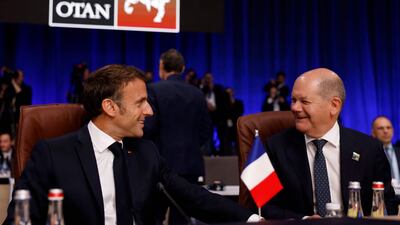
Mr Scholz speaks with French President Emmanuel Macron. AFP -
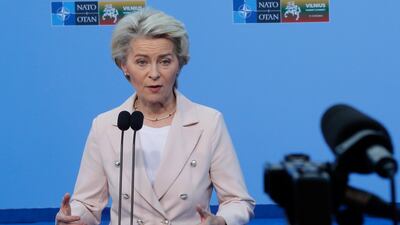
Ms von der Leyen speaks during the second day of the summit. EPA -
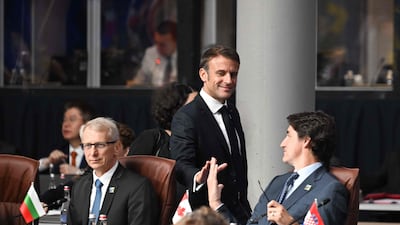
Mr Macron greets Canada's Prime Minister Justin Trudeau. AFP


On arrival in Vilnius, Mr Zelenskyy thanked a rally of thousands in the Lithuanian capital, which lies only 150km from Russian territory, for its warm welcome.
Ukrainian flags have been displayed on the streets while buses have carried banners stating that Kyiv should join Nato as soon as possible.
“Ukrainian flags on Lithuanian streets clearly prove that we are already allies,” Mr Zelenskyy wrote on Twitter.
His warm words were in sharp contrast with the public rebuke at Nato’s unwillingness to extend Ukraine a formal invitation to join the alliance despite its repeated statements that Kyiv will, one day, join the club.
Nato’s communique published on Tuesday stated that it would invite Ukraine to join the alliance when “allies agree and conditions are met”. That provoked a warning from Mr Zelenskyy that the situation was absurd.
Ukraine cannot join Nato while it is at war with Russia because this would put the alliance in a direct confrontation with Moscow. The alliance has also said that Ukraine must strengthen governance, fight corruption and increase interoperability, regardless of the war.
The biggest concession that Ukraine obtained on Tuesday was that Nato removed the necessity for it to introduce a formal Membership Action Plan (MAP), which requires further reforms before accession becomes a possibility.
The removal of the plan will ensure that Ukraine’s accession to Nato “is quicker when the war is over”, according to Great Britain.
It said that Prime Minister Rishi Sunak met Mr Zelenskyy on Wednesday where he said that the additional arrangements were not a substitute for Nato membership.
"The prime minister welcomed the fact that the MAP requirement for Ukraine had now been removed, smoothing the path to full Nato membership in the future," according to a Downing Street statement.
“The prime minister and the president agreed on the importance of the security arrangements to be announced by the G7 this afternoon.
“They marked a new high point in support from the international community and would give Ukraine an even greater level of endurance against Russian aggression."

