Follow the latest updates on Afghanistan here
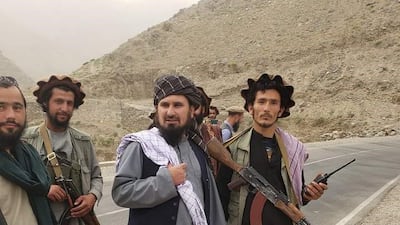
The Taliban on Tuesday announced their first government after taking control of Afghanistan last month.
Key positions were given to some of the movement’s leading officials and the Ministry of Women’s Affairs, which was a staple in governments before Taliban rule, was removed.
The hardline movement had been expected to announce a government since the US and its allies completed their withdrawal from Kabul on August 31.
The Taliban promised an “inclusive” government that represents Afghanistan’s complex ethnic make-up, although women are unlikely to be included at the top level and, as of now, most of the positions are held by Pashtuns.
The Taliban’s new Cabinet
Mohammed Hassan Akhund – Acting Prime Minster
Mohammad Hassan Akhund was announced as leader of the Taliban’s new government. He is a Taliban veteran who was a close associate and political adviser to Mohammed Omar, the founder of the movement and its first supreme leader.
A member of the group's Supreme Council, he served as deputy foreign minister in their previous regime, prior to the 2001 invasion. He was placed on a UN Security Council sanctions list connected to the "acts and activities" of the Taliban. The UN said he had a reputation of having been "one of the most effective Taliban commanders".
He is originally from Kandahar, the birthplace of the Taliban, where he also served as the Taliban governor of the province.
Abdul Ghani Baradar – Deputy Prime Minister
Taliban co-founder Abdul Ghani Baradar will be one of two deputy prime ministers. The second deputy will be Abdul Salam Hanafi, an ethnic Uzbek and a member of Taliban’s political office in Doha, Qatar. He was deputy minister of education when the Taliban last ruled between 1996 and 2001.
One of the founding members of the Taliban in 1994, Mr Baradar is seen as de facto leader of the group, despite serving under supreme leader Hibatullah Akhundzada.
He, like Mr Akhund, was also raised in Kandahar. During the Soviet era, Mr Baradar was said to have been radicalised, eventually fighting alongside the cleric and co-founder of the group, Mohammed Omar. In the early 1990s during the Soviet withdrawal, the two founded the Taliban movement.
After the 2001 invasion by US-led forces, Mr Baradar is said to have been among a small group of insurgents that approached the interim leader and former President Hamid Karzai with a potential deal that would have involved the militants recognising the new administration.
Eventually, Mr Baradar was arrested in Pakistan in 2010 where he was kept until his release in 2018, when he was moved to Qatar.
During his time in Qatar, he was appointed head of the Taliban's political office. He led the Taliban's negotiation team and oversaw the signing of the troop withdrawal agreement with the US.
In March 2020, he became the first Taliban leader to speak directly to a US president, when he had a phone call with Donald Trump.
Mawlavi Abdul Salam Hanafi – Second Deputy Prime Minister
Sirajuddin Haqqani – Interior Minister
Sirajuddin Haqqani is one of two deputies under Hibatullah Akhundzada and the head of the powerful Haqqani network.
The son of a famed commander from the anti-Soviet war, Mr Haqqani will double as the deputy leader of the Taliban as well as the interior minister.
The US State Department's Rewards For Justice Programme offers a multimillion-dollar reward for information leading to his arrest over his role as leader of the Haqqani network.
The Haqqani network, a US-designated terrorist group, has long been viewed as one of the most dangerous militant factions in Afghanistan. It is believed to be behind some of the most high-profile terrorist attacks in Kabul over the past 20 years.
The network is also accused of assassinating leading Afghan officials and holding kidnapped Western citizens for ransom, including US soldier Bowe Bergdahl, who was released in 2014.
The group is known for its independence, fighting acumen and savvy business dealings. It operates largely out of eastern Afghanistan and holds considerable sway over the Taliban's leadership council.
Mohammad Yaqoob – Defence Minister
Mohammad Yaqoob is the son of Taliban co-founder Mohammed Omar. He sits on the Taliban’s leadership council and has reportedly been responsible for overseeing the movement’s vast network of shadow governors throughout the country. He also heads the group's military commission, which oversaw commanders charged with executing insurgency. Mr Yaqoob is considered a unifying figure in the Taliban due to his father's role as co-founder.
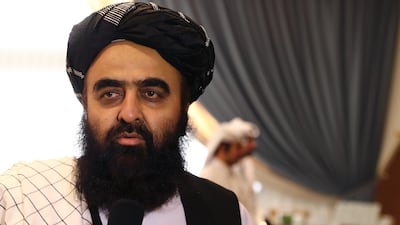
Amir Khan Muttaqi – Foreign Minister
A member of the Taliban political office in Doha, he was one of the group's senior leaders that helped negotiate the US withdrawal agreement with the government of Donald Trump. He is an ethnic Pasthun from Helmand province.
Abdul Hakim Sharie – Justice Minister
A hardline cleric, he ran a religious school and led the Taliban’s judicial system and oversaw the group’s clerics.
Hedayatullah Badri – Finance Minister
Little is known about him.
Din Mohammad Hanif – Economy Minister
A member of the Supreme Council, he was also a member of the negotiating team in Qatar. Before the 2001 invasion and the fall of the Taliban, he was the minister of planning and higher education.
Abdul Latif Mansoor – Energy and Water Minister
Mohammed Idris – Head of the Central Bank
Mohammed Idris is said to have led the Taliban’s economic commission. Little is known about his background.
Khairullah Khairkhwa – Information and Culture Minister
A former Guantanamo Bay prisoner considered among the most hardline by US security officials, he was released by former president Barack Obama in 2014 in exchange for US Army soldier Sgt Bowe Bergdahl.
His release was requested originally in 2011 by then-president Hamid Karzai, who said the release of Mr Khairkhwa was critical for the peace process. His deputy will be Zabihullah Mujahid, known for using Twitter to share statements.
Mr Khairkhwa is originally from Kandahar. Before 2001, he was the governor of Herat, as well as interior minister. He is one of the original members of the Taliban.
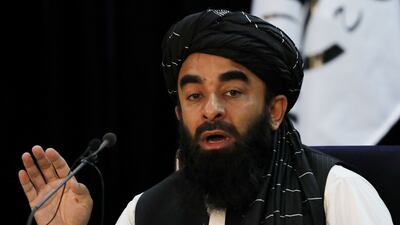
Zabihullah Mujahid – Deputy Information and Culture Minister
The long-time spokesman for the Taliban, Mr Mujahid has for more than a decade been the key conduit for information on the group's activities, regularly posting details of suicide attacks through his Twitter account.
No photo of him existed until he gave his first press conference following the fall of Kabul last month, and for years American military intelligence believed Mujahid was a persona for several individuals running the group's media operations.
Abdul Haq Wasiq – Head of National Directorate of Security
Also a former Guantanamo Bay detainee, Mr Wasiq was released in exchange for Sgt Bergdahl. He was previously the deputy minister of intelligence for the Taliban and took part in political negotiations with the US in Doha.
Qari Fasihuddin – Army head
A Tajik fighter who rose within the Taliban ranks, he was previously a shadow governor for the group in Badakhshan province.
He led the Taliban’s takeover of the north of the country, one of the most significant developments in the group’s return to power. He is considered one of the most important leaders and is the first Tajik to have made it to the military commission in the history of the majority Pashtun Taliban.
Noorullah Noor – Borders and Tribal Affairs Minister
Younus Akhundzada – Rural Rehabilitation Minister
Abdul Manan Omari – Public Works Minister
Mohammed Esa Akhund – Mines and Petroleum
Najibullah Haqqani – Communications Minister
Abdul Baqi Haqqani – Higher Education Minister
Khalil ur Rahman Haqqani – Refugee and Repatriation Minister
“The Cabinet is not complete; it is just acting,” Mr Mujahid said at the Government Information and Media Centre in Kabul. “We will try to take people from other parts of the country.”

The specs
Engine 60kwh FWD
Battery Rimac 120kwh Lithium Nickel Manganese Cobalt Oxide (LiNiMnCoO2) chemistry
Power 204hp Torque 360Nm
Price, base / as tested Dh174,500
Countries recognising Palestine
France, UK, Canada, Australia, Portugal, Belgium, Malta, Luxembourg, San Marino and Andorra
Tom Fletcher on 'soft power'
Scores
Scotland 54-17 Fiji
England 15-16 New Zealand
How much sugar is in chocolate Easter eggs?
- The 169g Crunchie egg has 15.9g of sugar per 25g serving, working out at around 107g of sugar per egg
- The 190g Maltesers Teasers egg contains 58g of sugar per 100g for the egg and 19.6g of sugar in each of the two Teasers bars that come with it
- The 188g Smarties egg has 113g of sugar per egg and 22.8g in the tube of Smarties it contains
- The Milky Bar white chocolate Egg Hunt Pack contains eight eggs at 7.7g of sugar per egg
- The Cadbury Creme Egg contains 26g of sugar per 40g egg
COMPANY%20PROFILE
%3Cp%3EFounder%3A%20Hani%20Abu%20Ghazaleh%3Cbr%3EBased%3A%20Abu%20Dhabi%2C%20with%20an%20office%20in%20Montreal%3Cbr%3EFounded%3A%202018%3Cbr%3ESector%3A%20Virtual%20Reality%3Cbr%3EInvestment%20raised%3A%20%241.2%20million%2C%20and%20nearing%20close%20of%20%245%20million%20new%20funding%20round%3Cbr%3ENumber%20of%20employees%3A%2012%3C%2Fp%3E%0A
UAE%20athletes%20heading%20to%20Paris%202024
%3Cp%3E%3Cstrong%3EEquestrian%3Cbr%3E%3C%2Fstrong%3EAbdullah%20Humaid%20Al%20Muhairi%2C%20Abdullah%20Al%20Marri%2C%20Omar%20Al%20Marzooqi%2C%20Salem%20Al%20Suwaidi%2C%20and%20Ali%20Al%20Karbi%20(four%20to%20be%20selected).%3C%2Fp%3E%0A%3Cp%3E%3Cstrong%3E%3Cbr%3EJudo%3Cbr%3E%3C%2Fstrong%3EMen%3A%20Narmandakh%20Bayanmunkh%20(66kg)%2C%20Nugzari%20Tatalashvili%20(81kg)%2C%20Aram%20Grigorian%20(90kg)%2C%20Dzhafar%20Kostoev%20(100kg)%2C%20Magomedomar%20Magomedomarov%20(%2B100kg)%3B%20women's%20Khorloodoi%20Bishrelt%20(52kg).%3C%2Fp%3E%0A%3Cp%3E%3Cstrong%3E%3Cbr%3ECycling%3Cbr%3E%3C%2Fstrong%3ESafia%20Al%20Sayegh%20(women's%20road%20race).%3Cstrong%3E%3Cbr%3E%3C%2Fstrong%3E%3C%2Fp%3E%0A%3Cp%3E%3Cstrong%3ESwimming%3Cbr%3E%3C%2Fstrong%3EMen%3A%20Yousef%20Rashid%20Al%20Matroushi%20(100m%20freestyle)%3B%20women%3A%20Maha%20Abdullah%20Al%20Shehi%20(200m%20freestyle).%3Cstrong%3E%3Cbr%3E%3C%2Fstrong%3E%3C%2Fp%3E%0A%3Cp%3E%3Cstrong%3EAthletics%3Cbr%3E%3C%2Fstrong%3EMaryam%20Mohammed%20Al%20Farsi%20(women's%20100%20metres).%3C%2Fp%3E%0A
Another way to earn air miles
In addition to the Emirates and Etihad programmes, there is the Air Miles Middle East card, which offers members the ability to choose any airline, has no black-out dates and no restrictions on seat availability. Air Miles is linked up to HSBC credit cards and can also be earned through retail partners such as Spinneys, Sharaf DG and The Toy Store.
An Emirates Dubai-London round-trip ticket costs 180,000 miles on the Air Miles website. But customers earn these ‘miles’ at a much faster rate than airline miles. Adidas offers two air miles per Dh1 spent. Air Miles has partnerships with websites as well, so booking.com and agoda.com offer three miles per Dh1 spent.
“If you use your HSBC credit card when shopping at our partners, you are able to earn Air Miles twice which will mean you can get that flight reward faster and for less spend,” says Paul Lacey, the managing director for Europe, Middle East and India for Aimia, which owns and operates Air Miles Middle East.
MATCH INFO
Championship play-offs, second legs:
Aston Villa 0
Middlesbrough 0
(Aston Villa advance 1-0 on aggregate)
Fulham 2
Sessegnon (47'), Odoi (66')
Derby County 0
(Fulham advance 2-1 on aggregate)
Final
Saturday, May 26, Wembley. Kick off 8pm (UAE)
Learn more about Qasr Al Hosn
In 2013, The National's History Project went beyond the walls to see what life was like living in Abu Dhabi's fabled fort:
Defence review at a glance
• Increase defence spending to 2.5% of GDP by 2027 but given “turbulent times it may be necessary to go faster”
• Prioritise a shift towards working with AI and autonomous systems
• Invest in the resilience of military space systems.
• Number of active reserves should be increased by 20%
• More F-35 fighter jets required in the next decade
• New “hybrid Navy” with AUKUS submarines and autonomous vessels
Pros%20and%20cons%20of%20BNPL
%3Cp%3E%3Cstrong%3EPros%3C%2Fstrong%3E%0D%3C%2Fp%3E%0A%3Cul%3E%0A%3Cli%3EEasy%20to%20use%20and%20require%20less%20rigorous%20credit%20checks%20than%20traditional%20credit%20options%0D%3C%2Fli%3E%0A%3Cli%3EOffers%20the%20ability%20to%20spread%20the%20cost%20of%20purchases%20over%20time%2C%20often%20interest-free%0D%3C%2Fli%3E%0A%3Cli%3EConvenient%20and%20can%20be%20integrated%20directly%20into%20the%20checkout%20process%2C%20useful%20for%20online%20shopping%0D%3C%2Fli%3E%0A%3Cli%3EHelps%20facilitate%20cash%20flow%20planning%20when%20used%20wisely%0D%3C%2Fli%3E%0A%3C%2Ful%3E%0A%3Cp%3E%3Cstrong%3ECons%3C%2Fstrong%3E%3C%2Fp%3E%0A%3Cul%3E%0A%3Cli%3EThe%20ease%20of%20making%20purchases%20can%20lead%20to%20overspending%20and%20accumulation%20of%20debt%0D%3C%2Fli%3E%0A%3Cli%3EMissing%20payments%20can%20result%20in%20hefty%20fees%20and%2C%20in%20some%20cases%2C%20high%20interest%20rates%20after%20an%20initial%20interest-free%20period%0D%3C%2Fli%3E%0A%3Cli%3EFailure%20to%20make%20payments%20can%20impact%20credit%20score%20negatively%0D%3C%2Fli%3E%0A%3Cli%3ERefunds%20can%20be%20complicated%20and%20delayed%0D%3C%2Fli%3E%0A%3C%2Ful%3E%0A%3Cp%3E%3Cem%3ECourtesy%3A%20Carol%20Glynn%3C%2Fem%3E%3C%2Fp%3E%0A
Mercer, the investment consulting arm of US services company Marsh & McLennan, expects its wealth division to at least double its assets under management (AUM) in the Middle East as wealth in the region continues to grow despite economic headwinds, a company official said.
Mercer Wealth, which globally has $160 billion in AUM, plans to boost its AUM in the region to $2-$3bn in the next 2-3 years from the present $1bn, said Yasir AbuShaban, a Dubai-based principal with Mercer Wealth.
“Within the next two to three years, we are looking at reaching $2 to $3 billion as a conservative estimate and we do see an opportunity to do so,” said Mr AbuShaban.
Mercer does not directly make investments, but allocates clients’ money they have discretion to, to professional asset managers. They also provide advice to clients.
“We have buying power. We can negotiate on their (client’s) behalf with asset managers to provide them lower fees than they otherwise would have to get on their own,” he added.
Mercer Wealth’s clients include sovereign wealth funds, family offices, and insurance companies among others.
From its office in Dubai, Mercer also looks after Africa, India and Turkey, where they also see opportunity for growth.
Wealth creation in Middle East and Africa (MEA) grew 8.5 per cent to $8.1 trillion last year from $7.5tn in 2015, higher than last year’s global average of 6 per cent and the second-highest growth in a region after Asia-Pacific which grew 9.9 per cent, according to consultancy Boston Consulting Group (BCG). In the region, where wealth grew just 1.9 per cent in 2015 compared with 2014, a pickup in oil prices has helped in wealth generation.
BCG is forecasting MEA wealth will rise to $12tn by 2021, growing at an annual average of 8 per cent.
Drivers of wealth generation in the region will be split evenly between new wealth creation and growth of performance of existing assets, according to BCG.
Another general trend in the region is clients’ looking for a comprehensive approach to investing, according to Mr AbuShaban.
“Institutional investors or some of the families are seeing a slowdown in the available capital they have to invest and in that sense they are looking at optimizing the way they manage their portfolios and making sure they are not investing haphazardly and different parts of their investment are working together,” said Mr AbuShaban.
Some clients also have a higher appetite for risk, given the low interest-rate environment that does not provide enough yield for some institutional investors. These clients are keen to invest in illiquid assets, such as private equity and infrastructure.
“What we have seen is a desire for higher returns in what has been a low-return environment specifically in various fixed income or bonds,” he said.
“In this environment, we have seen a de facto increase in the risk that clients are taking in things like illiquid investments, private equity investments, infrastructure and private debt, those kind of investments were higher illiquidity results in incrementally higher returns.”
The Abu Dhabi Investment Authority, one of the largest sovereign wealth funds, said in its 2016 report that has gradually increased its exposure in direct private equity and private credit transactions, mainly in Asian markets and especially in China and India. The authority’s private equity department focused on structured equities owing to “their defensive characteristics.”
Specs – Taycan 4S
Engine: Electric
Transmission: 2-speed auto
Power: 571bhp
Torque: 650Nm
Price: Dh431,800
Specs – Panamera
Engine: 3-litre V6 with 100kW electric motor
Transmission: 2-speed auto
Power: 455bhp
Torque: 700Nm
Price: from Dh431,800
The 12 Syrian entities delisted by UK
Ministry of Interior
Ministry of Defence
General Intelligence Directorate
Air Force Intelligence Agency
Political Security Directorate
Syrian National Security Bureau
Military Intelligence Directorate
Army Supply Bureau
General Organisation of Radio and TV
Al Watan newspaper
Cham Press TV
Sama TV
UAE currency: the story behind the money in your pockets