
On a cold, wet morning in Toronto, Canada’s largest city, Jennifer Commins dons white overalls and hairnet before blending a new batch of tea inside her bustling factory.
"We have eyes on every ingredient," she tells The National, before explaining that blending by hand reduces leaf breaks.
"That’s not what we love … When you’re buying such beautiful teas, you don’t want those leaves to get broken up."
Adorning a nearby wall is a black-and-white photograph of King Charles III and the Queen Consort, pictured enjoying one of her teas during their 2017 royal tour of Canada. They were drinking a green tea with ginger, lavender and honey on ice.
While Ms Commins was born in America’s neighbour to the north, she has British roots, with her father hailing from the Cumbrian town of Barrow-in-Furness.
She has created a special "coronation blend" to celebrate the official crowning of King Charles III, which will be served to guests of Canada's Governor General, Mary Simon, on the day of the ceremony.
Such is Ms Commins's passion for tea that she became a certified tea sommelier, with her framed accreditation also hanging from the wall.
"Tea is not just a beverage," she says, "It’s a ritual, it’s a pause in your day, it’s an opportunity for wellness and health."
Another mounted photograph offers a clue into what makes the business, known as Pluck Tea, a little different.
In the image, Ms Commins is touring one of the many vineyards in the province of Ontario, sourcing ingredients for her teas.
"You can often identify opportunities where upcycling can exist," she says.
"I’m often bumping up against other companies that are making different products, and we have these conversations that lead to: 'Hey, at the end of my juice-making day, I have mountains of citrus peel'."
"As a tea company, I’m always looking for dried citrus peel."
Upcycling is the process of turning unwanted or wasted materials into new products, giving them a second life.
Ms Commins sources grape skins from winemakers, citrus peel from juice makers and cacao shells from chocolate makers.
All of these ingredients, which would have otherwise been discarded, are processed and mixed into her teas.
-

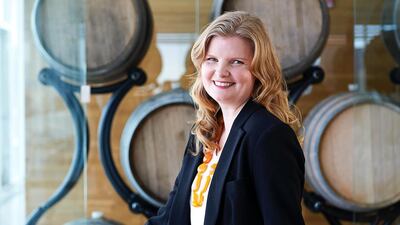
Jennifer Commins is the founder and chief executive of Pluck Tea. Photo: Pluck Tea -
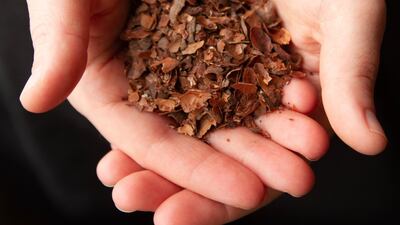
Pluck Tea uses cacao shells from a local chocolatier that would have otherwise been discarded. Photo: Pluck Tea -
Ms Commins sources upcycled ingredients from across Ontario. Photo: Pluck Tea -
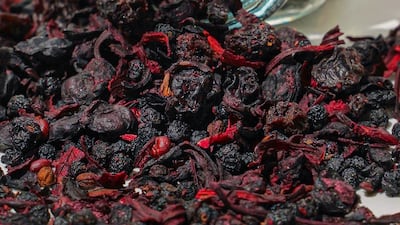
These grape skins from an Ontario winemaker are processed, dried, then layered with hibiscus and berries. Photo: Pluck Tea -
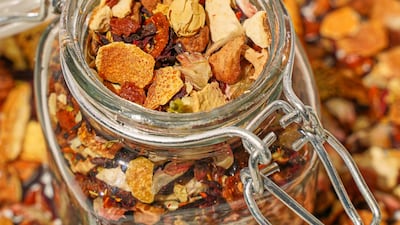
The company gathers discarded citrus peels from a local juice maker. Photo: Pluck Tea -

Ms Commins shows how she hand-blends tea. Joshua Longmore / The National -

Ms Commins stands in her factory, where orders wait to be sent. Joshua Longmore / The National -

Pluck Tea employs an emission-free delivery service in Toronto called The Drop. Photo: The Drop Distribution


Estimates on food waste vary, but a study carried out by food rescue organisation Second Harvest suggests that nearly 60 per cent of food produced in Canada is lost and wasted annually.
The UN estimates 17 per cent of total global food production is wasted, adding that it undermines sustainability, contributes to climate change and increases food costs.
"This is a tragedy in a world where so many people are hungry," Ms Commins says. "Anything that we can do to help reduce food waste is very important."
But it doesn’t stop with upcycling.
Ms Commins shows off her tea-bagging machine, which runs on "fully compostable, plant-based material".
The noisy contraption swallows buckets of tea before dispensing neatly formed bags to be sent to customers.
Pluck Tea then employs an emission-free delivery service witha fleet of electric vehicles and bicycles. They have also released a line of reusable and recyclable glass jars.
The tea plant, camellia sinensis, does not grow in Canada and must be imported.
"When you’re dealing with that, you have an inherent carbon footprint," Ms Commins says.
"If you can create environments for upcycling within your business, it helps to mitigate some of those issues around the transport of tea leaves from faraway lands to Canada.
"I don’t think Canadians are going to stop drinking tea any time soon, but our goal is to be the most sustainable tea company on the planet."

