

The dawning sun shines down on the pavement leading to Sacred Heart Church in El Paso, Texas, slowly warming the desert chill.
The heat is a much needed respite for the hundreds of migrants from Central and South America seeking shelter and protection near the century-old church.
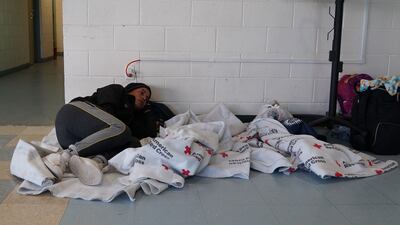
Wrapped in jackets and American Red Cross blankets seen in humanitarian crises the world over, the asylum seekers, many of whom have journeyed for months to reach the US, have been sleeping in the rough in near-freezing temperatures.
They have been coming in record numbers since August, flooding the streets of El Paso, a frontier city bordering Juarez, Mexico. The US city has a higher-than-average poverty rate, which puts constraints on how much support is available.
“Our community is a resilient one,” said Peter Svarzbein, a former El Paso City council member.
“We're not the most prosperous city in the United States or in Texas but we're full of love and compassion.”
Nowhere in the city is that generosity more evident than outside of Sacred Heart Church, which lies a few hundred metres from the border in historic El Segundo Barrio, once known as the “other Ellis Island”.
It is an area of low-slung houses and colourful murals, where Mexican and American culture mix seamlessly. The vibrant area is anchored by the redbrick church that dominates its skyline.
-
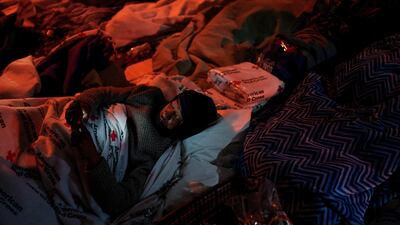
Venezuelans seeking US asylum rest under Red Cross blankets outside of Sacred Heart Church in El Paso's city centre. Reuters -
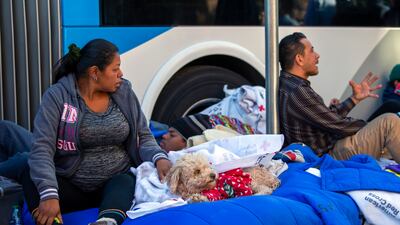
A Venezuelan migrant sits with her dog at an encampment outside the Sacred Heart Church. AP -

Church volunteers serve garlic bread to migrants camping outside. AP -
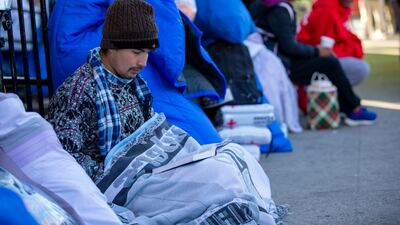
A migrant reads the Bible while camping outside the Sacred Heart Church. AP -

Migrants prepare to spend the night on the pavement or inside an idle city bus as they attempt to stay warm. AP -

Hot meals are served by volunteers outside the Sacred Heart Church. AP -

Several hundred people marched through the streets of El Paso a day before President Joe Biden's first visit to the southern border. AP -
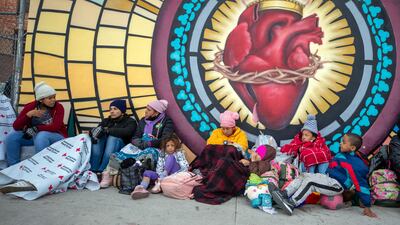
Migrants try to stay warm while camping outside the church. AP -
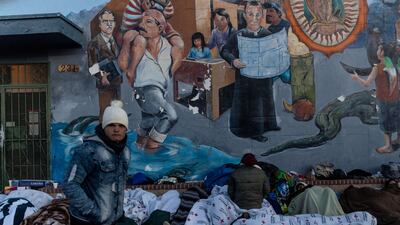
A migrant walks outside the church after being released from US Customs and Border Protection custody and spending the night on the street in El Paso. Reuters


English and Spanish can be heard in equal measure on the neighbourhood's streets.
Church volunteers gather daily to offer warm meals and comfort to the migrants, most of whom have crossed illegally into the US, hoping to seek asylum.
“[It’s been] very challenging,” explained Rafael Garcia, the priest at Sacred Heart.
“We sort of started from zero. We did not have a shelter, we had to start getting volunteers on a day-by-day basis to provide food and clothing.”
At its peak in mid-December, as many as 2,400 migrants were crossing into the city every day.
While the crossings have slowed in recent weeks, the city remains at the forefront of a growing problem for the administration of US President Joe Biden.
Last Sunday, Mr Biden briefly visited El Paso before heading to Mexico for the North American Leaders Summit.

Mr Biden toured Bridge of the Americas, the city’s busiest port of entry. He met US Customs and Border Protection agents who have been grappling with the record number of migrants attempting to enter the country.
The Border Patrol apprehended about 2.4 million people in the last fiscal year — which ended in September — the highest number ever recorded.
Before his four-hour trip to the border, the President announced that he would be expanding Title 42, a Trump-era policy that allows the US to turn away asylum seekers for health safety reasons.
Under the administration's new immigration policy, migrants from Nicaragua, Venezuela, Haiti and Cuba will be returned to Mexico if they enter the US illegally.
The administration is trying to discourage migrants from crossing illegally by providing a new, legal pathway for them to apply for a parole programme online from their home countries.
-

President Joe Biden greets US Border Patrol agents at the border fence in El Paso, Texas. AP -
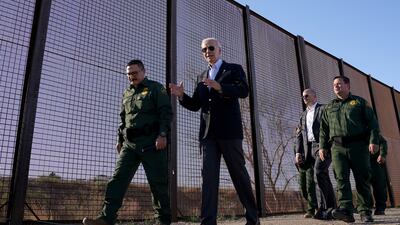
Mr Biden walks along the border fence during his visit to the US-Mexico border. Reuters -

A supporter of former president Donald Trump stands near El Paso International Airport as President Joe Biden visits El Paso, Texas. Reuters -
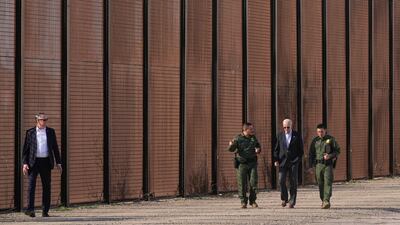
There are more crossings at El Paso than anywhere else along the 3,145km border with Mexico. AP -

Mr Biden tours the El Paso port of entry, Bridge of the Americas, a busy port of entry along the border. AP -
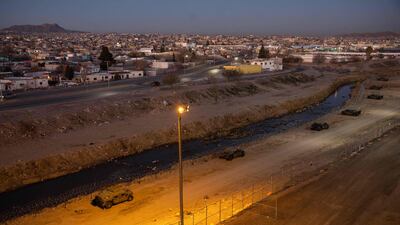
Texas National Guard soldiers line the Rio Grande at the US-Mexico in El Paso, Texas. Getty / AFP -
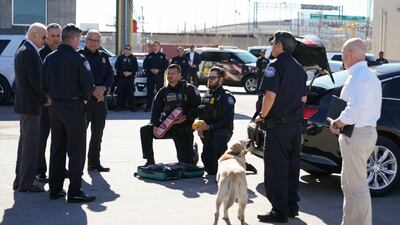
Mr Biden watches as border officers demonstrate how they search vehicles for drugs, money and other contraband. AP -
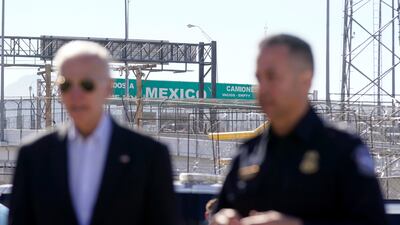
Mr Biden at the US-Mexico border. AP -
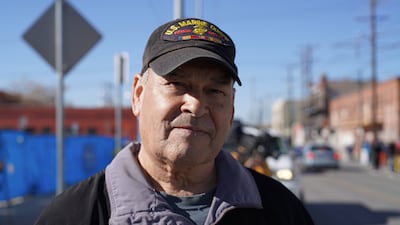
Marine Corps veteran Joe Barraza said he was frustrated by Mr Biden's handling of the border crisis. Willy Lowry / The National -
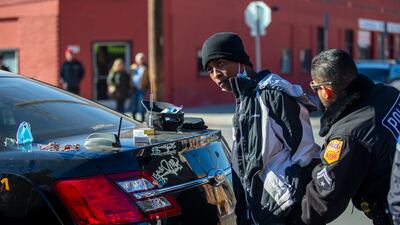
An El Paso police officer pats down a Venezuelan migrant after his arrest at the camping site outside the Sacred Heart Church in downtown El Paso, Texas in Sunday. AP -
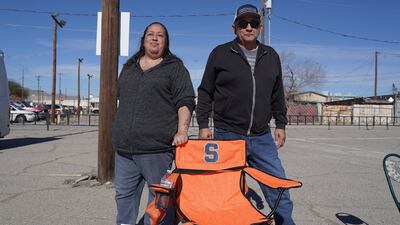
Rafel and Lupe Rodriguez came out to support the President. Willy Lowry / The National -
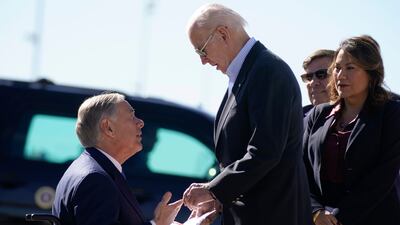
Texas Governor Greg Abbott hands Mr Biden a letter that outlined laws that the governor said would make a great difference, if enforced, in addressing the 'chaos' at the border. AP -
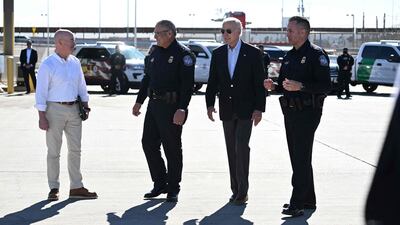
Mr Biden and Secretary of Homeland Security Alejandro Mayorkas (left) speak with US Customs and Border Protection police. AFP -
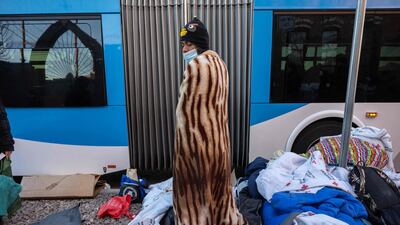
Colombian immigrant Manuel, 21, gets up after sleeping outside a migrant shelter in El Paso, Texas. Getty / AFP -
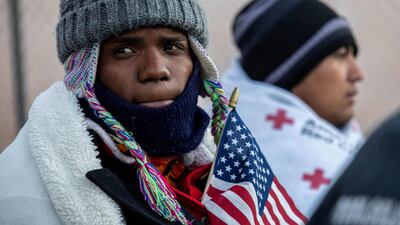
A Venezuelan migrant bundles up against the cold in El Paso. Getty / AFP -
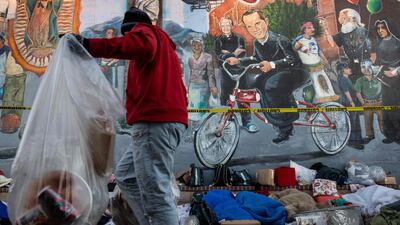
Immigrants clean up trash while others sleep outside a migrant shelter. Getty / AFP -
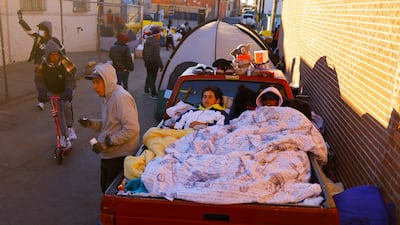
Migrants rest in the back of a truck. Reuters -
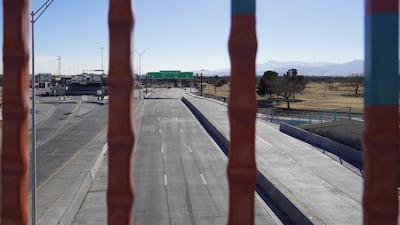
The entrance to the Bridge of Americas, which connects El Paso, Texas to Juarez, Mexico. Willy Lowry / The National


But immigration experts have roundly condemned the new policy.
“The administration is trying to kind of play both sides and appeal to nativists and restrictionists while also trying to present this kind of mirage that the United States is living up to its human rights obligations when it's not,” said Sunil Varghese, policy director at the International Refugee Assistance Project.
Many of the migrants are fleeing economic and political instability that have forced them to seek opportunities elsewhere.
Those already in El Paso do not have the option to apply legally through the new programme and are stuck in limbo.
“They're fleeing an oppressive government and they had to leave on probably short notice, like most people that are in forced migration,” Fr Garcia told The National.
“They're here now with a hope of asking for asylum, like you can in most parts of the world, and that option is blocked.”
-
Ender Gonzales, a migrant from Venezuela, rests in a shelter in El Paso, Texas. Willy Lowry / The National -
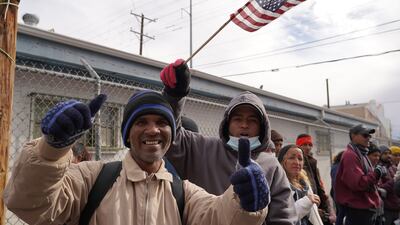
A migrant waves an American flag during a protest against the Title 42 immigration policy in El Paso. Willy Lowry / The National -

Children study inside a shelter for migrants in El Paso. Willy Lowry / The National -
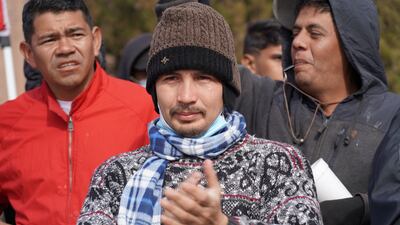
A migrant cheers on protesters during a march against Title 42. Willy Lowry / The National -
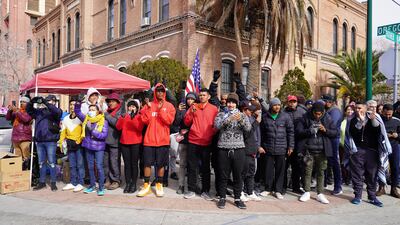
A group of migrants gather outside the Sacred Heart Church in El Paso to cheer on protesters. Willy Lowry / The National -
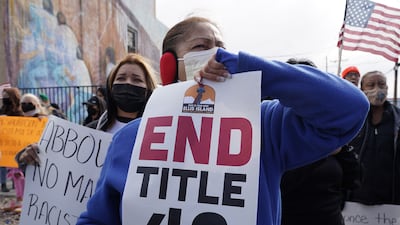
A woman holds a sign calling for an end to to Title 42, a policy the Biden administration has been using to turn migrants away. Willy Lowry / The National -
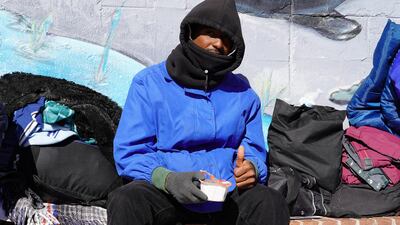
A migrant gives a thumbs up outside the Sacred Heart Church in downtown El Paso. Willy Lowry / The National -

Migrants hold up a Venezuelan flag during a march in El Paso. Willy Lowry / The National -
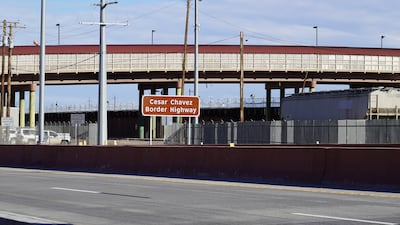
A pedestrian bridge connecting El Paso to Ciudad Juarez, Mexico. Willy Lowry / The National -
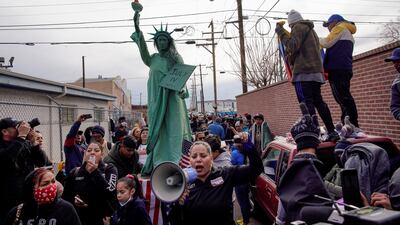
Protesters march near Sacred Heart Church, where many undocumented Venezuelans have been staying. Reuters -
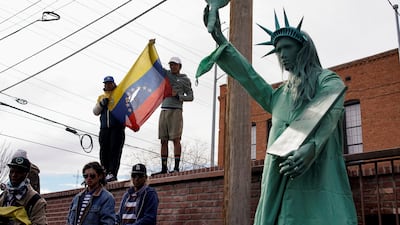
Venezuelan migrants hold their country's flag next to a replica of the Statue of Liberty. Reuters -

Venezuelan migrants wave American flags during a protest to demand an end to the immigration policy called Title 42. Reuters


Fr Garcia said he is committed to helping those outside his church but he worries “what's going to happen to them” now that they have no legal avenue to claim asylum.
During his stopover, the President did not visit Fr Garcia’s Parish.
If he had, he would have seen a community working hard to help those in need and trying to keep a sliver of the American dream alive for those still seeking it.

