• A collection of embroidery works by Canadian artist Danielle Currie whose work is inspired by satellite images of the ocean. Photo: Danielle Currie
    A collection of embroidery works by Canadian artist Danielle Currie whose work is inspired by satellite images of the ocean. Photo: Danielle Currie
  • Danielle Currie's swirling designs are absorbing, gently provoking thought on the uniqueness of our waters. Photo: Danielle Currie
    Danielle Currie's swirling designs are absorbing, gently provoking thought on the uniqueness of our waters. Photo: Danielle Currie
  • Cascading swirls in myriad shades of blue, green and the occasional brown characterise Danielle Currie’s embroidery art. Photo: Danielle Currie
    Cascading swirls in myriad shades of blue, green and the occasional brown characterise Danielle Currie’s embroidery art. Photo: Danielle Currie
  • Danielle Currie says she enjoys looking at satellite imagery and maps for inspiration. Photo: Danielle Currie
    Danielle Currie says she enjoys looking at satellite imagery and maps for inspiration. Photo: Danielle Currie
  • Indian embroidery artist Diti Baruah finds inspiration in her home state of Assam, in north-east India. Photo: Diti Baruah
    Indian embroidery artist Diti Baruah finds inspiration in her home state of Assam, in north-east India. Photo: Diti Baruah
  • Dawki in Meghalaya, north-east India, by Diti Baruah. Photo: Diti Baruah
    Dawki in Meghalaya, north-east India, by Diti Baruah. Photo: Diti Baruah
  • The Dzuko valley on the border of Manipur and Nagaland in north-east India. Photo: Diti Baruah
    The Dzuko valley on the border of Manipur and Nagaland in north-east India. Photo: Diti Baruah
  • A krisnachora tree by Diti Baruah. Photo: Diti Baruah
    A krisnachora tree by Diti Baruah. Photo: Diti Baruah
  • Lohit town in Arunachal Pradesh. Photo: Diti Baruah
    Lohit town in Arunachal Pradesh. Photo: Diti Baruah
  • A view of Margherita town in Assam, India. Photo: Diti Baruah
    A view of Margherita town in Assam, India. Photo: Diti Baruah
  • Chandubi Lake in Assam, India. Photo: Diti Baruah
    Chandubi Lake in Assam, India. Photo: Diti Baruah
  • Franklin Park in Boston by Clara Bowe. Photo: Clara Bowe
    Franklin Park in Boston by Clara Bowe. Photo: Clara Bowe
  • Central Park in New York City by Clara Bowe. Photo: Clara Bowe
    Central Park in New York City by Clara Bowe. Photo: Clara Bowe
  • Californian artists Ashley Victoria Owen with some of her work. Photo: Ashley Victoria Owen
    Californian artists Ashley Victoria Owen with some of her work. Photo: Ashley Victoria Owen
  • Ashley Victoria Owen weaves messages about sustainability into her work. Photo: Ashley Victoria Owen
    Ashley Victoria Owen weaves messages about sustainability into her work. Photo: Ashley Victoria Owen
  • Owen's 'early spring forest'. Photo: Ashley Victoria Owen
    Owen's 'early spring forest'. Photo: Ashley Victoria Owen
  • Black swallow tail eggs. Photo: Ashley Victoria Owen
    Black swallow tail eggs. Photo: Ashley Victoria Owen
  • Mountainscapes with forest lakes. Photo: Ashley Victoria Owen
    Mountainscapes with forest lakes. Photo: Ashley Victoria Owen
  • A metal pendant featuring a corpse flower and fungi by Ashley Victoria Owen. Photo: Ashley Victoria Owen
    A metal pendant featuring a corpse flower and fungi by Ashley Victoria Owen. Photo: Ashley Victoria Owen

Aerial embroidery with a message: meet the artists stitching for a cause


  • English
  • Arabic

Ashley Victoria Owen likes to get her hands dirty, playing with soil in her garden or in the forests around her home in Redding, California.

“I’ve spent most of my life in Northern California and am deeply inspired by the different biomes and ecosystems here,” says the freelance writer and embroidery artist.

This keen interest in the natural world is reflected in Owen’s degree in horticulture, her writing on environmental science and Forest Floor Fibre Art, her embroidery art with intricate aerial views of the forest, specifically the riches on its floor ― fungi, moss, slime molds, rocks and more.

“In my agriculture and horticulture classes, I rediscovered layers of the natural world that I hadn’t given much thought since childhood, reigniting my interest in the difference between what we see at first glance, and what we see when we look deeper. This is where the focus of my aerial embroidery lies.”

Woven within these pieces is a larger message of awareness, respect and sustainability, Owen highlights how all detritus on forest grounds is recycled and repurposed by the forest, providing nutrients and shelter for animals, insects and plants in the area. This has influenced her zero-waste policy, using all her materials to the fullest advantage.

Like Owen, there are several aerial embroidery artists using this birds-eye-view to zoom in on nature, creating three-dimensional pieces of various landscapes. But uniting their work is a common thread, a narrative of respect and awareness of our environment, conservation and sustainability.

Ashley Victoria Owen weaves messages about sustainability into her work. Photo: Ashley Victoria Owen

Cascading swirls in myriad shades of blue, green, and occasionally browns or flaming orange, characterise Danielle Currie’s embroidery art, Satellite Stitches. These are replicas of satellite images of the ocean, with titles such as 60.08, 145.23 specifying the location’s co-ordinates.

“I love the ocean. I grew up on the east coast of Canada and going to the beach was one of my favourite things to do,” says Currie, a government environmental project officer in New Brunswick, Canada.

“I enjoy looking at satellite imagery and maps. The patterns and colours captured from that vantage point are stunning, especially images of movement patterns of biological processes.”

Her swirling designs are absorbing, gently provoking thought on the uniqueness of these waters. “I hope that others can see what I see and can come to realise how special and incredibly important oceans are.”

Nostalgia fuels several of these creations. Indian embroidery artist Diti Baruah finds inspiration in her home state of Assam, one of the eight states in north-east India, each with distinct cultures, languages and abundant natural beauty.

She has fond memories of lazy summer holidays in Dibrugarh’s tea gardens, walking through the paddy fields to her grandparents’ home in a neighbouring village, and travels around the region.

“I wanted to recreate those memories through my art. I have lived around India and abroad and during my conversations with people I realised they knew little about north-east India. I wanted to create awareness of the region through my artwork,” Baruah says.

Her work features lush colourful scenes with informative captions. A shower of pink and white French knotted cherry blossoms cascading through the air in Shillong. Boats floating on Manipur’s Loktak Lake, hemmed in by green layers of phumdis or floating landmasses, dotted with pink flowers.

The Siang River in Arunachal Pradesh, painted in blue, snaking through green satin-stitched fields, scattered with French-knotted foliage and wispy cotton clouds floating overhead.

As well as creating awareness, some artists also incorporate action. The self-taught embroidery artist behind Crewel and Kind, Clara Bowe, is driven by her interest in the built environment and how it affects our lives and the environment.

Artist Clara Bowe is driven by her interest in the built environment and how it affects our lives and the environment. Photo: Clara Bowe

Two of her pieces are sweeping aerial views of some of the US's famous parks. Bowe, who lives in Washington DC, is using these to promote the creation of urban gardens within these spaces where food can be grown.

“I believe it is one of the last opportunities a citizen has to engage with nature,” she says. “We are so separate from our food system, that if we were able to change that then it could change perceptions on where food can and should be grown.”

She donated a print of her tapestry of the Boston Emerald Necklace, an 445-hectare string of parks in Boston, with embroidered green lawns studded with French knots and swirling water features, to the Emerald Neck Conservancy, the foundation that manages these parks, to raise funds for their conservation projects.

The Muddy River in Boston by Clara Bowe. Photo: Clara Bowe

Another project is a table runner she has been sewing over the past four years with an aerial view of Central Park in Manhattan. Including millions of French knots. The precision and complexity of this piece conveys the generosity and beauty of this popular public space, which Bowe hopes will include a food garden in the future, her plan is to use this project to collaborate with an organisation who will campaign for this goal.

Baruah intends for future collaborations with conservation groups to combat the declining greenery and the negative effects of urbanisation on north-east India’s biodiversity.

“I don’t want to limit my association to monetary contribution, but to focus on making an impact at the policy level. I am also in discussion with a group to train locals in embroidery art and provide them a part-time income source," she says.

Currie has used her art for fundraising in the past and is open to collaborations for environmental causes, while Owen will continue her efforts as she further builds her audience and customers.

“I would love to shed more light on resources for them to explore eco-consciousness, conservation, and other facets of environmental responsibility.”

As they thread together these scenes, their art is a reminder of how each stitch and, by extension, each action, affects the larger picture.

New discoveries in Iraq upend story of Mesopotamia — in pictures

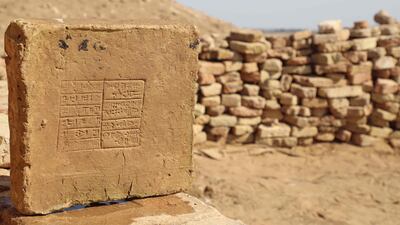
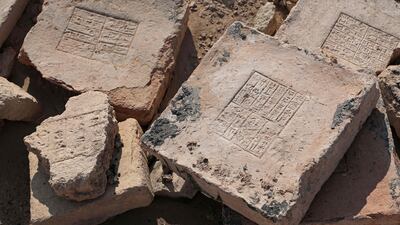
  • A mud brick bearing a cuneiform inscription found during the Girsu Project's excavation at the ancient Sumerian city, now known as Tello, in Iraq in 2021. Recent excavations of the ancient complex have shed new light on the history and development of the city. AFP
    A mud brick bearing a cuneiform inscription found during the Girsu Project's excavation at the ancient Sumerian city, now known as Tello, in Iraq in 2021. Recent excavations of the ancient complex have shed new light on the history and development of the city. AFP
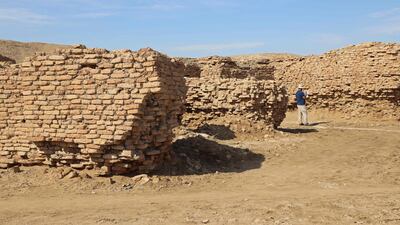
  • For decades, historians have believed that the Sumerians' mastery of irrigation led to their development. Now, the Girsu Project's discoveries suggest that irrigation was not the cause of these changes after all. AFP
    For decades, historians have believed that the Sumerians' mastery of irrigation led to their development. Now, the Girsu Project's discoveries suggest that irrigation was not the cause of these changes after all. AFP
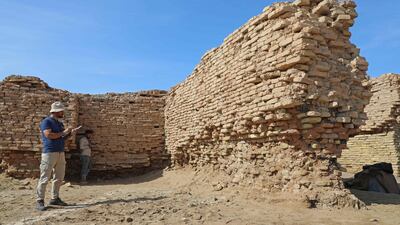
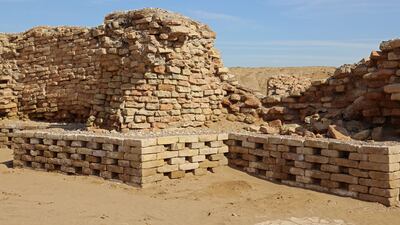
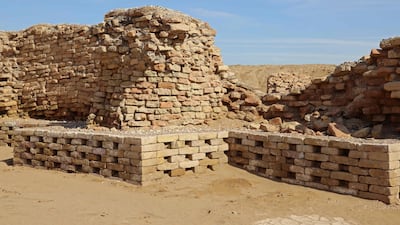
  • A partial view shows the bridge in the city of Girsu. AFP
    A partial view shows the bridge in the city of Girsu. AFP
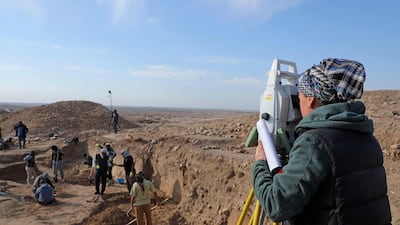
  • Archaeologists used new technologies to understand the development of the city, flying drones over the vast, 250-hectare site. AFP
    Archaeologists used new technologies to understand the development of the city, flying drones over the vast, 250-hectare site. AFP
  • The images they gathered show the extent to which the irrigation system was embedded throughout the city and its surrounds. AFP
    The images they gathered show the extent to which the irrigation system was embedded throughout the city and its surrounds. AFP
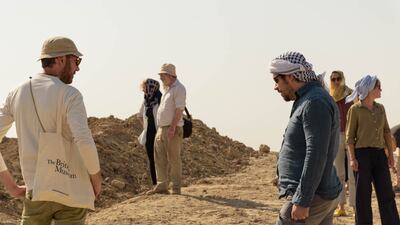
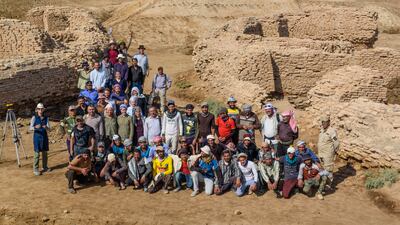
  • Members of the archaeological team at Girsu, southern Iraq, in autumn 2021. Photo: British Museum
    Members of the archaeological team at Girsu, southern Iraq, in autumn 2021. Photo: British Museum
  • A statue of King Gudea found in Girsu, dating from circa 2130 BC. The statue and other items from Iraq are currently on show as part of the Ancient Iraq: New Discoveries exhibition in Nottingham in the UK. Photo: British Museum
    A statue of King Gudea found in Girsu, dating from circa 2130 BC. The statue and other items from Iraq are currently on show as part of the Ancient Iraq: New Discoveries exhibition in Nottingham in the UK. Photo: British Museum
  • The new discovery indicates that the largest irrigation canals date to the prehistory of Mesopotamia. That means they are much older than the birth of the city, by about 1,000 years. AFP
    The new discovery indicates that the largest irrigation canals date to the prehistory of Mesopotamia. That means they are much older than the birth of the city, by about 1,000 years. AFP
  • Archaeologists believed that once the ancient Sumerians learnt to irrigate their crops, they were able to move from subsistence farming to building elaborate temples. But the Girsu Project’s discoveries show that they were living with well-watered plains for a full millennium before they began to build the temple complexes. AFP
    Archaeologists believed that once the ancient Sumerians learnt to irrigate their crops, they were able to move from subsistence farming to building elaborate temples. But the Girsu Project’s discoveries show that they were living with well-watered plains for a full millennium before they began to build the temple complexes. AFP
  • Cuneiform inscription is found during excavation at the ancient Sumerian city of Girsu. AFP
    Cuneiform inscription is found during excavation at the ancient Sumerian city of Girsu. AFP
  • Mud bricks bearing cuneiform inscriptions. AFP
    Mud bricks bearing cuneiform inscriptions. AFP
  • A cone bearing a cuneiform inscription. AFP
    A cone bearing a cuneiform inscription. AFP
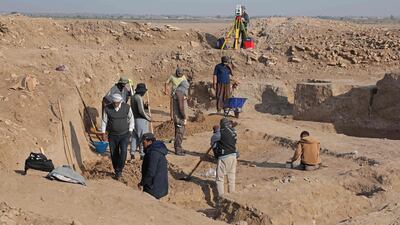
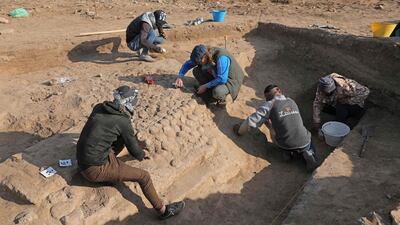
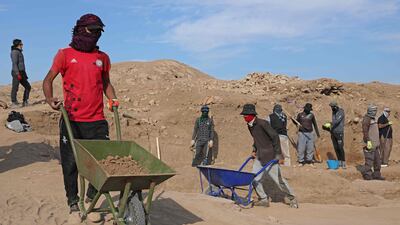
  • Archaeologists and workers excavate the ancient Sumerian city of Girsu. AFP
    Archaeologists and workers excavate the ancient Sumerian city of Girsu. AFP
  • Working with archaeologists from five universities in Iraq, the British Museum team dug out shells and other material from the bottom level of the canals to be carbon-dated. AFP
    Working with archaeologists from five universities in Iraq, the British Museum team dug out shells and other material from the bottom level of the canals to be carbon-dated. AFP
  • The last time Girsu was excavated was in the 1960s, when now-standard technologies and archaeological practices were not in place. AFP
    The last time Girsu was excavated was in the 1960s, when now-standard technologies and archaeological practices were not in place. AFP
  • Sumerian scholars have been working off that era’s imperfect knowledge since then, as the US invasion in the 1990s and the ensuing unrest have stalled any archaeological excavation of the site. AFP
    Sumerian scholars have been working off that era’s imperfect knowledge since then, as the US invasion in the 1990s and the ensuing unrest have stalled any archaeological excavation of the site. AFP
  • When the archaeological team arrived in 2021, they found Girsu pockmarked, with depressions in the soil where looters dug up items. AFP
    When the archaeological team arrived in 2021, they found Girsu pockmarked, with depressions in the soil where looters dug up items. AFP
  • The archaeologists' goals were to research the site but also to practice what they call 'forensic archaeology', treating the dig like a crime scene. AFP
    The archaeologists' goals were to research the site but also to practice what they call 'forensic archaeology', treating the dig like a crime scene. AFP
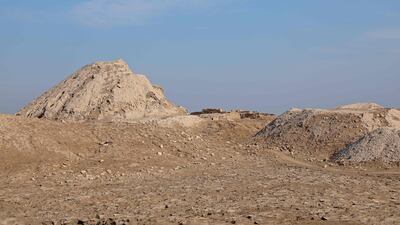
  • A general view shows the excavation site at the ancient Sumerian city of Girsu, known as Tello, in Iraq. AFP
    A general view shows the excavation site at the ancient Sumerian city of Girsu, known as Tello, in Iraq. AFP
  • Young Iraqi archaeologists received training as part of the Girsu Project, headed by Sebastien Rey of the British Museum, centre. Photo: British Museum
    Young Iraqi archaeologists received training as part of the Girsu Project, headed by Sebastien Rey of the British Museum, centre. Photo: British Museum
  • The British Museum excavation team in the ancient city of Girsu. Photo: British Museum
    The British Museum excavation team in the ancient city of Girsu. Photo: British Museum
Skoda Superb Specs

Engine: 2-litre TSI petrol

Power: 190hp

Torque: 320Nm

Price: From Dh147,000

Available: Now

About Proto21

Date started: May 2018
Founder: Pir Arkam
Based: Dubai
Sector: Additive manufacturing (aka, 3D printing)
Staff: 18
Funding: Invested, supported and partnered by Joseph Group

Avatar: Fire and Ash

Director: James Cameron

Starring: Sam Worthington, Sigourney Weaver, Zoe Saldana

Rating: 4.5/5

What can victims do?

Always use only regulated platforms

Stop all transactions and communication on suspicion

Save all evidence (screenshots, chat logs, transaction IDs)

Report to local authorities

Warn others to prevent further harm

Courtesy: Crystal Intelligence

COMPANY%20PROFILE
%3Cp%3E%3Cstrong%3ECompany%20name%3C%2Fstrong%3E%3A%20ASI%20(formerly%20DigestAI)%3C%2Fp%3E%0A%3Cp%3E%3Cstrong%3EStarted%3A%3C%2Fstrong%3E%202017%3C%2Fp%3E%0A%3Cp%3E%3Cstrong%3EFounders%3A%3C%2Fstrong%3E%20Quddus%20Pativada%3C%2Fp%3E%0A%3Cp%3E%3Cstrong%3EBased%3A%3C%2Fstrong%3E%20Dubai%2C%20UAE%3C%2Fp%3E%0A%3Cp%3E%3Cstrong%3EIndustry%3A%3C%2Fstrong%3E%20Artificial%20intelligence%2C%20education%20technology%3C%2Fp%3E%0A%3Cp%3E%3Cstrong%3EFunding%3A%3C%2Fstrong%3E%20%243%20million-plus%3C%2Fp%3E%0A%3Cp%3E%3Cstrong%3EInvestors%3A%3C%2Fstrong%3E%20GSV%20Ventures%2C%20Character%2C%20Mark%20Cuban%3C%2Fp%3E%0A
RACE CARD

6.30pm Al Maktoum Challenge Round-1 Group 1 (PA) Dh119,373 (Dirt) 1,600m

7.05pm Handicap (TB) Dh102,500 (D) 1,200m

7.40pm Handicap (TB) Dh105,000 (Turf) 1,800m

8.15pm UAE 1000 Guineas Trial (TB) Dh183,650 (D) 1,400m

9.50pm Handicap (TB) Dh105,000 (D) 1,600m

9.25pm Handicap (TB) Dh95,000 (T) 1,000m

Results

2.30pm: Dubai Creek Tower – Handicap (PA) Dh40,000 (Dirt) 1,200m; Winner: Marmara Xm, Gary Sanchez (jockey), Abdelkhir Adam (trainer)

3pm: Al Yasmeen – Maiden (PA) Dh40,000 (D) 1,700m; Winner: AS Hajez, Jesus Rosales, Khalifa Al Neyadi

3.30pm: Al Ferdous – Maiden (PA) Dh40,000 (D) 1,700m; Winner: Soukainah, Sebastien Martino, Jean-Claude Pecout

4pm: The Crown Prince Of Sharjah – Prestige (PA) Dh200,000 (D) 1,200m; Winner: AF Thayer, Ray Dawson, Ernst Oertel

4.30pm: Sheikh Ahmed bin Rashid Al Maktoum Cup – Handicap (TB) Dh200,000 (D) 2,000m; Winner: George Villiers, Antonio Fresu, Bhupat Seemar

5pm: Palma Spring – Handicap (PA) Dh40,000 (D) 2,000m; Winner: Es Abu Mousa, Antonio Fresu, Abubakar Daud

How to watch Ireland v Pakistan in UAE

When: The one-off Test starts on Friday, May 11
What time: Each day’s play is scheduled to start at 2pm UAE time.
TV: The match will be broadcast on OSN Sports Cricket HD. Subscribers to the channel can also stream the action live on OSN Play.

Updated: July 08, 2022, 6:02 PM