• A lifeguard wearing a face mask stands by the wave pool at Wild Wadi waterpark in Dubai. Chris Whiteoak/The National
    A lifeguard wearing a face mask stands by the wave pool at Wild Wadi waterpark in Dubai. Chris Whiteoak/The National
  • Overlooking the Sheikh Zayed mosque - a lifeguard patrols the swimming pool of the Shangri -La Hotel, Qaryat al Beri in Abu Dhabi. Stephen Lock / The National
    Overlooking the Sheikh Zayed mosque - a lifeguard patrols the swimming pool of the Shangri -La Hotel, Qaryat al Beri in Abu Dhabi. Stephen Lock / The National
  • A beach lifeguard at the Atlantis The Palm hotel in Dubai. Reuters
    A beach lifeguard at the Atlantis The Palm hotel in Dubai. Reuters
  • Eddie Molion has been living and working as a lifeguard at the UAE for the past four years and is from the province of Bicol, Philippines. He's on duty to ensure no one finds themselves in trouble in and around the water at the Louvre. Victor Besa / The National
    Eddie Molion has been living and working as a lifeguard at the UAE for the past four years and is from the province of Bicol, Philippines. He's on duty to ensure no one finds themselves in trouble in and around the water at the Louvre. Victor Besa / The National
  • A lifeguard at The Meydan Hotel. Chris Whiteoak / The National
    A lifeguard at The Meydan Hotel. Chris Whiteoak / The National
  • A lifeguard bikes to his spot at Corniche Beach in Abu Dhabi. Victor Besa / The National
    A lifeguard bikes to his spot at Corniche Beach in Abu Dhabi. Victor Besa / The National
  • A lifeguard wears a protective face mask to protect him from Covid-19. Chris Whiteoak / The National
    A lifeguard wears a protective face mask to protect him from Covid-19. Chris Whiteoak / The National
  • A lifeguard at Wild Wadi water park. Chris Whiteoak / The National
    A lifeguard at Wild Wadi water park. Chris Whiteoak / The National

Swimming instructors say UAE's beaches in need of more lifeguards


Sarwat Nasir
  • English
  • Arabic

Swimming coaches in the UAE are urging beachgoers to beware of dangerous riptides and to take swimming lessons to be safer in the water.

The warnings came after three people drowned in the UAE this week.

On Friday, a mother drowned in the sea off a beach in Umm Al Quwain after getting into difficulty while swimming.

In another case, a five-year-old boy who spent 50 days in intensive care died on Tuesday following a swimming accident.

I've noticed that the adults sometimes feel embarrassed that they are learning how to swim at that age, but that shouldn't be the case

Angelica Mendoza, a licensed swimming coach in the UAE for the past six years, said the country's beaches must be monitored.

“There needs to be more lifeguards as it [swimming] could be dangerous, especially for those who aren’t very experienced and are weak swimmers,” she said.

“People also should get some swimming lessons so they can learn how to avoid dangerous situations and be safe.

"Riptides can you pull you in, and a swimmer should know how to survive them.

“Parents should also get lessons with their children, and there needs to be an adult present whenever there is a child swimming, no matter how much training that child has.”

The World Health Organisation reported that there are an estimated 236,000 drowning deaths worldwide every year.

It listed drowning as one of the top five causes of death for people aged between one year to 14 and 48 to 85.

There are lifeguards stationed at beaches across the UAE, but there have been calls for more to increase safety.

The dangers of rip currents 

Swimming coaches say the public needs to learn how to swim, and also the technique to handling a rip current. Antonie Robertson / The National

Banu Cetin Akca, a co-founder of UrbanCircle – an online booking platform for swimming coaches – said the instructors who work for her company raised awareness of dangerous currents among their clients.

She said they teach children and parents how to react in a riptide.

“They teach how to remain calm and not to panic as a start point. Currents will only drag them away from the shore, but will not drag them under water,” Ms Akca said.

“So, our coaches teach their students how to keep their head above water and how to control their breathing until it [the current] weakens and how to conserve their energy to be able to ask for help.

“Fighting the current and swimming directly back to the coast might not be achieved by even the strongest swimmers.

"You have to swim parallel to the shore or float free instead of fighting it.”

Instructor Mahmoud Abdel Hadi has been coaching for 11 years.

He has clients that are aged between eight months to 55 years old.

“I’ve noticed that the adults sometimes feel embarrassed that they are learning how to swim at that age, but that shouldn’t be the case,” he said.

“Knowing how to swim is a life-saving skill. Parents shouldn’t just give their kids lessons. Adults need to know how to swim so they can supervise the young ones and avoid being in dangerous situations when they are swimming.”

Mr Hadi said that a person should know how  deep water is, how strong the currents are and if there is a lifeguard nearby before entering the sea to swim.

Volunteers clean-up UAE beaches - in pictures

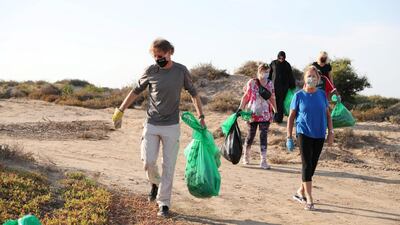
  • Fatima Alzaabi, Ruth and Tony Fitzgerald, Maria Lundberg, Pia Yun and Paul Rivers pick up litter at a beach in Umm Al Quwain. Pawan Singh / The National
    Fatima Alzaabi, Ruth and Tony Fitzgerald, Maria Lundberg, Pia Yun and Paul Rivers pick up litter at a beach in Umm Al Quwain. Pawan Singh / The National
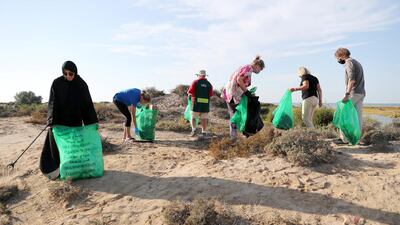
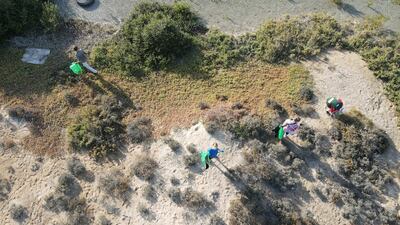
  • Volunteers work to clean up a beach on the border between Umm Al Quwain and Ras Al Khaimah. Pawan Singh / The National
    Volunteers work to clean up a beach on the border between Umm Al Quwain and Ras Al Khaimah. Pawan Singh / The National
  • Volunteers pick up rubbish during the clean-up drive at a beach in Umm Al Quwain on Tuesday. Pawan Singh / The National
    Volunteers pick up rubbish during the clean-up drive at a beach in Umm Al Quwain on Tuesday. Pawan Singh / The National
  • A discarded TV was among the items found on beaches in Umm Al Quwain and Ras Al Khaimah. Courtesy: Paul Rivers
    A discarded TV was among the items found on beaches in Umm Al Quwain and Ras Al Khaimah. Courtesy: Paul Rivers
  • Bags of rubbish are regularly collected on beaches in Umm Al Quwain and Ras Al Khaimah. Courtesy: Paul Rivers
    Bags of rubbish are regularly collected on beaches in Umm Al Quwain and Ras Al Khaimah. Courtesy: Paul Rivers
Virtual banks explained

What is a virtual bank?

The Hong Kong Monetary Authority defines it as a bank that delivers services through the internet or other electronic channels instead of physical branches. That means not only facilitating payments but accepting deposits and making loans, just like traditional ones. Other terms used interchangeably include digital or digital-only banks or neobanks. By contrast, so-called digital wallets or e-wallets such as Apple Pay, PayPal or Google Pay usually serve as intermediaries between a consumer’s traditional account or credit card and a merchant, usually via a smartphone or computer.

What’s the draw in Asia?

Hundreds of millions of people under-served by traditional institutions, for one thing. In China, India and elsewhere, digital wallets such as Alipay, WeChat Pay and Paytm have already become ubiquitous, offering millions of people an easy way to store and spend their money via mobile phone. Indonesia, Vietnam and the Philippines are also among the world’s biggest under-banked countries; together they have almost half a billion people.

Is Hong Kong short of banks?

No, but the city is among the most cash-reliant major economies, leaving room for newcomers to disrupt the entrenched industry. Ant Financial, an Alibaba Group Holding affiliate that runs Alipay and MYBank, and Tencent Holdings, the company behind WeBank and WeChat Pay, are among the owners of the eight ventures licensed to create virtual banks in Hong Kong, with operations expected to start as early as the end of the year.